.webp)

.png)
The best plants for rooftop gardens in Australia are drought- and wind-tolerant species. The plants you choose should match your roof type, local climate, substrate depth, and structural load. Prioritise Australian natives, succulents, Mediterranean species, and ornamental grasses. Always confirm substrate depth and load with a structural engineer or green roof expert.
City views, extra sunshine, and the blue sky - rooftops make surprisingly great gardens. However, they also come with challenges, including stronger winds, reflected heat, limited substrate depth, and weight limits.
The right plants can handle all that while still looking good and earning their keep with flowers, fragrance, and a habitat for pollinators.
By selecting hardy plants that can handle the sun, drought, wind, and cold, you can create a successful and beautiful garden.
Native Australian plants, succulents, Mediterranean species, and ornamental grasses are all great choices.
These plants are tough, more sustainable with water usage, and perfect for the harsh conditions found on rooftops.
In this guide, we'll help you choose the best plants for rooftop gardens.
Quick plant choice by roof type
Best rooftop garden plants for Australian green roofs
Rooftop gardens in Australia face unique conditions. This includes high exposure to the sun, wind, drought, and low temperatures.
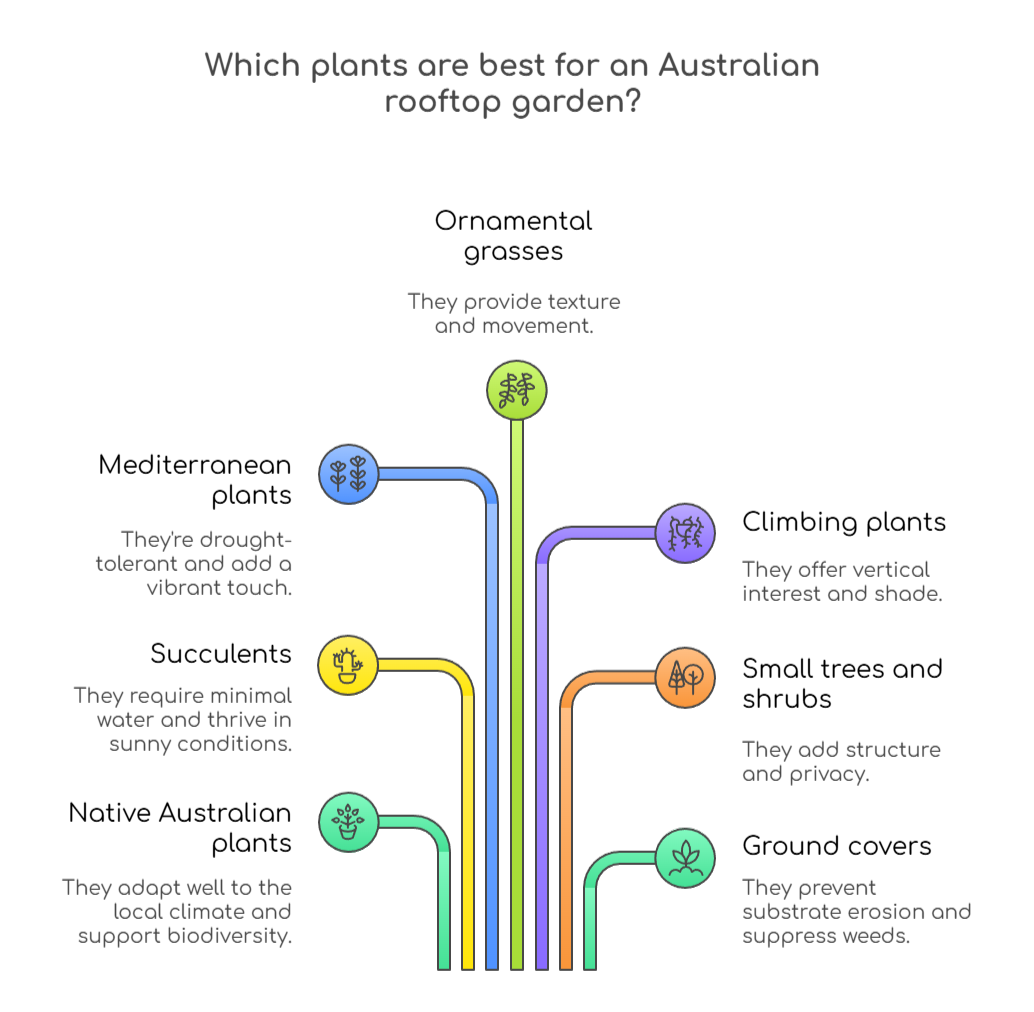
Selecting resilient, low-maintenance plants is key. Here are some of the best plants for rooftop gardens in Australia:
- Native Australian plants
- Succulents
- Drought-tolerant Mediterranean plants
- Ornamental grasses
- Climbing plants and vines
- Small trees and shrubs
- Ground covers
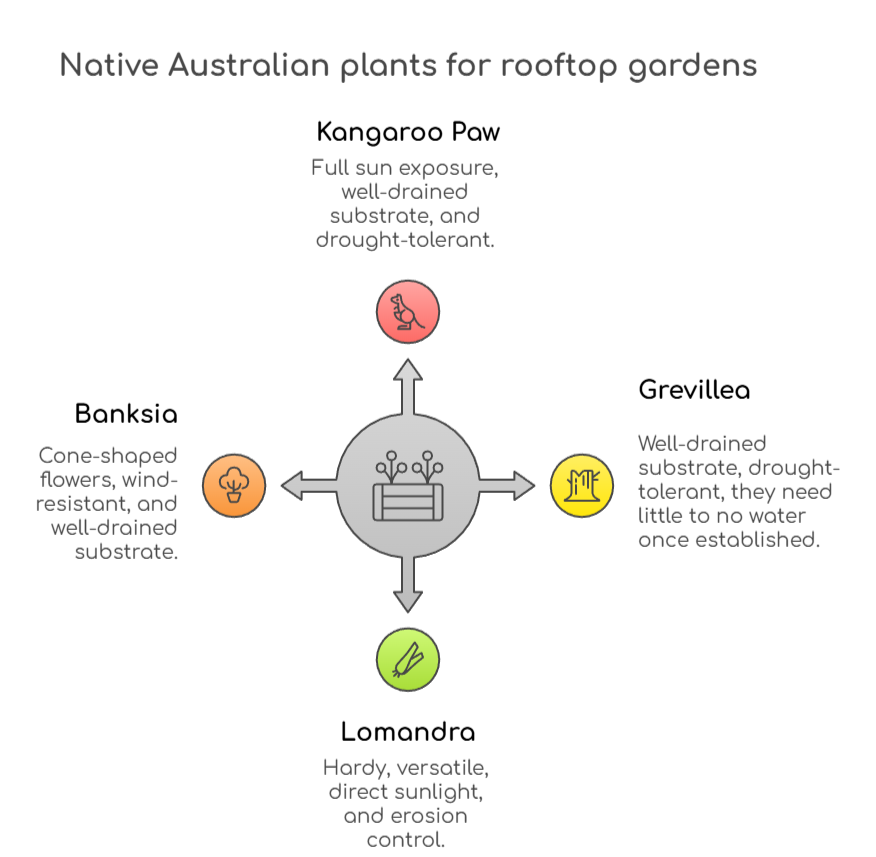
Native Australian plants
Native plants are well-suited to local environmental conditions and can thrive when chosen correctly. Here are some good plants for rooftop gardens from this category:
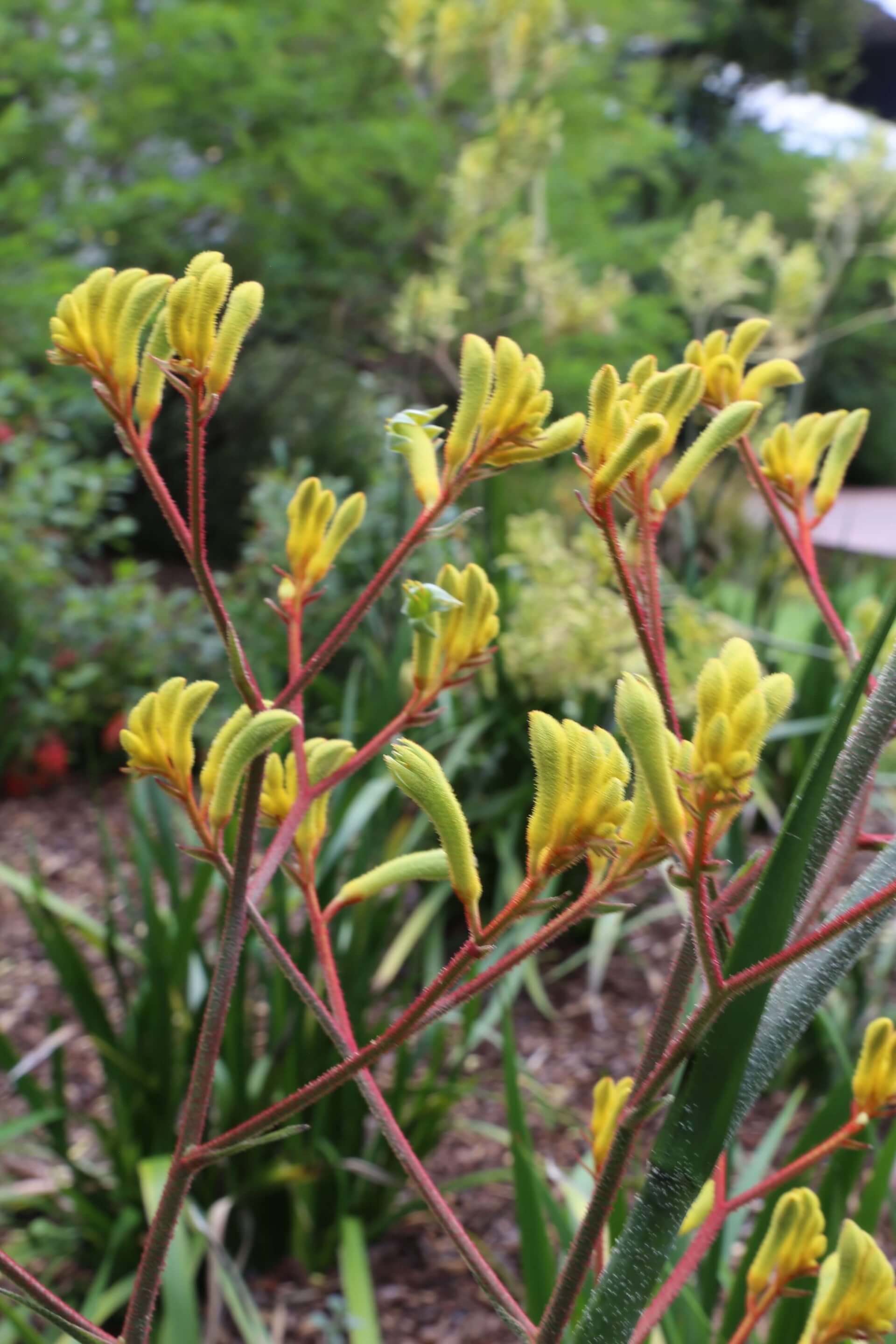
Kangaroo Paw (Anigozanthos)
This iconic Australian plant has tubular, velvety flowers shaped like a kangaroo's paw. The flowers come in shades of red, yellow, and green. It prefers full sun exposure and a well-drained substrate. It's drought-tolerant, but it benefits from occasional watering during long dry periods.
Grevillea
Grevilleas are a diverse group of shrubs or small trees that produce spider-like, nectar-rich flowers. They attract birds, bees, and butterflies. Grevilleas need at least six hours of direct sunlight to grow and thrive. They also need a well-drained substrate. Grevilleas are very drought-tolerant. Once established, they need little to no water.
Lomandra
Lomandra is an extremely hardy and versatile grass-like, clump-forming plant. It's often used for erosion control and ground cover. It thrives in direct sunlight and even partial shade sometimes. It's very drought-tolerant and can grow in various substrate types.
Banksia
Banksias have distinct cone-shaped flower heads. They can be grown as shrubs or small trees. The flowers attract birds and wildlife, which is also good for pest control. Banksias need direct sun exposure and a well-drained substrate. They can handle windy and exposed conditions, making them ideal for rooftop gardens.
Succulents
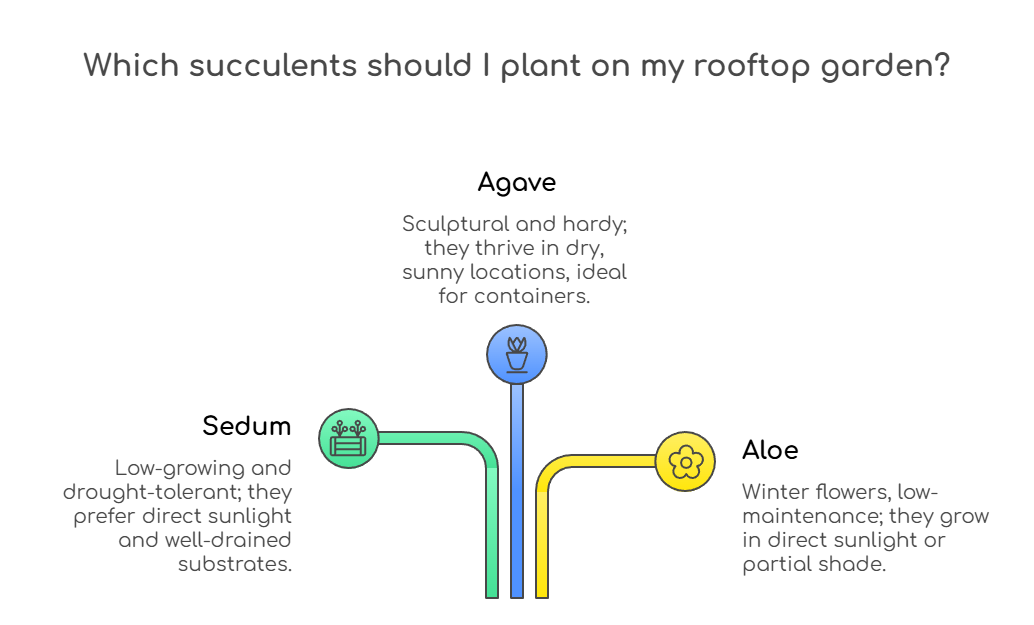
Succulents are some of the best plants for rooftop gardens. They can store water in their leaves and withstand harsh conditions. Here are some succulents you can plant on your rooftop garden:
Sedum
Sedums are low-growing succulents that come in many shapes, sizes, and colours. They are drought-tolerant succulents, perfect for green roofs. They prefer direct sunlight to light shade and well-drained substrates. They also don't need to be watered often.
Agave
Agaves are sculptural succulents with large, spiky leaves. They are hardy, architectural plants that thrive in dry, sunny locations. Some species remain compact, making them ideal for containers. They need full sun exposure, minimal water, and a well-drained substrate. They are slow-growing but need little care.
Aloe
Aloes are succulent plants that produce clusters of tubular flowers. They're low-maintenance and offer vibrant blooms. Aloe vera is a well-known species that has medicinal uses. Plant them where they will receive direct sunlight, but they can also grow in partial shade. They need a well-drained substrate and occasional watering.
Drought-tolerant Mediterranean plants
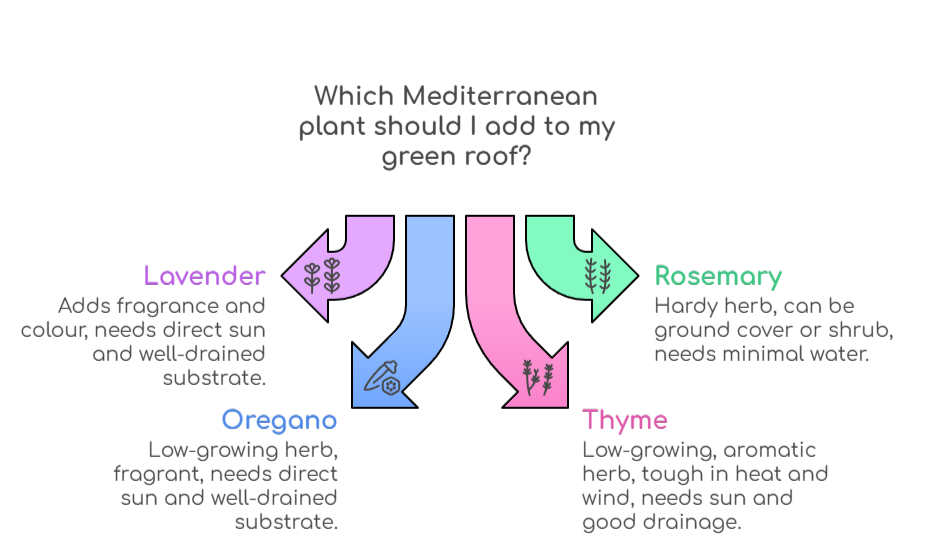
These plants come from Mediterranean climates, which are like many parts of Australia. They're used to dry, hot summers and cool, wet winters. They're well-suited for sunny, exposed rooftop environments and can make great rooftop garden plants. Here are some drought-tolerant Mediterranean plants you can add to your green roof:
Lavender
Lavender is a fragrant, bushy plant with silvery leaves and purple-blue flowers. It adds fragrance and colour to your rooftop garden while being highly drought-tolerant. Lavender needs to be exposed to direct sunlight, and it should be planted in a well-drained substrate. It's drought-tolerant, but it's best to avoid over-watering.
Rosemary
Rosemary is a hardy herb that can double as a culinary plant. This woody herb has needle-like leaves and small blue flowers. It can be grown as a ground cover or small shrub. Rosemary thrives in the sun, with minimal water needed once established.
Oregano and thyme
Oregano and thyme are low-growing herbs that are great for filling spaces. Both are fragrant herbs that can survive in tough conditions. Oregano has oval, green leaves, while thyme has smaller leaves and pink or purple flowers. Both types of herbs need direct sun and a well-drained substrate. They are excellent for culinary and ornamental purposes.
Ornamental grasses
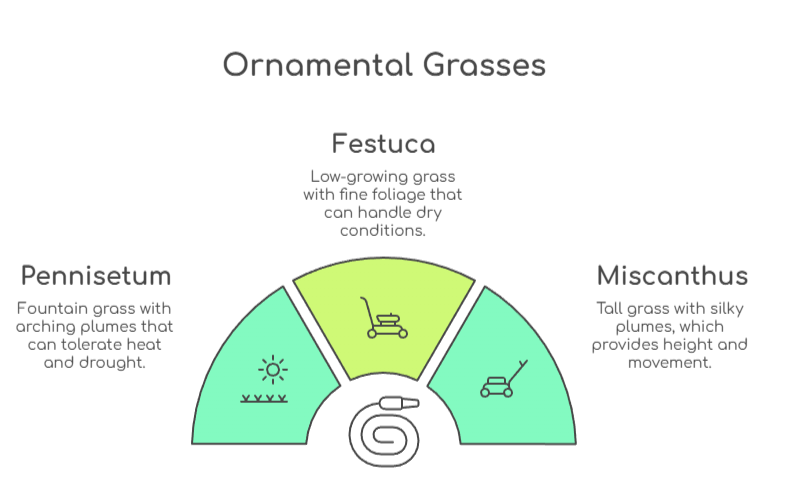
Ornamental grasses add texture and movement to the garden. They are often wind-resistant and very low maintenance. Here are some ornamental grass varieties that can make ideal rooftop garden plants:
Pennisetum (Fountain grass)
This type of grass tolerates heat and adds a soft, flowing texture. It's a clumping grass with arching, feathery plumes that sway in the wind. It has a graceful, flowing look. Pennisetum needs full sun exposure, a well-drained substrate, and minimal water. It's drought-tolerant once established.
Festuca
Festuca is a low-growing, mound-forming grass with fine blue or green foliage. It tolerates dry and exposed conditions. Festuca provides a soft texture to the garden. It needs full sun exposure to partial shade. You don't need to water it too often, as it can tolerate a poor substrate.
Miscanthus (Maiden grass)
Miscanthus is a tall, clumping grass with narrow leaves and silky plumes. It adds height, movement, and late-season colour. It can double as a light screen on windy roofs. Miscanthus needs full sun and a well-drained substrate, with regular watering until established. It's drought-tolerant once established.
Climbing plants and vines
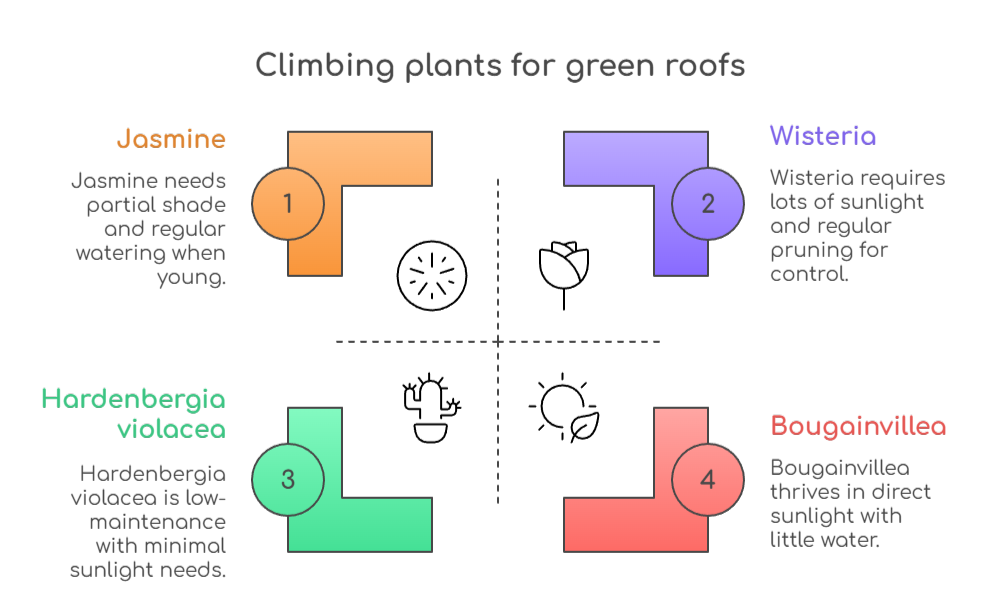
Climbing plants and vines can also make good plants for rooftop gardens. They can create shade and soften the hard edges of your rooftop garden. Here are some varieties to consider:
Bougainvillea
Bougainvillea is a hardy, fast-growing vine with vibrant pink, red, or purple bracts surrounding small white flowers. It's a sun-loving vine. Bougainvillea thrives in direct sunlight, and it needs a well-drained substrate. Once planted, it needs very little water.
Jasmine
Jasmine produces fragrant white or yellow flowers. It's often used to climb trellises or walls in rooftop gardens. It's great for both fragrance and creating vertical interest. When young, jasmine needs full sun exposure to partial shade and regular watering. It's a drought-tolerant plant.
Wisteria
Wisteria is a deciduous vine that produces stunning, hanging clusters of purple or white flowers in spring. It can provide shade and stunning springtime blooms. To control its vigorous growth, it requires full sun exposure, a well-drained substrate, and regular pruning.
Hardenbergia
Hardenbergia violacea is a climbing plant with branches that twist around the stems of other plants. It is moderately vigorous but rarely covers other plants so extensively as to cause damage. It's known for its shrubby form without the climbing tendency.
Small trees and shrubs
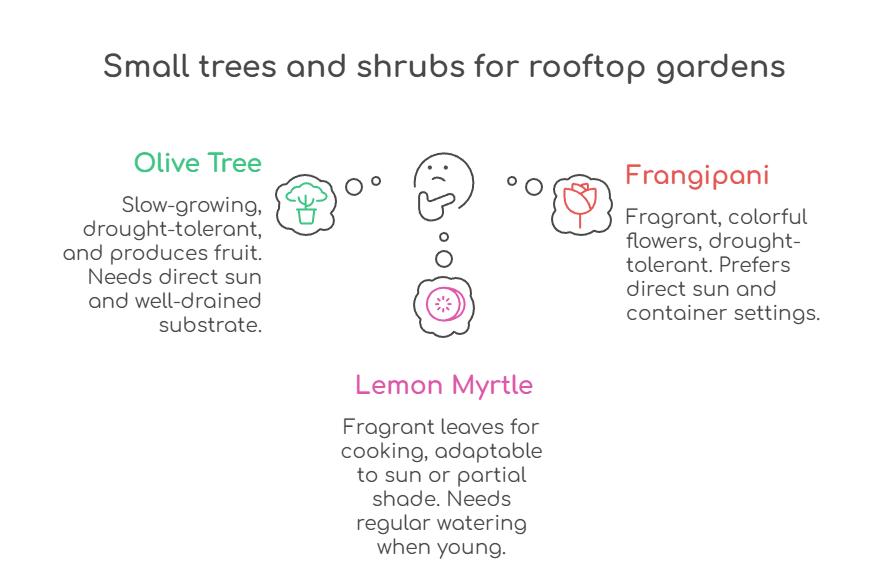
There are many shrubs and small trees for rooftop gardens. They add height and structure to a rooftop garden. Make sure to select varieties that are compact and suited to the local conditions and that have adequate planting space. These are some options:
Olive tree
Olive trees are slow-growing and thrive in warm, dry climates. With their drought tolerance and compact size, they're great for rooftop gardens. They produce fruit and have silvery-green leaves. They need direct sun exposure and a well-drained substrate. Once established, they're drought-tolerant and can grow well in pots.
Lemon myrtle
Lemon myrtle is a native Australian shrub with fragrant leaves that can be used in cooking. It needs to be exposed to direct sunlight, but it can also do well in partial shade. This shrub needs regular watering when young, but it's fairly drought-tolerant once planted.
Frangipani
Frangipanis have thick, fleshy branches and they produce fragrant, colourful flowers in summer. They are ideal for warm climates. They prefer direct sunlight exposure, and they're drought-tolerant. You can grow them in containers on your rooftop garden.
Ground covers
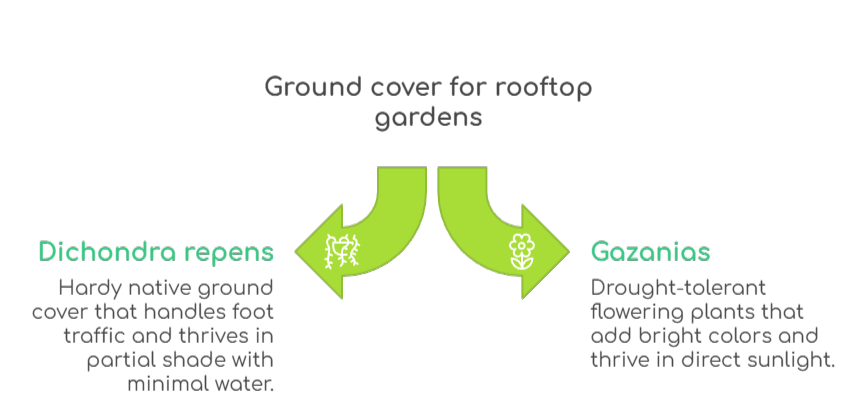
Ground covers help provide greenery across larger areas. They are important for filling gaps and preventing substrate erosion. They can also help conserve moisture in rooftop gardens. Here are some ideas for ground covers for your rooftop garden:
Dichondra repens
This is a low-growing trailing plant with small kidney-shaped leaves. It's often used as a lawn substitute in areas difficult to reach. It's a hardy native ground cover that's suitable for areas with limited foot traffic. It needs to be exposed to the sun during the day, but it can also thrive in partial shade. It requires minimal water once established.
Gazania
Gazanias are low-growing, flowering plants with daisy-like blooms in bright colours like yellow, orange, and red. They make a tough, flowering ground cover that thrives in direct sunlight. They are very drought-tolerant and perfect for hot, dry conditions. They add a burst of colour to your rooftop garden.
Choosing good plants for rooftop gardens
When choosing the best rooftop garden plants, here are some factors you need to consider:
- Substrate depth, drainage, and structural load
- Design and plant selection for Australian conditions
- Irrigation, establishment, and maintenance
- Coastal roofs and salt spray
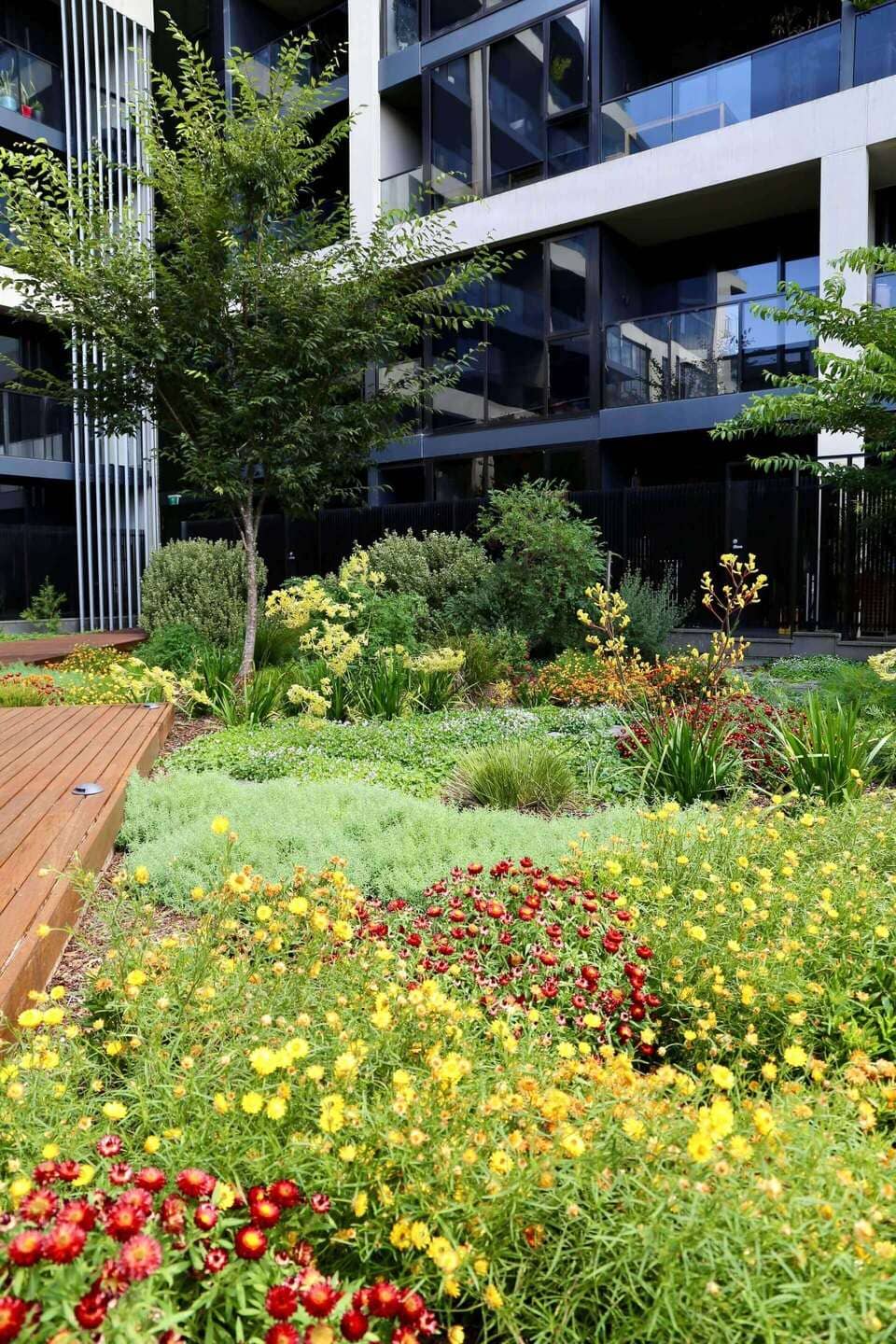
Substrate depth, drainage, and structural load
The success of a green roof depends on its depth and weight. There are three types of green roofs that vary by substrate depth:
- Extensive roofs (shallower than 200mm)
- Intensive roofs (deeper than 250mm)
- Semi-intensive roofs (between 150mm and 250mm deep)
For extensive roofs, it's best to choose sedums, succulents, and other shallow-rooted mixes. At about 100–150 mm, saturated loads are typically 120–150 kg/m². These builds are lightweight, quick-draining, and heat-resilient with appropriate species.
Increasing depth towards 200–250 mm lets you introduce tougher perennials and herbs. In this range, saturated loads usually rise to around 180–250 kg/m².
Intensive roofs are designed to support more substrate volume, larger plants, and usable spaces.
For small shrubs or screening plants at 300–500 mm depth, saturated loads are commonly 300–500 kg/m². For small trees or large shrubs at 500–1,000+ mm depth, saturated loads are often greater than 500 kg/m², depending on the:
- Substrate type
- Tree pit design
- Irrigation strategy
Semi-intensive roofs sit between extensive and intensive systems. Saturated loads are usually about 180–250 kg/m². They're still lighter than full intensive roofs but heavier than basic sedum systems.
All green roof types need a well-designed drainage system that removes excess water without allowing the substrate to dry out too quickly. This includes:
- Protection
- Waterproofing
- Root barrier
- Drainage
- Filter fabric
These layers must be designed to work together as a system.
Always engage a structural engineer or green roof experts, like Evergreen Infrastructure. Only a qualified assessment can confirm allowable loads, wind uplift, and details around penetrations and edges.
The structural integrity of the rooftop is very important. Make sure that the combined weight of containers, substrate, and plants does not exceed the roof's load-bearing capacity.
Design and plant selection for Australian conditions
Rooftops in Australia act like high-exposure sites. They're hotter, windier, and sunnier than the ground. Design and plant choices need to reflect that.
This is why you should choose plants proven in hot, open positions. You can also upgrade to coastal-tolerant species if you're near the shore, where salt and abrasive winds are a factor.
Where possible, use local Australian natives, as they:
- Support biodiversity
- Handle heat once established
- Often demand less irrigation
It's important to create layers so the planting works as a system.
Use mat-forming succulents to stabilise and shade the substrate. Combine them with grasses that add movement, root mass, and resilience. You can also include small shrubs to provide height, screening, and wind baffling for the plants below.
For existing buildings, aim to keep weight and complexity down by using modular planted trays where appropriate. You can also use lightweight engineered substrates that reduce structural loads. This also simplifies installation and maintenance.
Where allowed, add mulch and moisture-retentive components to the substrate. This reduces irrigation needs without sacrificing drainage or plant health.
Irrigation, establishment, and maintenance
Even hardy native plants need help to get established.
Plan for regular watering during the first six to 12 months while roots grow through the substrate and the planting settles in. For efficient watering, use drip or subsurface drip irrigation on timers, ideally supplied by a rainwater tank and pump to reduce mains water use.
Fertilise lightly. Choose a slow-release, native-safe fertiliser. Make sure to avoid high-phosphorus products, especially for phosphorus-sensitive species.
Maintenance needs depend on the roof type.
- Extensive roofs (shallow, simple systems) can often be managed with monthly inspections and seasonal weeding.
- Semi-intensive and intensive roofs need more regular care, including pruning, replacing plants, checking irrigation performance, and monitoring nutrients.
Good access is essential. Design safe walkways, hose connection points, and easy-to-reach irrigation controllers so the roof can be maintained properly.
Finally, expect some plant turnover. Plan to replace annuals and short-lived perennials over time to maintain a dense, attractive, and weed-resistant canopy.
Coastal roofs and salt spray
Coastal roofs face salt-laden winds that burn foliage and concentrate salts in media.
This is why you can start with salt-tolerant natives like Westringia and Carpobrotus, plus hardy succulents. Avoid delicate ornamentals unless they're sheltered.
You also have to maintain drainage to prevent salt accumulation. Periodic flushing through rainfall or irrigation helps.
Use permeable windbreaks and position tough, taller shrubs on the windward edge. Doing this will reduce desiccation of the lower layers.
Plan for a slower start and use a thicker base layer (if possible) to protect against changes in salt levels and temperature.
Choosing the Best Rooftop Garden Plants
Creating a rooftop garden in Australia can be a rewarding way to transform unused space into a beautiful green environment.
With the right plant choices, you can overcome challenges like harsh sun, wind, and drought.
Your rooftop garden will be easy to care for if you use plants like Australian natives, succulents, species from the Mediterranean, and tough ornamental grasses.
For expert advice on selecting plants for your rooftop garden, Evergreen Infrastructure has a team of green roof specialists. We offer extensive knowledge and experience in plant selection.
We're dedicated to transforming urban spaces into lush, sustainable environments. Our green roof consultants can tell you which plants to choose, based on the condition of your roof and many other factors.
If you want to know more about our green roof services, feel free to contact us.
We create green oases in urban settings
We'd love to discuss how we can partner to bring innovative, sustainable solutions to your urban environment.