.webp)

Australia's national climate approach has two jobs at once: mitigation and adaptation. Mitigation refers to reducing greenhouse gas emissions to limit future warming. Adaptation means preparing for impacts that are already unavoidable. National policy now treats these as parallel priorities. For councils, developers, and asset owners, the practical opportunity is to deliver projects that do both. Green infrastructure can help, including green roofs, green walls, and water-sensitive urban design.
Climate change is now shaping day-to-day decisions across Australia's built environment.
Heatwaves are lasting longer, heavy rain is testing drainage systems, and coastal assets face rising exposure. Governments and investors are tightening expectations on emissions performance.
That is why the conversation is no longer "climate change mitigation or adaptation." Australia needs both.
Mitigation is about cutting greenhouse gas emissions to slow future warming. Adaptation is about preparing communities, buildings, and infrastructure for the impacts that are already here and still growing.
For councils, developers, and asset owners, the practical task is to turn this into deliverable projects.
Green infrastructure is one of the most useful tools. Green roofs and walls help manage heat and stormwater. They can also improve building performance and reduce energy demand.
What is climate change mitigation and adaptation?
Climate change mitigation means reducing emissions (or increasing removals) so that the climate does not warm as much in the future.
Climate change adaptation means adjusting systems to reduce harm from climate impacts that are already underway. These systems might refer to buildings, infrastructure, services, and ecosystems.
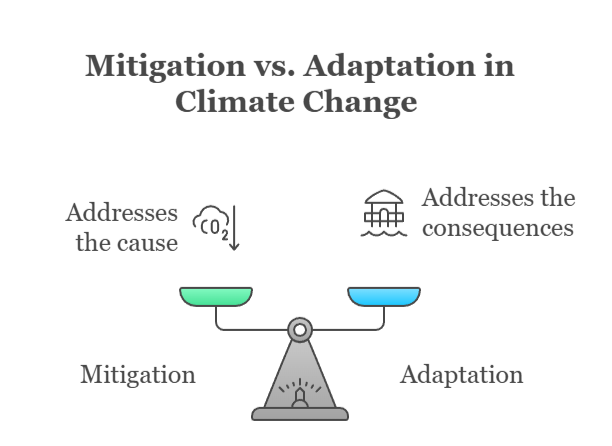
This distinction is the heart of adaptation vs. mitigation in climate change:
- Mitigation addresses the cause (greenhouse gases).
- Adaptation addresses the consequences (heat, floods, fires, sea-level rise, and compounding hazards).
Australia needs both. Even strong global mitigation cannot "turn off" near-term risks. Not only that, but adaptation without mitigation becomes increasingly costly as hazards intensify.
Australia's mitigation framework
Australia's mitigation framework is built around clear national targets and sector-based policies.
The focus is on cutting emissions from electricity, industry, and transport. These areas drive a large share of Australia's total emissions.
These settings are important for project owners and delivery partners, as they affect how approvals and reports are handled. They also determine what funders expect to see in a strong business case.
National emissions reduction targets
Australia has set national targets to cut greenhouse gas emissions. These targets are set out under the Climate Change Act architecture and implemented through Commonwealth policy programs.
The main targets are:
- 43% lower emissions by 2030 compared to 2005 levels, and
- Net zero emissions by 2050.
Australia has also set a 2035 target of 62–70% below 2005 levels. This is framed as the next step in national ambition under the Paris Agreement cycle.
Some independent assessments say Australia's current policies still do not go far enough to keep warming within a 1.5°C pathway.
In practical terms, that means targets alone are not enough. Emissions reductions need to happen faster, and key policies need to deliver at scale.
Decarbonising electricity
Electricity is a key part of Australia's mitigation plan. If the grid gets cleaner, it also becomes easier to cut emissions in other sectors like buildings, transport, and parts of industry.
Australia's federal target is 82% renewable electricity in the National Electricity Market by 2030.
Two major levers support that goal:
- Capacity Investment Scheme (CIS)
- Rewiring the Nation
CIS is designed to bring forward new clean generation and storage by giving projects more revenue certainty.
The government says the scheme aims to deliver 40 GW of new capacity by 2030. This includes 26 GW of renewable generation and 14 GW of dispatchable capacity, such as batteries. The uplift to 40 GW was announced in July 2025.
Rewiring the Nation is a $20 billion initiative focused on transmission. The basic idea is simple. Even if we build more renewable energy, the grid still needs new and upgraded lines to move power to where it's used.
This means the energy transition is not only about building wind and solar. It also depends on storage, firming, and transmission delivery.
Industrial emissions
Australia's biggest industrial sites are covered by the Safeguard Mechanism. It sets an emissions limit (a baseline) for each facility. That baseline steps down over time.
For most facilities, the standard baseline declines by 4.9% each year until 30 June 2030. Some trade-exposed sites have different settings.
The Clean Energy Regulator also reports the overall direction of the scheme. Net emissions from Safeguard-covered facilities are expected to fall to no more than 100 Mt CO₂-e in 2029–30.
Transport
Transport emissions are harder to reduce without cleaner vehicles. Australia is now using CO₂ standards for new light vehicles to push that change.
These standards set yearly emissions targets for car makers. The targets tighten over time, so new vehicles sold each year must become cleaner.
The government's modelling shows these standards reduce transport emissions over the next decade. They also support the shift to electric vehicles, especially as the electricity grid becomes more renewable.
Australia's adaptation framework: planning for unavoidable impacts
Mitigation reduces the size of the future problem. Adaptation reduces the damage from risks that cannot be fully avoided.
National Climate Risk Assessment
Australia's National Climate Risk Assessment (NCRA) is the federal government's first full national assessment of climate risk.
It looks at how climate change can affect key systems. This includes health, infrastructure, the economy, and the environment.
It highlights that climate hazards can stack together. For example, heat, flooding, and infrastructure failure can happen at the same time. This can make impacts worse and harder to manage.
The NCRA also shows how exposure can grow. One example is coastal risk. It finds that sea-level rise could put 1.5 million more people in high-risk coastal areas by 2050.
National Adaptation Plan
Australia's National Adaptation Plan (NAP) explains how the Commonwealth will support climate adaptation. It's designed to respond to the risks identified in the NCRA.
The NAP focuses on practical delivery, aiming to:
- Build capability across governments and sectors
- Clarify who is responsible for what
- Support better investment and planning decisions
It's organised across seven systems, including areas like infrastructure and the built environment, health, communities, and primary industries.
The goal is to make adaptation part of normal decision-making, not a separate activity.
Disaster resilience funding
A major federal funding example is the Disaster Ready Fund. It supports projects that reduce risk before disasters happen.
The fund provides up to $1 billion over five years from 1 July 2023. It's aimed at resilience and risk reduction, such as:
- Flood mitigation and drainage upgrades
- Bushfire risk reduction works
- Stronger design and rebuilding standards for essential assets
- Community preparedness and early warning improvements
Integrating mitigation and adaptation in climate change: Why "either/or" is the wrong question
Many organisations still treat climate action as a choice. They ask themselves, "Should we spend on emissions reduction or flood protection?"
In infrastructure, the better question is: Which investments deliver both, and how do we design them to avoid trade-offs?
Government guidance increasingly treats emissions reduction and climate resilience as parallel priorities.
The NCRA page itself explicitly describes adaptation action occurring "along with taking steps to reduce emissions."
This matters most in the built environment because:
- Buildings and precincts drive energy use, which drives operational emissions.
- Buildings and precincts also concentrate risks, including heat, flooding, and service disruption.
That is where green infrastructure is especially useful. It can reduce heat and manage stormwater (adaptation). It can also improve building performance and lower energy demand (mitigation).
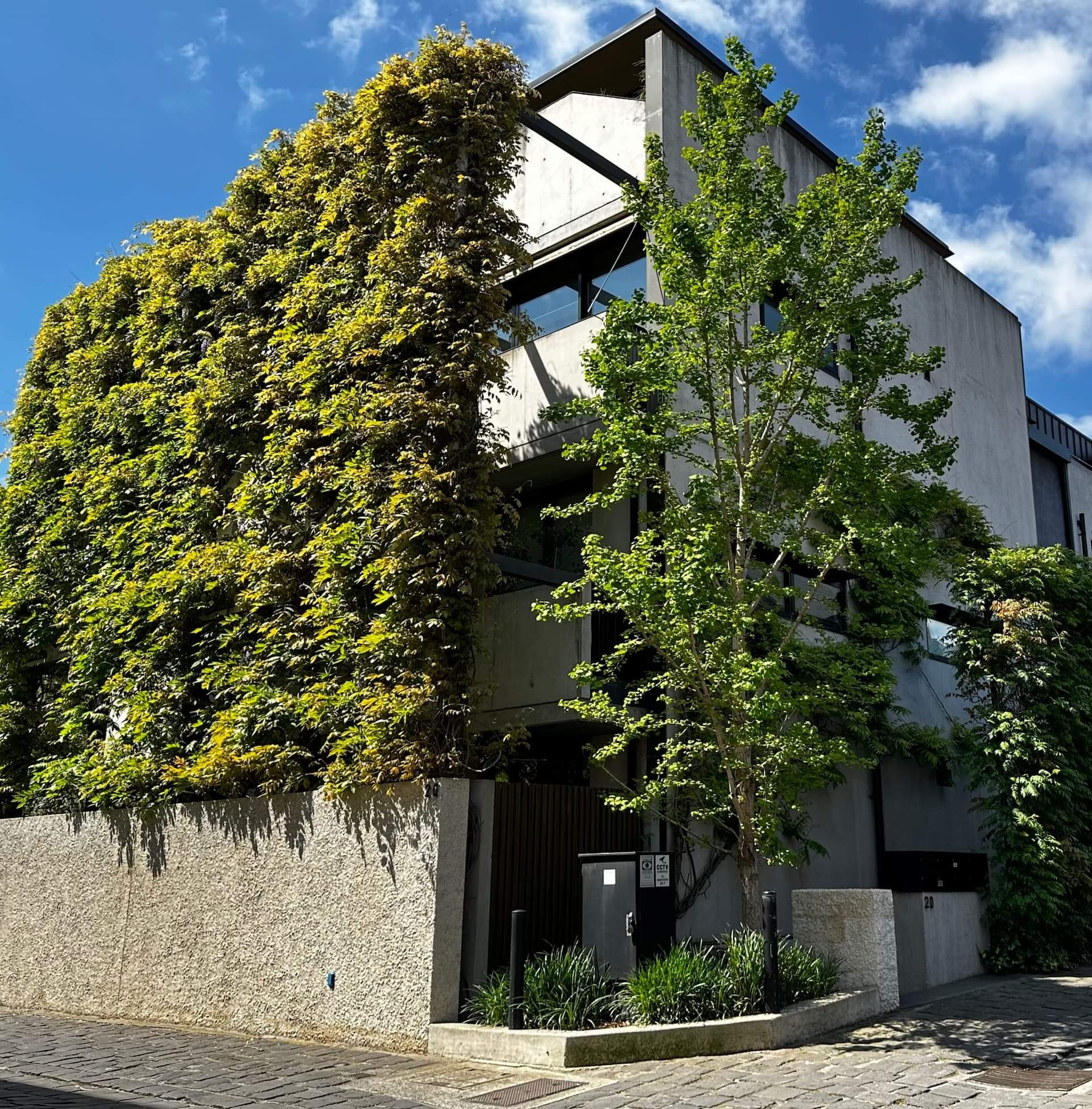
For example, green walls can cool buildings and streets, manage heat risk, and support better building performance.
Mitigation vs adaptation in climate change examples (and where green infrastructure fits)
Mitigation and adaptation can feel abstract until you see them in real projects.
The examples below show what each approach looks like and where green infrastructure can deliver benefits on both sides.
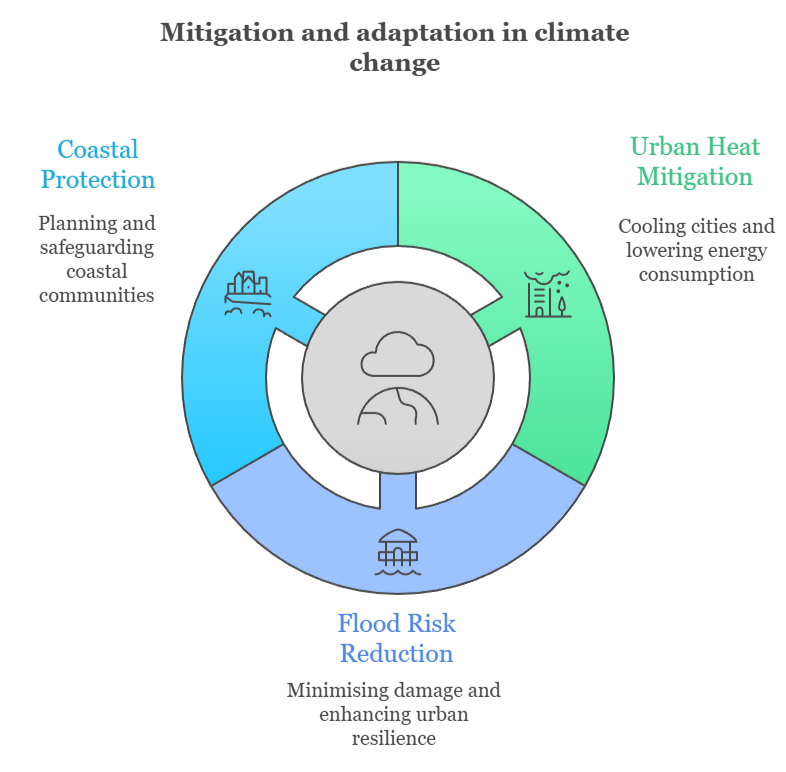
Urban heat: cooling people and reducing energy demand
Heat is a serious risk in Australian cities. It affects health, comfort, and how well buildings perform. It can also push up air-conditioning use on the hottest days.
Green infrastructure can help in two ways:
- Green roofs cool roofs and the surrounding air through shade and evapotranspiration. They can also improve insulation, which can reduce cooling demand.
- Green walls add shade and insulation to building facades. They can help keep indoor spaces more stable during heat extremes.
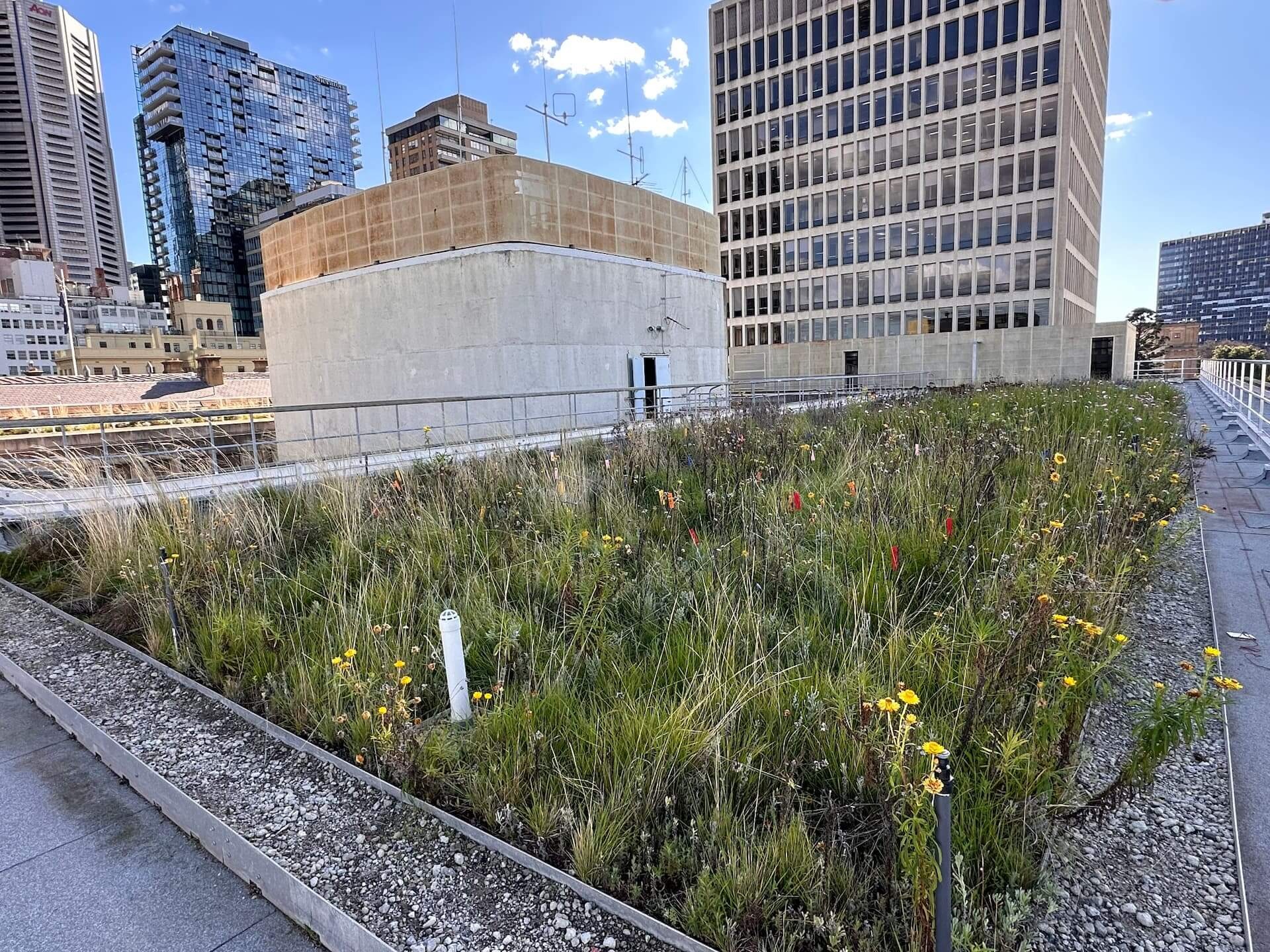
Green infrastructure can support mitigation by reducing electricity use for cooling. It supports adaptation by keeping buildings and streets cooler and reducing heat stress during heatwaves.
Flood and stormwater risk: reducing damage and improving liveability
Heavy rainfall can overwhelm urban drainage, especially in areas with lots of hard surfaces. This increases flood risk and disrupts roads, businesses, and services.
Nature-based and hybrid stormwater projects help by:
- Slowing down runoff
- Soaking up and filtering water
- Storing water temporarily so pipes and waterways are not hit all at once
Programs like the Commonwealth's Urban Rivers and Catchments Program support this kind of work.
Projects often include wetlands, swales, rain gardens, and restored waterways. These features can also cool local areas and improve public spaces.
By slowing and absorbing runoff, these projects can reduce flood peaks and disruption during storms. In some cases, it can also lower energy use by reducing pumping and treatment demand.
Coastal risk: planning, protection, and reducing future exposure
Sea-level rise and coastal flooding are long-term risks. They affect homes, roads, ports, and water assets.
This is why many councils and asset owners now build sea-level allowances into design and planning decisions.
Coastal adaptation usually relies on a mix of approaches, such as:
- Smarter land-use planning (setbacks, minimum floor levels, and avoiding high-risk areas)
- Protecting key assets where it makes sense (engineered options)
- Restoring or strengthening natural buffers where possible
Green infrastructure is not a replacement for seawalls or major coastal works. But it can still play a useful role in coastal precincts.
It can reduce heat, manage runoff, and support habitat outcomes alongside broader coastal protection and planning.
Funding realities: why partnerships matter
Adaptation funding in Australia is spread across many programs. There is no single "adaptation budget" that councils can rely on.
Instead, projects are often funded through different portfolios, each with its own goals and rules.
Here are a few examples:
- Disaster Ready Fund: funding for resilience and risk reduction projects before disasters happen.
- Urban Rivers and Catchments Program: funding for green and blue infrastructure that improves waterways and supports community resilience.
- ALGA proposal: a call for a $400 million per year climate adaptation fund for local governments (an advocacy position, not a confirmed program).
Because funding is fragmented, partnerships often make projects easier to deliver. Councils and asset owners can strengthen applications by forming teams that cover:
- Strong technical design and costing
- Proven delivery capability
- Community engagement and stakeholder support
- Monitoring and evaluation to show outcomes
Evergreen Infrastructure's role
Evergreen Infrastructure designs and delivers green infrastructure for councils, developers, and other asset owners.
These projects help manage heat and stormwater in built-up areas. In some cases, they can also reduce energy demand by improving building performance.
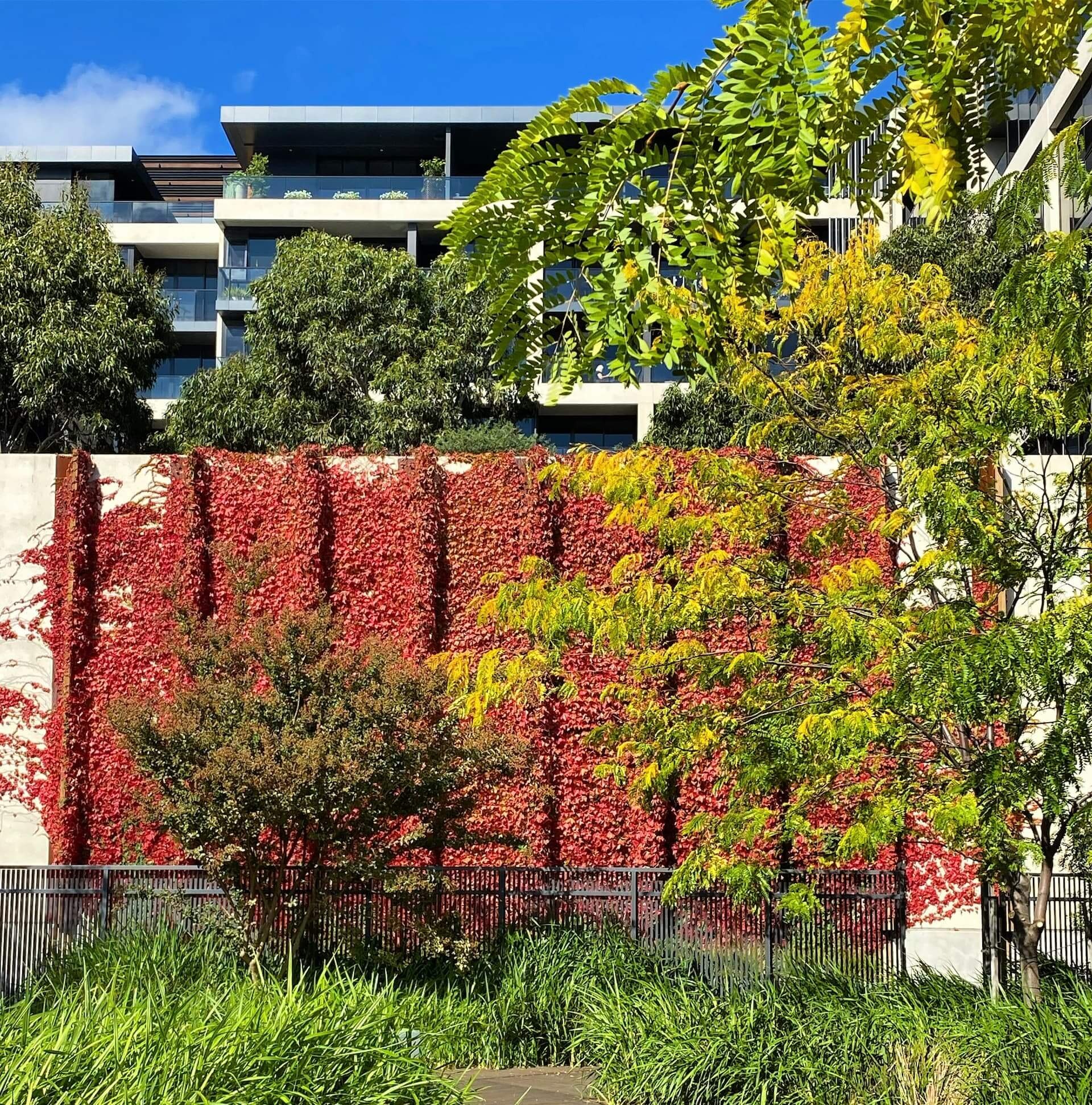
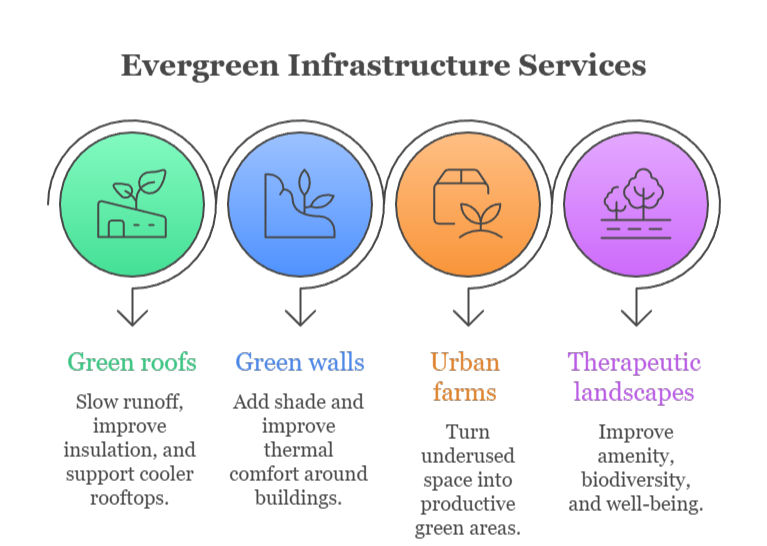
Evergreen Infrastructure's services can include:
- Green roofs and blue-green roofs to slow runoff, improve insulation, and support cooler rooftops.
- Green walls and living facades to add shade and improve thermal comfort around buildings.
- Urban farms that turn underused roof or site space into productive green areas and support stronger local amenities.
- Therapeutic landscapes, urban farms, and green open spaces that improve amenity, biodiversity, and well-being.
Most sites need a mix of measures. We can help package the right combination, then manage delivery and ongoing maintenance so the system keeps performing over time.
Delivering mitigation and adaptation together
Australia's climate challenge now has two priorities at the same time. We need to cut emissions fast, and we also need to prepare for heat, floods, fires, and coastal risks. The best projects often do both.
For cities and assets, this means choosing solutions that reduce risk and improve performance. Green roofs and green walls can cool buildings, manage stormwater, and improve liveability. They can also reduce energy demand over time.
Evergreen Infrastructure designs green infrastructure projects, including green roofs and green walls. If you're planning a new build or an upgrade, we can help you choose options that support both mitigation and adaptation.
Contact us to discuss your site, your goals, and the best next steps.
We create green oases in urban settings
We'd love to discuss how we can partner to bring innovative, sustainable solutions to your urban environment.