.webp)

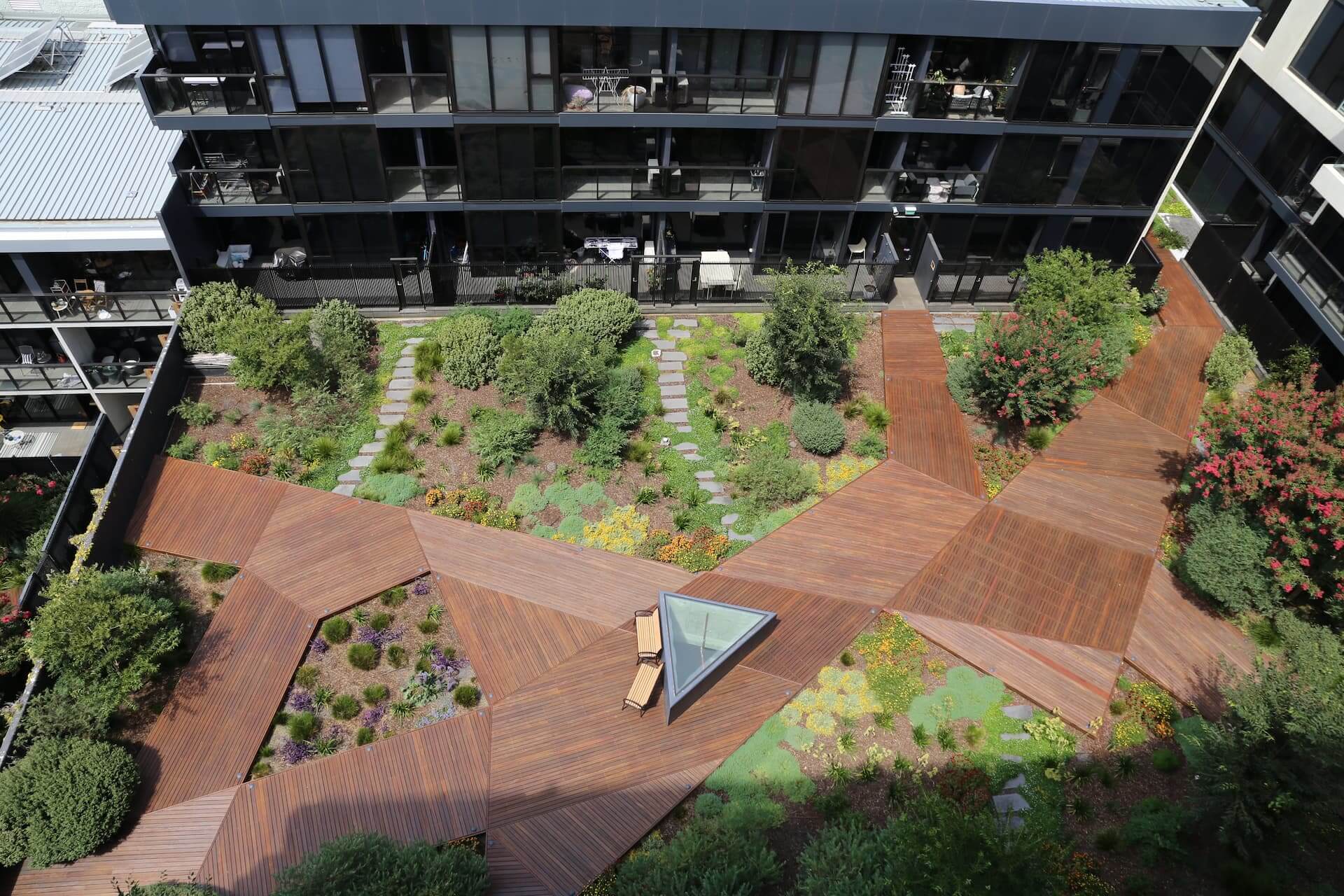
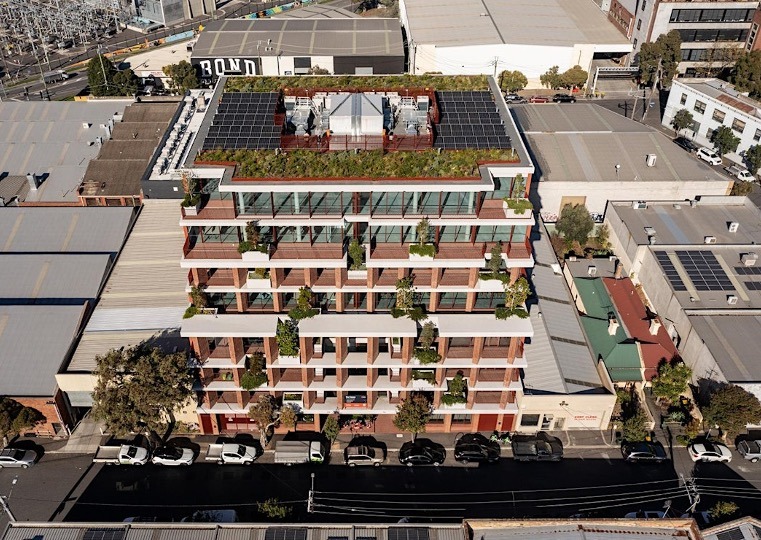
A green roof is a layered system of plants, growing media, and waterproofing. It's installed over a building's existing roof. Green roofs reduce urban heat, manage stormwater, and cut building cooling loads. Costs in Australia range from $155 to $835 per square metre. The price depends on the system type, but lifecycle savings offset the initial investment. Evergreen Infrastructure provides complete green roof services across Melbourne, ensuring long-lasting results.
A green roof is a vegetated roof system. There, you'll find living plants growing in engineered media over a waterproof membrane. Put simply, it's a roof covered with plants.
Green roofs reduce urban heat, manage stormwater, cut energy costs, and support biodiversity. All these benefits come from otherwise unused rooftop space.
The result is thriving ecosystems that benefit both people and the planet. These green projects are quietly transforming the way we think about urban buildings.
Read this article about how green roofs work, what they cost, and what they deliver.
What is green roof technology?
A green roof is a roof with layers of plants and growing media, built on top of a waterproof base. It may also be called a living roof or vegetated roof.
Green roof technology works on both flat and pitched roofs. Every layer serves a structural, water management, or biological function.
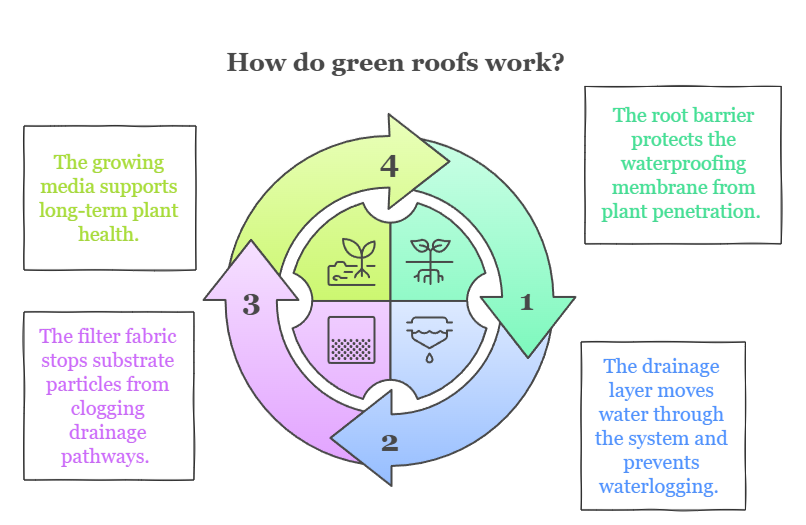
Here is how green roof technology works:
- The root barrier protects the waterproofing membrane from plant penetration.
- The drainage layer moves water through the system and prevents waterlogging.
- The filter fabric stops substrate particles from clogging drainage pathways.
- The growing media supports long-term plant health.
Green roofs have ancient origins. Turf roofs appeared on Viking dwellings in Scandinavia. The described hanging gardens of Babylon used rooftop planting thousands of years ago.
Modern green roofs are built to meet current performance standards.
What are the different types of green roofs?
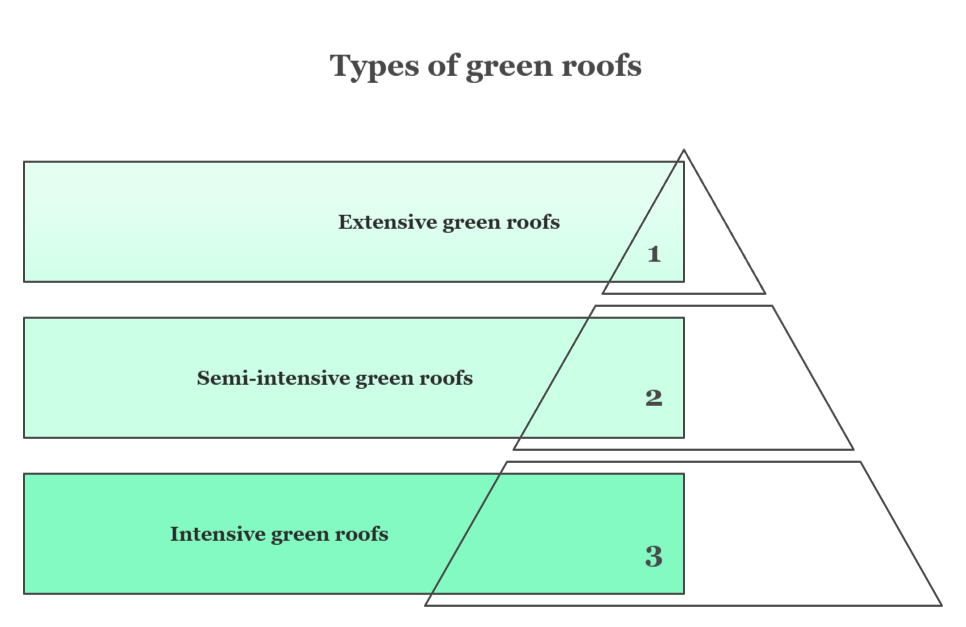
Green roofs fall into three types: extensive, intensive, and semi-intensive. The right type depends on your building's structure, budget, and design goals.
What is an extensive green roof?
An extensive green roof uses a shallow growing substrate. It's typically 50 to 150 millimetres deep.
Hardy, drought-tolerant species are ideal for extensive roofs. These could include:
- Sedums
- Mosses
- Grass
- Succulents
- Wildflowers
- Selected native groundcovers
Extensive systems are lightweight. They weigh between 50 and 170 kilograms per square metre when saturated. This makes them well-suited for retrofit projects on existing buildings.
It needs minimal ongoing maintenance once established. Plan for annual fertilisation, periodic weeding, and occasional plant replacement.
What is an intensive green roof?
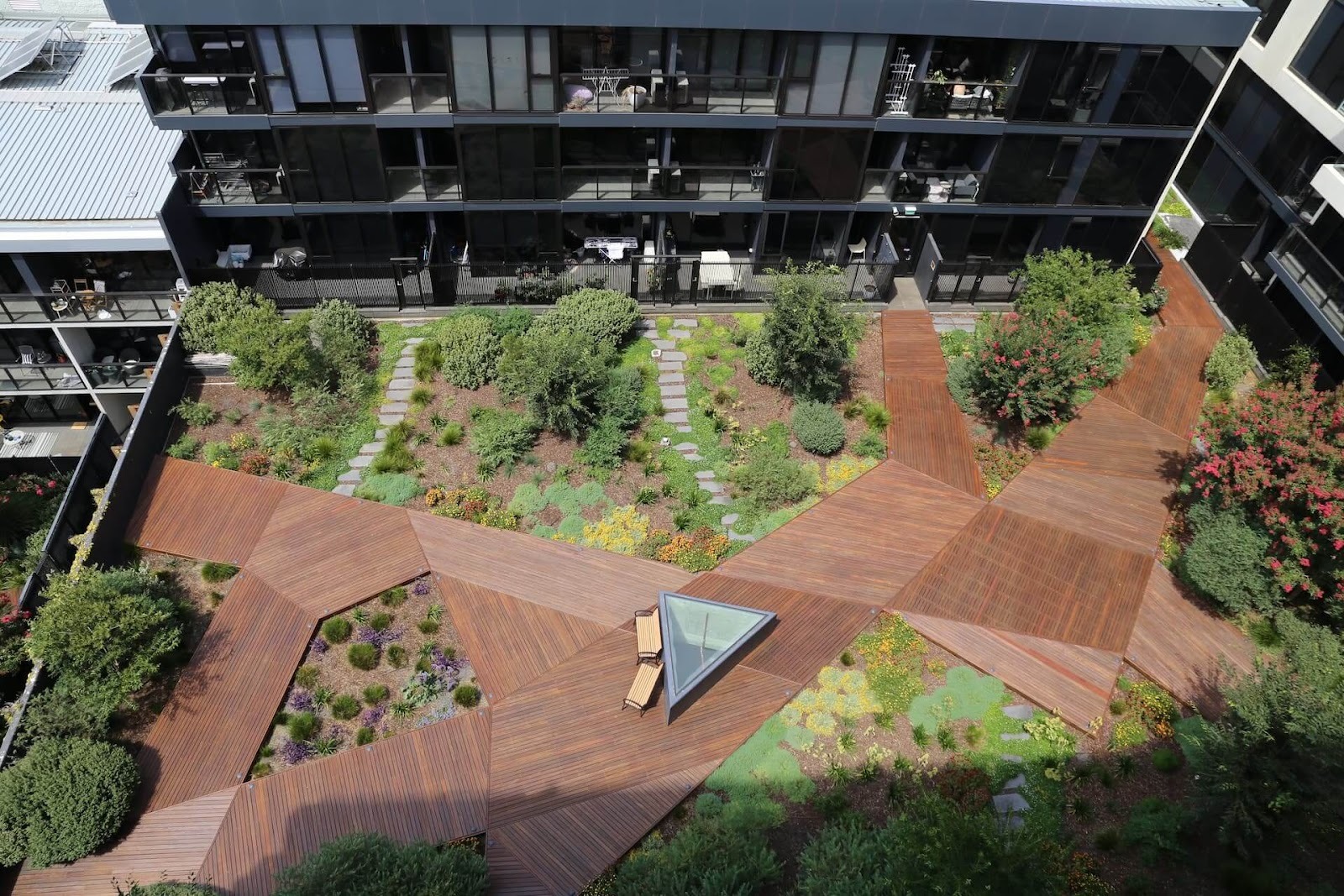
An intensive green roof uses growing substrate deeper than 250 millimetres. This supports a wider variety of plants, including:
- Herbaceous perennials
- Herbs
- Vegetables and fruit
- Shrubs
- Vines and climbers
- Small trees
Intensive systems function as rooftop gardens or parks. They offer stronger biodiversity, recreation, and ecosystem benefits.
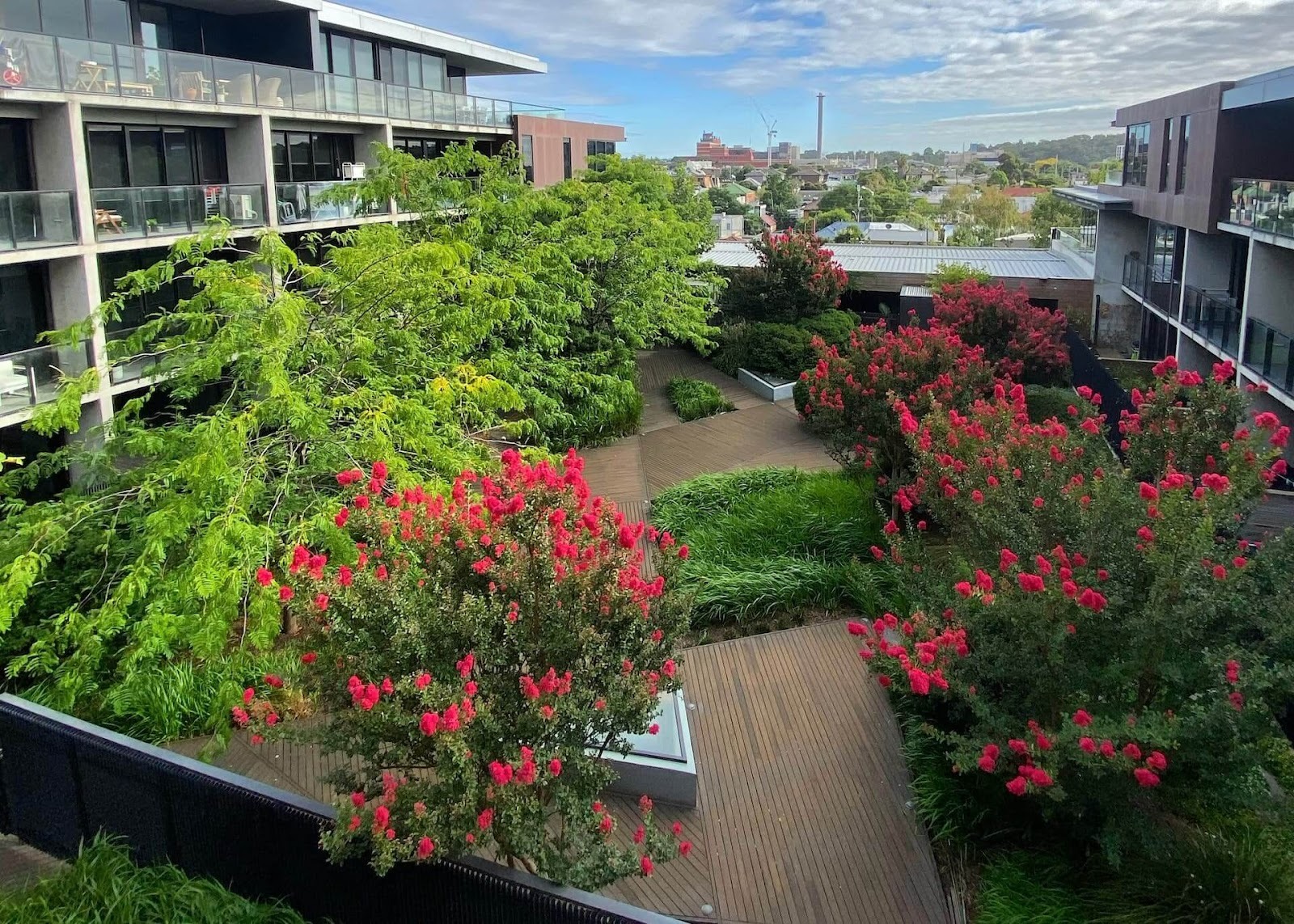
Saturated weight loads range from 200 to 1,200 kilograms. You will need a structural engineering assessment. The building must also be purpose-designed or reinforced.
Intensive green roofs need regular horticultural care. This includes:
- Irrigation
- Pruning
- Fertilisation
- Active plant management
Green roofs do come with higher upfront and maintenance costs. But these are offset by real ecological, social, and financial returns. This includes the added property value of usable rooftop space.
What is a semi-intensive green roof?
A semi-intensive green roof is also called a hybrid system. It uses substrate depths between 150 and 250 millimetres. It balances:
- The low weight and simple maintenance of extensive systems
- The greater plant diversity and amenity of intensive systems
Saturated weight typically ranges between 170 and 290 kilograms.
Semi-intensive green roofs offer diverse planting and some usable space.
They strike a balance between a simple extensive system and a fully intensive roof. They just don't come with the heavy structural or maintenance demands.
How do extensive, intensive, and semi-intensive green roofs compare?
What are the benefits of a green roof?
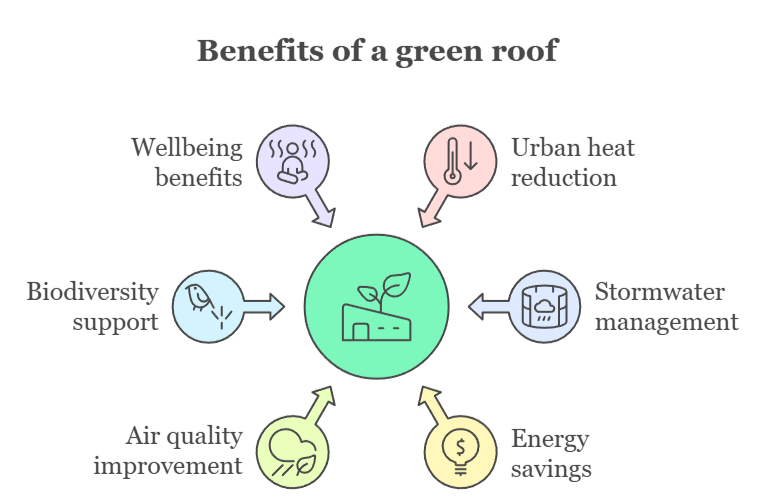
A green roof delivers various benefits at the same time. You can get all these benefits from a single installation:
- Urban heat reduction
- Stormwater management
- Energy savings
- Air quality improvement
- Biodiversity support
- Wellbeing benefits
How do green roofs reduce urban heat?
Green roofs reduce urban heat through two mechanisms.
First, plants and substrate physically shade the roof membrane from direct sunlight. Second, evapotranspiration releases water vapour that dissipates thermal energy.
Green roof surface temperatures can be up to about 31°C lower than normal roofs on a sunny day.
When many roofs in a neighbourhood use green roofs, they can lower nearby air temperatures by around 0.2–1°C.
How do green roofs manage stormwater?
Green roofs hold rainfall in the growing media. The water then slowly leaves through evapotranspiration and controlled drainage.
This reduces both the volume and peak flow rate of runoff entering an urban drainage system.
Extensive green roofs hold approximately 60% of annual rainfall volume. Intensive green roofs can retain 100% of small storms under the right conditions.
This retention helps meet Water Sensitive Urban Design (WSUD) requirements.
How do green roofs improve building energy performance?
Green roofs cut your building's cooling loads. They add thermal mass, insulation, and shading.
Studies show that green roofs reduce cooling loads by up to 70% compared to normal roofs. Indoor air temperatures also drop to a great extent.
During winter, the substrate's thermal mass can reduce heat loss through the roof.
On an annual basis, green roofs typically deliver cooling energy savings. They can also reduce heating demand in many climates. This reduces ongoing operational costs for building owners.
What are the air quality benefits of green roofs?
Green roofs improve urban air quality through three pathways.
- They reduce the energy demand that drives power generation emissions.
- Plants absorb atmospheric pollutants through their stomata.
- Lower ambient temperatures slow ground-level ozone formation.
Research on green roofs in Kansas City found that over 700,000 square feet of coverage would avoid:
- 384 pounds of nitrogen oxides
- 734 pounds of sulphur dioxide
- about 245 tonnes of CO₂
This is all in a single year.
How do green roofs support biodiversity?
Green roofs provide critical urban habitat for pollinators and beneficial invertebrates.
These include bees, butterflies, and hoverflies. They are essential pollinators and natural predators of horticultural pests.
Green roofs with diverse habitat structures support richer invertebrate communities. Effective habitat structures include:
- Open grassland areas
- Wildflowers
- Bare ground
- Native plantings
Green roofs also function as ecological stepping stones within fragmented urban landscapes. They help wildlife move through urban areas where ground-level habitat has been lost to development.
How do green roofs improve wellbeing?
Green roofs improve mental and physical wellbeing for building occupants and city residents.
Access to visible or usable green spaces helps:
- Reduce stress
- Restore mental focus
- Improve overall mood
People working in or near buildings with green roofs are often more productive.
Green roofs can have psychological benefits even when they're not directly accessible. Views of greenery and natural elements can still have an impact on your mood.
Research shows that contact with vegetation can lower heart rate and blood pressure, while reducing anxiety.
Green roofs also encourage physical activity and social connection. Both of these support long‑term wellbeing.
What are the layers of a green roof system?
A green roof is a multi-layered assembly. Each layer performs a specific function. The table below outlines core layers and their roles.
Engineered growing media is the most important component for long-term performance.
Normal topsoil has too much silt and clay. They shrink as organic matter breaks down. They are not made to meet green roof standards.
By contrast, engineered green roof substrates use:
- Lightweight mineral aggregates
- Recycled materials
- Controlled organic matter proportions
How much does a green roof cost in Australia?
Green roof costs in Australia vary by system type, size, and building access. Here is what you can expect to pay as of 2025.
- Extensive green roofs cost approximately $155 to $465 per square metre.
- Intensive green roofs cost approximately $420 to $835 per square metre.
Do green roofs save money in the long term?
Yes. Green roofs extend the lifespan of your waterproofing membrane by shielding it from:
- UV radiation
- Extreme temperature swings
- Physical wear
A conventional membrane lasts 15 to 25 years. A green roof can extend that to 30 to 50 years.
Research from Berlin documents green roofs protecting waterproofing membranes for over 90 years.
A single green roof can outlast two conventional roofs over the lifetime of a building. This makes green roofs a strong investment for long-term building owners, including:
- Universities
- Hospitals
- Government institutions
Evergreen Infrastructure uses BIM (Building Information Modelling), smart irrigation, and digital monitoring. This helps us manage asset performance and cut lifecycle costs for clients.
{{cta}}
Can you install a green roof on an existing building?
Yes. You can install a green roof on an existing building. Before installation, you need to assess:
- The roof structure
- Waterproofing condition
- Drainage
- Accessibility
A structural engineer must verify your building's load-bearing capacity first. Make sure they have green roof experience. Evergreen Infrastructure has an engaged green infrastructure consultant to assist with these discussions.
Extensive green roofs often work on existing structures without modification.
Intensive systems typically need structural reinforcement. This is because they include loads up to 1,200 kilograms per square metre.
Extensive green roofs are much lighter. They have saturated loads of just 50 to 170 kilograms per square metre.
Check your existing waterproofing membrane for condition and leaks. Fix any leaks before installation. Repairs after a green roof is in place are much harder.
What does green roof maintenance involve?
Green roof maintenance requires specialised horticultural knowledge and systematic planning. It is not the same as general landscape maintenance.
What does extensive green roof maintenance include?
For extensive green roofs, your maintenance plan covers:
- Annual fertilisation — organic slow-release formulations matched to your substrate composition and plant species
- Weed management — removal of unwanted species before they establish deep root systems
- Periodic irrigation — supplemental watering during extended droughts, especially during the establishment phase
- Visual inspection — completed at every maintenance visit
- Plant replacement — restoring target coverage and biodiversity outcomes where gaps or die-off occur
- Drainage system checks — confirming drainage pathways remain unobstructed and functional
What does intensive green roof maintenance include?
Intensive green roofs need all of this, plus regular irrigation, pruning, and fertilisation.
Your maintenance plan must be goal-focused and reflect the current roof condition. It must also flag future maintenance needs proactively.
As part of our asset management service, Evergreen Infrastructure provides:
- Operations and Maintenance (O&M) manuals
- Plant and asset health monitoring
- Structural and system assessment to support safety, integrity, and compliance
What are the green roof policies and planning requirements in Australia?
Australian green roof projects must comply with:
- The National Construction Code
- AS 1170 for structural loads
- AS 4654 for waterproofing membranes
- AS 3959 for fire safety in bushfire-prone areas
City policies
Sydney was the first Australian city to introduce a comprehensive green roof policy. This happened when it launched its Green Roofs and Walls Policy in 2014. Melbourne has driven adoption through its Canopy forums and Green Factor Tool.
Green Star certification
The Green Building Council of Australia recognises green roofs under the Green Star – Design and As Built rating system. This gives developers a direct incentive to include them in sustainability-certified projects.
Bushfire-prone areas
Many areas in Australia have a Bushfire Attack Level (BAL) rating. In those areas, green roofs must comply with AS 3959. This means using low-flammability materials and fire-resistant plant species.
Note that green roofs are not yet generally approved for use in designated bushfire zones in Australia. Before you propose a green roof in any BAL‑rated area, get advice from a bushfire consultant and check with your local council or building certifier that it is allowed for your site and building type.
Local council requirements
Approval requirements vary by council. Some ask for development approvals in heritage zones or fire-prone areas. Others actively encourage green roof installation through planning scheme provisions.
Stormwater and WSUD compliance
Green roofs are a recognised Water Sensitive Urban Design (WSUD) measure. They can be used to demonstrate stormwater retention performance in planning approvals.
Evergreen Infrastructure helps property developers, councils, and government agencies navigate these planning frameworks. The team can also help align projects with Green Star, other certifications, and ESG reporting goals.
Green roof benefits at a glance
FAQ
What is the difference between a green roof and a living roof?
There is no difference. A green roof and a living roof refer to the same system. It's a living layer of plants grown on top of a building.
Can you install a green roof on a sloped roof?
Yes. Green roofs work on sloped roofs. Systems work reliably up to about 35–45°. They need special detailing above ~20–25°. Flat roofs need careful drainage design to prevent water ponding. Steeply sloped roofs need slope stabilisation and specialist installation to prevent substrate movement.
Do green roofs need a lot of water?
No. Extensive green roofs generally need little supplemental irrigation once they are established. This is especially true with drought-tolerant species suited to your local climate. All green roofs do need regular watering during the establishment phase. This is about one growing season, roughly 6–18 months. The most intensive irrigation is needed in the first few months after installation.
How do green roofs contribute to Green Star ratings?
Green roofs earn credits within the Green Building Council of Australia's Green Star – Design and As Built rating system. You can earn credits for:
- Urban heat mitigation
- Stormwater management
- Bodiversity
- Building energy performance
What Australian native plants work best on green roofs?
Australian native plants that work best on green roofs are tough and low-maintenance. They should be able to handle shallow growing media, wind, heat, and drought. Here are some of the top choices:
- Kangaroo Paw
- Grevillea
- Lomandra
- Banksia
Work with Melbourne's green roof specialists
Evergreen Infrastructure is a Melbourne-based green infrastructure firm specialising in:
- Green roofs
- Green walls
- Urban farms
- Therapeutic landscapes
- Nature-based solutions for the built environment
Who we are
The team includes horticulturists with qualifications in urban horticulture and therapeutic landscape design. Evergreen Infrastructure is affiliated with:
- The Australian Institute of Horticulture (AIH)
- Green Roofs for Healthy Cities
- Landscaping Victoria
- Therapeutic Horticulture Australia (THA)
Research and global connections
Evergreen Infrastructure partners with the University of Melbourne, RMIT, and Deakin University. The firm also works with National Parks Singapore (NParks) and the Singapore Garden Festival. That way, we can bring global best practices to local projects.
Our services
Evergreen Infrastructure offers end-to-end service. This includes everything from feasibility and consulting. This includes design, project management, and long-term asset management. The team uses BIM, smart irrigation, and digital monitoring. This helps manage performance and cut lifecycle costs.
Get in touch
Do you want to install a green roof? Contact Evergreen Infrastructure to discuss your project.
{{cta}}
We create green oases in urban settings
We'd love to discuss how we can partner to bring innovative, sustainable solutions to your urban environment.