.webp)

Evergreen Infrastructure Director Michael Casey visited Jakarta in June. With Anton Siura and the SIURA Studio team, he toured Tebet Eco Park and Taman Bendera Pusaka. Both projects turn ageing canals into naturalised systems where water, planting, habitat and public space work together. The lesson for us: one piece of land can manage flooding while also delivering biodiversity, cooling and amenity. Meetings with Karen Tambayong and Indonesia's horticultural industry, plus a visit to Bogor Botanical Gardens, reinforced that living infrastructure still depends on deep plant knowledge. Jakarta, Singapore and Melbourne share the same pressures: heat, flooding, biodiversity loss, growth. We're bringing back a clear principle - Treat green infrastructure as infrastructure from the start, not landscaping added at the end.
A visit to Jakarta in June provided an opportunity for Evergreen Infrastructure Director Michael Casey to reconnect with friends, colleagues and industry leaders across Indonesia’s landscape, horticulture and urban green infrastructure sectors.
The visit focused on professional exchange, strengthening regional relationships and seeing firsthand some of the innovative blue-green infrastructure projects now reshaping public space in Jakarta.
Visiting Tebet Eco Park and Taman Bendera Pusaka
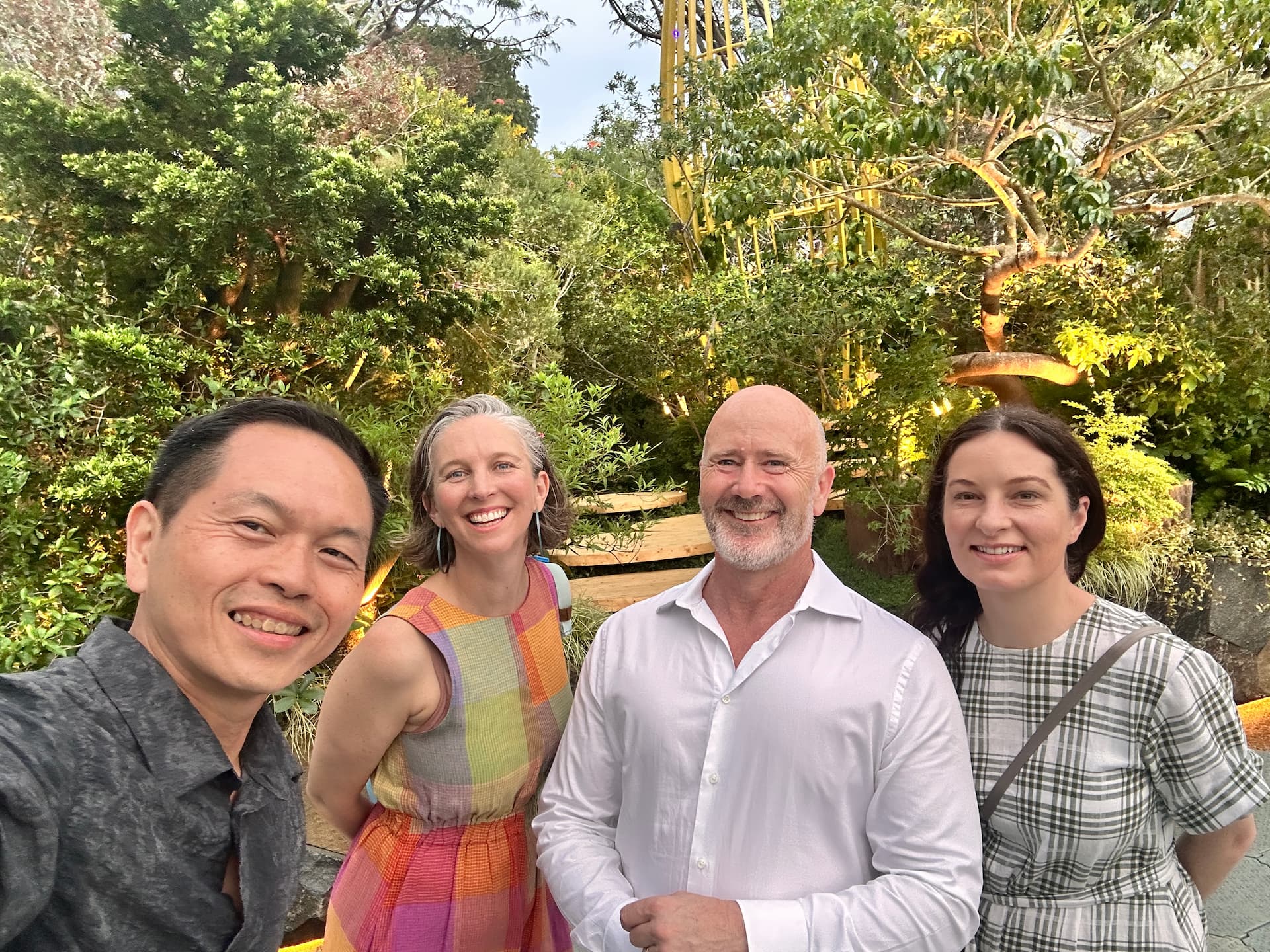
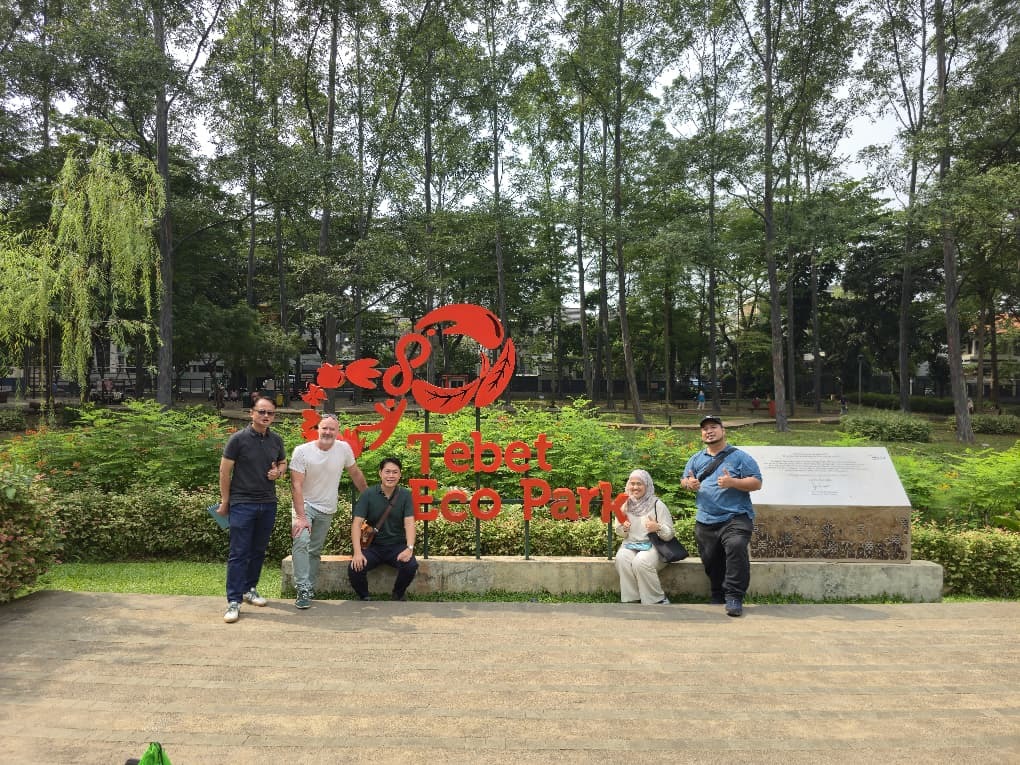
A major part of the visit was time spent with Anton Siura and the SIURA Studio team, including visits to Tebet Eco Park and Taman Bendera Pusaka.
I had first visited Tebet Eco Park during the COVID period, when restrictions meant the community was unable to fully use and experience the space. Returning several years later was particularly valuable.
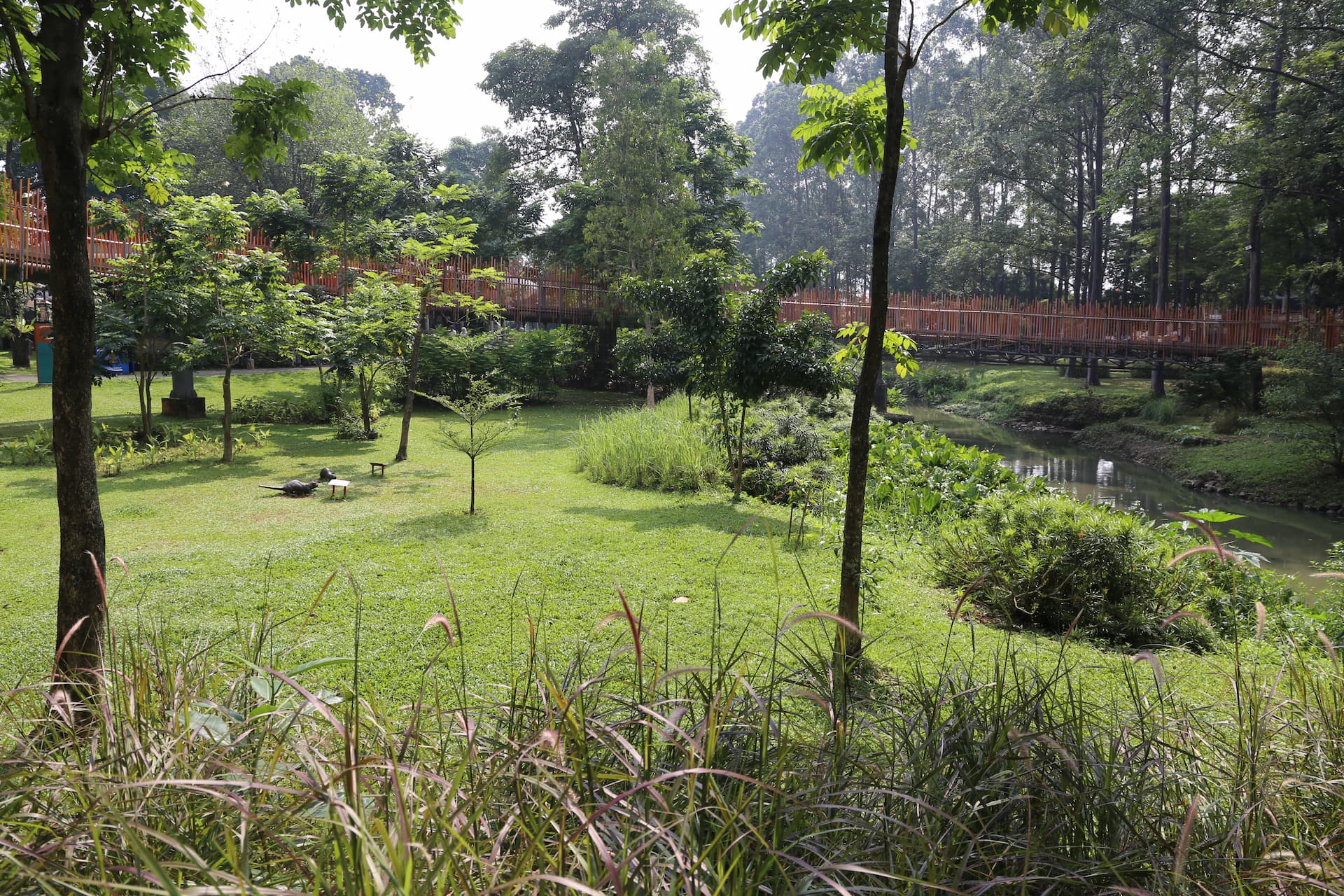
The park was now active, heavily used and functioning as a genuine piece of public infrastructure. People were walking, gathering and exercising while the water, planting and ecological systems continued to perform around them.
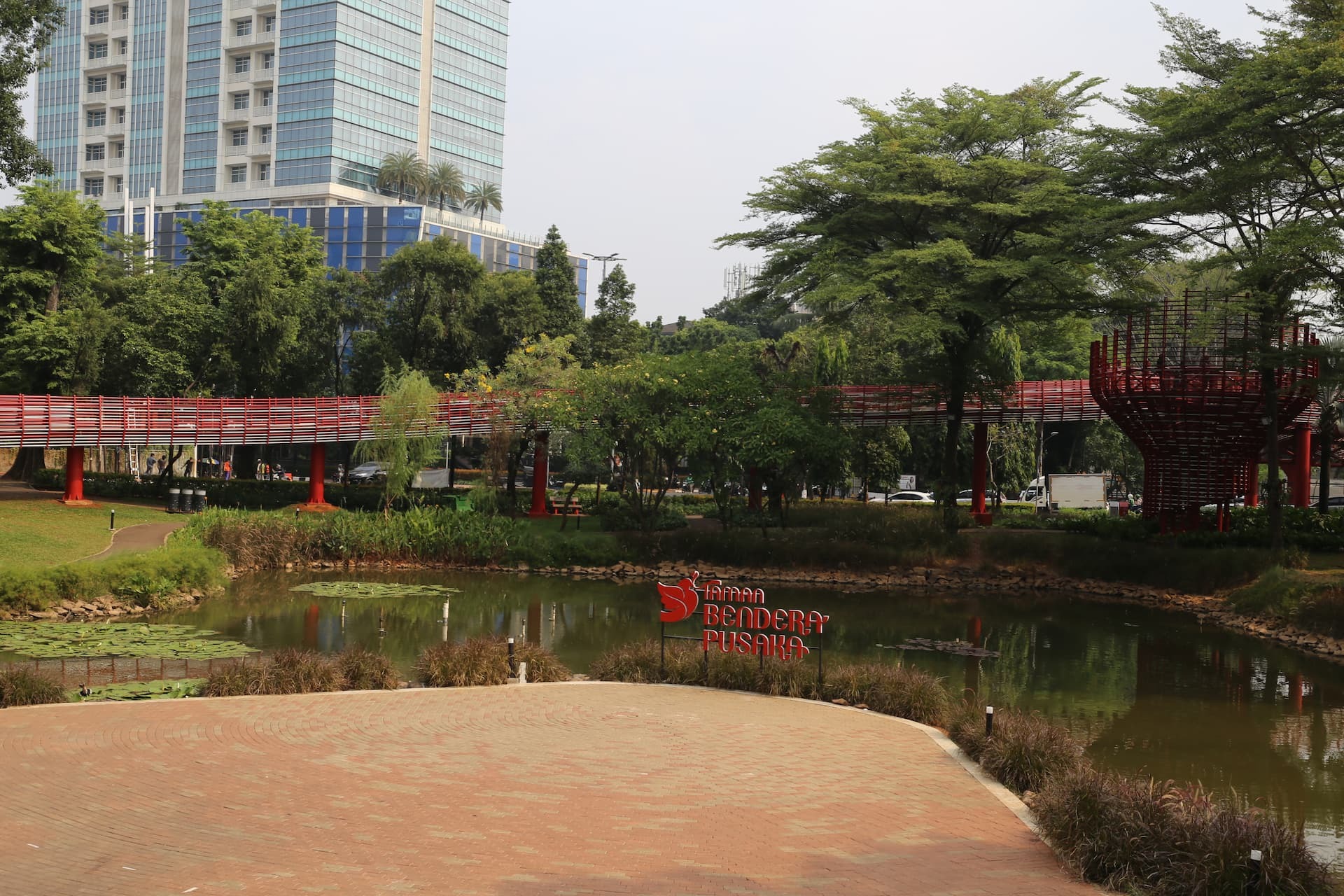
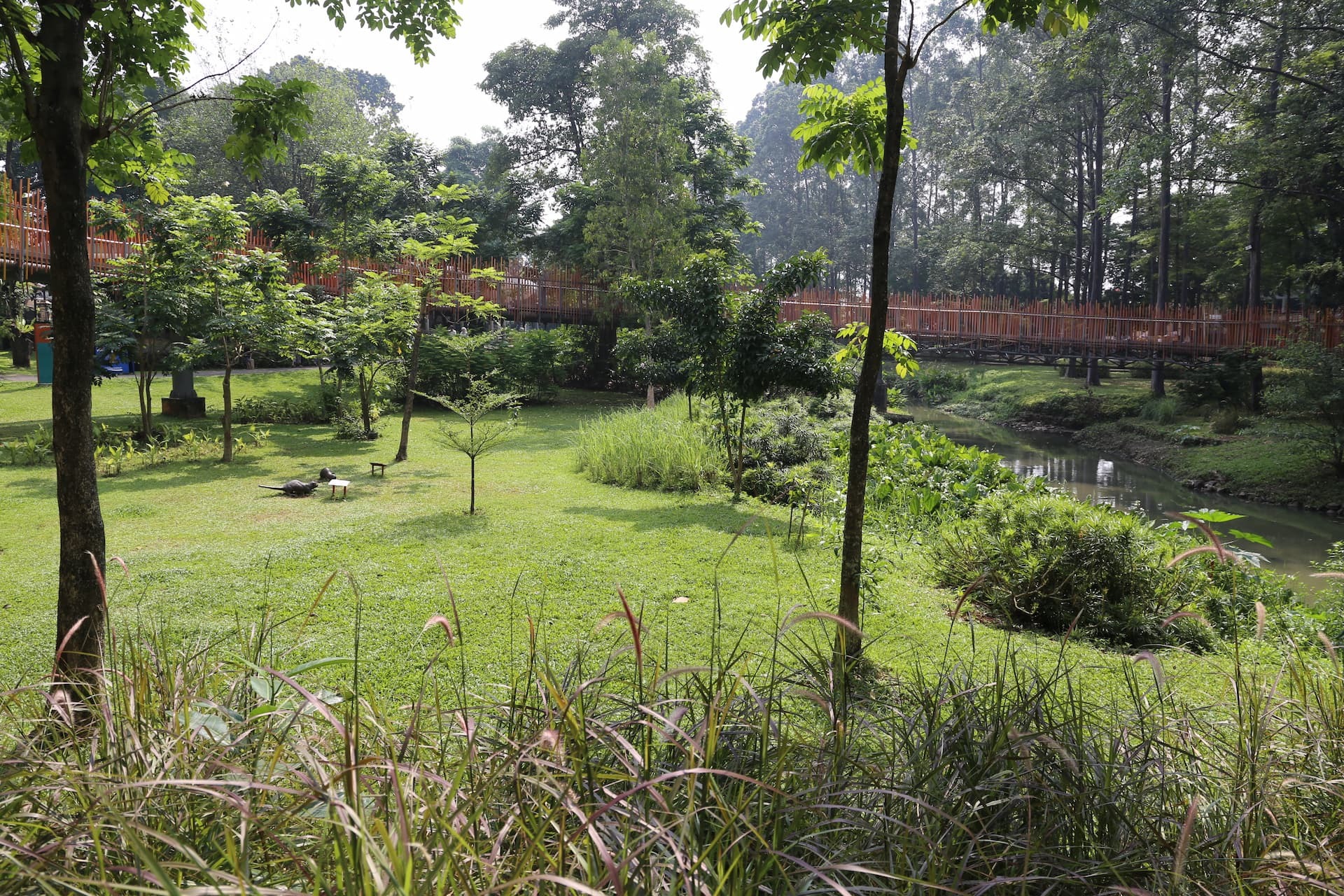
One of the most important transformations has been the treatment of the existing waterway. Rather than continuing to treat the canal purely as hard drainage infrastructure, the project has created a more naturalised system where water movement, vegetation, habitat and public space work together.
The result is blue-green infrastructure that helps manage water while also improving biodiversity and the quality of public space.
From old drainage infrastructure to living systems
This thinking is taken further at Taman Bendera Pusaka.
The project demonstrates the potential to transform older drainage and canal systems into living urban landscapes.
Instead of seeing waterways simply as engineering corridors designed to move water away as quickly as possible, these spaces can become ecological corridors that slow water, support vegetation, create habitat and contribute to the experience of the city.
This is particularly important in dense urban environments where space is limited.
If a drainage corridor can also provide biodiversity, cooling, public amenity and stronger connections between green spaces, the same piece of land begins delivering multiple benefits.
This is one of the strongest lessons from Jakarta — infrastructure can perform more than one function when water, plants and people are considered together.
SIURA Studio and an emerging profession
Spending time with Anton Siura and the SIURA Studio team provided a valuable opportunity to better understand the thinking behind these projects and the wider direction of landscape and green infrastructure in Indonesia.
Their work demonstrates how landscape architecture, ecology, water-sensitive design and public space can be considered together from the beginning.
Importantly, biodiversity is not simply added after the major design decisions have been made. Water, vegetation, habitat and people are fundamental parts of the infrastructure itself.
During the visit I also had the opportunity to connect with the President of the ILAM Centre of Excellence, continuing conversations around education, professional development and the emerging skills required to deliver urban green infrastructure across the region.
As our cities ask landscapes to perform more complex functions, the professions responsible for designing, building and maintaining those landscapes also need to evolve.
Time with Karen Tambayong and industry colleagues
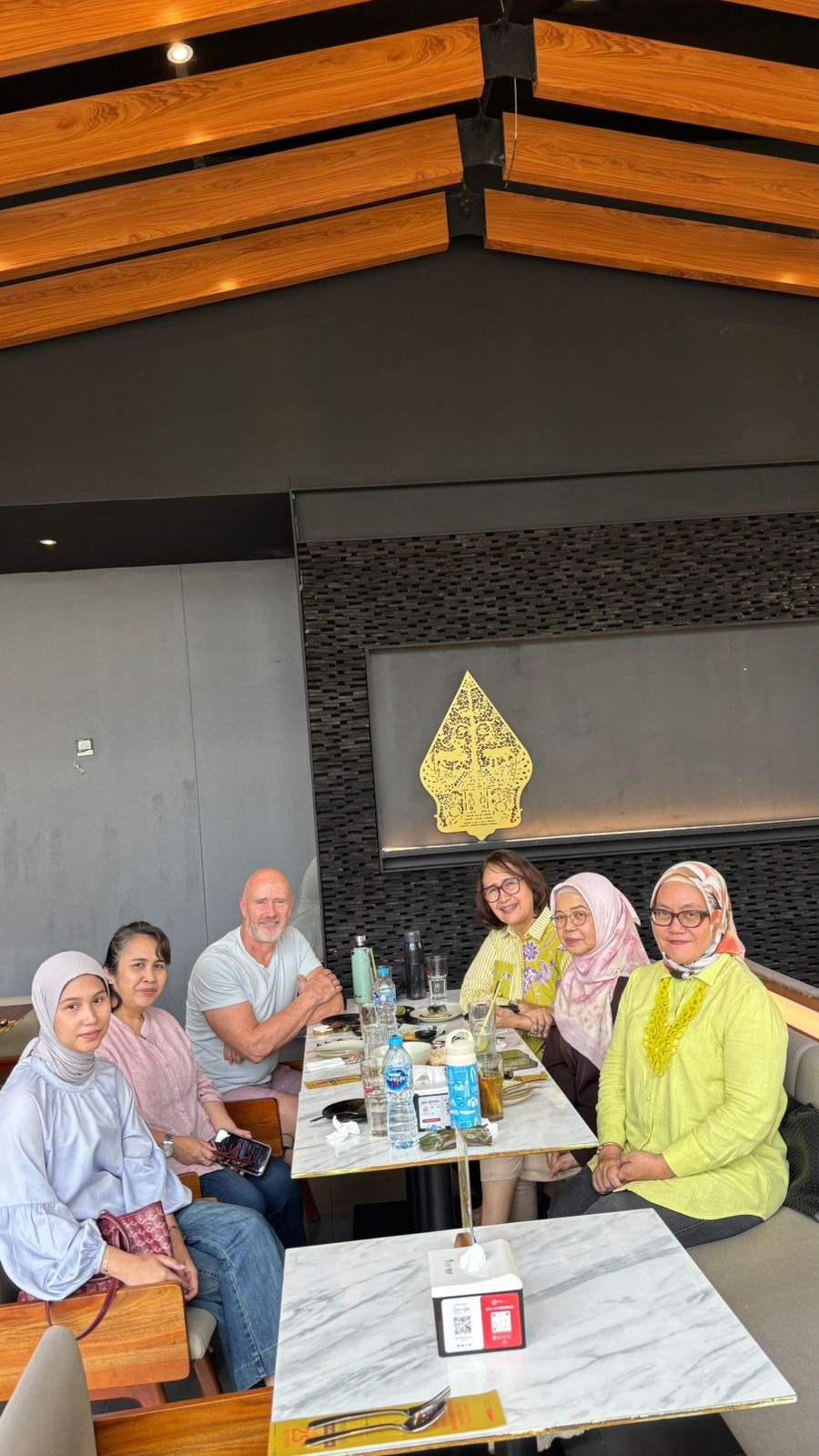
Another important part of the trip was spending time with Karen Tambayong and many of her colleagues from across Indonesia’s horticultural and landscape industries.
Through lunches, meetings and informal conversations, I was able to connect with professionals associated with PPHI, Wira Landscape, PSI Landscape Company and other parts of the industry.
These conversations are often just as valuable as the project visits themselves.
They provide an opportunity to compare the challenges our industries are facing, discuss how governments and clients are responding to urban greening and understand where new areas of professional expertise are emerging.
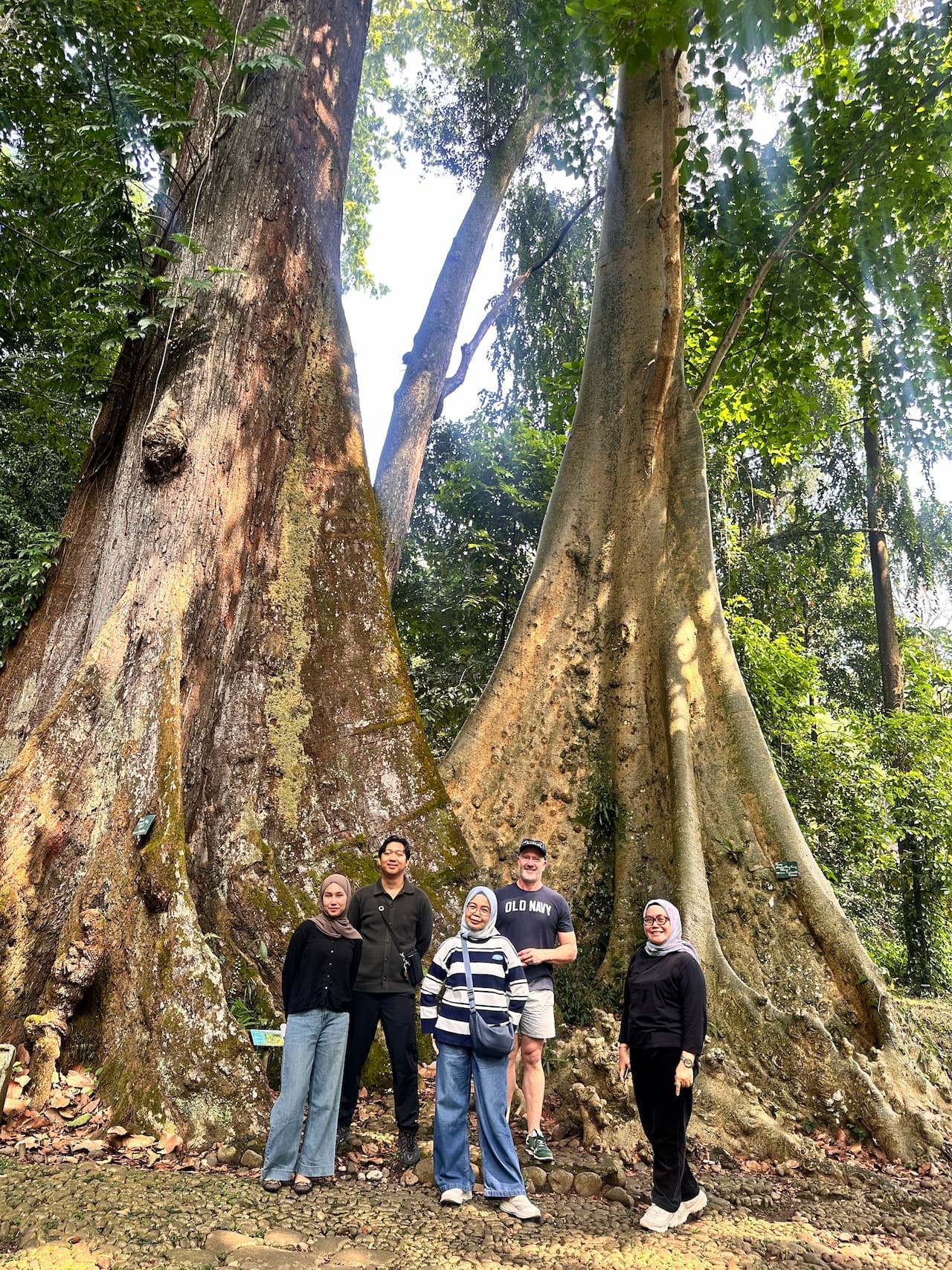
Karen and her colleagues also arranged a visit to the historic Bogor Botanical Gardens, where I was fortunate to attend as a guest of the garden’s management.
For someone whose career has always been grounded in horticulture and plants, visiting an institution such as Bogor with local colleagues was particularly valuable.
It reinforced an important point: regardless of how sophisticated our engineering, policy or environmental targets become, successful living infrastructure still depends on a deep understanding of plants and how they perform in their environment.
Why professional exchange matters
One of the reasons Evergreen Infrastructure continues to build relationships across South-East Asia is the value of seeing how other cities are responding to familiar urban challenges.
Jakarta, Singapore and Melbourne are very different cities, but many of the issues are shared — urban heat, flooding, biodiversity loss, population growth and the need for better-quality green space.
International exchange allows us to move beyond theory.
Seeing a completed project, walking through it with the people who designed it and observing how it performs several years after completion provides an understanding that cannot be gained from a photograph or presentation alone.
It allows us to ask what worked, what changed, how the landscape is being maintained and what lessons might be relevant to our own cities.
Bringing the lessons back to Australia
The purpose of visiting projects internationally is not to copy them.
The value is in understanding the principles behind successful projects and considering how they may inform our own work.
Jakarta provides a strong example of what can happen when water infrastructure is reconsidered as part of a wider living system.
A canal can become an ecological corridor. A flood management area can become public open space. Planting can provide both human amenity and habitat.
For Evergreen Infrastructure, these lessons reinforce the importance of approaching green infrastructure as a multidisciplinary field and considering it as infrastructure from the beginning, rather than landscaping added at the end.
Continuing the conversation
A sincere thank you to Anton Siura and the SIURA Studio team for generously sharing their projects and knowledge, and to Karen Tambayong and the many Indonesian colleagues who made time for meetings, lunches, site visits and conversations throughout the trip.
Thank you also to the management team at Bogor Botanical Gardens for the opportunity to visit and learn more about this remarkable horticultural institution.
The Jakarta visit reinforced the value of seeing projects firsthand and learning directly from the people delivering them.
From SIURA Studio’s transformation of ageing waterways into blue-green infrastructure to conversations with Indonesia’s landscape and horticultural professionals, the trip provided valuable lessons for how we continue developing urban green infrastructure in Australia.
{{cta}}
We create green oases in urban settings
We'd love to discuss how we can partner to bring innovative, sustainable solutions to your urban environment.