.webp)

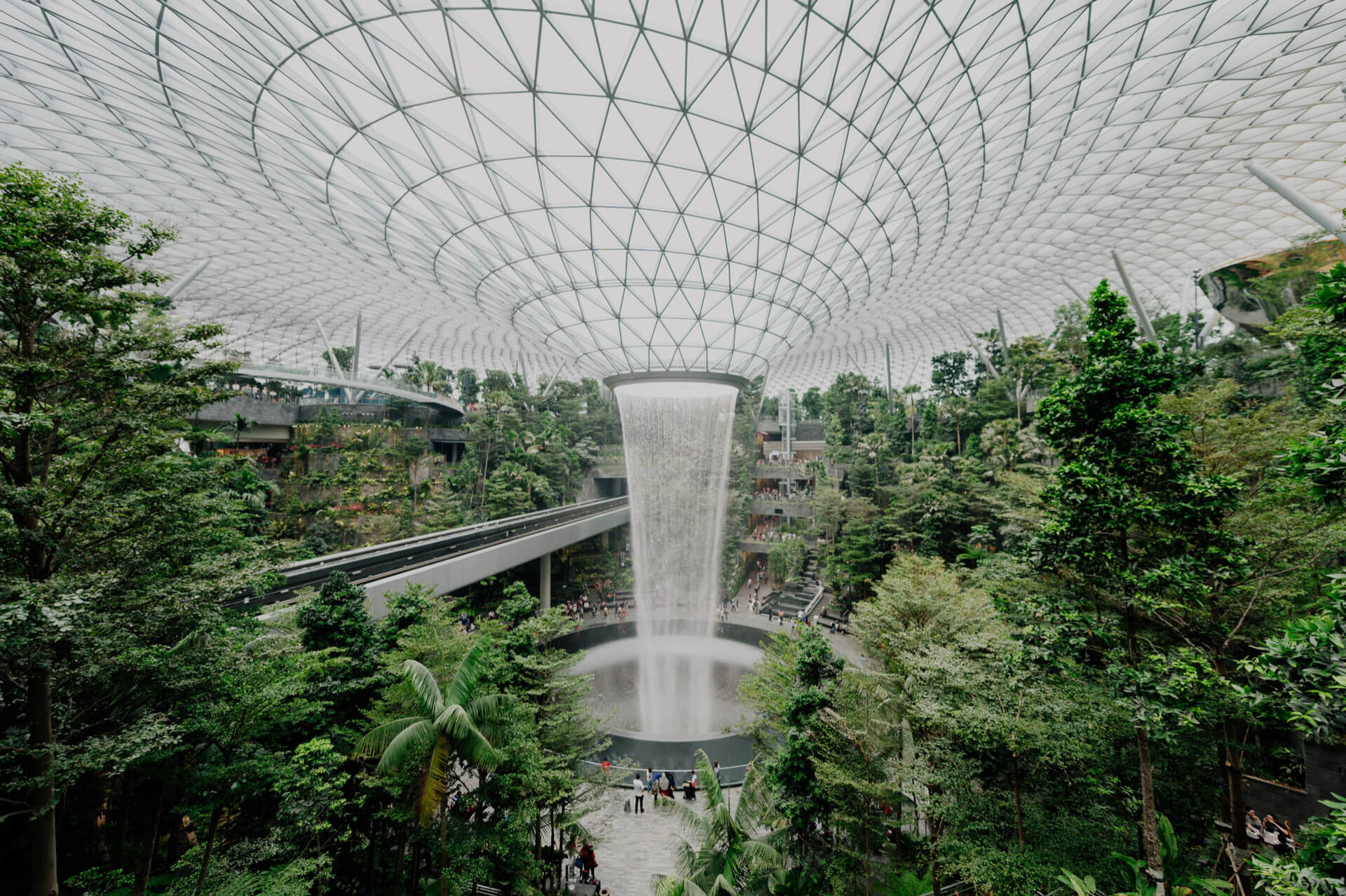
Australia's sustainable development plan centres on climate goals, renewable energy, and preserving the environment. The government is using different programs to fund clean energy and reduce carbon emissions. Another important focus is energy efficiency and ecosystem protection. Government reports show actual progress, especially in renewables and community action. However, fossil-fuel dependence and biodiversity decline remain serious problems.
Sustainable development is about meeting today's needs without closing off options for future generations. It connects economic growth, social well-being, and the environment.
For infrastructure, it means planning, building, and operating low-carbon assets. They must also be reliable and beneficial to communities in the long term.
This includes energy networks, transportation, water systems, buildings, and urban green infrastructure. Green roofs are an excellent example.
In Australia, this shows up in renewable energy zones, new transmission lines, better public transport, and more nature in cities.
The question is less "is development sustainable?" and more "how do we make sustainability in development the norm?"
For Evergreen Infrastructure, this means building green spaces that perform well and keep their environmental impact low over time.
What is sustainable development?
Sustainable development refers to the practice of improving living standards and promoting economic growth. At the same time, it focuses on minimising environmental damage.
It links three interconnected areas:
- Economy
- Society
- Environment
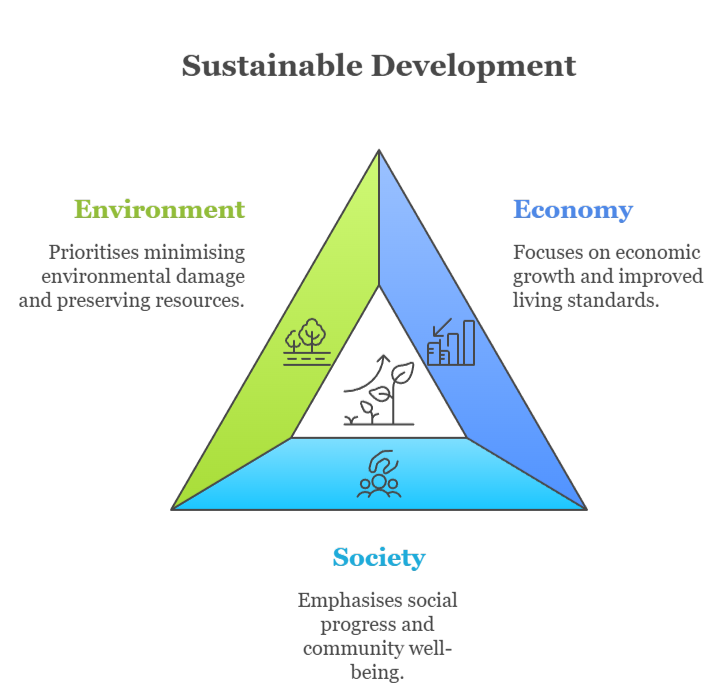
Economical sustainable development refers to cutting emissions and pollution. It also covers protecting ecosystems, water, and biodiversity, and using land and materials efficiently.
In social terms, sustainable development can mean supporting health, safety, and community well-being. It also encompasses respecting cultural values and ensuring fair access to services and opportunities.
Environmental sustainable development refers to creating stable, long-term jobs and industries. It also includes using capital and resources efficiently and managing risks so assets stay valuable and resilient.
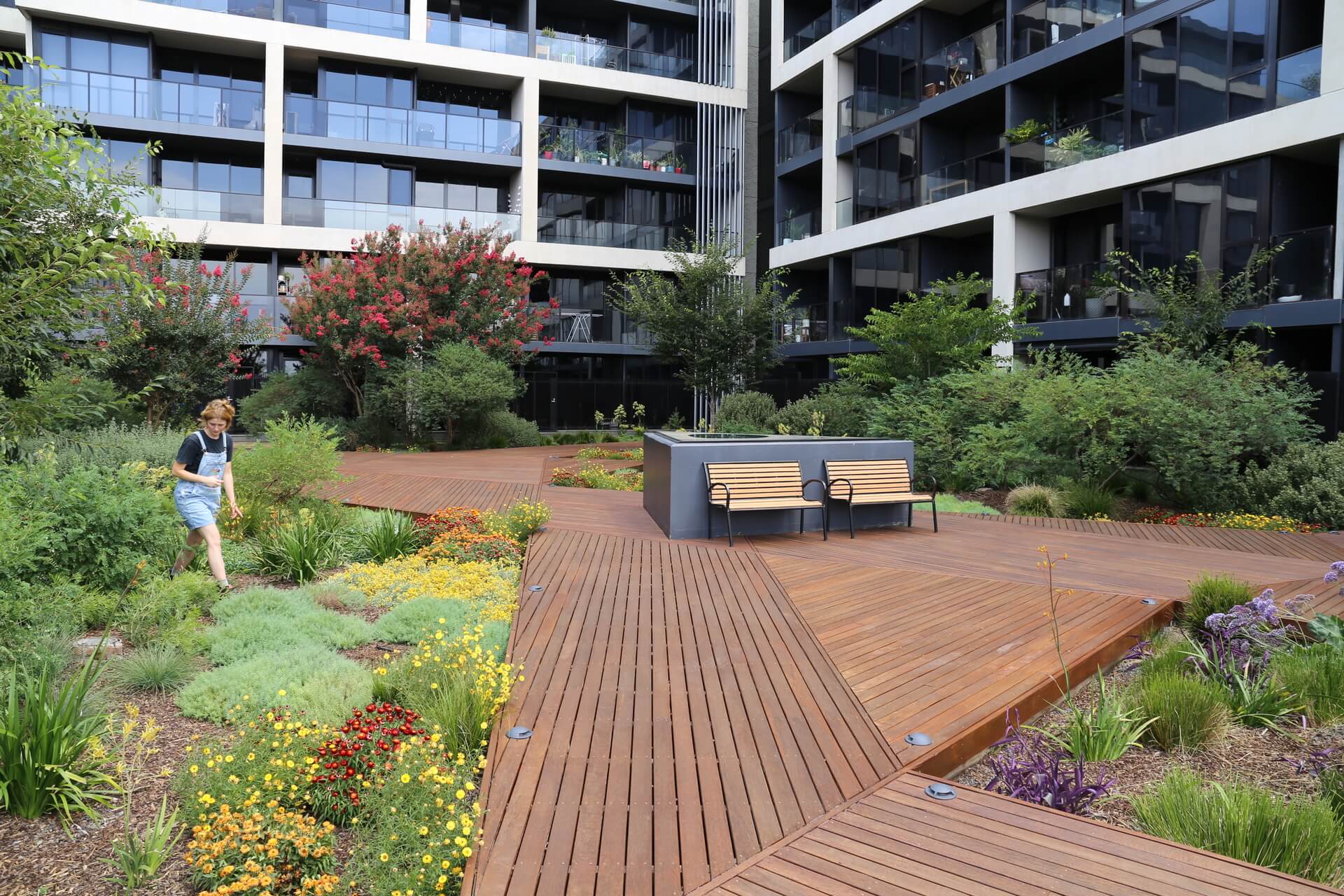
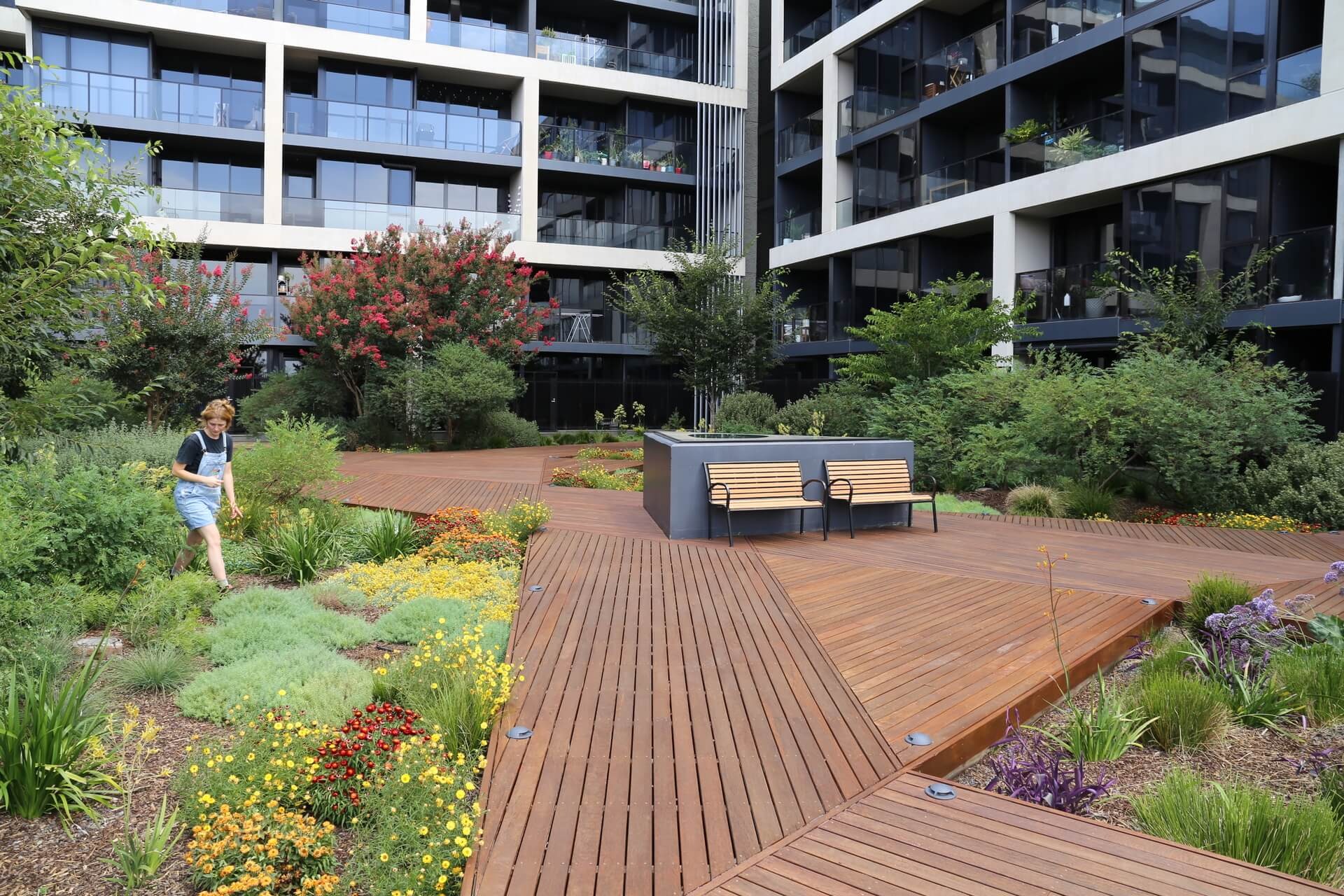
Urban green infrastructure, such as green roofs, is a practical example. They help manage heat and stormwater, while supporting a sustainable environment.
Green roofs support all 3 pillars of sustainable development. These spaces provide a haven for biodiversity, numerous environmental and economic benefits, and a social space for all to enjoy.
Sustainable development in Australia
Several national priorities define Australia's approach to sustainability:
- Climate and net-zero commitments
- Rapid renewable-energy uptake
- Nature and biodiversity protection
- Circular economy and waste reform
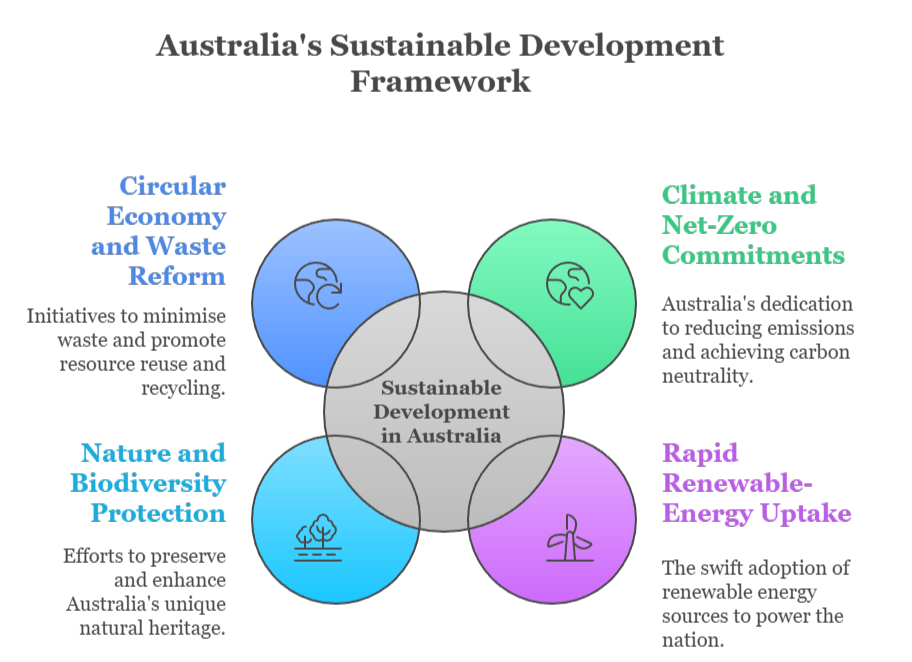
Legislation aims to reduce emissions by 43% below 2005 levels by 2030 and reach net zero emissions by 2050. This will require staged funding to support the transition.
Another priority is the strong deployment of large-scale wind and solar energy. This step includes world-leading household solar uptake.
Australia's Strategy for Nature 2024-2030 is the national biodiversity strategy and action plan. It aims to halt and reverse biodiversity loss by 2030 and reconnect people with nature.
There's also a growing focus on reducing waste, boosting recycling, and designing for reuse.
Federal and state governments now embed sustainable development in:
- Budget and investment frameworks
- Environmental and social reporting obligations
- Infrastructure strategies and land-use planning
- Industry-specific decarbonisation and circular-economy roadmaps
Progress is significant but uneven. Renewable electricity reached 34% of generation in 2023, up from 17% in 2018, and community action has moved quickly.
However, Australia requires an additional 8 GW of renewable capacity beyond current plans to meet the 82% renewable electricity target by 2030. Coal phase-out is now projected to occur more slowly than previously estimated.
Fossil-fuel exposure, biodiversity decline, and the implementation of a circular economy remain stubborn challenges.
Key federal programs and policy tools
Australia uses several major programs to support sustainable development across the economy. These programs include:
- Powering Australia Plan
- Hydrogen Headstart and regional industry programs
- Powering the Regions Fund and targeted grants
- Household and social-housing energy upgrades
- Biodiversity and nature strategy
- Circular economy initiatives and waste reforms
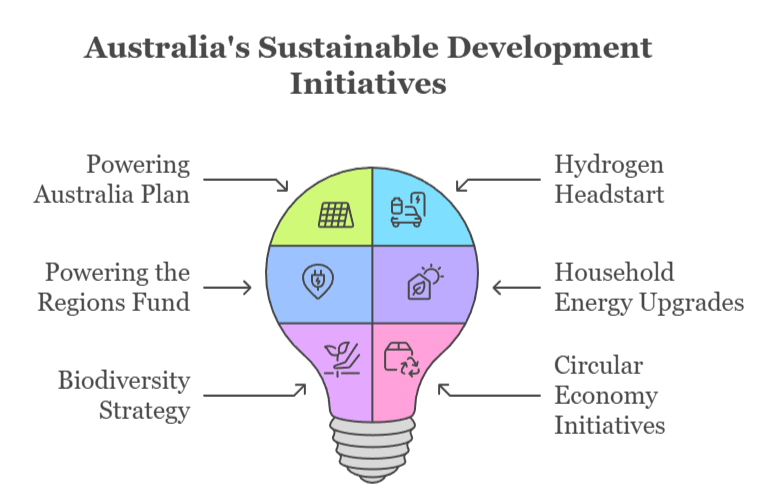
Powering Australia Plan funds large-scale wind, solar, and storage. It includes Renewable Energy Zones, new transmission, and grid modernisation.
Regional industry programs like Hydrogen Headstart help fund renewable hydrogen projects. They also create new regional clean-energy jobs.
The Powering the Regions Fund (PRF) supports emissions-intensive regions and industries. It helps them invest in low-carbon technologies and transition plans.
Household and social-housing energy upgrades provide finance for insulation, efficient appliances, and electrification.
Biodiversity and nature strategies set a national framework for protected areas. They also support restoration efforts and nature-positive project design.
Circular economy initiatives and waste reforms promote product stewardship. This also includes recycling infrastructure and circular business models.
Challenges and criticisms
Despite strong momentum, there are serious challenges to sustainable development in Australia.
These challenges include:
- Implementation speed remains a critical problem, with transmission infrastructure severely lagging behind renewable generation.
- Policy coherence is uneven, as mixed signals across the federal, state, and local levels make planning difficult.
- Fossil-fuel dependence continues, with significant coal and gas production, exports, and related infrastructure.
- Just transition remains challenging, as Australia lacks a dedicated Just Transition Authority.
- Biodiversity decline persists, driven by habitat loss, species stress, and climate impacts such as fires and floods.
- Circular economy gaps are evident, with limited recycling infrastructure and high construction and demolition waste.
What this means for Australians
Sustainability and development choices show up in everyday life, not just in policy documents. They affect where jobs are created, how much energy costs, and how liveable places feel.
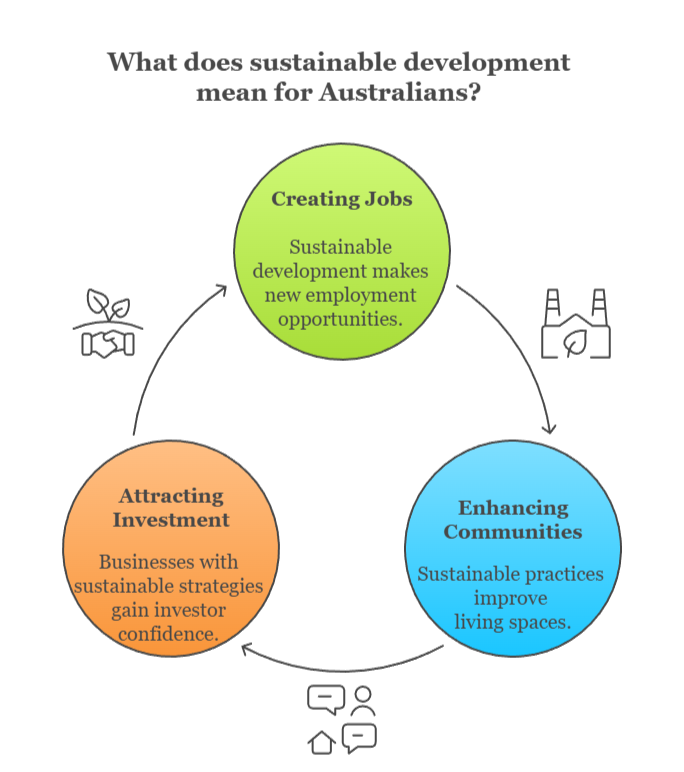
Jobs and regional opportunity
Sustainable development creates new kinds of work, especially outside major cities. This includes:
- Construction and operations roles in renewable energy, transmission, and storage projects.
- Jobs in hydrogen production, battery manufacturing, and other clean-tech services.
- New work in nature repair, environmental monitoring, and land and water management.
- Roles in planning, engineering, digital systems, and community engagement for complex projects.
- Local business opportunities in accommodation, catering, equipment hire, and professional services.
Projects help local areas when they include plans for job training, skill development, and buying goods and services locally.
Households and communities
Sustainable development shows up most clearly in homes, streets, and neighbourhoods.
For households and communities, this means:
- Lower energy bills and better comfort
- Healthier living environments
- More resilient neighbourhoods
- Fair access to upgrades
- Stronger local connections
Homes stay cooler in heatwaves and warmer in winter. Good insulation, efficient appliances, and better building design all contribute to this.
People benefit from cleaner air, more natural light, and access to parks, trees, and green spaces that support physical and mental well-being.
Communities cope better with heatwaves, storms, and network outages. This is all thanks to local preparedness, shared assets, and strong social support.
Renters, apartment dwellers, and people in social and affordable housing receive support so they are not left behind in the transition.
Community gardens, shared spaces, and local projects bring people together. They create connections around liveability, climate action, and nature.
Practical measures include improving home energy performance, adding more urban nature, choosing lower-impact transport options, and supporting local sustainability initiatives.
Household solar, batteries, and community energy projects are one important part of this picture.
Businesses and investors
For businesses, a sustainable development strategy is now central to access to capital. Businesses can integrate sustainable development by:
- Measuring emissions across operations and supply chains, then setting and delivering reduction targets.
- Using circular design for products, buildings, and infrastructure to reduce waste and embodied emissions.
- Integrating climate, nature, and social risks into core risk management and investment decisions.
- Strengthening governance, with clear accountability for sustainability performance at the board and executive levels.
- Providing transparent ESG reporting that meets investor, regulator, and community expectations.
Lenders and investors increasingly favour projects that show clear sustainability of development outcomes. It's not just about strong short-term financial returns anymore.
Sustainable development in infrastructure
Sustainability in development is now visible in real projects across Australia.
Businesses, councils, and communities are turning policy goals into practical action on the ground.
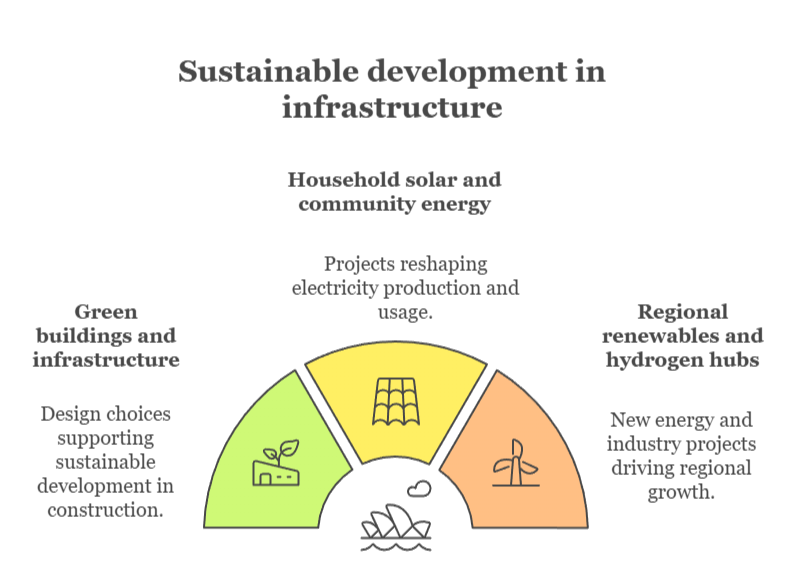
Green buildings and infrastructure standards
Green buildings and rated infrastructure projects show how design choices can support sustainable development, not just compliance.
- Green Star buildings cut emissions, improve comfort, and support healthier workplaces and public buildings.
- IS ratings and similar tools benchmark energy, water, and materials for infrastructure projects.
- Building performance standards encourage better insulation and efficient systems in new and existing buildings.
- Urban green infrastructure, such as green roofs, reduces heat, manages stormwater, and improves amenity.
- Portfolio-wide rating strategies help owners prioritise upgrades and track sustainability performance.
Greening roof spaces in environmentally sensitive locations provides all the benefits to the building while protecting and enhancing natural vegetation.
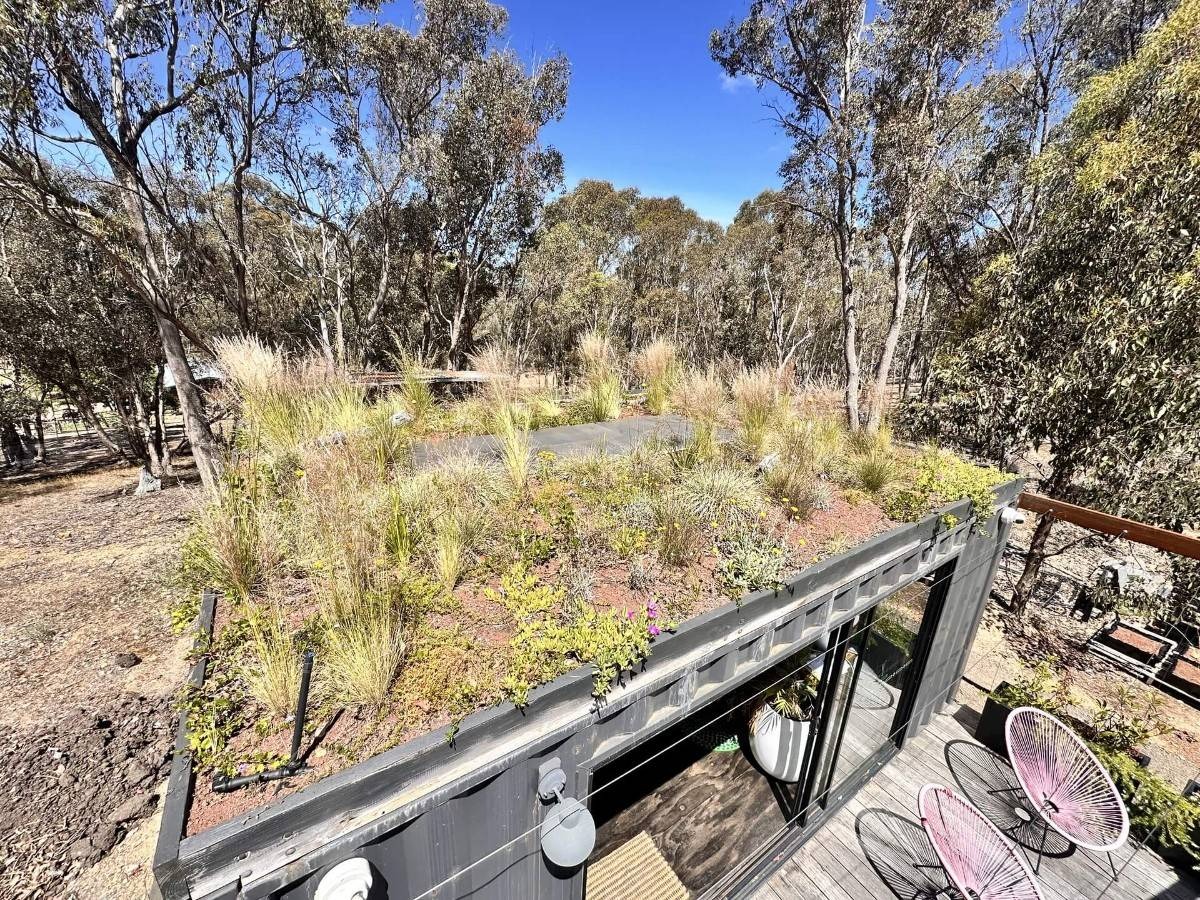
Together, these standards make the sustainability of development more measurable, transparent, and consistent across the market.
Household solar and community energy
Household solar and community energy projects are reshaping how electricity is produced, stored, and used across Australia.
Australia now has over 3.6 million rooftop solar systems, supplying over 11% of the nation's electricity. This rapid uptake is changing how the energy system works.
Key trends include:
- Rooftop solar on homes
- Home batteries and smart inverters
- Community energy projects and microgrids
- Solar on schools, halls, and clubs
- Digital tools and platforms
Rooftop solar provides cheap, clean power and reduces household energy bills. Millions of homes can now generate their own electricity.
Home batteries and smart inverters allow households to store solar energy and manage demand more effectively.
Community energy projects and microgrids enable towns, suburbs, and local groups to co-invest in generation and storage. This improves reliability and local control.
Solar on schools, halls, and clubs turns community buildings into local clean-energy assets. They cut costs and support education and engagement.
Digital tools and platforms help households and communities track energy use. They can also participate in demand response and access new tariffs and market opportunities.
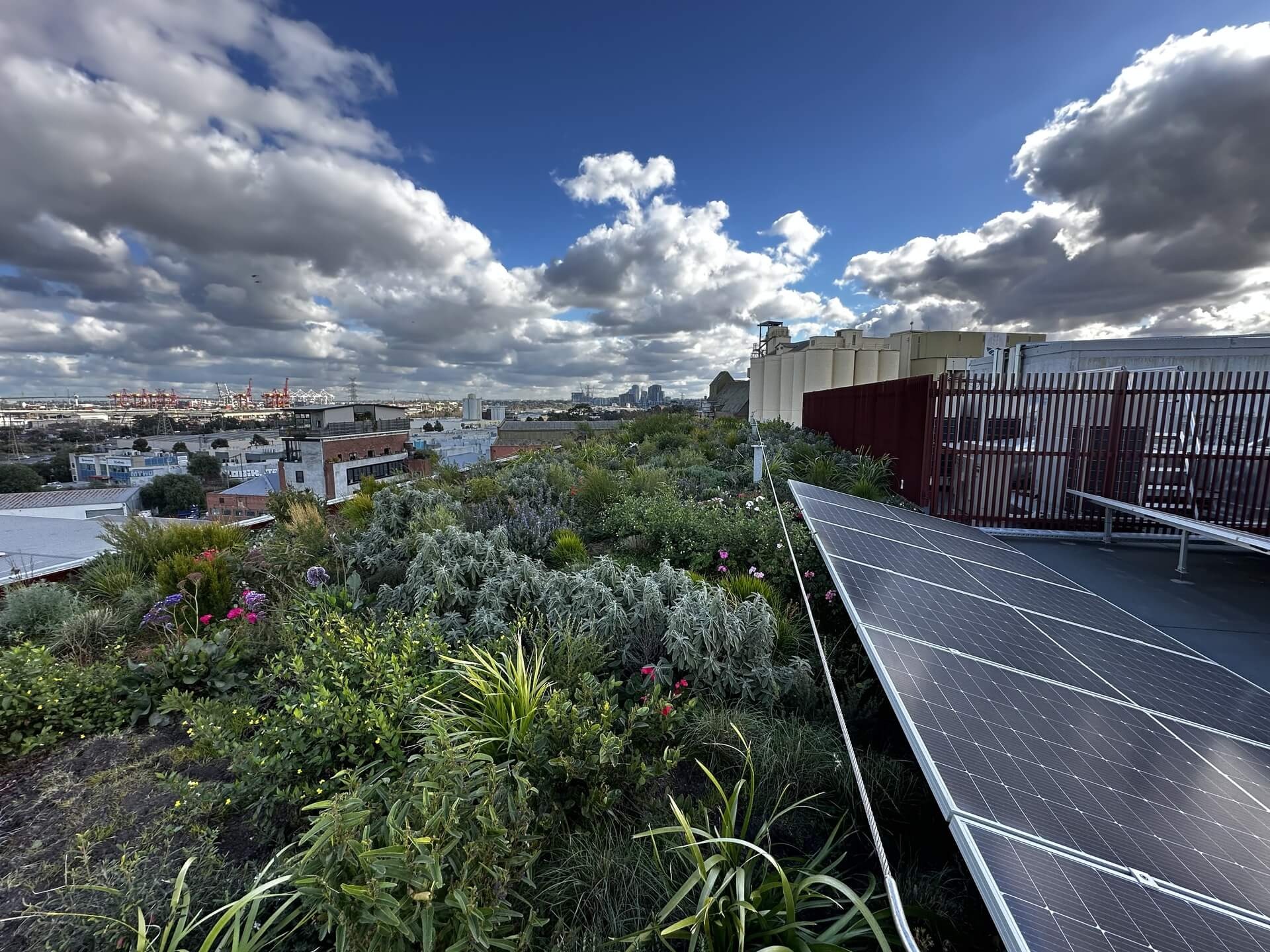
Plants help cool not only the roof space but the photovoltaic panels that capture sunlight, ensuring they work efficiently on hot days.
Regional renewables and hydrogen hubs
Regional Australia is central to sustained development as new energy and industry projects roll out.
- Large wind and solar farms in Renewable Energy Zones bring new investment into regional communities.
- Grid-scale batteries and storage projects improve reliability and support higher renewable energy shares.
- Hydrogen hubs link clean hydrogen production with ports, industry, and future transport uses.
- Shared infrastructure, such as roads, water, and workforce housing, supports broader regional development.
- Local training and employment programs help residents access construction, operations, and long-term technical roles.
These regional projects support more diverse and sustained development in local economies. At the same time, they can improve national climate and energy goals.
How Evergreen Infrastructure can help
Evergreen Infrastructure can help you turn sustainable development from a policy goal into a project reality.
We support clients to:
- Plan and assess projects against net zero, circular economy, and biodiversity goals.
- Design assets that integrate green roofs, urban nature, and climate resilience from day one.
- Build robust business cases that align sustainability, risk management, and long-term value.
If you want to understand whether your current or planned assets are truly sustainable development, Evergreen Infrastructure can help you assess, prioritise, and move.
Contact us if you want to know more.
We create green oases in urban settings
We'd love to discuss how we can partner to bring innovative, sustainable solutions to your urban environment.