.webp)

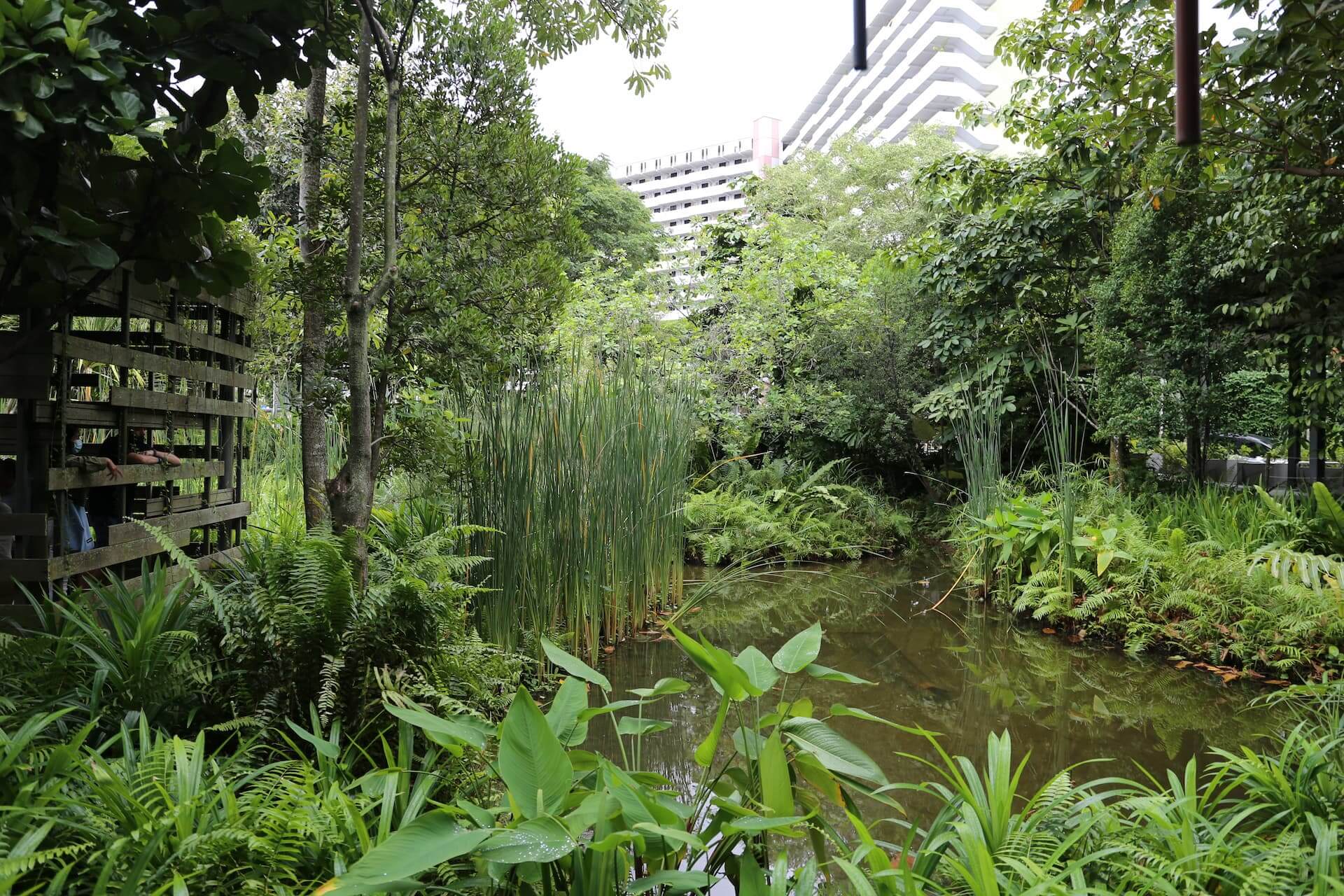
Water Sensitive Urban Design (WSUD) is an approach to urban planning that treats stormwater as a resource, not waste. It uses green infrastructure like green roofs, permeable pavements, and rainwater tanks. In Victoria and Queensland, WSUD is a legal requirement for new residential subdivisions. Well-designed systems hold 30–100% of stormwater and reduce local air temperatures by 1–5 degrees Celsius. They can also remove up to 97% of suspended solids.
Water Sensitive Urban Design (WSUD) is an approach to planning and designing urban environments. It integrates the full urban water cycle into the built and natural landscape. This cycle covers stormwater, groundwater, wastewater, and water supply.
The core purpose of water sensitive design is to treat water as a resource rather than a problem. At the same time, it improves environmental outcomes and reduces flood risk. More importantly, it can make cities more liveable.
In Australia, some states include WSUD in their planning rules. Victoria and Queensland are the most advanced in using and putting WSUD into practice.
WSUD is ideal for new builds and retrofits. It also works for both homes and commercial projects.
What does Water Sensitive Urban Design actually mean?
Water Sensitive Urban Design means managing the urban water cycle to copy natural water patterns. This process includes retaining, filtering, and reusing water.
The term started in Australia. It is most commonly used in Australia and the Middle East. The same idea goes by different names around the world, including:
- Low-Impact Development in the United States
- Sustainable Drainage Systems in the United Kingdom
All three approaches share one foundation: stormwater is a resource, not a liability.
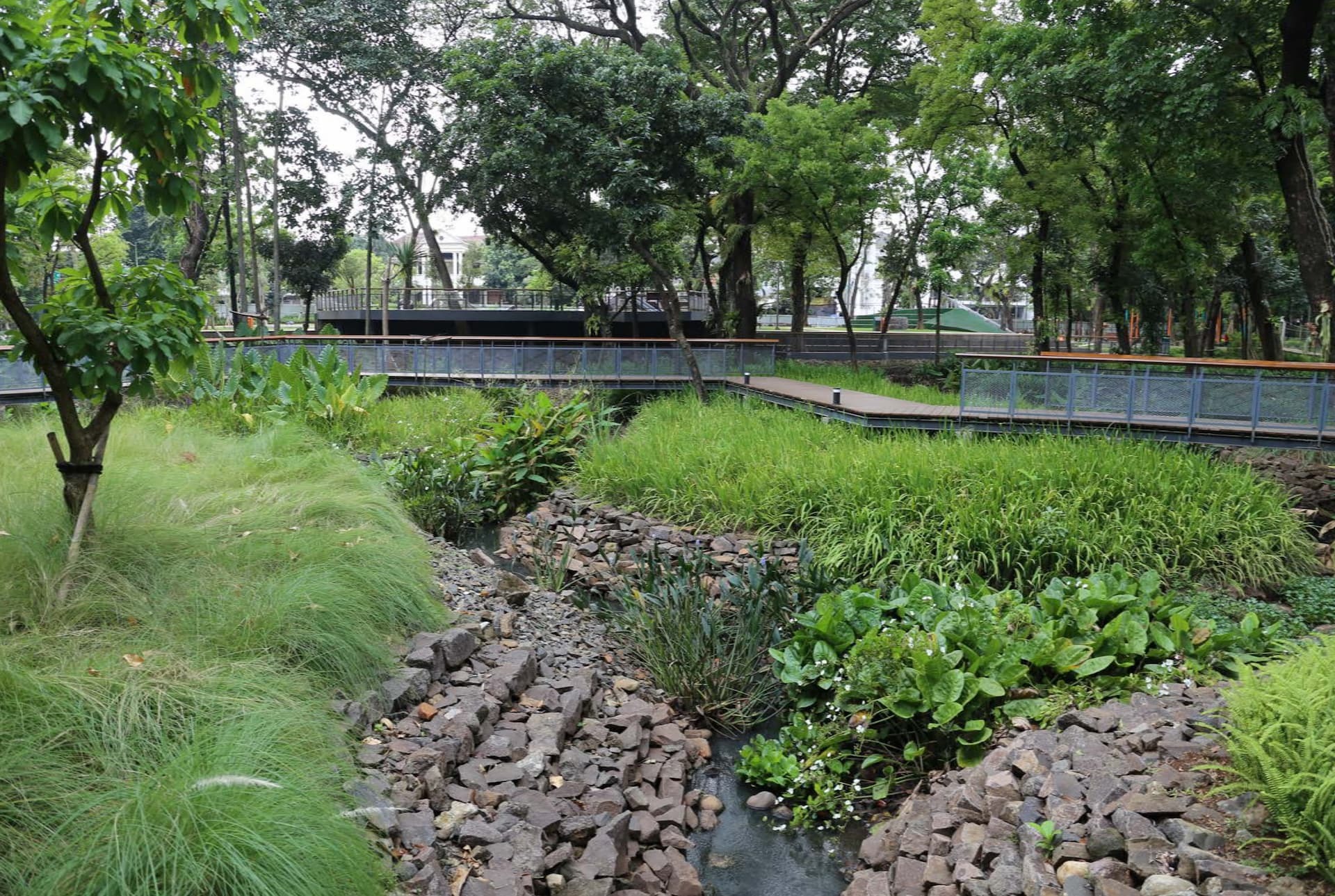
Water Sensitive Urban Design addresses:
- Water sustainability
- Environmental resilience
- Urban amenity
- Flood risk management
- Water quality improvement
- Biodiversity and habitat support
What are the core principles of Water Sensitive Urban Design?
The core principles of Water Sensitive Urban Design guide every design decision, from site layout to material choice.
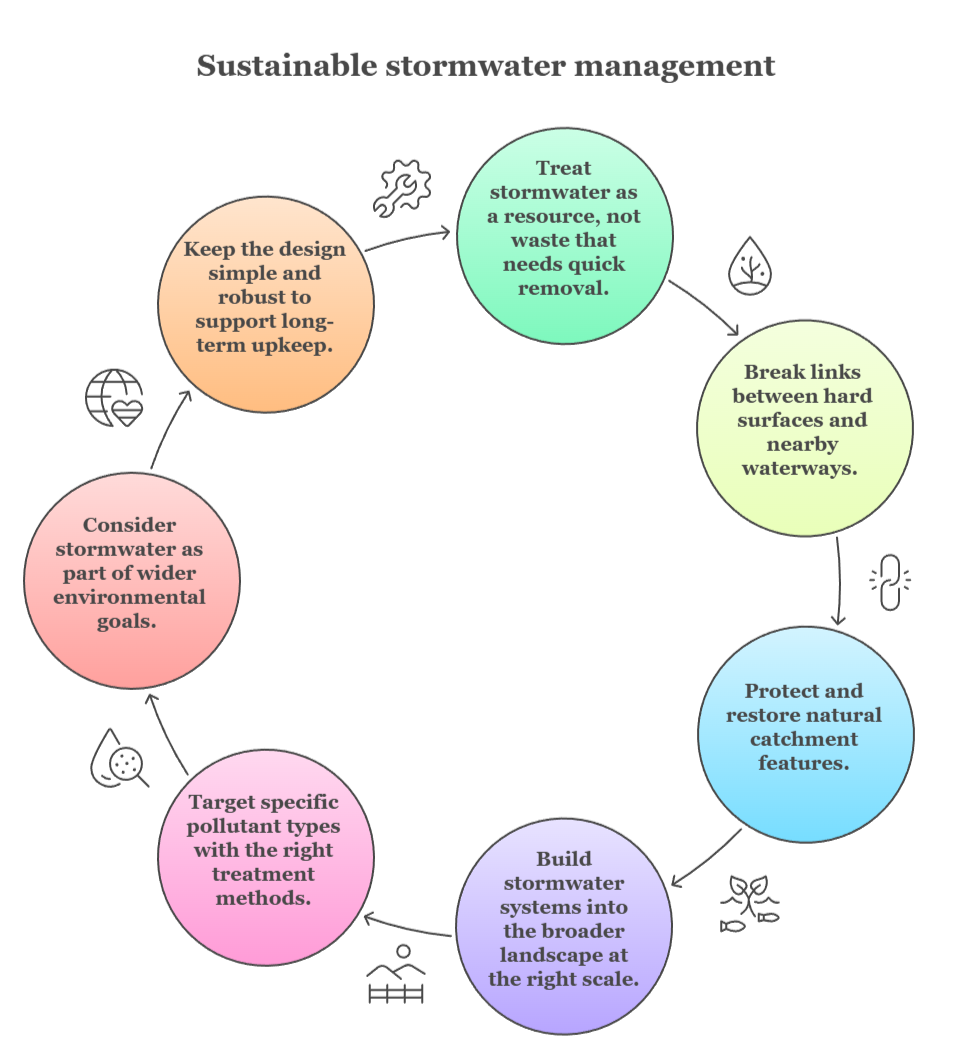
These principles are consistent across Australian practice guidelines and research:
- Treat stormwater as a resource, not waste that needs quick removal.
- Break links between hard surfaces and nearby waterways. Manage water at the source before it enters drainage systems.
- Protect and restore natural catchment features, including existing plants, growing media, and waterways.
- Build stormwater systems into the broader landscape at the right scale.
- Target specific pollutant types with the right treatment methods.
- Consider stormwater as part of wider environmental goals. This includes urban heat, biodiversity, and public health outcomes.
- Keep the design simple and robust to support long-term upkeep and community care.
Australian practice guidelines set measurable targets for WSUD systems. For streams, creeks, and small rivers, the objectives include:
- An 80% cut in annual total suspended solids loads
- A 45% cut in total phosphorus
- A 45% cut in annual total nitrogen loads (best practice)
What are the main WSUD techniques used in Australian projects?
Water Sensitive Urban Design uses a suite of green infrastructure techniques that work together. Each targets specific elements of the urban water cycle.
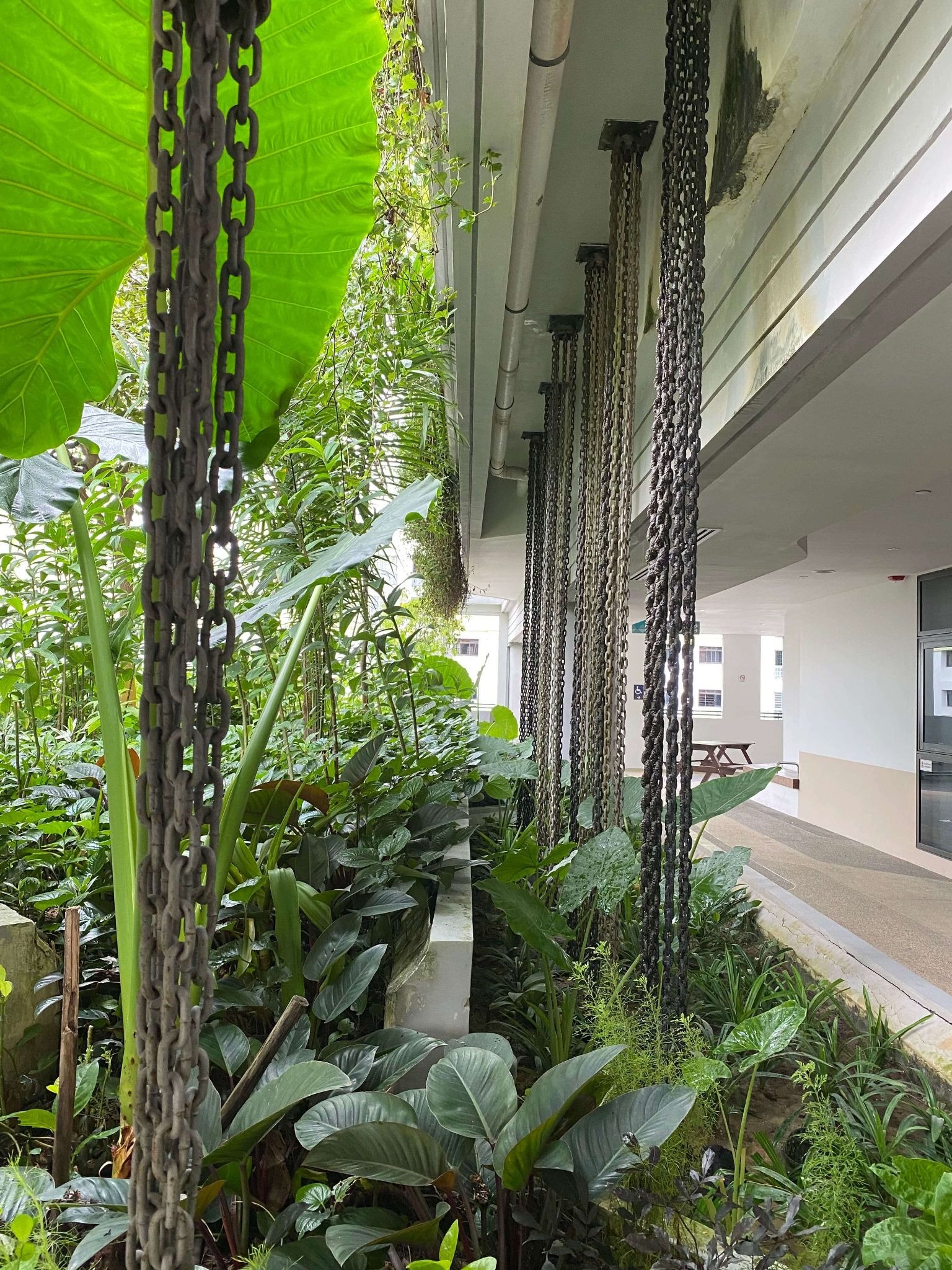
Common Water Sensitive Urban Design systems in Australian projects include:
- Bioretention systems
- Swales
- Constructed wetlands
- Permeable pavements
- Rainwater tanks
- Infiltration systems
- Green roofs
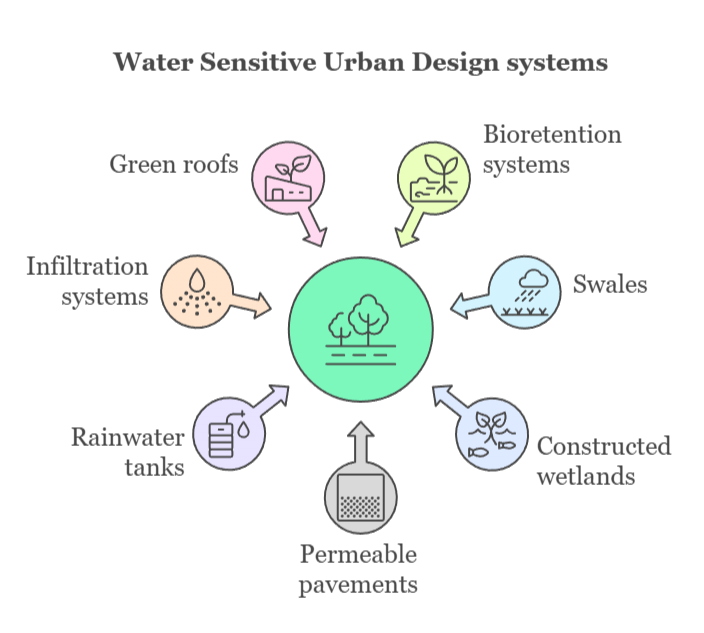
Bioretention systems and rain gardens
Bioretention systems filter stormwater through layers of growing media and plants. They remove pollutants and reduce runoff volumes.
Bioretention systems reduce stormwater volume by up to 100%. The average reduction is 63%.
A well-designed system in Vaughan, Ontario shows what strong performance looks like:
- Over 90% of average stormwater runoff kept on site
- The system achieved a 97% average volume reduction, with 83% of events fully retained
- Water soaking into the ground made up 88% of the inflow
- Plants releasing water vapour added a further 6%
Australian bioretention systems reach similar results under good conditions with the right design.
Green roofs
Green roofs retain stormwater within growing media and vegetation layers. They reduce peak runoff rates and annual volumes.
Across 55 studied green roof assets, stormwater volume retention ranges from 11% to 77%. The median is 56%.
Seasonal changes are very important in this context. According to research:
- In temperate climates, well-designed green roofs retain around 50–60% of annual rainfall.
- During warm, dry growing seasons, they can retain close to 100% for smaller storms.
- In cooler months, the amount retained drops to only 20–30%.
Swales and buffer strips
Vegetated swales slow stormwater flow and filter pollutants through plant and growing media contact. They work as both drainage channels and treatment systems.
You can integrate swales into:
- Streetscapes
- Road corridors
- Open space designs
Yearly upkeep costs are low ($1–$5 per square metre).
Constructed wetlands
Constructed wetlands treat stormwater through settling, filtration, and biological uptake. They also provide a habitat for water-based and land-based wildlife.
Annual maintenance costs range from less than $1 to $10 per square metre.
Permeable pavements
Permeable pavements let rainwater soak through the surface into the growing media below. They can filter out up to 99% of sediment and debris in some cases. They also filter:
- Heavy metals
- Organic matter
- Certain microplastics
The University of Melbourne has helped create permeable pavement products made from recycled tyres. These materials offer significantly higher water infiltration rates than conventional permeable pavements. They also keep waste tyres out of landfills.
Rainwater tanks
Rainwater tanks capture roof runoff for non-potable reuse. They reduce demand on the potable water network.
A Melbourne study modelled a 1,500-litre tank with a 12-hour drain delay. It reduced sewer overflow volumes by up to 33%.
A single 3-kilolitre tank delivered strong results, including:
- A 75% reduction in hydraulic loading
- A 97% reduction in total suspended solids
- A 90% reduction in total phosphorus
Infiltration trenches and basins
Infiltration trenches and basins send stormwater into the soil to refill underground water supplies. They work only where the growing media drains well enough.
You will find them in housing and business sites with limited surface space.
How does WSUD differ from conventional stormwater management?
Water Sensitive Urban Design retains, filters, and reuses water within the landscape. Standard stormwater systems remove it quickly through piped drains.
Conventional systems treat stormwater as a hazard that needs disposal. WSUD treats it as a resource worth keeping.
The table below sums up the key differences:
What are the benefits of Water Sensitive Urban Design?
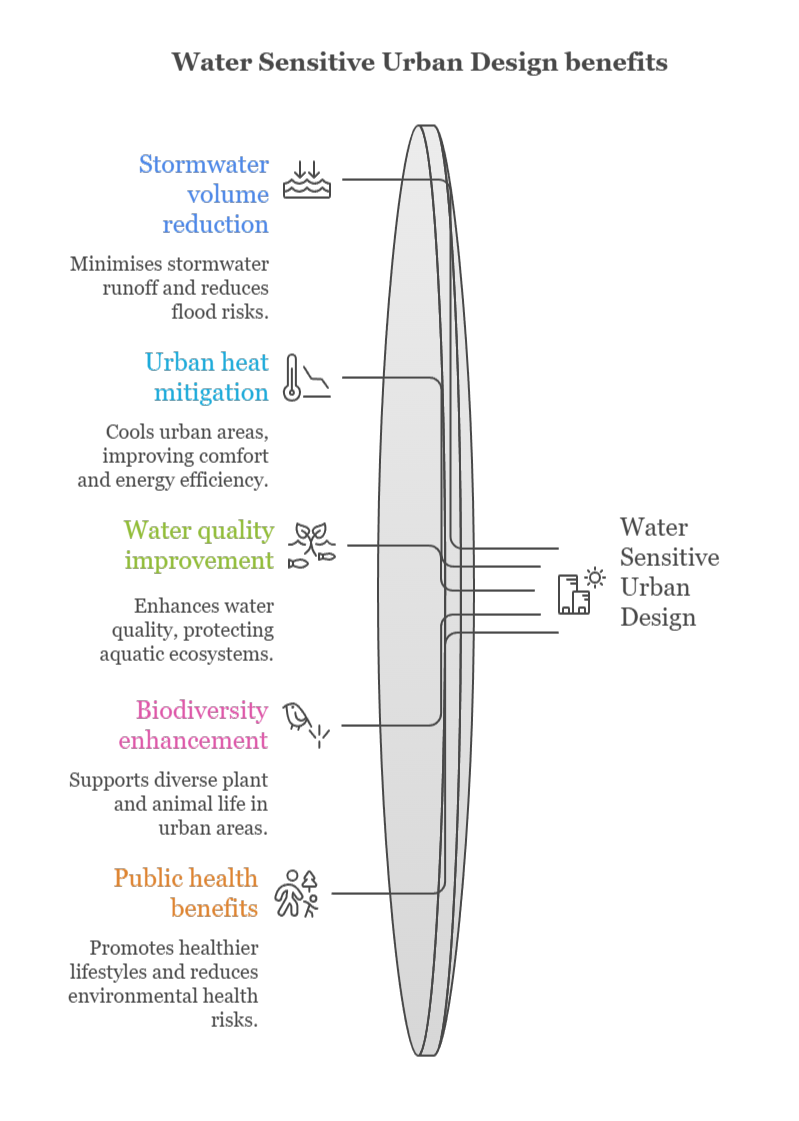
Water Sensitive Urban Design delivers measurable benefits across different areas. These areas include:
- Stormwater volume
- Urban heat
- Water quality
- Biodiversity
- Public health
How much stormwater does WSUD retain?
Site-scale WSUD applications retain between 30% and 100% of stormwater.
Results depend on design, climate, and site conditions. Potable water demand reduction spans 18% to 100%.
How does WSUD reduce urban heat?
Adding more tree canopy cover can lower neighbourhood air temperatures by 1°C or more. This is a core WSUD strategy.
Localised cooling effects of several degrees are possible in specific small areas.
Green roof projects in Melbourne, including installations by Evergreen Infrastructure, have recorded measurable temperature reductions.
{{cta}}
What water quality improvements does WSUD achieve?
Victorian planning guidelines require WSUD systems to:
- Retain particles 125 micrometres and smaller at very high efficiency
- Reduce phosphorus and nitrogen loads by at least 45%
Well-designed systems consistently meet or exceed these targets.
How does WSUD support biodiversity?
Native plants in WSUD systems provide homes for land and water wildlife.
The Federation Square biodiversity green roof is a documented example. It shows biodiversity gains through purpose-designed green infrastructure in the inner city.
What are the public health benefits of WSUD?
Time spent in green spaces created through WSUD is linked to:
- Lower rates of high blood pressure
- Reduced depression and anxiety symptoms
- Improved social wellbeing
- Faster recovery from stress
- Improved attention and cognitive function
Therapeutic green spaces within WSUD landscapes offer real, measurable benefits for:
- Communities
- Aged care residents
- Health facility users
- Children and young people
- People with dementia
- Individuals with disabilities
Is WSUD a legal requirement in Australia?
Yes. In Victoria, WSUD is a legal requirement for new residential subdivisions. New housing must manage stormwater on site under Clause 56.07-4. The exact rules depend on the local council.
Queensland has also built WSUD rules into its planning system. Victoria and Queensland lead the nation in WSUD uptake. In these states, WSUD is routine practice, not an optional innovation.
Western Australia, New South Wales, and South Australia have less prescriptive statewide requirements. In those states, adoption depends more on developer initiative or council policy.
Worked example: WSUD integration in a mixed-use development
Picture a 2,000 m² mixed-use development site in metropolitan Melbourne. The developer must show WSUD compliance under the Victorian planning framework.
The design response includes four linked systems:
- A green roof on the commercial building covering 400 m². It retains an estimated 50–60% of annual rainfall and helps lower the air temperature by 3–5°C.
- A bioretention system at the car park entry. It targets an 80% reduction in total suspended solids and a 45% reduction in nitrogen and phosphorus loads.
- A 3,000-litre rainwater tank supplying toilet flushing and irrigation. It cuts drinking water demand and lowers water flow load by up to 75%.
- Permeable paving across 20% of the site's hard surface area. It meets the permeability standard and filters heavy metals and organic pollutants.
This combined system meets planning rules and helps earn Green Star ratings. All results are tracked through digital monitoring and included in compliance reports.
What are the ongoing maintenance requirements for WSUD systems?
WSUD systems need regular, planned maintenance to keep working well. Costs vary by asset type:
- Biofilters: $1–$30 per square metre per year
- Tree pits: $5–$35 per square metre per year
- Swales: $1–$5 per square metre per year
- Constructed wetlands: less than $1 to $10 per square metre per year
Well-designed assets carry substantially lower maintenance costs than poorly designed systems. Most WSUD failures result from poor upkeep planning, not design flaws.
At Evergreen Infrastructure, our end-to-end service model includes:
- Operations and Maintenance (O&M) manuals
- Biodiversity health monitoring
- Compliance reporting
We use BIM, smart irrigation, and digital monitoring to track performance and reduce ongoing costs for your project.
What are the barriers to wider WSUD adoption?
Several barriers slow broader WSUD adoption across Australia:
Gaps in lifecycle cost data.
Those working in the field struggle to find accurate upkeep cost data. A national database is now being built.
Governance complexity.
WSUD needs input from councils, developers, government agencies, and private landowners. This creates friction.
Skills and knowledge gaps.
Limits on what designers, builders, and maintenance staff know and can do matter more than cost.
Community communication failures.
Six Australian case studies showed strong community support when WSUD was clearly explained. Pushback comes from poor outreach, not real opposition.
FAQ
What is the definition of Water Sensitive Urban Design?
Water Sensitive Urban Design (WSUD) manages water as a resource within urban planning. It targets water quality, flooding, urban heat, and biodiversity together.
What is the difference between WSUD and conventional drainage?
Conventional drainage removes stormwater quickly through pipes, treating it as waste. WSUD instead retains, filters, and reuses water through green infrastructure. It also delivers cooling, biodiversity, and public health benefits that conventional drainage cannot.
Does WSUD work in low-rainfall areas?
Yes. WSUD systems work across different climates through design tuning. In drier climates, the focus shifts to reducing peak runoff and improving infiltration.
What pollutants does WSUD remove from stormwater?
WSUD systems remove several types of pollutants:
- Sediment and suspended solids through settling and filtration
- Heavy metals are retained in filter media and growing media
- Phosphorus and nitrogen through biological uptake and filtration
Rainwater tanks reduce total suspended solids by 97% and total phosphorus by 90%. Permeable pavements trap up to 99% of total suspended pollutant loads.
Who designs WSUD systems in Australia?
WSUD systems need specialist design skills. Key professionals include landscape architects, civil engineers, and urban designers. In complex projects, specialist firms handle design, detail, and management.
Evergreen Infrastructure provides end-to-end WSUD services across Victoria, including:
- Consulting and compliance advice
- Design and project management
- Long-term asset management
We partner with the University of Melbourne, RMIT, and Deakin University. This keeps our designs grounded in the latest research.
How Evergreen Infrastructure delivers WSUD outcomes
Evergreen Infrastructure specialises in urban green spaces across Melbourne and Victoria. Our team includes registered plant experts who focus on urban and therapeutic landscape design.
We are affiliated with:
- Australian Institute of Horticulture (AIH)
- Green Roofs for Healthy Cities
- Landscaping Victoria
- Therapeutic Horticulture Australia (THA)
Our WSUD projects span the full range, including:
- The Victorian State Treasury Building green roof
- The Federation Square biodiversity green roof
- Council-managed public open space
- Therapeutic landscapes for aged care and health providers
Our service model covers the complete project lifecycle:
- WSUD consulting, compliance advice, design, and project management
- Long-term asset management, including O&M manuals, digital monitoring, biodiversity health assessments, and compliance reporting
- BIM and smart irrigation to get the best results and reduce lifecycle costs
If your project requires WSUD compliance, Green Star contribution, or ESG alignment, contact us. We deliver measurable outcomes, not just ticked boxes.
{{cta}}
We create green oases in urban settings
We'd love to discuss how we can partner to bring innovative, sustainable solutions to your urban environment.