.webp)

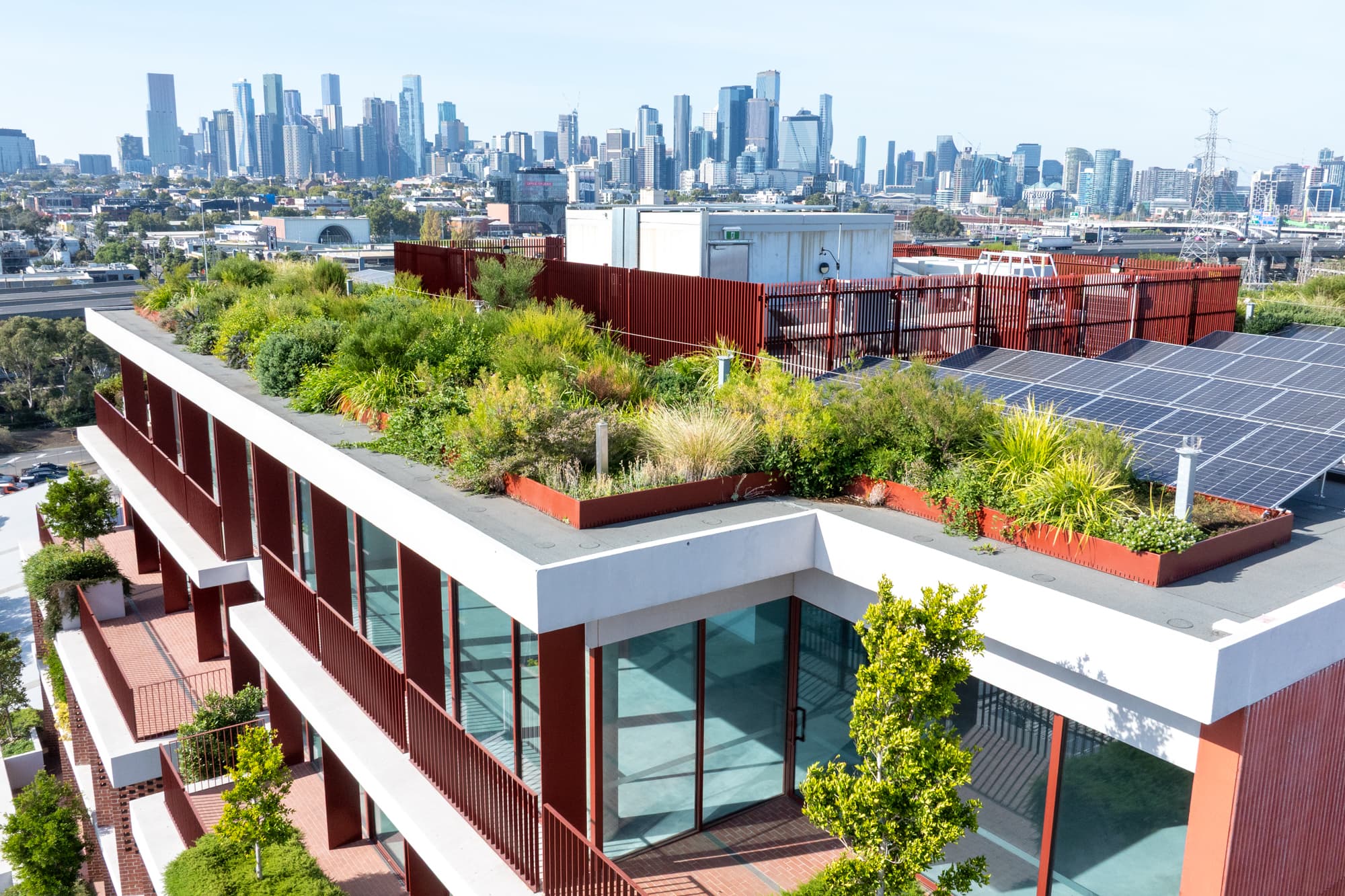
Green roofs cool buildings and cities, cut stormwater runoff, and reduce flood risk. They extend roof membrane life by up to three times and support biodiversity in dense urban areas. Costs vary by system and site, but long-term value often offsets the upfront investment. In Australia, green roofs are increasingly recognised in planning policy. They also contribute to sustainability frameworks like Green Star and WSUD.
A living roof, also called a green roof, has several benefits. It reduces ambient air temperatures, cuts stormwater runoff, and extends roof membrane lifespan. It also supports biodiversity in the built environment.
These results are documented and measurable. They have been delivered across commercial, government, and institutional projects in Australia.
Green roofs are an increasingly recognised response to urban heat, flooding risk, and biodiversity loss. They are supported by planning policies and guidelines in several Australian cities.
What does a living roof actually do?
A living roof is a roof system that has multiple layers over a structural roof deck, from top to bottom:
- Vegetation
- Growing substrate
- Filter fabric
- Drainage layer
- Root barrier
- Waterproofing membrane
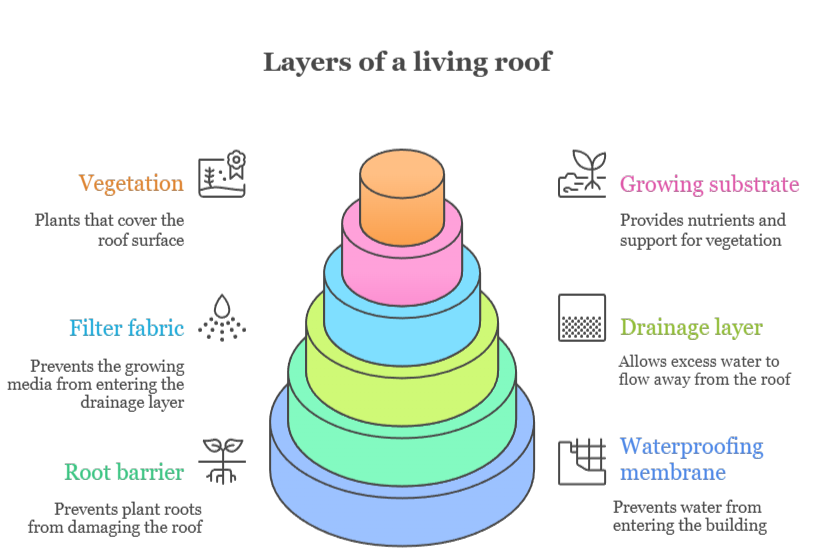
Each layer has a function:
- Plants absorb rainfall.
- The growing substrate retains moisture.
- The drainage layer channels the excess water.
- The membrane protects the building structure.
There are two main types of green roofs: extensive and intensive.
Extensive green roofs use a shallow substrate, typically 50 to 150 mm. They support drought-tolerant ground covers and sedums.
Intensive green roofs use a deeper substrate. They can support shrubs, trees, and accessible garden spaces.
Both types deliver core benefits. Intensive systems offer greater ecological and social value, but at higher load and cost.
How do green roofs help the environment?
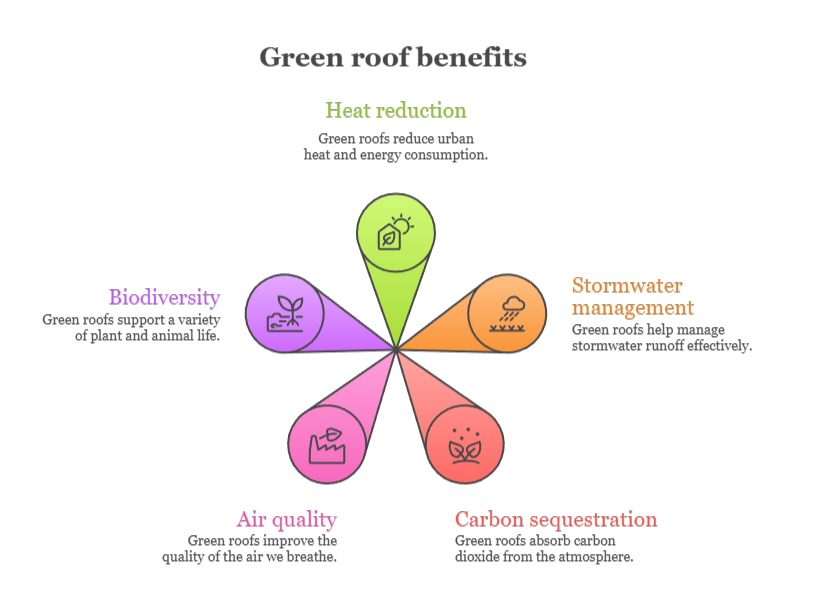
Green roofs deliver measurable environmental benefits across five areas:
- Urban heat and energy reduction
- Stormwater management
- Carbon sequestration
- Air quality improvement
- Biodiversity support
Urban heat and energy reduction
A Melbourne study found that a green roof cooled roof-level air temperature by 1.5°C. It also found that the green roof could improve thermal comfort by 2.38°C on hot summer days.
The US EPA has estimated that green roofs can reduce city-wide ambient temperatures by up to 2.8°C.
Modelling suggests that large‑scale adoption of green roofs can reduce city‑wide building energy use by up to ~8%. This figure assumes near-total rooftop coverage.
Individual buildings can see substantial cooling savings. One Canadian study reported over 75% lower daily air-conditioning use in summer. Others found 2–17% lower overall energy use compared to conventional roofs.
Stormwater Management
Green roofs reduce stormwater runoff by 50–100% during most rainfall events, retaining an average of 50–75% of total annual rainfall.
A monitored extensive green roof in Washington DC retained about 75% of total rainfall volume over a ten-month period.
A green roof with 75–100 mm of substrate can retain about 25 mm of rainfall. This is equivalent to 25 litres per square metre of roof area. This directly reduces peak stormwater flows and the load on urban drainage infrastructure.
Green roofs also align with Water Sensitive Urban Design (WSUD) principles. WSUD is widely used in planning guidelines across Australian states and councils.
Carbon Sequestration and Air Quality
An extensive green roof system sequesters about 375 grams of carbon per square metre. This includes carbon held within substrate organic matter. Combined energy savings add a further 702 grams of carbon per square metre annually.
Green roof vegetation captures particulate matter, nitrogen dioxide, and other airborne pollutants.
Biodiversity Support
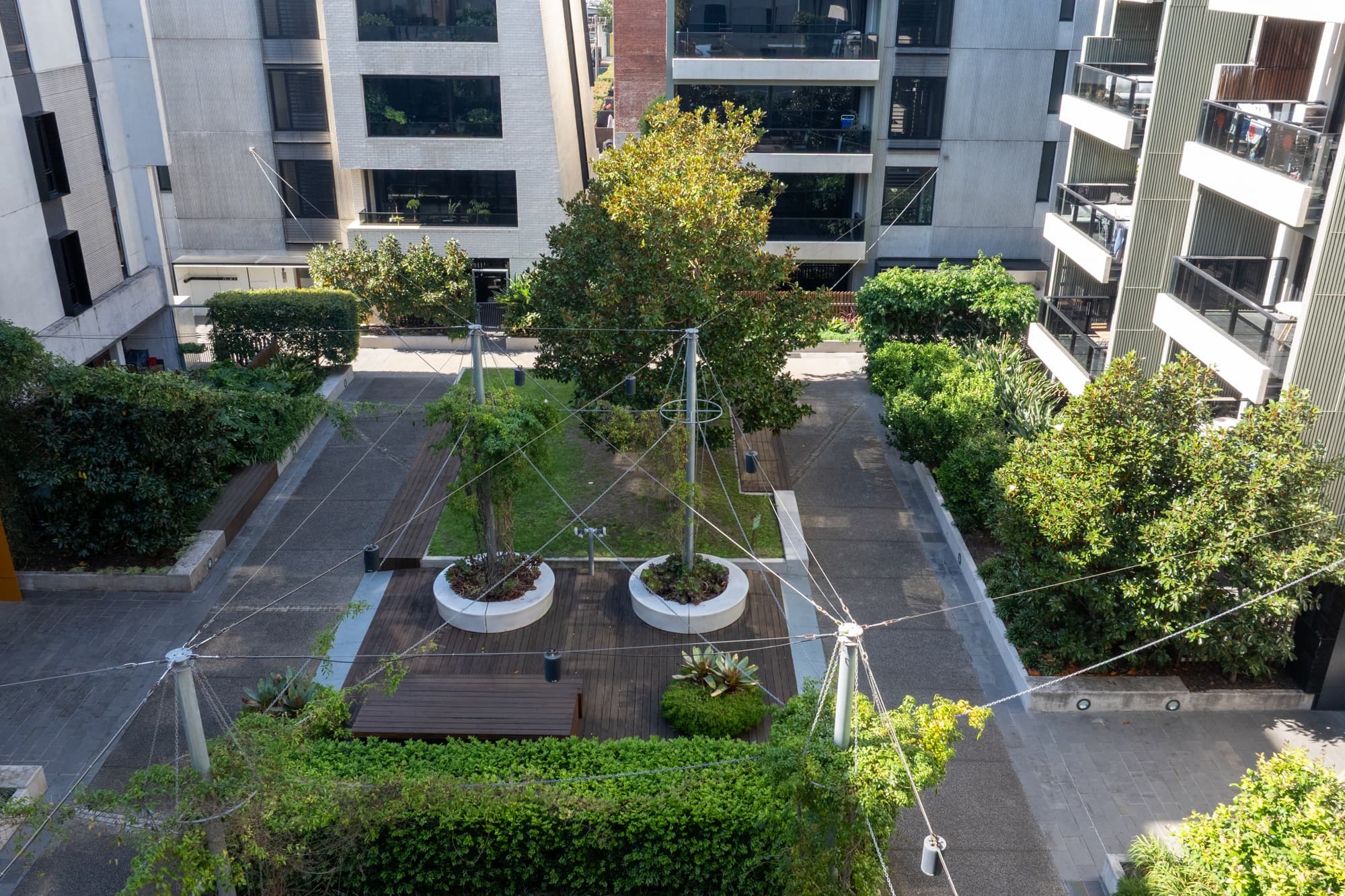
Green roofs create a habitat for insects, birds, and native plant communities. This matters in urban areas where ground-level habitat is scarce.
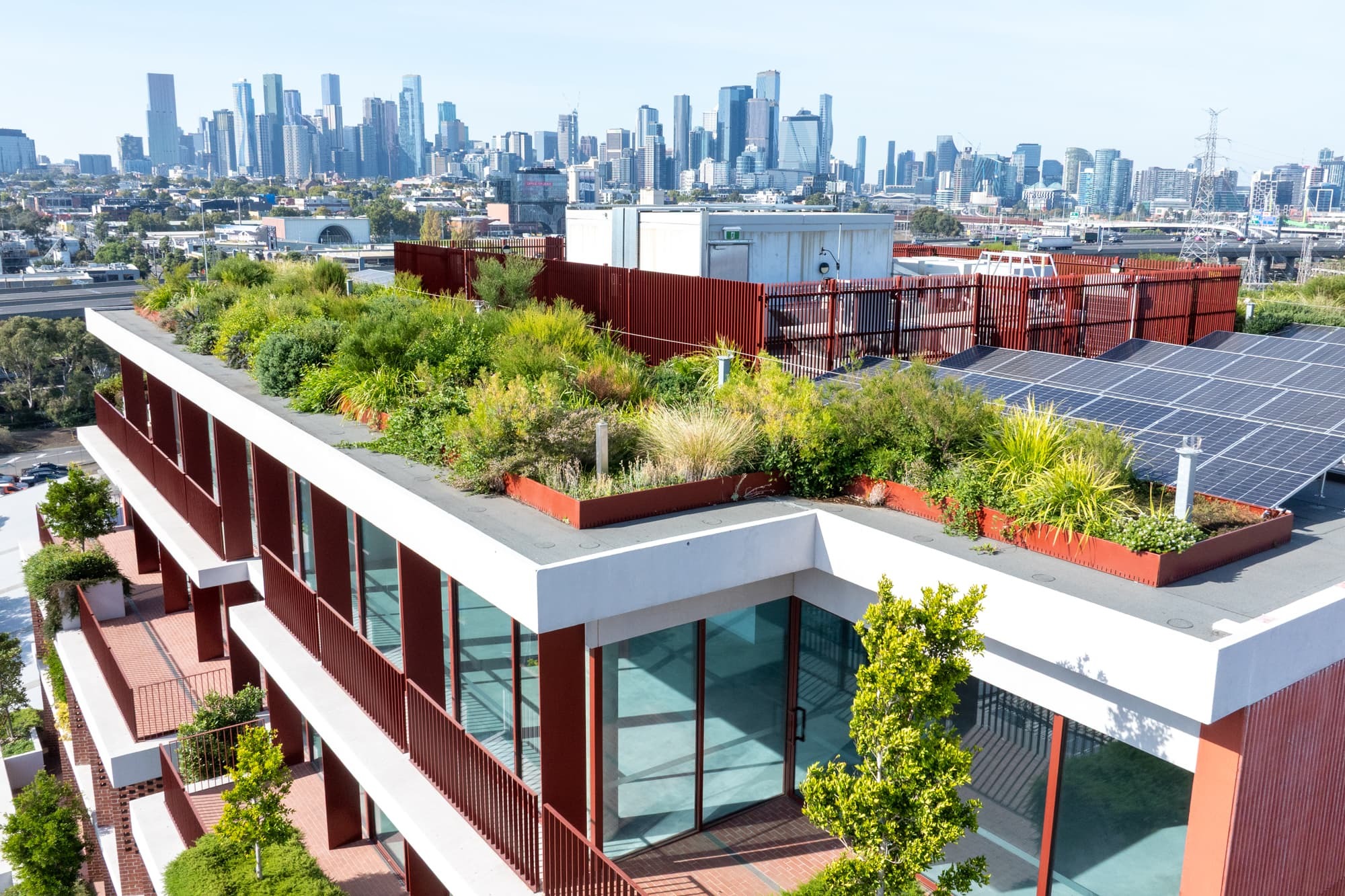
At Melbourne's Federation Square, we delivered a green roof for the Greenline Project Hub. We used a predominantly native planting palette. The project will provide three years of data on native plant performance.
Biodiversity green roofs can be designed to local ecological benchmarks. They can also be monitored using structured health assessments. We provide these assessments as part of our ongoing asset management service.
What are the benefits of a green roof for buildings?
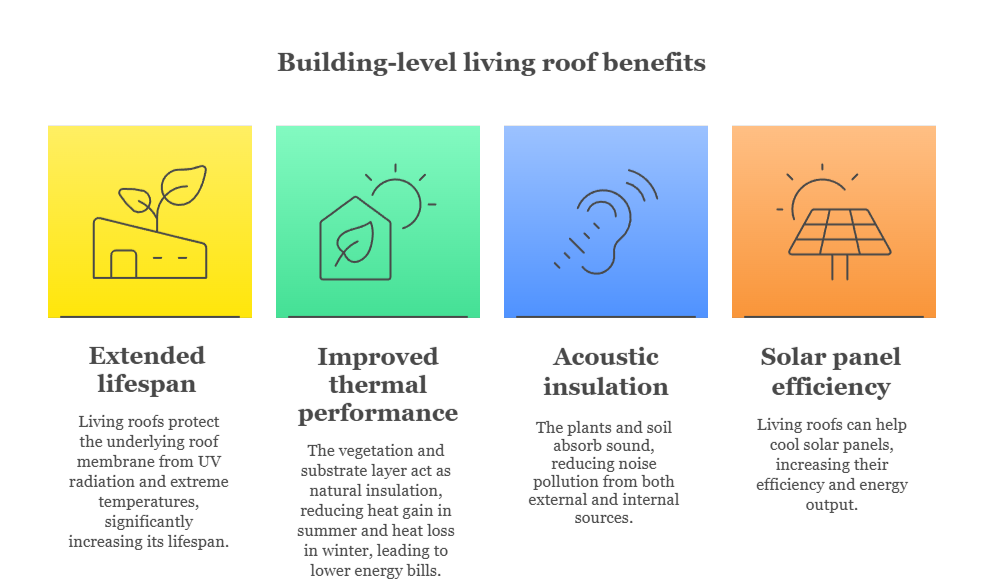
Living roofs deliver four direct building-level benefits:
- Extended roof lifespan
- Improved thermal performance
- Acoustic insulation
- Solar panel efficiency
Extended roof lifespan
A green roof can extend the life of the underlying waterproof membrane by up to three times compared to a conventional exposed roof. The vegetation layer shields the membrane from UV radiation, thermal cycling, and physical damage. When properly installed and maintained, green roofs are expected to last 30–50 years.
Improved thermal performance
The substrate and vegetation layer add insulation value to the roof assembly. This reduces heat gain in summer and heat loss in winter, lowering the energy needed to keep comfortable indoor temperatures.
Acoustic insulation
Green roofs reduce indoor noise by absorbing sound through their substrate and plant layers. Reductions range from a few decibels for shallow systems to around 40 decibels for deeper substrates.
The substrate absorbs low-frequency sounds. The plant layer scatters and absorbs higher-frequency noise. This makes green roofs useful for buildings near transport corridors, flight paths, or dense urban activity.
Solar panel efficiency
Solar panels installed on green roofs operate at lower temperatures and produce more electricity.
A UTS study at Barangaroo, Sydney, combined solar panels with a green roof. Over eight months, this improved solar energy output by 3.6% on average compared with a conventional rooftop array.
The same research also found that the cooling effect of vegetation increased solar panel output by up to 107% during peak periods.
What are the benefits of green roofs in urban areas?
Green roofs deliver social, economic, and planning benefits in dense urban areas, not only environmental ones.
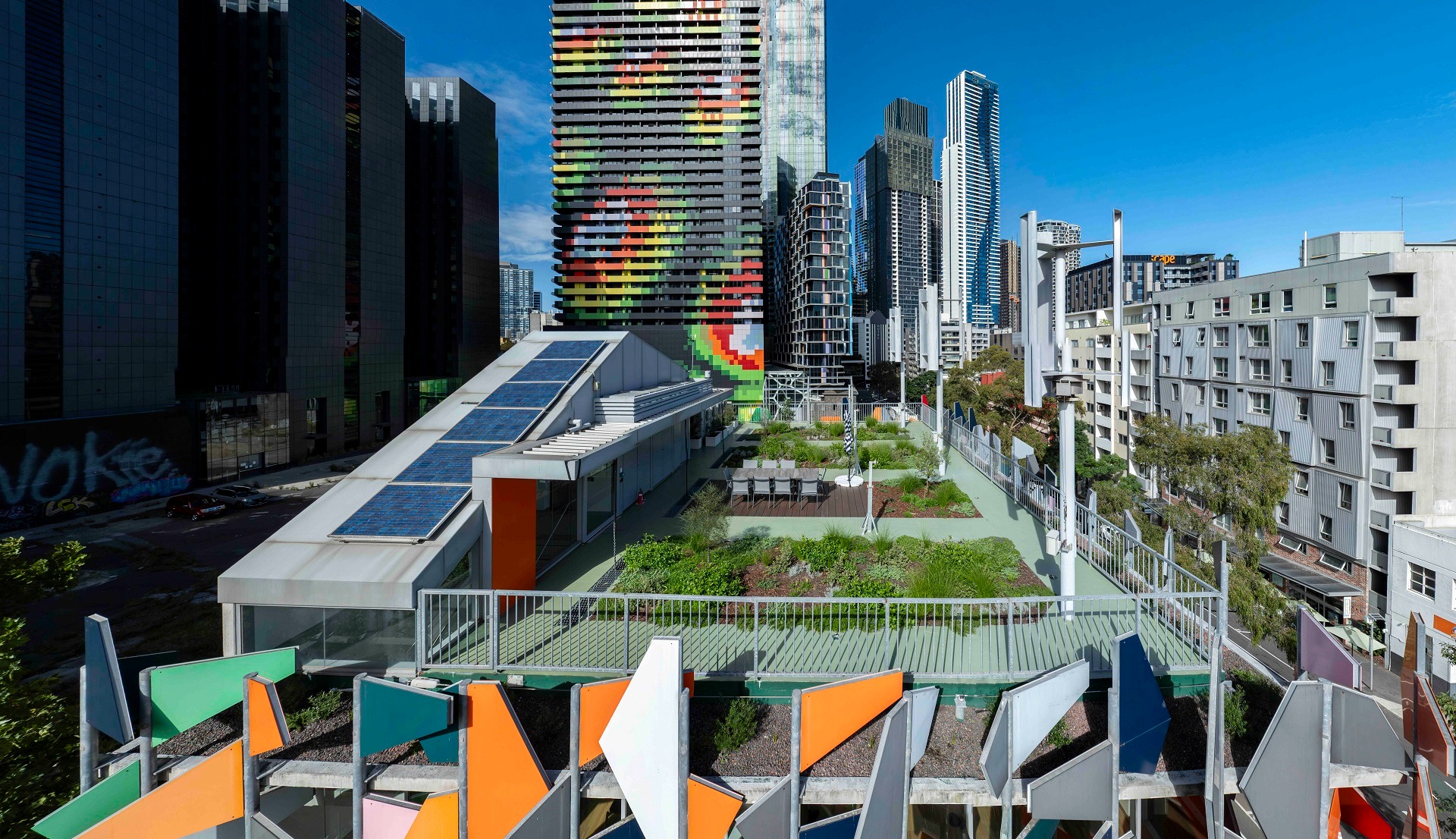
Human wellbeing and usable green spaces
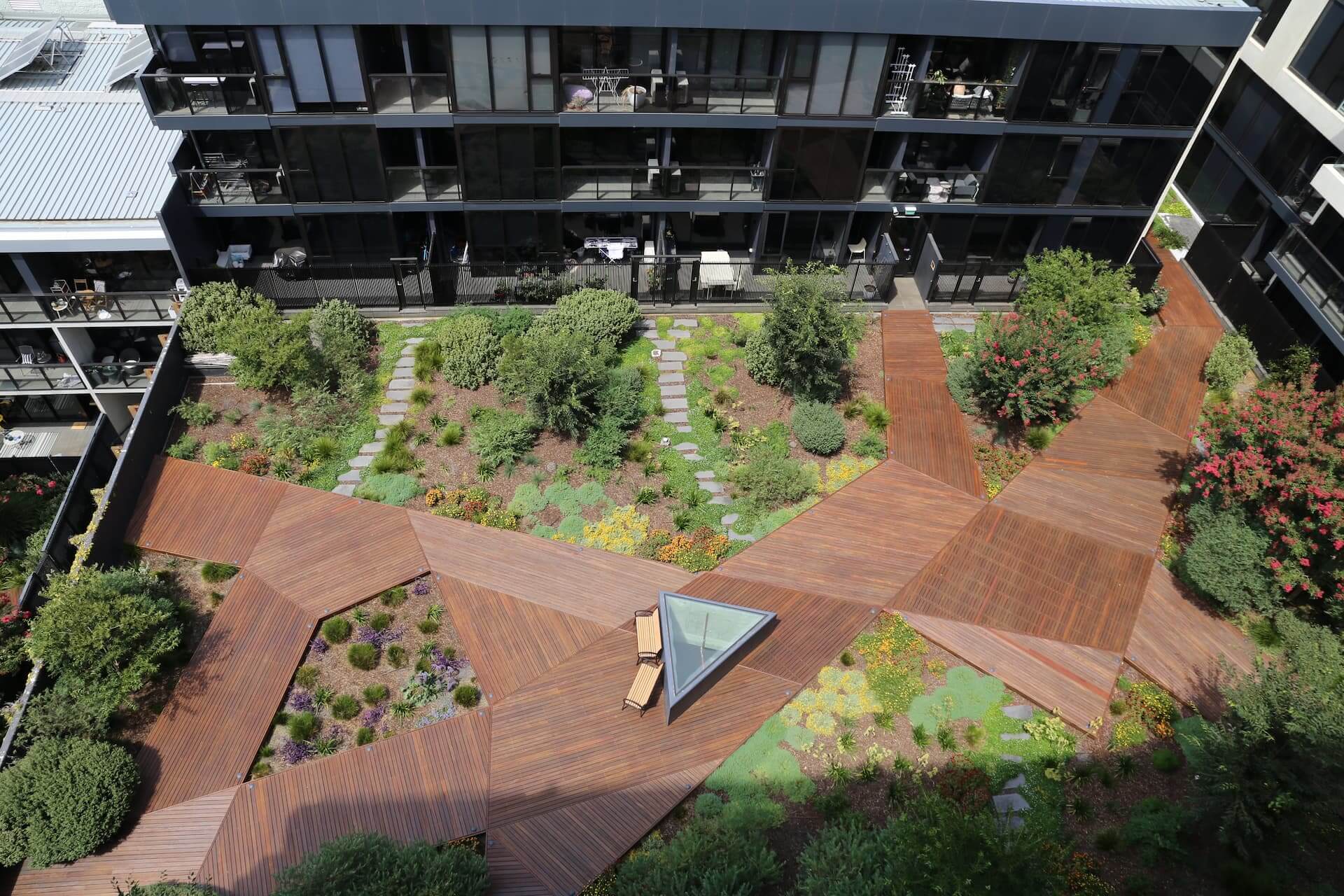
Accessible green roofs provide outdoor space in dense urban areas where ground-level space is limited. They are particularly valuable for hospitals, aged care, universities, and workplaces. In these settings, rooftop green space supports mental health, recovery, and staff wellbeing.
We design therapeutic landscapes and green roofs for health and education clients. This includes projects with Austin Health. We use a co-design methodology. This brings clinical and community stakeholder input into every stage.
ESG and planning compliance
Green roofs can contribute to Green Star ratings and SDG alignment. They also indirectly support NABERS energy performance and Climate Active carbon reporting. They do this by reducing building energy use and sequestering carbon.
For property developers and building owners, this adds measurable ESG reporting value.
Flood mitigation at precinct scale
At precinct and city scale, widespread green roof adoption can reduce flood volume by about 10–60%. The exact reduction depends on rooftop coverage and rainfall intensity.
This also lowers peak stormwater flows. It reduces pressure on ageing urban drainage infrastructure.
How much does a living roof cost in Australia?
Extensive green roofs in Australia cost $155–$465 per square metre. Intensive green roofs cost $420–$835 per square metre.
These figures are based on our experience with Australian commercial and institutional projects. Actual costs vary by site, design, structural requirements, and location.
For a 100 m² extensive installation, materials, and installation alone cost about $15,500 to $46,500. With structural works, irrigation, and professional fees added, total costs typically range from $30,000 to $90,000.
These costs are offset by several long-term benefits. These include reduced energy use, longer membrane life, and stormwater management value. Some councils also recognise green roofs in planning approvals as a nature-based infrastructure measure.
Why are green roofs important for Australian cities?
Australian cities face three converging pressures that green roofs directly address. These are urban heat, stormwater overload, and biodiversity loss. Melbourne, Sydney, and Brisbane are all getting hotter as impervious surfaces expand.
Green roofs replace heat-absorbing roofing materials with vegetation. The vegetation cools the surrounding area through evapotranspiration and shading.
WSUD frameworks in Victoria and NSW recognise green roofs as a stormwater management measure.
The City of Melbourne and the Victorian Government delivered a demonstration green roof at 1 Treasury Place. This was part of the Green Our Rooftop project. The project also provides research and education to support broader rooftop greening across the city.
FAQ
What is the difference between an extensive and an intensive green roof?
An extensive green roof uses a shallow substrate (50–150 mm). It supports low-maintenance plants like sedums and native ground covers. Extensive green roofs weigh 50–170 kg/m² when saturated.
An intensive green roof uses a deeper substrate and supports shrubs, trees, and accessible spaces, weighing 200–730+ kg/m² when saturated. Intensive systems need a structural engineering review and carry higher installation costs.
How long does a green roof last in Australia?
When properly installed and maintained, green roofs are expected to last 30–50 years. The vegetation layer protects the waterproof membrane from UV and thermal damage. This can extend membrane life by up to three times compared to an exposed conventional roof.
Do green roofs need a lot of maintenance?
Extensive green roofs are low-maintenance, not maintenance-free. Once established, they usually need one to three inspections a year. These cover weeding, drainage checks, and occasional fertilising.
Sedum-based systems need regular irrigation for roughly the first 10 to 12 weeks. They also need watering through the first growing season. After that, they generally only need watering during prolonged hot, dry periods.
Are green roofs suitable for existing buildings?
Green roofs can be installed on existing buildings, subject to a structural assessment. Extensive systems are the most practical for retrofits because they add 50–170 kg/m² at saturation. Buildings that cannot support this load may need structural reinforcement, adding $5,000–$20,000+ to the project cost.
Do green roofs help with planning approvals in Australia?
Green roofs can support WSUD, Green Star, and biodiversity requirements. All these are relevant to development approvals in Victoria and NSW. Some Australian councils recognise rooftop greening as a nature-based infrastructure measure. These include the City of Melbourne and the City of Sydney.
Ready to green your rooftop?
Green roofs are a practical response to the pressures Australian cities face. These include urban heat, stormwater overload, biodiversity loss, and rising energy costs.
Costs vary by system and site. But the long-term value often offsets the upfront investment. This value comes from energy savings, extended membrane life, and planning compliance.
Evergreen Infrastructure delivered the green roof installation at 1 Treasury Place. This was part of the City of Melbourne and Victorian Government's Green Our Rooftop project.
We have also worked across commercial, government, health, and education sectors throughout Australia. Our end-to-end model covers consulting, design, project management, and asset management.
If you're considering a green roof for your project, get in touch. We'll assess your site, outline the applicable planning requirements, and provide a costed design scope.
{{cta}}
We create green oases in urban settings
We'd love to discuss how we can partner to bring innovative, sustainable solutions to your urban environment.