.webp)

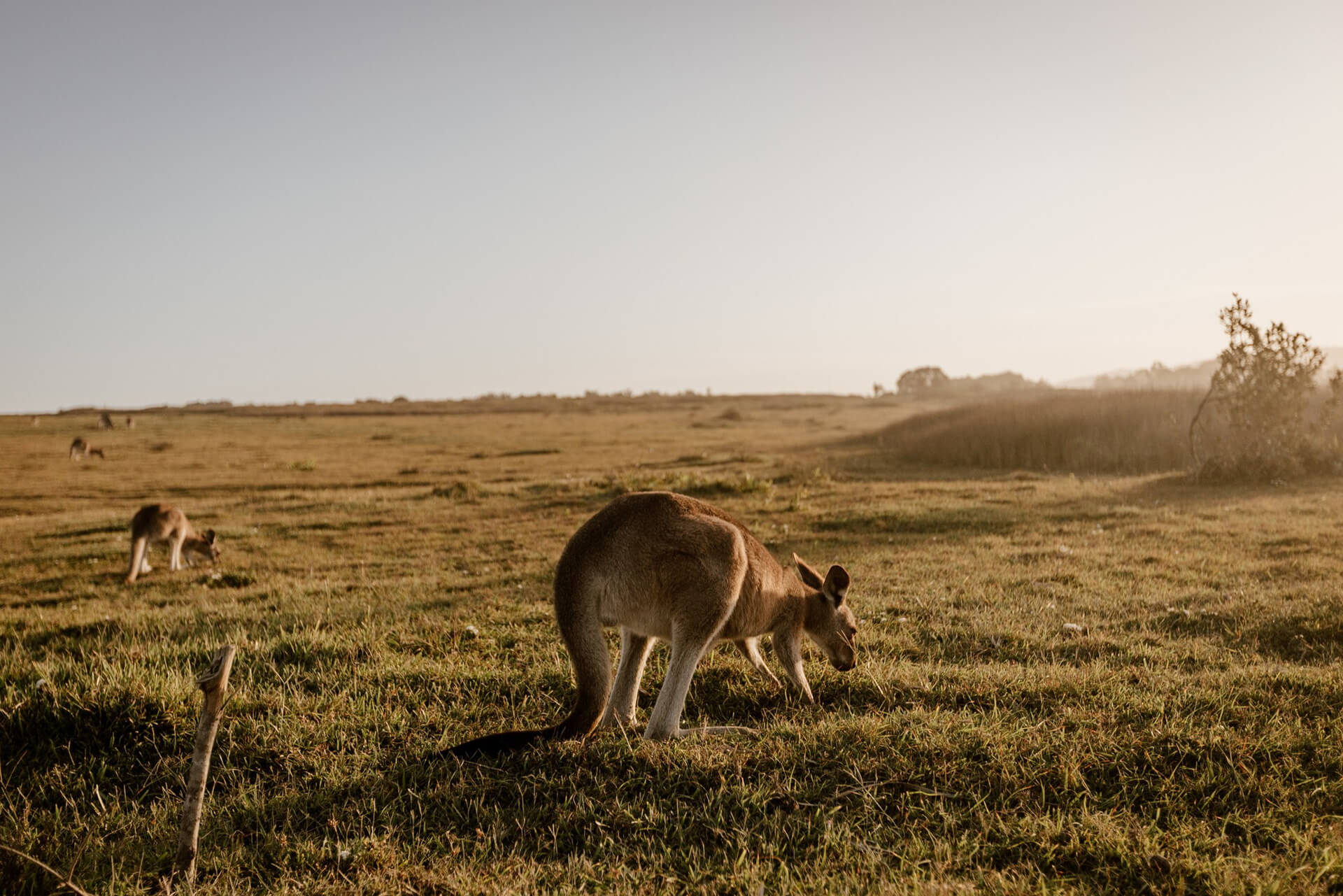
Australia's biodiversity hotspots are home to many unique species, which have lost most of their original habitats. In Australia, the two global hotspots are Southwest Australia and the forests of East Australia. These biodiversity hotspots are under pressure from clearing, fragmentation, invasive species, and climate change. Protecting these biodiversity regions requires focused conservation and smarter projects. This includes green infrastructure like green roofs and walls that support habitat and connectivity.
Australia has wildlife you can't find anywhere else in the world. Biodiversity hotspots are the places where those species cluster, and where habitat loss is most severe.
Australia's biodiversity regions matter beyond conservation alone. They hold irreplaceable species. However, they also face intense pressure from clearing, fragmentation, invasive species, and climate change.
This article explains what biodiversity hotspots are and shows where they can be found in Australia.
Evergreen Infrastructure works in the built environment, where many positive impacts begin. The goal is simple: to design and deliver greener projects that support habitat, strengthen resilience, and protect what cannot be replaced.
What are biodiversity hotspots?
A biodiversity hotspot is a region with exceptional unique species and major habitat loss.
By definition, a hotspot must have high numbers of endemic plants and must have already lost most of its original habitat.
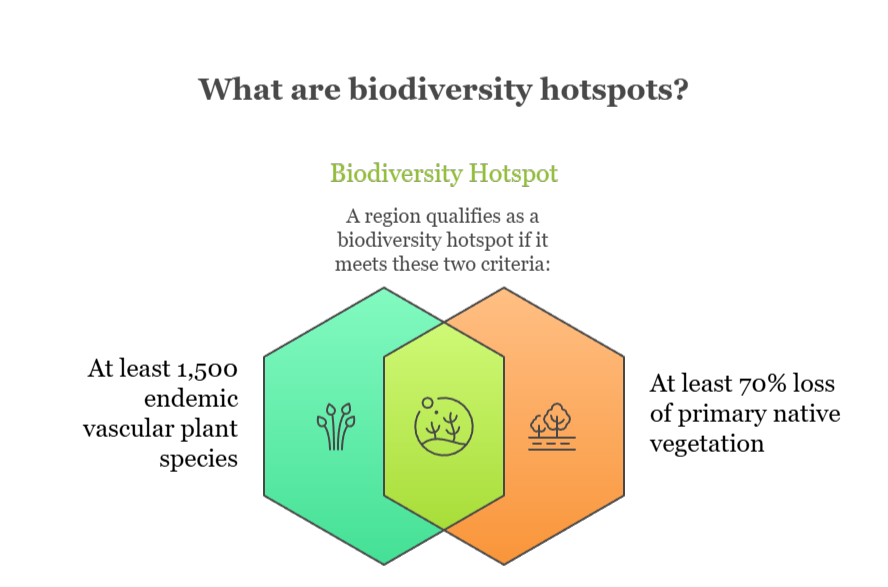
The biodiversity hotspot criteria are specific and global. A region qualifies only if it meets both these thresholds:
- At least 1,500 endemic vascular plant species.
- At least 70% loss of primary native vegetation (original habitat).
Scientists use plants for hotspot assessments because plants are measurable at scale. They create food, shelter, shade, and local cooling that many other species depend on.
These criteria matter because they combine irreplaceability (species found nowhere else) with urgency (large habitat destruction). That combination helps decision-makers focus resources where they can prevent the most loss.
Australia has two globally recognised biodiversity hotspots: Southwest Australia and the forests of East Australia. It also has 15 nationally declared hotspots, with eight in Western Australia.
Global overview of biodiversity hotspots
There are 36 recognised global biodiversity hotspots in the world today. These hotspots cover only about 2.5% of Earth's land. Yet, they hold more than half of the world's plant species and 43% of land vertebrates as endemics.
Where are biodiversity hotspots located? They are spread across the globe, and they are not all the same.
Many are islands with species that evolved in long isolation, while others are large forests or mountain regions with strong habitat changes over short distances.
Examples of biodiversity hotspots around the world include:
- Madagascar and the Indian Ocean islands
- The Western Ghats and Sri Lanka
- Indo-Burma
- The Tropical Andes
Australia's global biodiversity hotspots
Australia has two areas recognised as global biodiversity hotspots: Southwestern Australia and the forests of East Australia.
These are biodiversity regions where high endemism overlaps with high habitat loss.
Southwest Australia: a world-class hotspot
Southwest Australia is internationally recognised as a hotspot, covering about 356,700 km².
Here is what makes this region stand out:
- 4,000+ endemic plant species
- Around 100 endemic vertebrate species
- Australia's highest concentration of rare and endangered species
- About 8,379 tracked taxa, with 47% endemic to the region
Biodiversity is not evenly spread across the southwest. Plant diversity often spikes where soils, rainfall, and landforms change quickly over short distances.
High-richness sub-areas within Southwest Australia include:
- Walpole-Frankland region
- Stirling Ranges
- Manypeaks
- Bremer Bay-Ravensthorpe
- Rocky Gully
- Boxwood Hills
Fitzgerald River National Park is a clear example of how dense biodiversity can be. It is home to:
- Around 1,748 plant species
- About 75 endemic to the park
- Roughly 250 rare or geographically restricted species
The region's endemics include the Red and Green Kangaroo Paw (Anigozanthos manglesii). Other notable endemics include the Motorbike Frog (Litoria moorei) and the critically endangered Gilbert's Potoroo (Potorous gilbertii).
Forests of East Australia: The second global hotspot
The forests of East Australia are spread across Queensland and New South Wales. The forest includes WWF ecoregions, covering temperate forests and tropical rainforests.
What makes this hotspot stand out:
- 1,500+ endemic vascular plants (found nowhere else)
- 32 globally threatened plant species (1 Critically Endangered, 12 Endangered, 19 Vulnerable)
- About 18% formally protected, including the Blue Mountains World Heritage Area
One of the best-known endemics in this region is the Wollemi Pine (Wollemia nobilis). It was discovered in 1994 and has been reported as having fewer than 100 mature individuals in the wild.
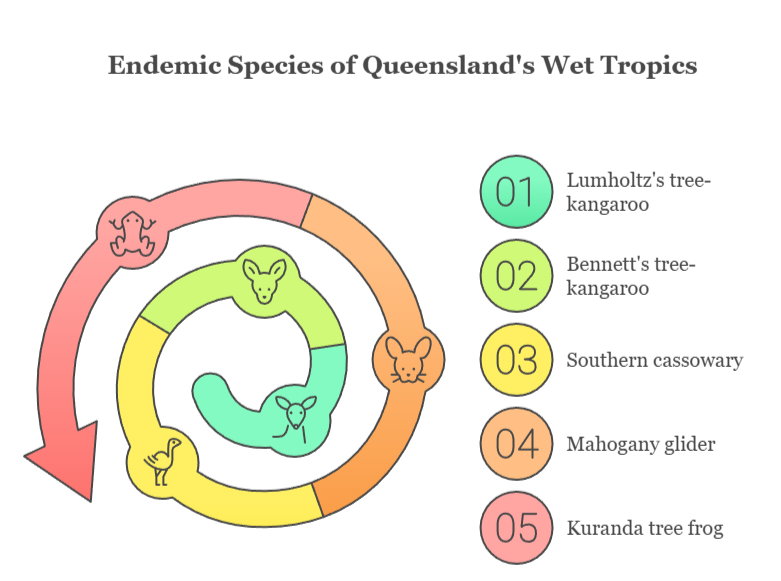
Queensland's Wet Tropics, part of the forests of East Australia hotspot, is home to exceptional endemism:
- Lumholtz's tree-kangaroo (Dendrolagus lumholtzi): An arboreal marsupial found only between the Daintree River and Atherton Tablelands
- Bennett's tree-kangaroo (Dendrolagus bennettianus): Capable of leaping 9 metres between branches and dropping 18 metres to the ground
- Southern cassowary (Casuarius casuarius): A flightless bird reaching 2 metres tall, with approximately 4,600 individuals remaining in the wild
- Mahogany glider: A rare gliding marsupial endemic to the region
- Kuranda tree frog: One of numerous amphibian endemics
Western Australia's other hotspots
Western Australia is home to eight of Australia's 15 nationally recognised biodiversity hotspots. These hotspots include:
- Fitzgerald River-Ravensthorpe
- Busselton-Augusta
- Central and Eastern Avon Wheatbelt
- Mount Lesueur-Eneabba
- Geraldton to Shark Bay sandplains
- Carnarvon Basin
- Hamersley-Pilbara
- North Kimberley
The Northern Territory also has distinctive endemics. Bambusa arnhemica (Top End bamboo) is a native bamboo found in the NT, including riparian zones in Kakadu.
Another example is the Hooded Parrot (Psephotellus dissimilis), which is endemic to the Northern Territory.
Human impacts and threats to biodiversity hotspots
Habitat loss and degradation drive most risk in biodiversity hotspots. They also make every other pressure harder to manage.
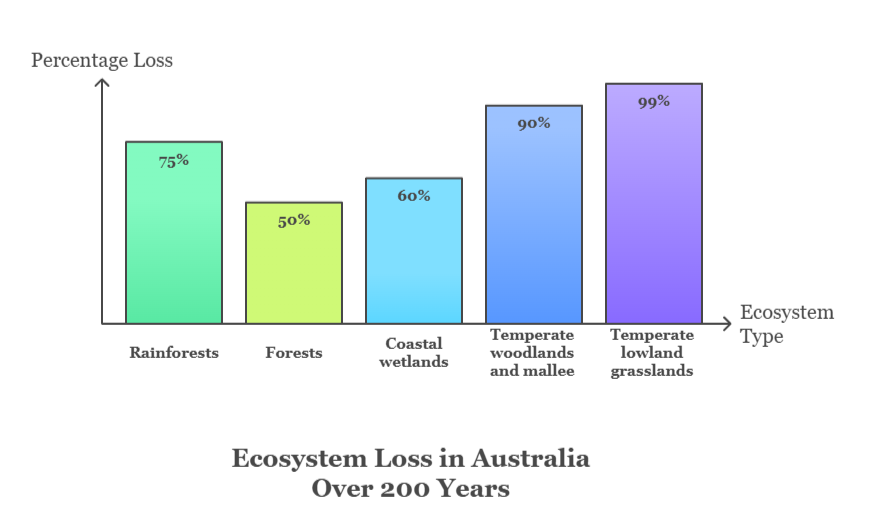
Australia has lost huge areas of native ecosystems since European settlement. The Australian Museum summarises losses over the past 200 years as:
- 75% of rainforests and nearly 50% of all forests
- Over 60% of coastal wetlands in southern and eastern Australia
- Nearly 90% of temperate woodlands and mallee
- More than 99% of the south-eastern temperate lowland grasslands
Current threats
Hotspots do not decline for one reason. They decline because pressures stack on top of each other.
Current threats include:
- Habitat fragmentation: Breaking large ecosystems into isolated patches
- Weed invasion: Exotic plant species out-competing native flora
- Altered fire regimes: Changes to traditional burning patterns affecting fire-adapted species
- Invasive animals: Feral cats, foxes, rabbits, and others decimating native species
- Climate change: Shifting temperature and rainfall patterns
- Urban expansion and agriculture: Converting natural habitats for human use
- Mining and industry: Particularly significant in resource-rich Western Australia
Threatened species statistics
Southwest Australia has the highest concentration of rare and endangered species in Australia. That concentration reflects both high endemism and heavy land-use pressure.
In South Australia's Hills and Fleurieu region, regional conservation assessments identified 126 threatened fauna species and 445 threatened flora species. They also estimate that 37 fauna and 38 flora are regionally extinct.
The Northern Hairy-nosed Wombat (Lasiorhinus krefftii) remains one of the world's rarest land mammals.
It was once confined to a very small area within Epping Forest National Park. Queensland now manages two populations to reduce the risk of a single-site loss.
Approaches to protecting biodiversity hotspots
Protection works best when it combines law, land management, and practical design choices on the ground.
Globally, hotspot work often focuses on three levers:
- Protecting remaining habitat
- Restoring key links between patches
- Funding species recovery where extinction risk is high
In Australia, protection uses both national and state mechanisms. The Australian Government's environment portfolio outlines national biodiversity priorities and programs. This includes initiatives focused on threatened species conservation.
A good example of focused investment is South Australia's Back from the Brink program. It targets priority landscapes and threatened species with funded on-ground action.
Connectivity is a simple concept with a large impact. It means keeping habitat patches linked so wildlife can move, breed, and adapt.
In the Forests of East Australia hotspot, published assessments describe whole-of-landscape initiatives that improve connectivity. They do this through voluntary protection and restoration programs across the Great Dividing Range.
Why Australia's biodiversity hotspots matter
Australia is home to between 600,000 and 700,000 species, the majority of which are endemic.
Over 80% of Australian mammal species are found nowhere else on Earth. This is the result of Australia's long period of geographic isolation following the breakup of Gondwana.
Australia continues to reveal new species at a remarkable rate. In 2024 alone, 750 new species of plants, animals, fungi, and other organisms were added to Australia's official species list.
Western Australia, with its diverse landscapes and relatively underexplored regions, leads in new plant discoveries.
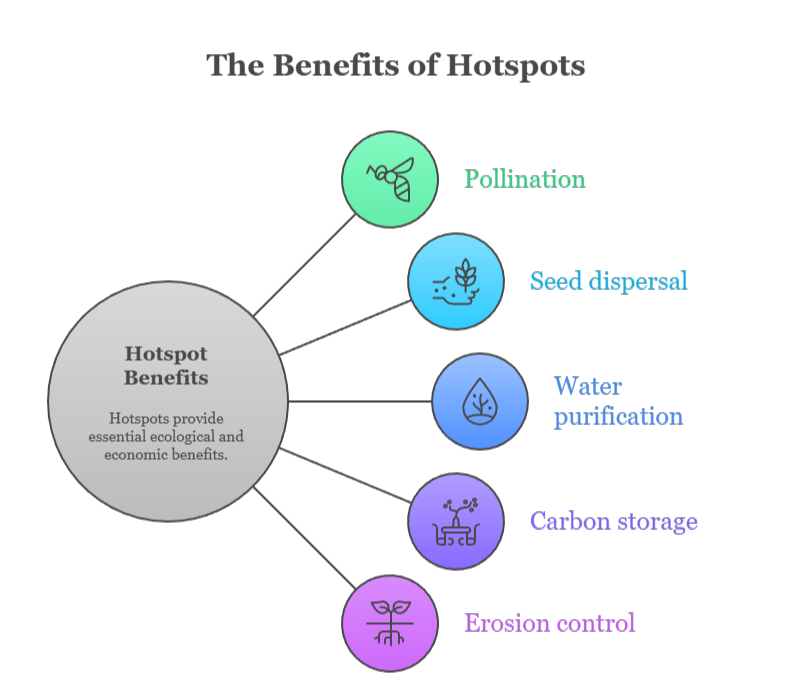
Key benefits of hotspot support include:
- Pollination, which helps plants reproduce and supports food systems
- Seed dispersal, including by cassowaries in tropical rainforests
- Water purification, as forests and wetlands filter runoff
- Carbon storage, as native vegetation stores carbon in biomass and soils
- Erosion control, as plant roots stabilise soil, especially after fire and heavy rain
Sustainable infrastructure solutions
Built environments can either push nature out or make room for it. Sustainable infrastructure reduces harm and helps ecosystems recover while still meeting cost, safety, and performance needs.
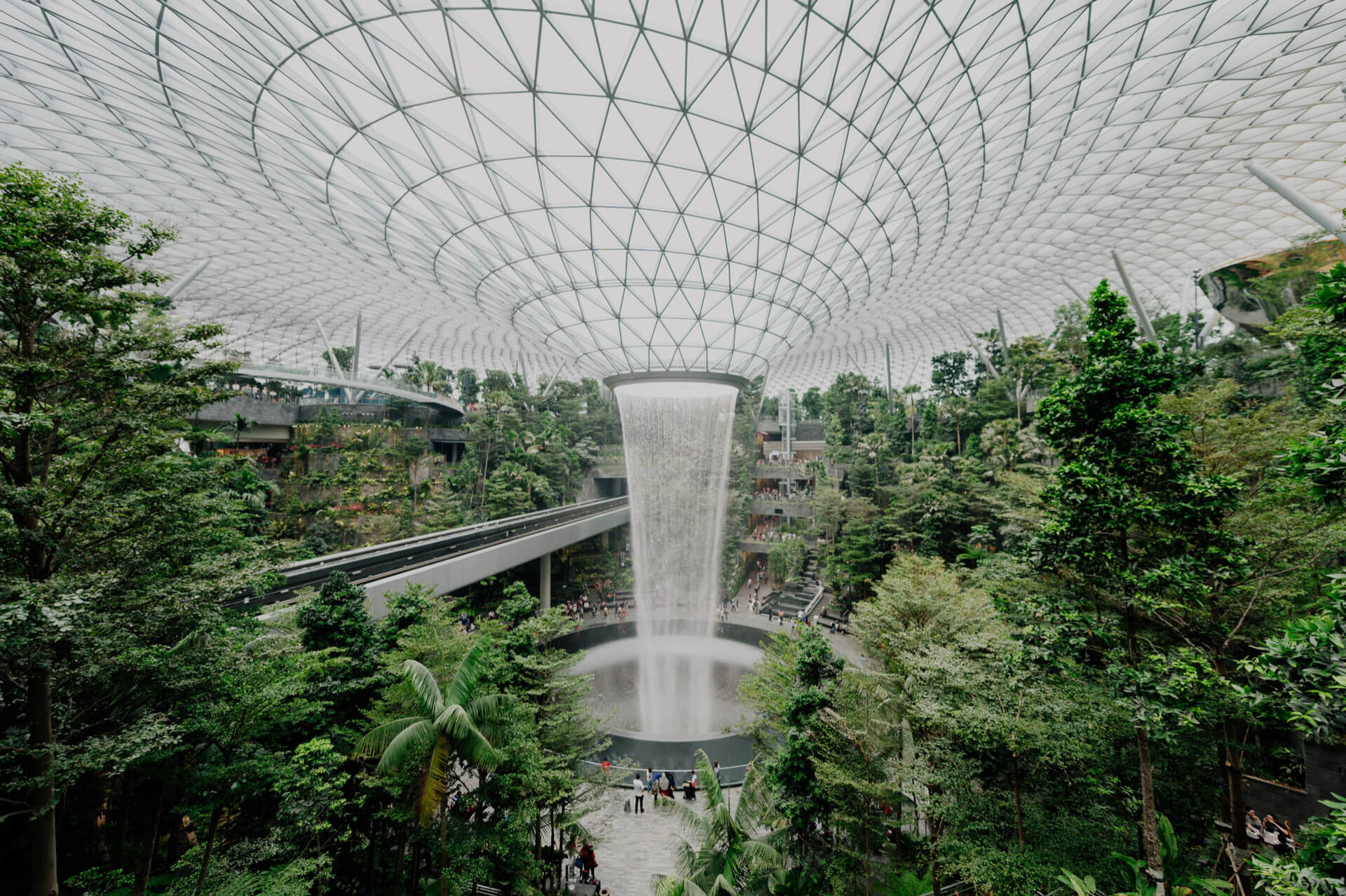
Green infrastructure in cities includes:
- Parks
- Street trees
- Rain gardens
- Green roofs and walls
- Urban farms
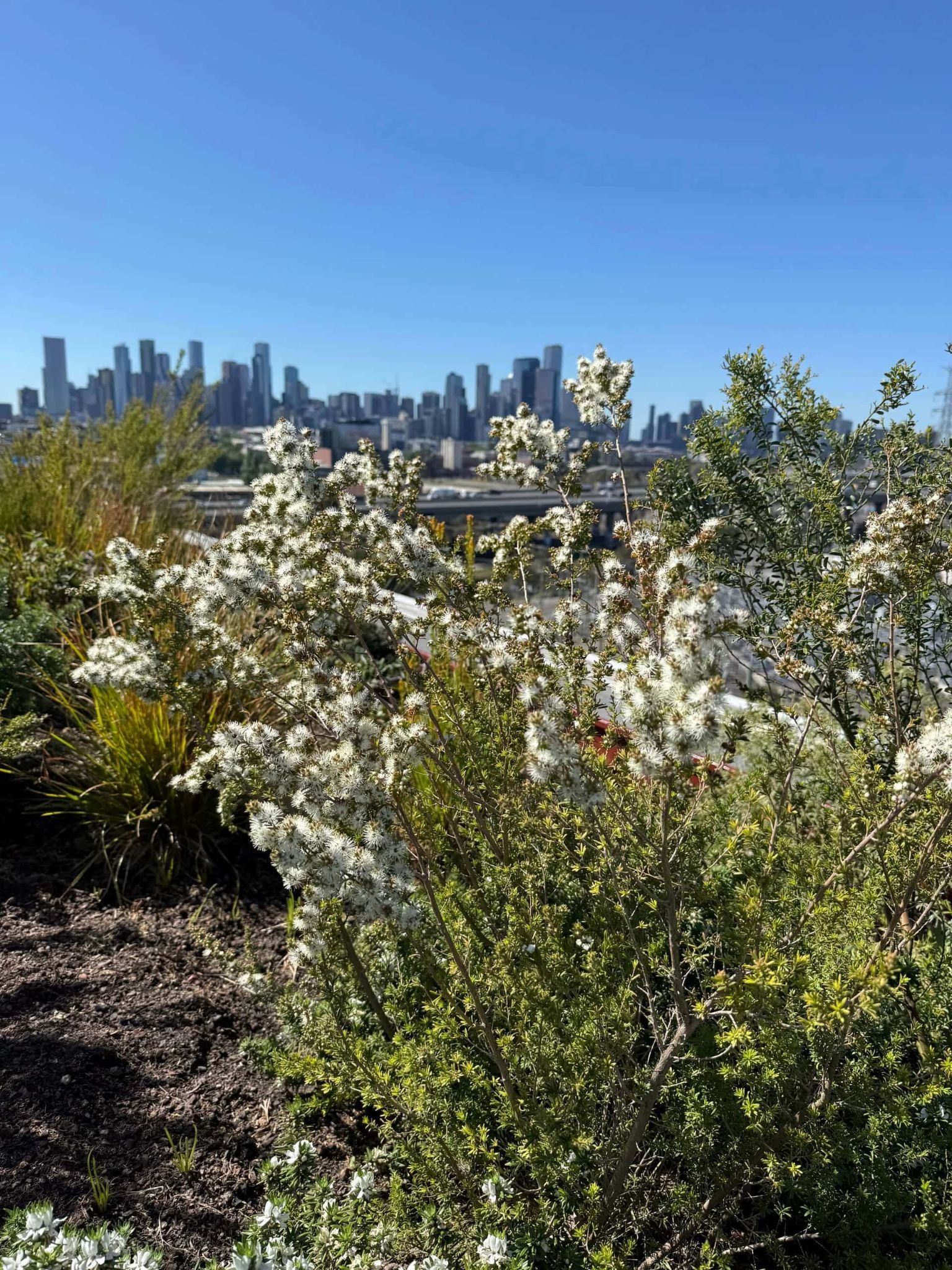
Green infrastructure can support biodiversity when it is designed as habitat, not decoration. It works best when it adds resources that urban wildlife is missing, like shelter, food plants, and safe movement routes.
Where green infrastructure can support biodiversity:
- Adding habitat structure (layers of plants, shelter, and nesting sites)
- Improving local cooling and moisture
- Reducing stormwater surges
- Creating stepping-stones across dense urban areas
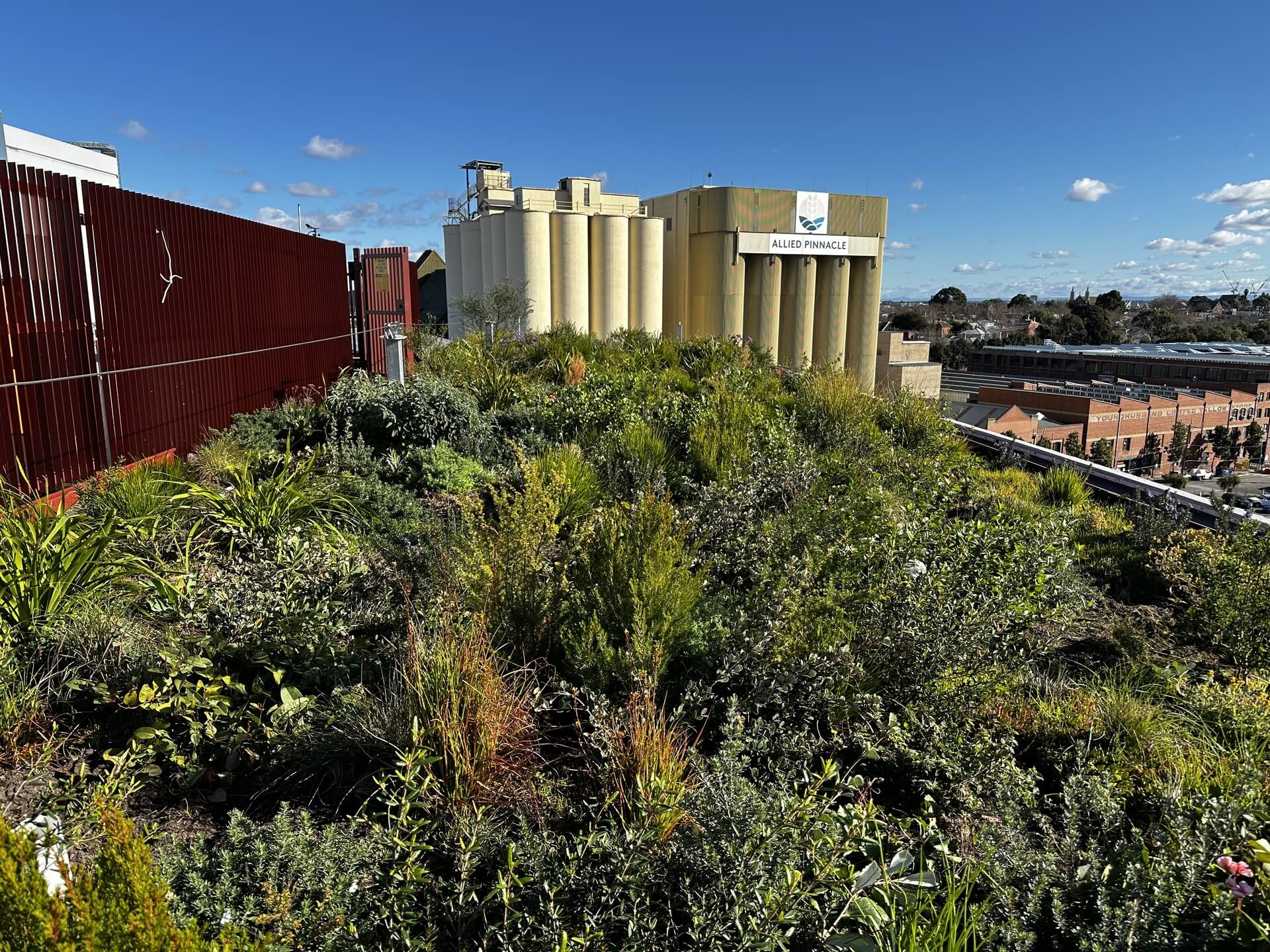
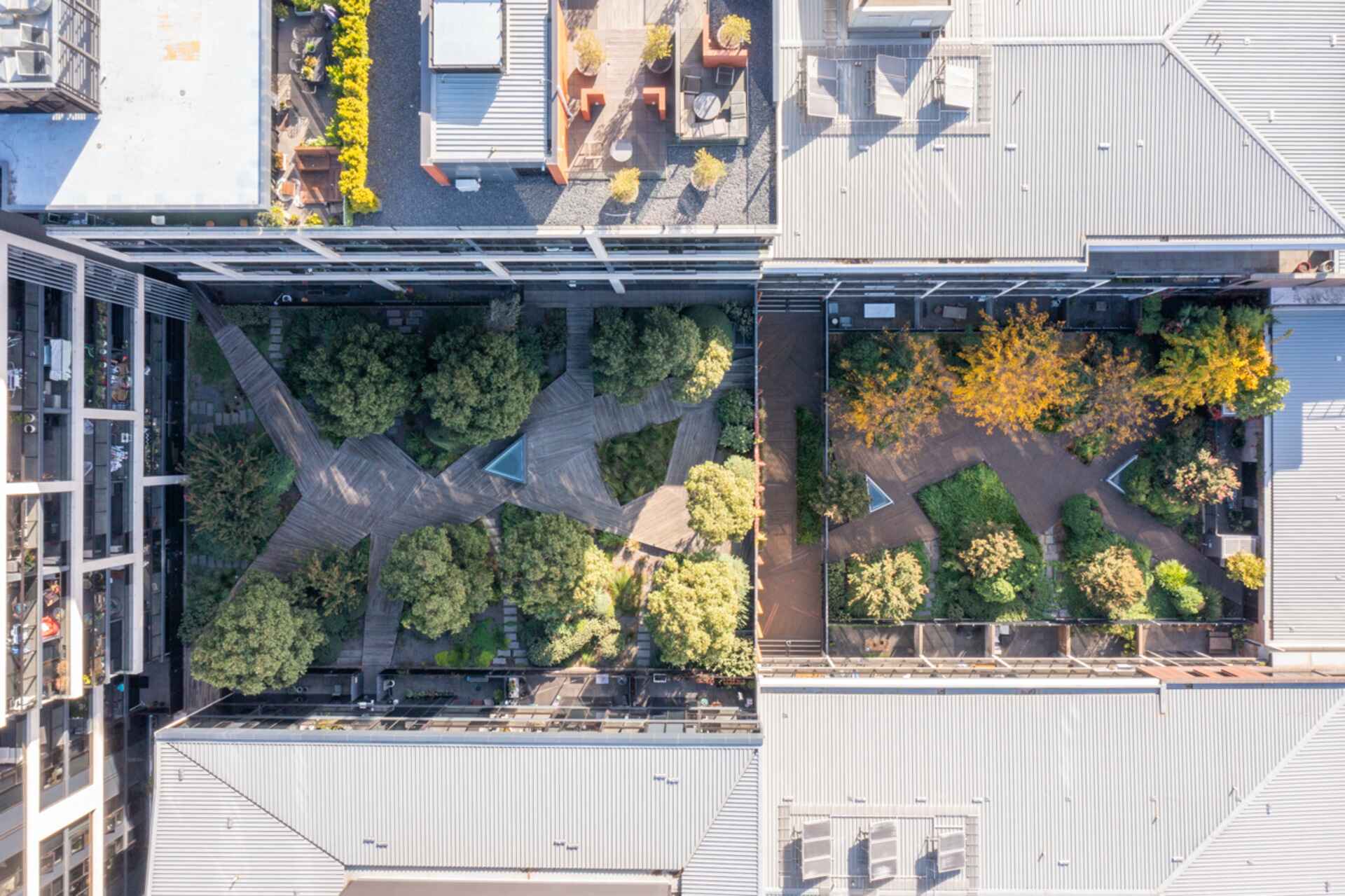
Green roofs are a strong example because they add vegetated space where there was none. More importantly, green roofs can support urban biodiversity.
Evergreen Infrastructure: building greener assets that support biodiversity
Built projects shape what survives in our cities and regions.
Evergreen Infrastructure helps clients reduce biodiversity impact by turning hard surfaces into functional green habitat.
We design and install green roofs and green walls, supported by design services and ongoing management. This approach matters because living systems need the right setup, and they need maintenance to keep performing.
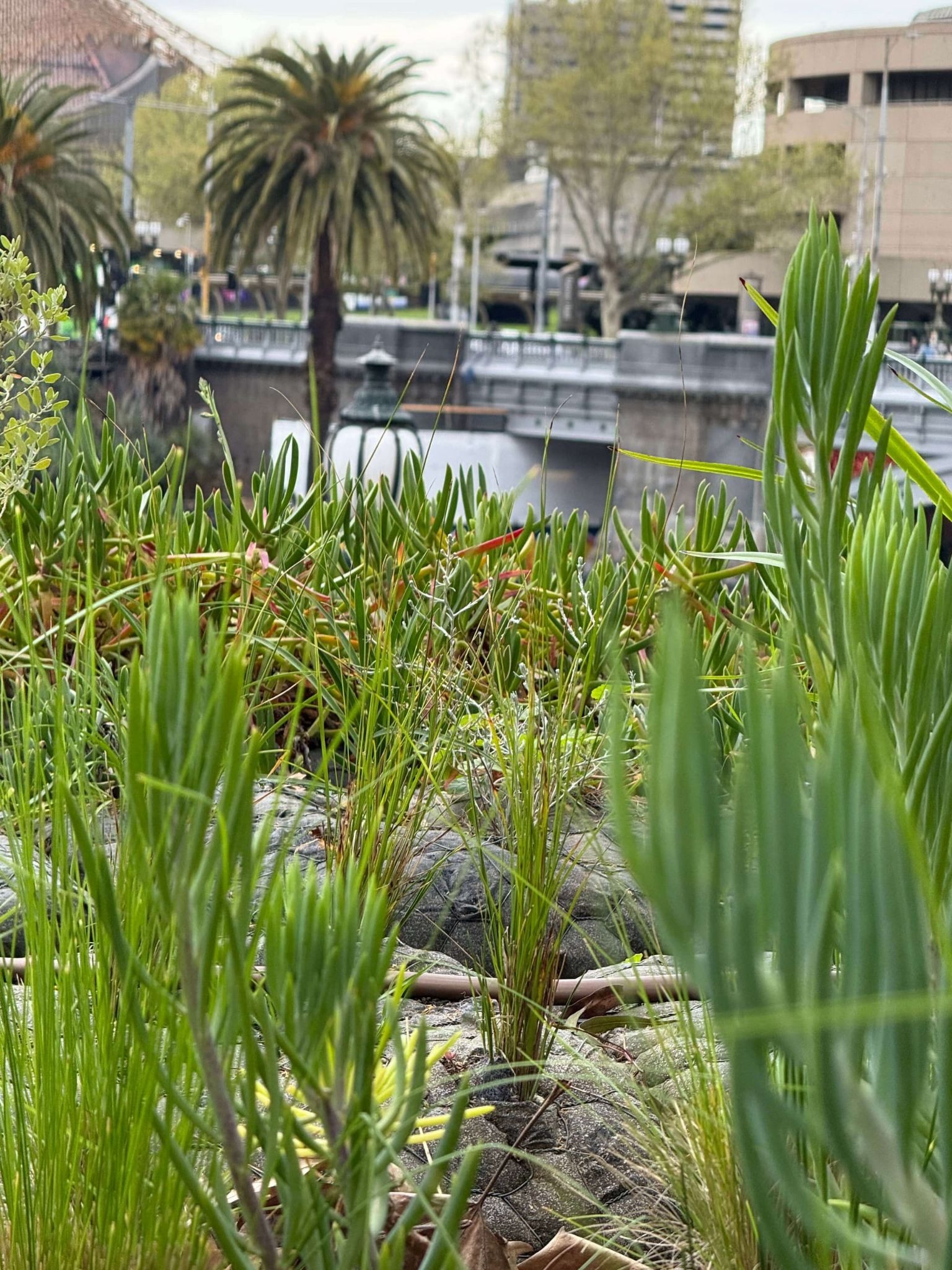
Our portfolio includes biodiversity-focused projects, including a biodiversity green roof at Federation Square and other biodiversity roof projects. They aim to do more than look green. The main goal is to support local species and improve urban resilience.
Design choices drive outcomes. Biodiversity gains are stronger when projects use locally suitable plant palettes, build in water-smart systems, and plan maintenance from day one.
Ongoing management is the difference between success and decline. Plants fail fast when irrigation, nutrition, and pests are not managed, especially through heat and dry periods. Evergreen Infrastructure's end-to-end delivery keeps accountability clear across the asset life cycle.
What this means for clients: fewer failures, more consistent performance, and clearer proof of outcomes for stakeholders, audits, and reporting.
Protecting hotspots and building nature-positive projects
Australia's biodiversity hotspots hold species the world cannot replace, yet they face ongoing pressure from habitat loss, invasive species, and a changing climate.
Protecting them takes strong conservation, but it also takes smarter choices in the places we build, maintain, and expand.
If your next project includes a roof, a wall, or a landscape interface, it is a chance to deliver real biodiversity value.
Evergreen Infrastructure designs and delivers green roofs and living green walls that perform as long-life assets, with end-to-end support from design to ongoing management.
Contact us to discuss a solution that fits your site, meets compliance needs, and supports measurable nature-positive outcomes.
We create green oases in urban settings
We'd love to discuss how we can partner to bring innovative, sustainable solutions to your urban environment.