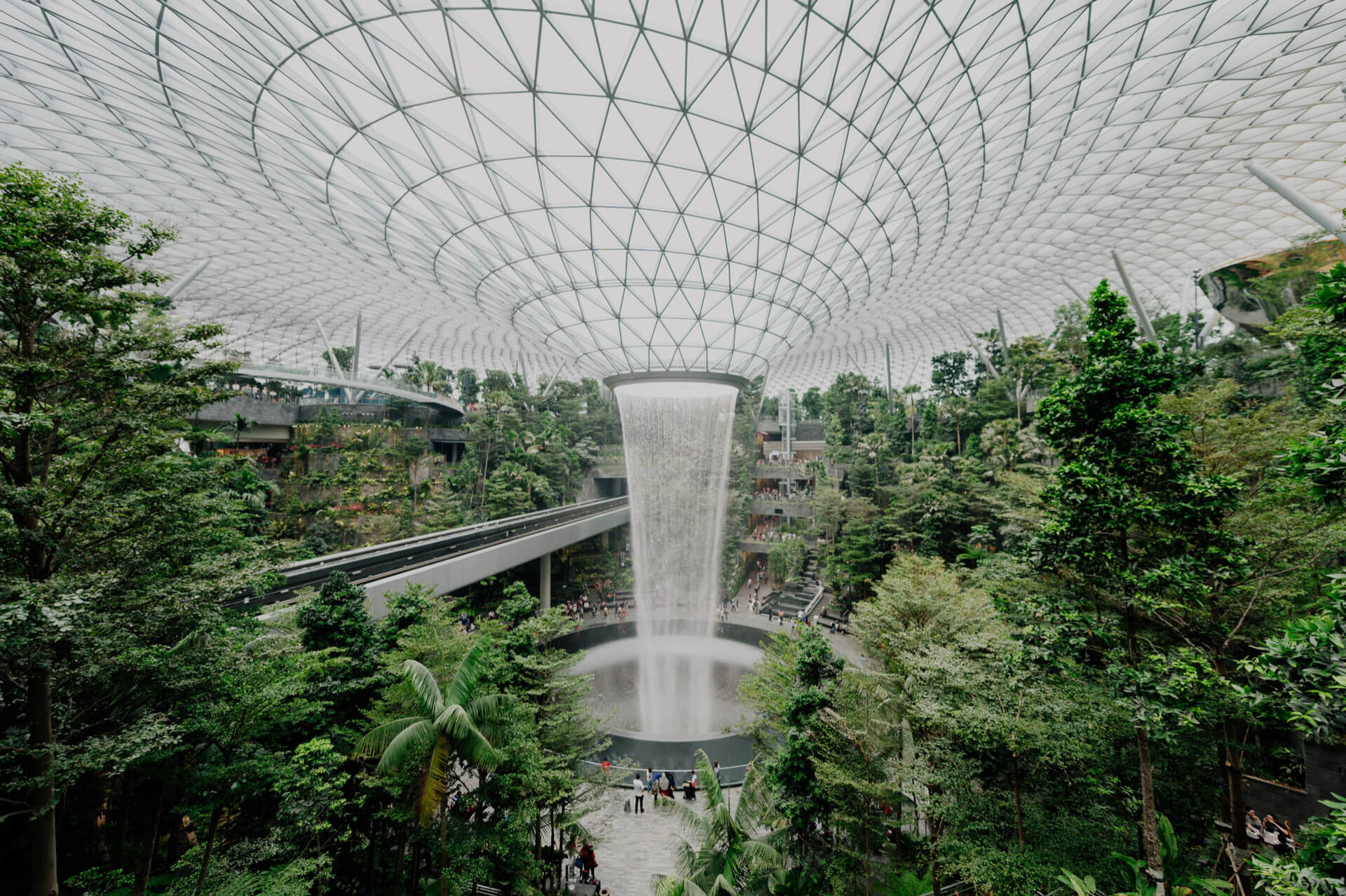
.webp)

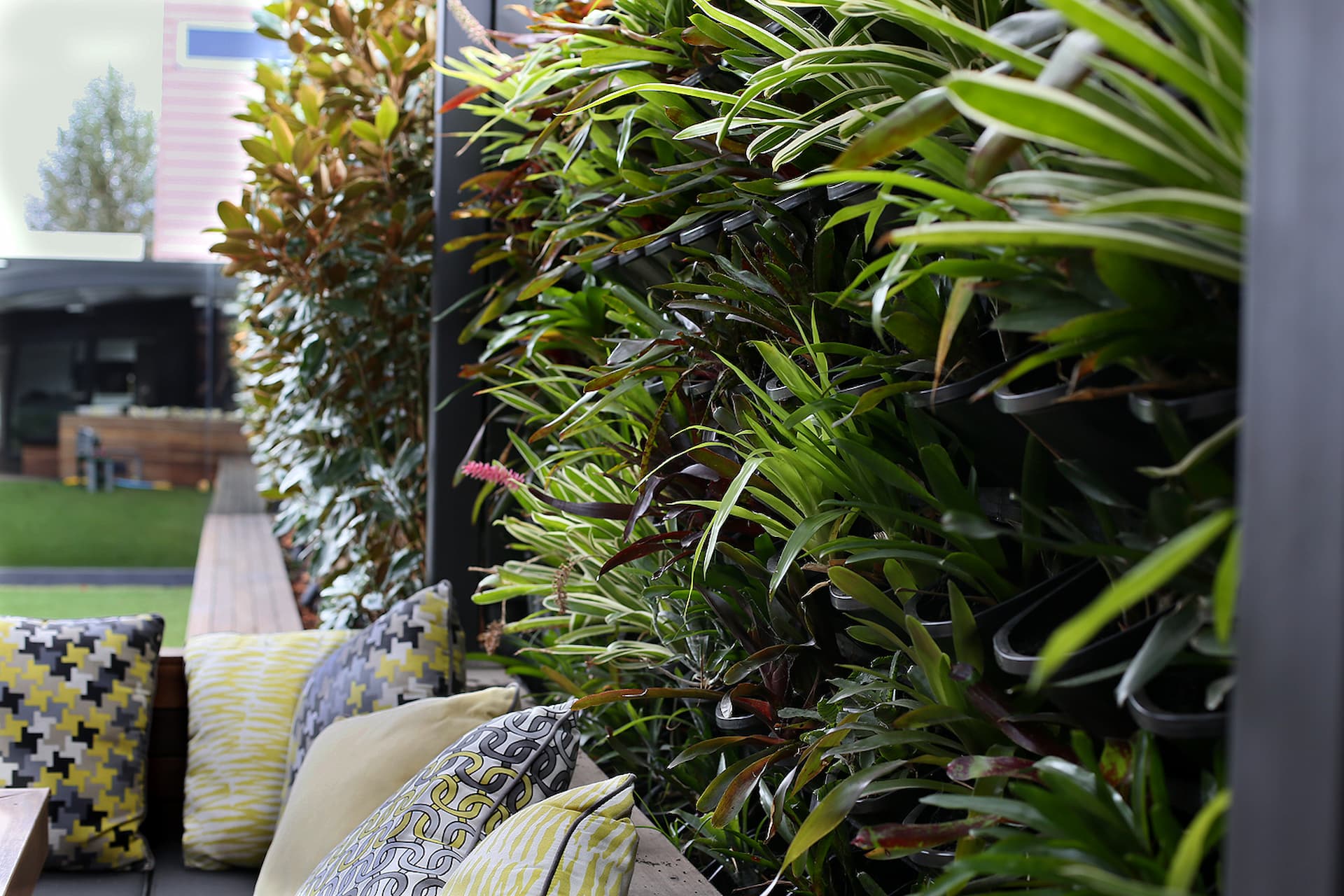
Biophilia suggests that people perform better when nature is an integral part of their everyday life. Being around nature can improve mood, reduce stress, and support focus. Biophilic design brings this to life through daylight, fresh air, greenery, natural materials, and calm and usable spaces. In Australia, the biggest wins come from starting small, which includes green views, pocket parks, green roofs, and living walls.
We don't only feel better when we're surrounded by nature, but we also perform better.
Biophilia, our innate connection to nature, affects many aspects of life, including our surroundings. It's reshaping how Australians design homes, workplaces, and public spaces.
Heat, noise, and constant screen time can wear us down quickly. As cities densify and people spend more time indoors, reconnecting to nature has become more important than ever.
This guide explains what biophilia means, what the evidence points to, and how to bring it into everyday life.
What is biophilia?
Biophilia is the idea that people tend to seek a connection with nature.
The term was first used by Erich Fromm and later popularised by E.O. Wilson. Wilson framed it as an inbuilt pull towards "life and lifelike processes." In plain terms, our brains often treat nature as a safe, supportive setting.
Biophilia shows up in everyday choices. People naturally gravitate towards light, greenery, water, and fresh air.
Do you feel calmer near water or under trees, even if you can't explain why? This is what biophilia is all about.
What are the benefits of biophilia?
Having regular contact with nature is more important than you might think.
Research often finds that people experience better mood and lower stress after time in natural settings. Biophilic design aims to bring these effects into everyday places.
Here's how this concept reflects on everyday life:
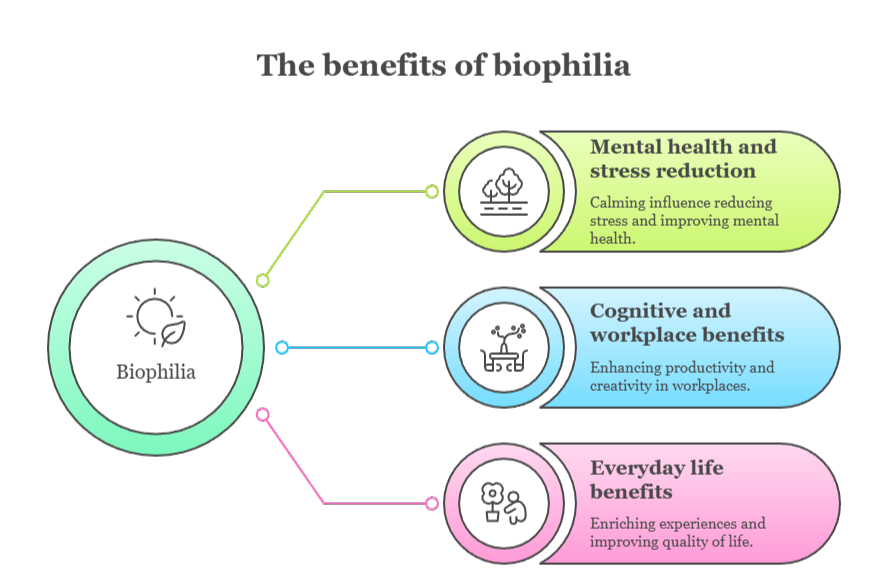
Mental health and stress reduction
Healthcare can be stressful for everyone. Biophilic design can make clinical spaces feel safer and more restorative.
A 2024 systematic review found that biophilic hospital design is linked with:
- Shorter stays
- Lower pain
- Lower stress for staff
It also reported better experiences for patients and families.
Victorian Health Building Authority guidance links natural light, ventilation, and green spaces with lower blood pressure and faster recovery. It also notes possible improvements in morale and staff turnover.
Other key benefits commonly linked to biophilic exposure include:
- Reduced perceived stress and faster stress recovery
- Lower anxiety levels and improved emotional regulation
- Improved mood and greater day-to-day resilience
- Reduced mental fatigue through restorative "micro-breaks"
- Increased sense of calm, comfort, and safety in the environment
Cognitive and workplace benefits
Work can drain attention fast. Nature cues can reduce mental fatigue and support better focus.
The Human Spaces report found that people in workplaces with natural elements reported:
- 15% higher well-being
- 6% higher productivity
- 15% higher creativity
Beyond well-being, biophilia can support cognitive function and performance in work and learning contexts.
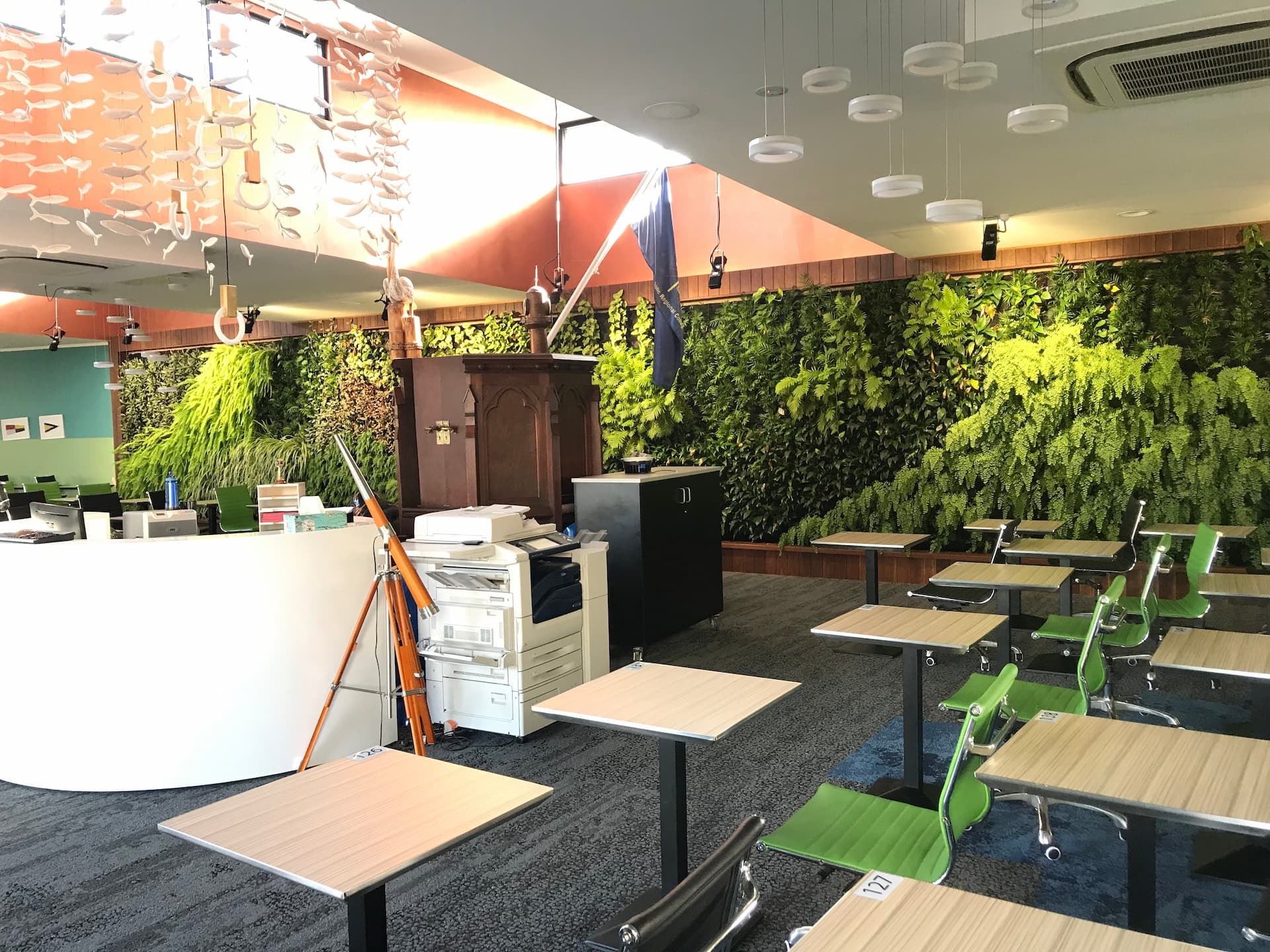
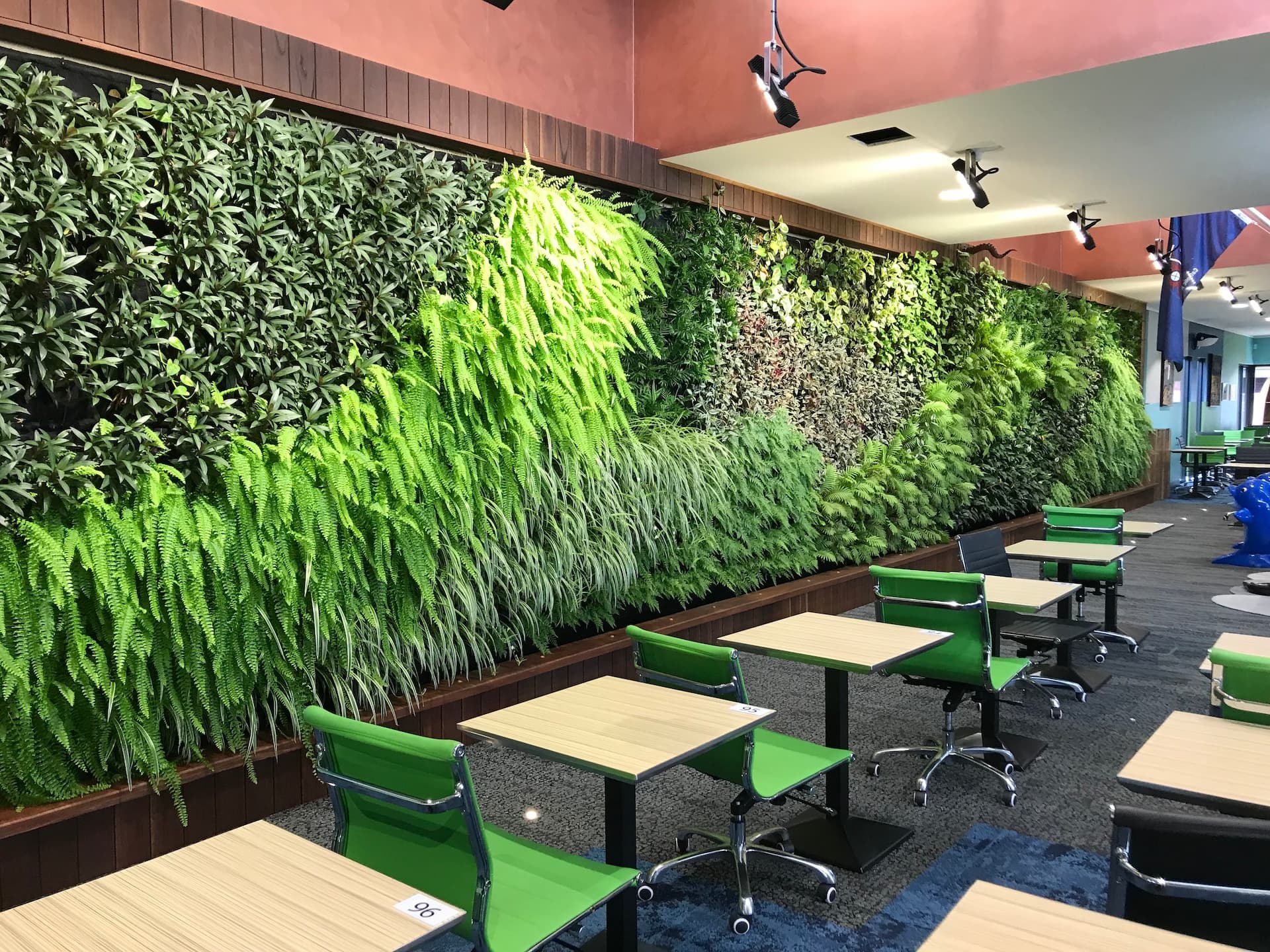
Access to natural light and views, along with the presence of natural forms and materials, is commonly linked to improved attention and reduced cognitive fatigue.
Therefore, core cognitive and workplace benefits include:
- Improved attention and sustained focus
- Reduced cognitive fatigue and faster mental recovery
- Higher perceived productivity and task persistence
- Improved satisfaction with the work environment
- Potential reduction in burnout risk
Everyday life benefits
Biophilia is not limited to offices or large-scale design projects. It can be integrated into daily routines and home environments in simple, low-effort ways.
Even small, consistent interactions with nature can have many advantages throughout the day.
Everyday benefits of biophilia can include:
- Better sleep quality through healthier light exposure and calming routines
- Improved mood and reduced irritability during busy periods
- More consistent energy and improved recovery from daily stress
- Greater motivation for movement and time outdoors
- Stronger sense of connection to place and personal comfort at home
Biophilic design in Australian homes
Australian homes are leaning into biophilia through native planting, indoor–outdoor flow, and natural materials.
The goal is simple: make spaces feel calmer, more comfortable, and more liveable.
You can see this shift in both new builds and renovations. Many projects now treat the house and garden as one system.
Award-winning Australian examples
Pepper Tree Passive House (Unanderra, NSW)
An addition opens onto a terrace set in the canopy of an existing tree. Timber-lined interiors and a warm, earthy palette support a stronger sense of nature indoors. Planting is used as a daily feature, not a backdrop. The home treats greenery as part of the living experience.
Maxwell House (Melbourne, VIC)
This eco-home was designed on biophilic principles from the start. It prioritises greenery views, daylight, natural ventilation, and nature-based materials. The outcome is a home that feels high-performance and grounded. Nature is built into the everyday routine.
Carrickalinga Shed (Fleurieu Peninsula, SA)
The layout wraps four wings around an internal courtyard. That courtyard helps with shelter, daylight control, and a strong indoor–outdoor rhythm. The project also includes rainwater harvesting and solar PV. Sustainability and well-being are treated as one package.
Courtyard House (VIC)
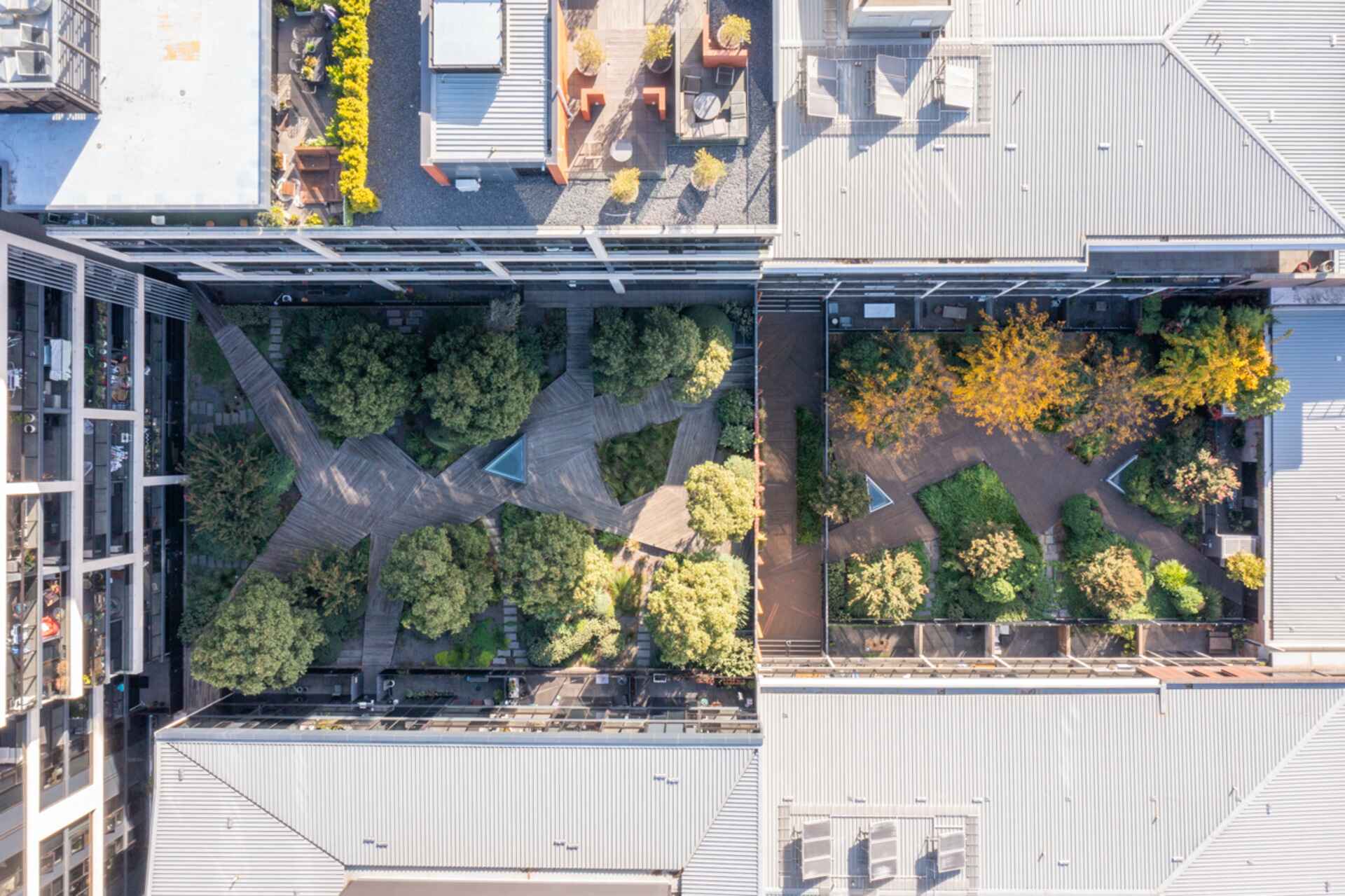
This design treats the landscape and the house as one connected system. Located in Albert Park, Melbourne, the home by Clare Cousins Architects features a central courtyard garden.
Key trends in Australian biophilic home design
Australian biophilic home design is getting more practical and more deliberate. The goal is everyday nature contact that also improves comfort in a warming climate.
These trends show up in new builds and renovations. They also show up on large blocks and tight urban sites.
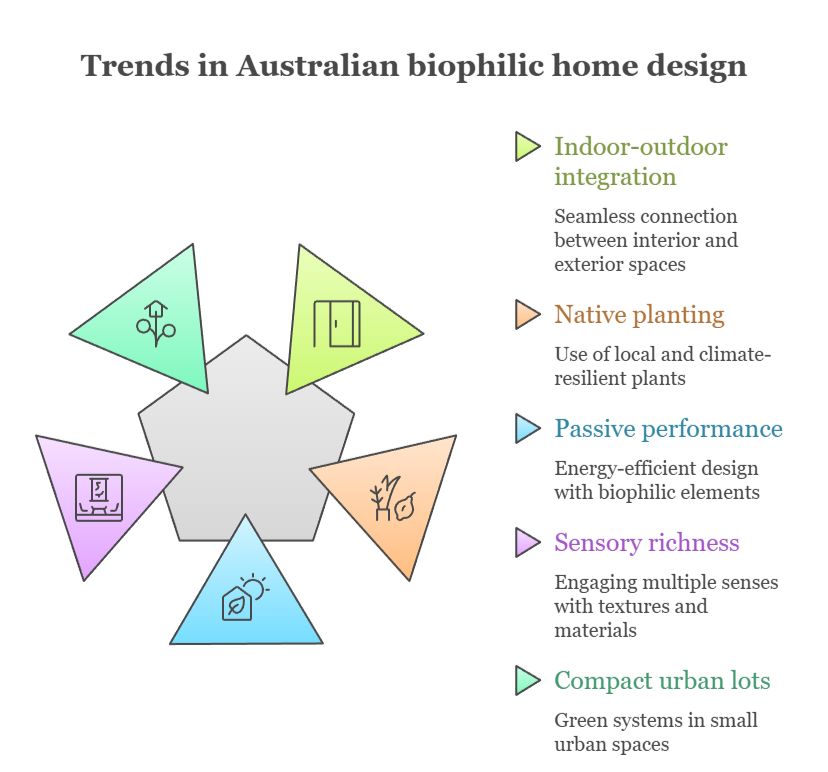
Stronger indoor-outdoor integration
Homes are being planned so that living spaces open straight to greenery. Courtyards, breezeways, and large sliding or stacking doors make it easy to move between inside and outside.
This isn't only about entertaining. It's about making nature part of normal routines, like cooking, working, and family time.
In many projects, living areas are elevated into treetops or oriented towards bush, rivers, or reserves. That creates a "treehouse" feel, with constant views of canopy and sky.
Native and climate-resilient planting
Planting is shifting from "pretty garden" to "living system." Landscape designers often look for gardens that give back to the landscape.
That means planting that supports birds, pollinators, and local habitat. It also means planting that can handle heat, wind, and dry spells without constant inputs.
On suburban blocks, designers often use layered planting, green roofs, and species that echo local plant communities.
The aim is shade, cooling, texture, and biodiversity, not just colour.
Passive performance + biophilia together
Biophilic design is increasingly paired with energy-smart design. Homes are combining comfort, efficiency, and nature contact in one plan, rather than treating them as separate goals.
Projects like Tall Tree House and Pepper Tree Passive House are often discussed in this context. They link high-performance building design with a strong visual and physical connection to nature.
Designers often combine passive solar planning with biophilic features. That can mean using sun and shade well, while also shaping views, planting, and outdoor rooms.
Sensory and material richness
Biophilic homes use more than plants. They also lean on textures, natural materials, and sensory comfort.
Timber is a common choice, often Australian species such as spotted gum. Stone, lime render, and low-VOC finishes also show up often.
These material choices do two jobs at once. They improve the feel of a space, and they can reduce indoor air irritants.
Views are also planned more carefully. Designers often frame tree canopies and sky from stairwells, kitchens, and hallways, so nature appears in daily movement paths.
One of the best ways to achieve this is through sensory gardens.
Compact urban lots embracing green systems
Smaller sites are not stopping biophilia. Urban homes are using intensive greening to overcome small footprints.
This often includes roof gardens, vertical planting, and compact courtyards that bring light and greenery into the centre of the home. Some projects even add aquaponics for daily contact with living systems.
These features can also help with thermal comfort. Shade and evapotranspiration (cooling from water evaporating off leaves and soil) can reduce heat build-up around the home.
In dense neighbourhoods, these green systems can act as buffer zones. They create privacy, soften noise, and improve outlook, even when lots are close together.
Practical biophilic strategies for Australian homes
Biophilia works best when it is built into daily routines. The aim is regular nature contact that you can see, feel, and use.
You can start indoors, outdoors, or both. Small changes often make the biggest difference because you notice them every day.
Indoor strategies
Start with what you look at most. A strong biophilic home often has clear sightlines to greenery, sky, or natural light.
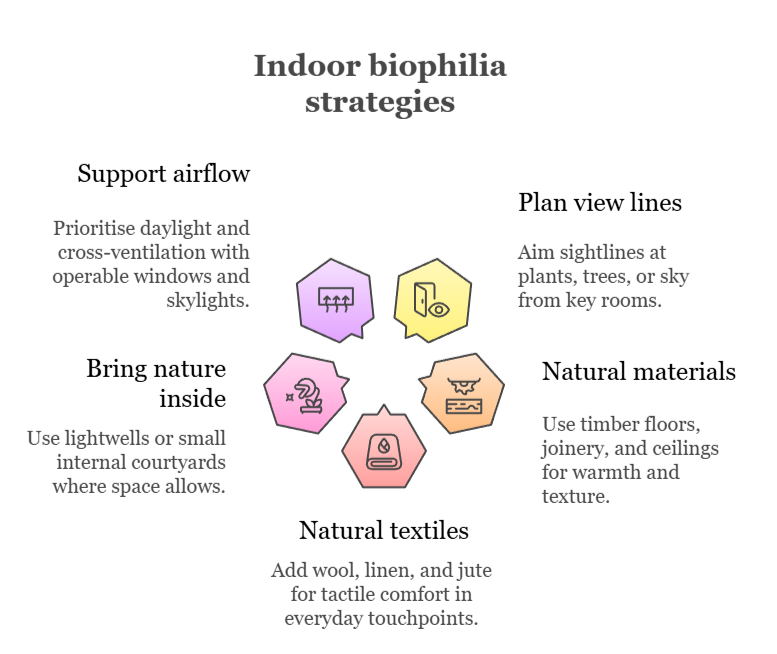
Here are some high-impact indoor ideas:
- Plan view lines: From the kitchen, living room, and desk, aim sightlines at plants, trees, or sky.
- Use natural materials: Timber floors, joinery, and ceilings add warmth and texture.
- Add natural textiles: Wool, linen, and jute create tactile comfort in everyday touchpoints.
- Bring nature into the centre: Use lightwells or small internal courtyards where space allows.
- Support airflow: Prioritise daylight and cross-ventilation with high-level operable windows, skylights, and well-placed openings.
Internal courtyards and lightwells can do more than bring light in. They can hold ferns, small native understory plants, or even a simple water bowl for movement and sound.
Outdoor and garden strategies
Outdoor biophilia works when the space is easy to use. Design the garden like an outdoor room, not a separate zone.
Courtyards are a strong option because they create privacy, shade, and comfort. They also make it more likely that people step outside for short breaks.
Here are some high-impact outdoor ideas:
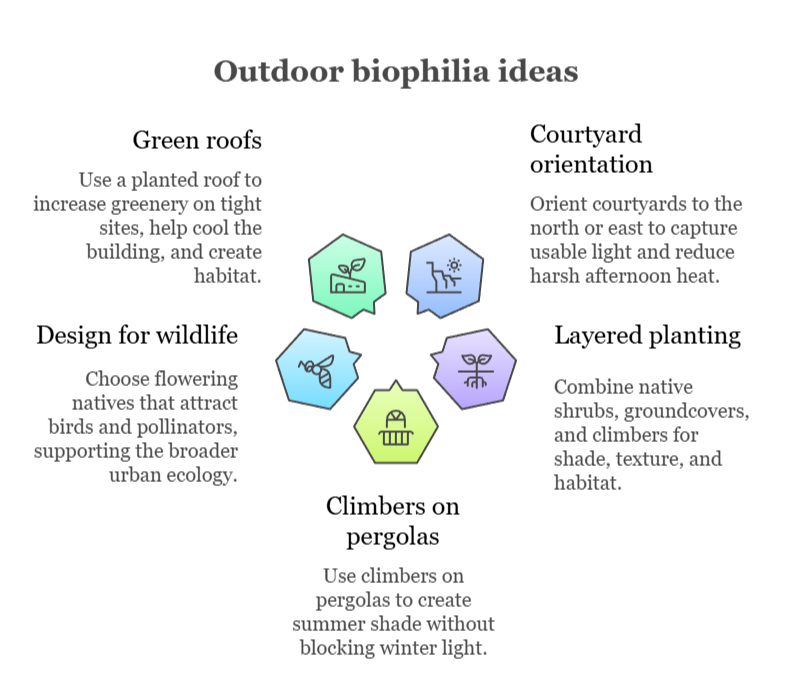
- Orient courtyards to the north or east where possible, to capture usable light and reduce harsh afternoon heat.
- Layer planting: Combine native shrubs, groundcovers, and climbers for shade, texture, and habitat.
- Use climbers on pergolas: This creates summer shade without blocking winter light.
- Design for wildlife: Choose flowering natives that attract birds and pollinators, supporting the broader urban ecology.
- Green roofs: Use a planted roof to increase greenery on tight sites, help cool the building, and create habitat.
Water and stormwater features can also play a role. They add sound, movement, and cooling, even when they are small.
Bring the benefits of biophilia to life with Evergreen Infrastructure
Biophilia is not a design trend. It is a practical way to make homes, workplaces, and neighbourhoods feel healthier and more liveable.
In Australia, the strongest results come from nature contact that you can repeat every day. That can be shade trees, planted courtyards, green roofs, living walls, or cooler streets that invite people outside.
Evergreen Infrastructure helps turn biophilia into working green infrastructure.
If you want a project that delivers shade, cooling, and biodiversity, talk to Evergreen Infrastructure. We can help you build a practical greening plan that stays healthy over time.
We create green oases in urban settings
We'd love to discuss how we can partner to bring innovative, sustainable solutions to your urban environment.