.webp)


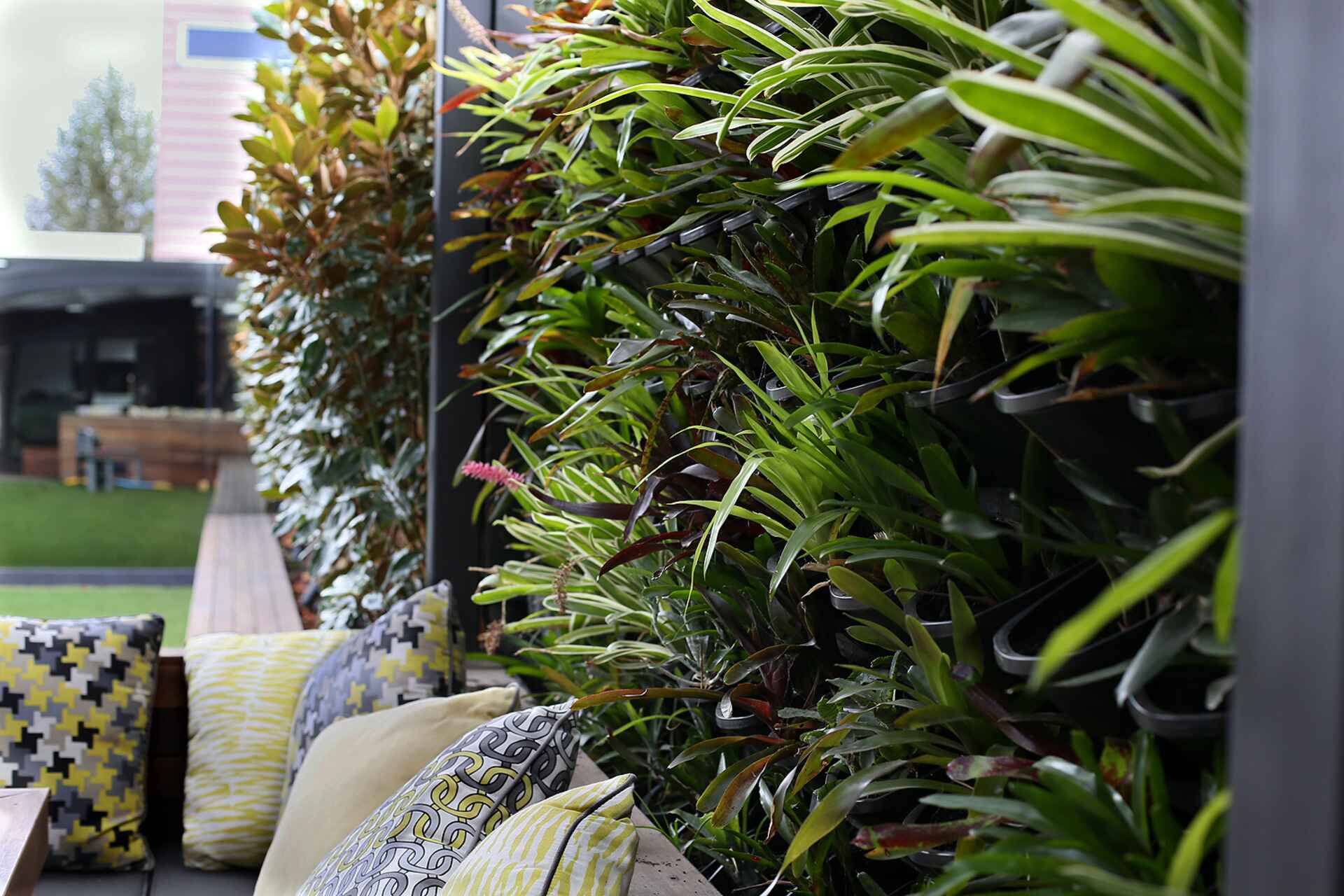
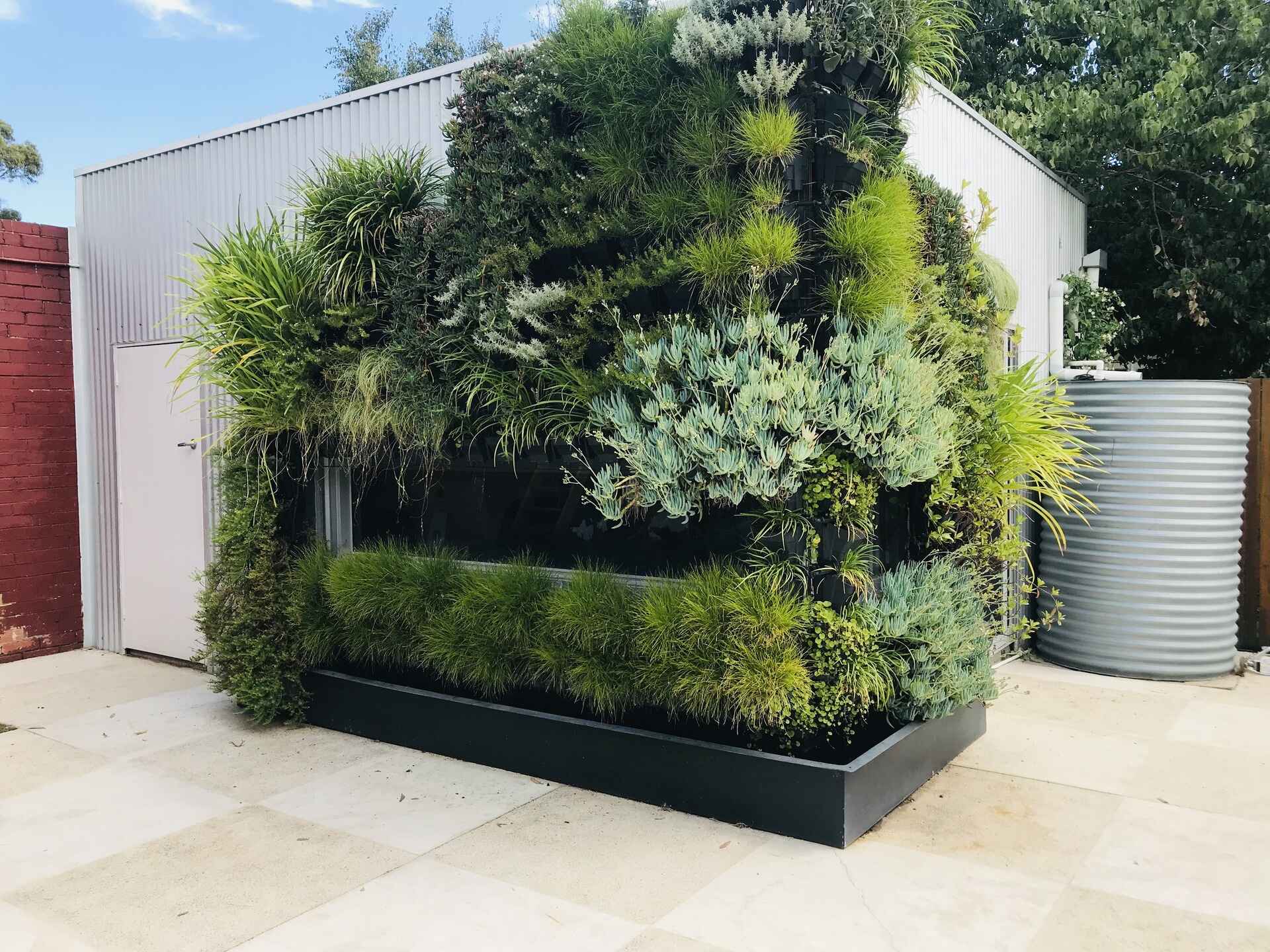
A living wall is a vertical surface planted with greenery grown in modules or panels fixed to a structural frame. Choosing one comes down to four factors: system type, plant selection, irrigation design, and ongoing maintenance. Get these right, and you can get cleaner air, cooler buildings, less noise, improved wellbeing, and Green Star credit. In Australia, costs range from $500 for small modular installations to $30,000 for large custom builds. Well-maintained systems last a decade or more.
A living wall is a vertical structure covered in plants, grown in a soil-based or soilless medium fixed directly to a wall surface.
Living walls are also called green walls or vertical gardens. They deliver measurable environmental and economic benefits. When done right, they can also provide significant wellbeing advantages for buildings.
Green walls clean the air, support urban biodiversity, and cool ambient temperatures. They also contribute to Water Sensitive Urban Design (WSUD) compliance.
They're used across commercial, civic, health, education, and residential settings throughout Australia.
What is a living wall?
A living wall is a planted vertical surface where plants can grow in:
- modules,
- felt pockets, or
- a continuous growing medium attached to a structural frame.
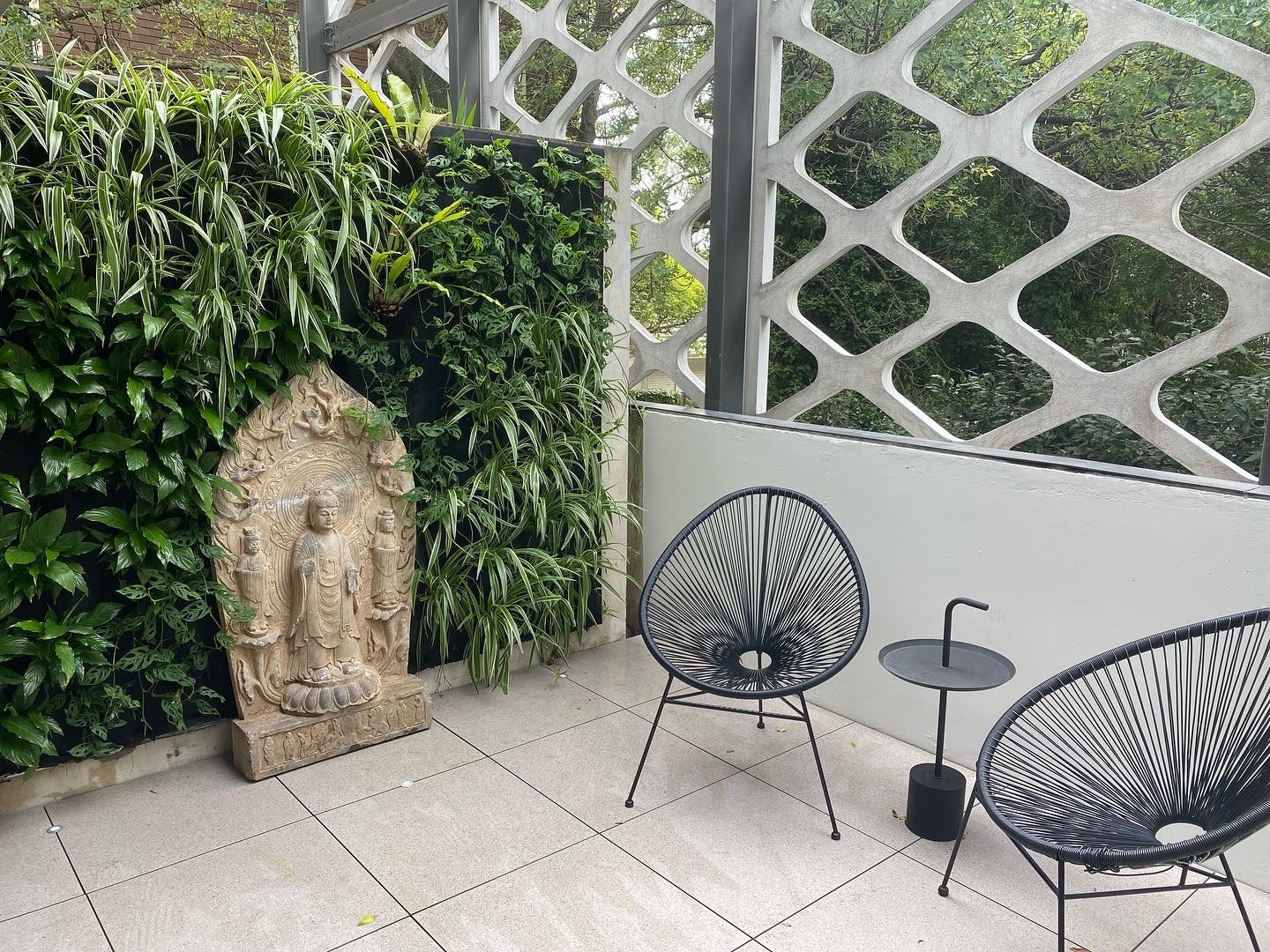
The frame, in that case, mounts to an existing wall or stands freestanding.
Living walls differ from green façades, where climbing plants root at ground level. In a living wall, each plant has its own growing medium at a certain height. This allows for far greater species diversity and design precision.
What are the environmental benefits of living walls?
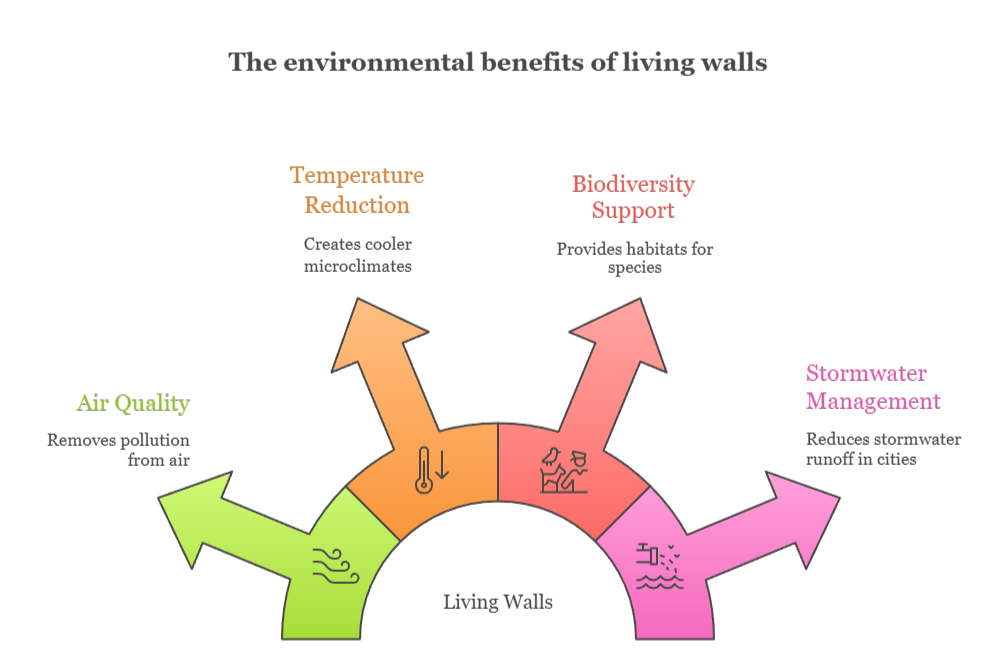
Living walls remove pollution from the air and reduce ambient temperatures. They can also support biodiversity and reduce stormwater runoff in urban environments.
Air quality improvement
A University of Technology Sydney (2026) case study found that plants in a living wall trap airborne particles on their foliage. The microbes in the growing medium break down gaseous pollutants like volatile organic compounds (VOCs).
Peer-reviewed research shows living walls can absorb 0.44–3.18 kg of CO₂ per square metre each year.
Temperature and urban heat reduction
Green walls reduce ambient air temperatures through two mechanisms: shading and evapotranspiration. Leaves intercept solar radiation, reducing the heat absorbed by walls. Water released through leaves cools the surrounding air.
A climate-informed systematic literature review by Susca et al. (2022) examined over 647 studies on green walls. The review found they can reduce ambient air temperature by up to 8°C in dense, high-rise urban environments. The effect is most pronounced in narrow street corridors.
Biodiversity support
Soil-based living walls attract more wildlife than systems using artificial substrates.
A 2025 Urban Science study by Lunt et al. examined plant selection and substrate effects on urban biodiversity. It found that ivy, Mexican daisy, and honeysuckle attracted the highest number of pollinator species.
The Australian Institute of Landscape Architects (AILA) recognises that green walls can improve biodiversity and healthy living. They also enhance urban amenity within the green infrastructure network.
Noise reduction
A 2020 study by Paull et al. measured ambient noise levels at green wall and bare wall sites across Sydney. The study was published in the International Journal of Environmental Research and Public Health. It found significantly lower noise at green wall sites, with a maximum reduction of 12.13 dB.
Stormwater management
Ostendorf et al.'s 2011 Green Roofs for Healthy Cities paper found that green retaining walls can cut urban stormwater runoff.
This makes green walls a useful Water Sensitive Urban Design (WSUD) tool. They help Australian developments meet stormwater management planning requirements.
What do living walls cost in Australia?
Professionally designed, supplied, and installed systems typically range from $800 to $1,500 per square metre. Basic DIY kits start around $300 per square metre before plants.
Living wall pricing in Australia depends on:
- Size
- System type
- Plant selection
- Location (indoor or outdoor)
- The complexity of the supporting infrastructure
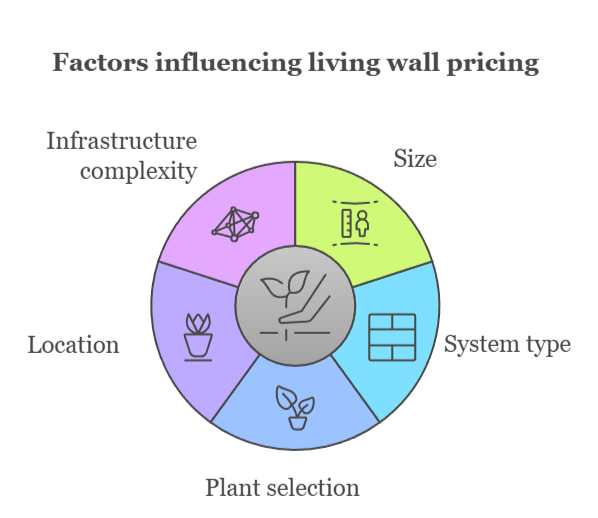
Cost ranges by project size are set out below.
Source: Evergreen Infrastructure, 2025.
These figures cover the structure, plants, irrigation, and installation. Costs scale with:
- Plant density (a lush wall typically requires 20–40 plants per square metre)
- The use of exotic versus hardy native species
- Whether the project is a new build (cheaper if planned early) or a retrofit (more labour-intensive)
Indoor vs. outdoor installations
Indoor living walls generally cost more than outdoor ones. They require:
- LED grow lighting
- Climate control
- Carefully managed drainage to prevent water damage
- More complex irrigation
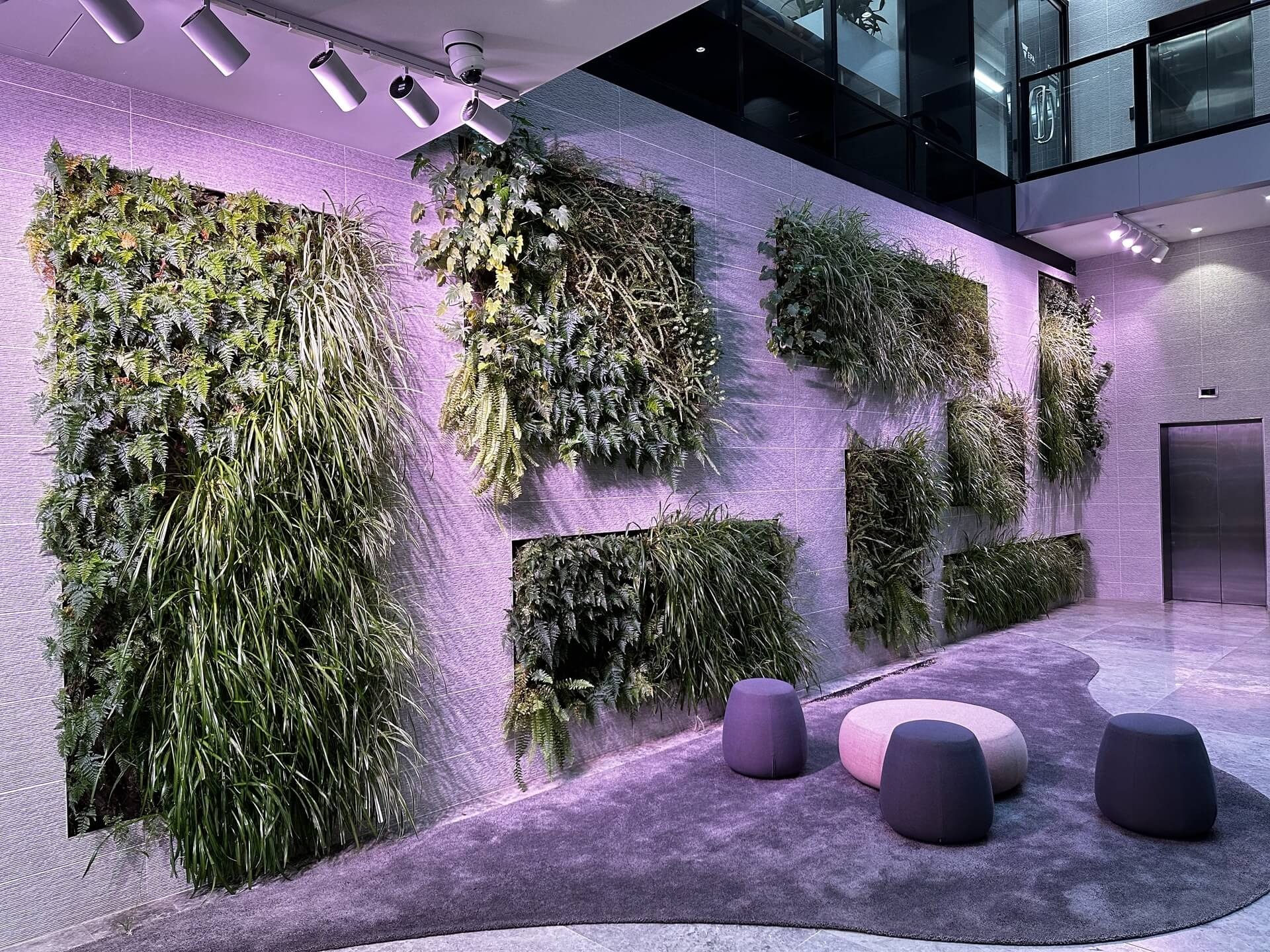
Outdoor walls draw on natural light and rainfall, lowering some infrastructure costs. But they must be engineered to handle wind load, sun exposure, and seasonal changes. Larger exterior installations often require council and engineering approval.
Ongoing maintenance
A living wall is not a set-and-forget feature. Professional maintenance packages typically range from $200 to $2,000 per month. It depends on the wall's size, accessibility, and system complexity.
What are the wellbeing and productivity benefits?
Living walls reduce emotional distress and lower heart rate in people who view or sit near them.
A 2026 experimental study by Kang and Yoon tracked 58 people using Fitbits and EEG sensors. It found that every green infrastructure setting tested reduced heat stress compared to a bare wall. Participants near live greenery also reported lower emotional distress.
A study in Frontiers in Psychology (2026) by Liu et al. compared three green wall shapes — curved, straight, and angled — to a wall with no greenery. All three green walls beat the bare wall on EEG readings and how people said they felt. Curved designs worked best for reducing fatigue and boosting attention and relaxation.
These findings have direct relevance for:
- Health and aged care providers
- Education campuses
- Corporate building owners
Research by the Harvard T.H. Chan School of Public Health compared workers in green-certified offices to those in regular ones. Those in green buildings scored up to 26% higher on cognitive tests and reported better health and sleep.
What types of living wall systems are available?
There are two main types of living walls: soil-based and soilless.
Soil-based systems
Soil-based systems grow plants in a soil or growing medium held within the wall structure.
A 2025 study by Lunt et al. found that soil-based living walls support more wildlife than those using artificial substrates. They are heavier and need more structural support. However, they deliver stronger biodiversity and ecological outcomes.
Hydroponic and felt-pocket systems
Hydroponic systems feed plants through a water and nutrient solution, with no soil. Felt-pocket systems use a fabric substrate. Both are lighter and easier to install on existing walls.
Hydroponic and felt-pocket systems suit interior commercial applications where weight is a constraint.
Modular panel systems
Modular systems use factory-produced plant panels clipped to a wall-mounted frame. Individual panels can be replaced without disturbing the rest of the wall.
Project timelines typically run several weeks from approval to installation. It depends on the wall size, plant selection, and site conditions.
How do you maintain a living wall?
You maintain a living wall by following an upkeep plan developed at the design phase. This includes regular irrigation checks, pruning, and plant replacement. Without regular care, a living wall will fail over time.
Regular living wall maintenance tasks include:
- Control weeds, prune plants, and apply mulch.
- Remove leaf litter and pruning clippings.
- Check plants for signs of disease or stress.
- Replace plants to maintain wall density.
- Ensure plants do not intrude into fixtures such as windows or drains.
- Remove dry vegetation and verify irrigation function.
- Inspect the support structure for damage or loose fittings.
Routine pruning keeps plant density even across the wall and prevents one species from outcompeting others. Aim to prune at least once per growing season, more often for fast-spreading varieties.
Built-up debris blocks irrigation drippers and creates pest harbour points. A quick clearing every few weeks is usually enough to keep both problems in check.
Yellowing, wilting, or leaf drop signal irrigation, light, or nutrient issues that need quick action. Catching these symptoms early often makes the difference between recovery and full replacement.
Replanting bare patches preserves the visual and ecological function of the wall. Use the same or compatible species to maintain consistency in growth rate and water needs.
Trimming back vegetation around openings prevents structural and drainage damage. Pay particular attention to windows, gutters, vents, and downpipes during each inspection.
Dry material increases fire risk, and a working irrigation system is the single largest factor in living wall longevity. Test emitters and check moisture levels regularly, especially during hot or dry spells.
Irrigation requirements
Living walls need regular watering, with how often depending on the system, climate, and plants. Interior walls generally need less frequent watering than exterior walls.
Smart irrigation and moisture sensors catch problems early and water plants automatically. This, in turn, lowers maintenance costs. Evergreen Infrastructure uses BIM and digital monitoring installations to track performance and keep long-term costs down.
What plants suit living walls in Australia?
Plant selection is one of the most critical decisions in living wall design. The wrong plants cause establishment failure, pest pressure, and poor longevity.
Australia's climate zones vary significantly:
- Tropical and subtropical regions (Queensland) need plants tolerant of high humidity and rainfall.
- Arid zones (Western Australia) need drought-tolerant species.
- Temperate zones (Victoria) support a wider range of species, including many natives.
Native species are generally the strongest choice for Australian projects. They're adapted to the local climate, and they support local pollinators and wildlife. They also typically need less water and intervention than exotics once established.
Soil-based growing media support greater species diversity than hydroponic alternatives. For any exterior installation in Australia, we select species suited to the site's:
- Specific microclimate
- Aspect
- Substrate depth
- Wind exposure
How do living walls contribute to green building compliance in Australia?
Living walls contribute directly to:
- Green Star ratings
- WSUD compliance
- Biodiversity offset requirements
They also support ESG reporting frameworks. This includes SDG alignment and the Climate Active framework.
The AILA position statement identifies green walls as contributors to:
- Reduced greenhouse gas emissions
- Improved air quality
- Reduced urban runoff
- Enhanced water quality.
Several of these outcomes are relevant to Green Star ratings and local planning overlays. This makes green walls a practical tool for meeting environmental assessment requirements.
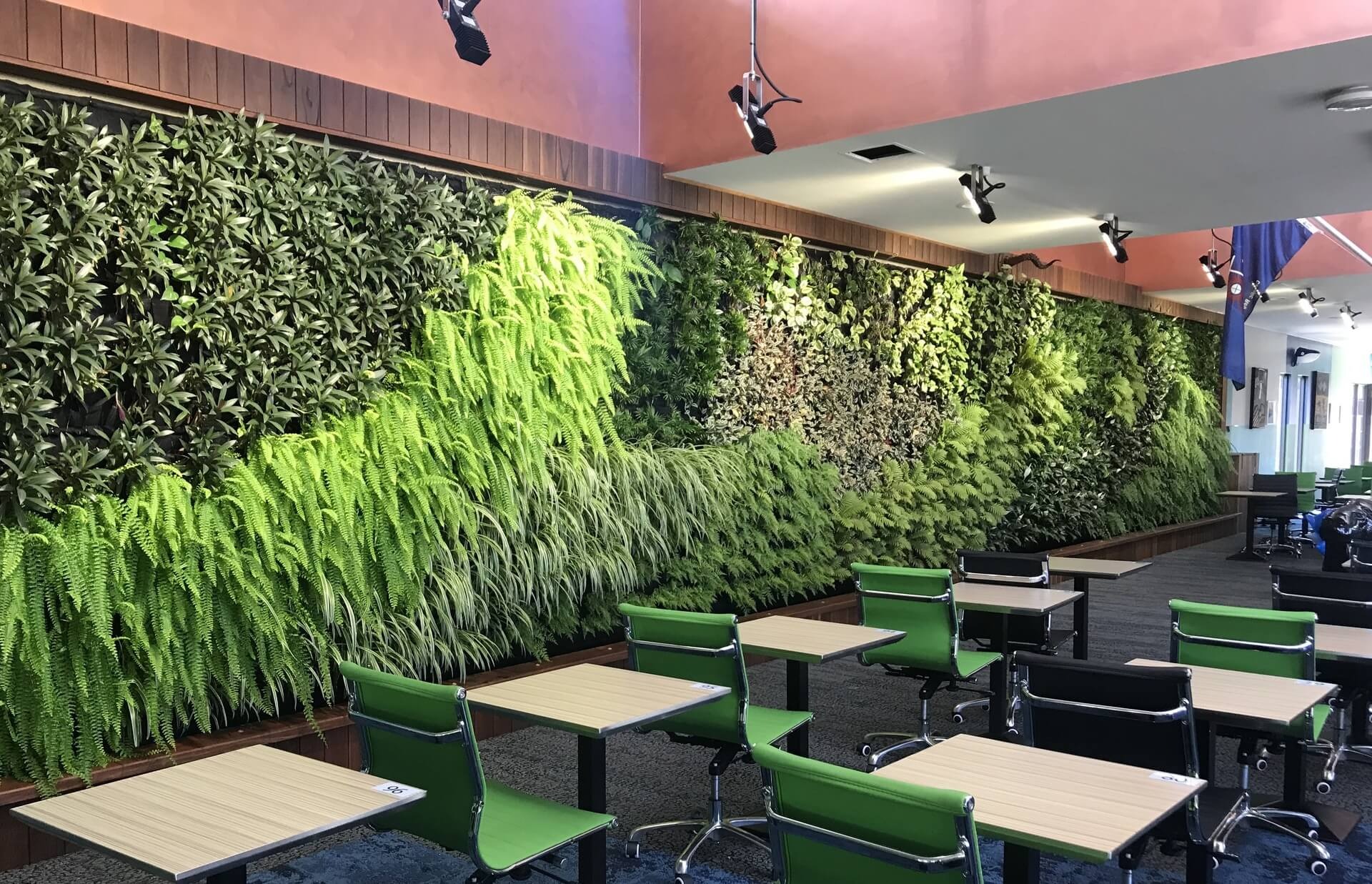
One Central Park in Sydney demonstrates the scale achievable in the Australian context. The complex features 35,000 plants across 23 green wall panels. This is the largest green façade in Australia.
It helps reduce the urban heat island effect in the Sydney CBD and introduces biophilic design at a city scale.
For property developers and councils, living walls can form part of a broader WSUD strategy. They work alongside green roofs, bioretention systems, and urban wetlands.
FAQ
Are living walls suitable for residential buildings in Australia?
Living walls are suitable for residential buildings in Australia. Based on our project experience, small modular systems (2–4 m²) typically cost between $500 and $1,500 installed. It depends on plant selection and site conditions. Both interior and exterior residential applications are feasible with the right irrigation design.
How long does a living wall last?
A living wall can last a decade or more when properly maintained. Longevity depends on:
- Irrigation reliability
- Plant species selection
- The frequency of professional maintenance
Do living walls require council approval in Australia?
Council approval requirements vary by jurisdiction, building type, and installation size. Living walls built into building façades may need a building permit. Confirm requirements with your local council or building surveyor before installation begins.
Can living walls reduce energy costs?
According to a 2026 case study from the University of Technology Sydney, living walls can reduce cooling loads. They do this by intercepting solar radiation and through evaporative cooling.
There is another US-based ROI case study by Ecobrooklyn, based on a hypothetical Manhattan hotel. It estimates annual HVAC savings of about USD 14,400 for a 250 sq ft living wall installation.
Exact savings for Australian buildings depend on
- Climate zone
- Wall orientation
- Plant coverage
What is the difference between a living wall and a green façade?
A green façade grows climbing plants from ground level, relying on the plants' natural vertical growth. A living wall uses a mounted frame where plants grow in individual pockets or panels at height. Living walls allow more species diversity, precise design, and installation on walls with no ground planting area.
Are living walls worth it?
Living walls deliver more than a green aesthetic. They clean the air, cool buildings, cut noise, and support urban biodiversity. They also measurably improve how people feel and perform inside the spaces they occupy.
Success comes down to four decisions made early. These include system type, plant selection, irrigation design, and maintenance planning. Get those right at the design phase, and the wall pays back across its full life cycle.
If you're weighing a living wall for a commercial, civic, education, health, or residential project in Australia, talk to our team.
Evergreen Infrastructure designs, installs, and maintains living walls built to last. We'll help you choose the right system for your site, budget, and compliance requirements.
{{cta}}
We create green oases in urban settings
We'd love to discuss how we can partner to bring innovative, sustainable solutions to your urban environment.