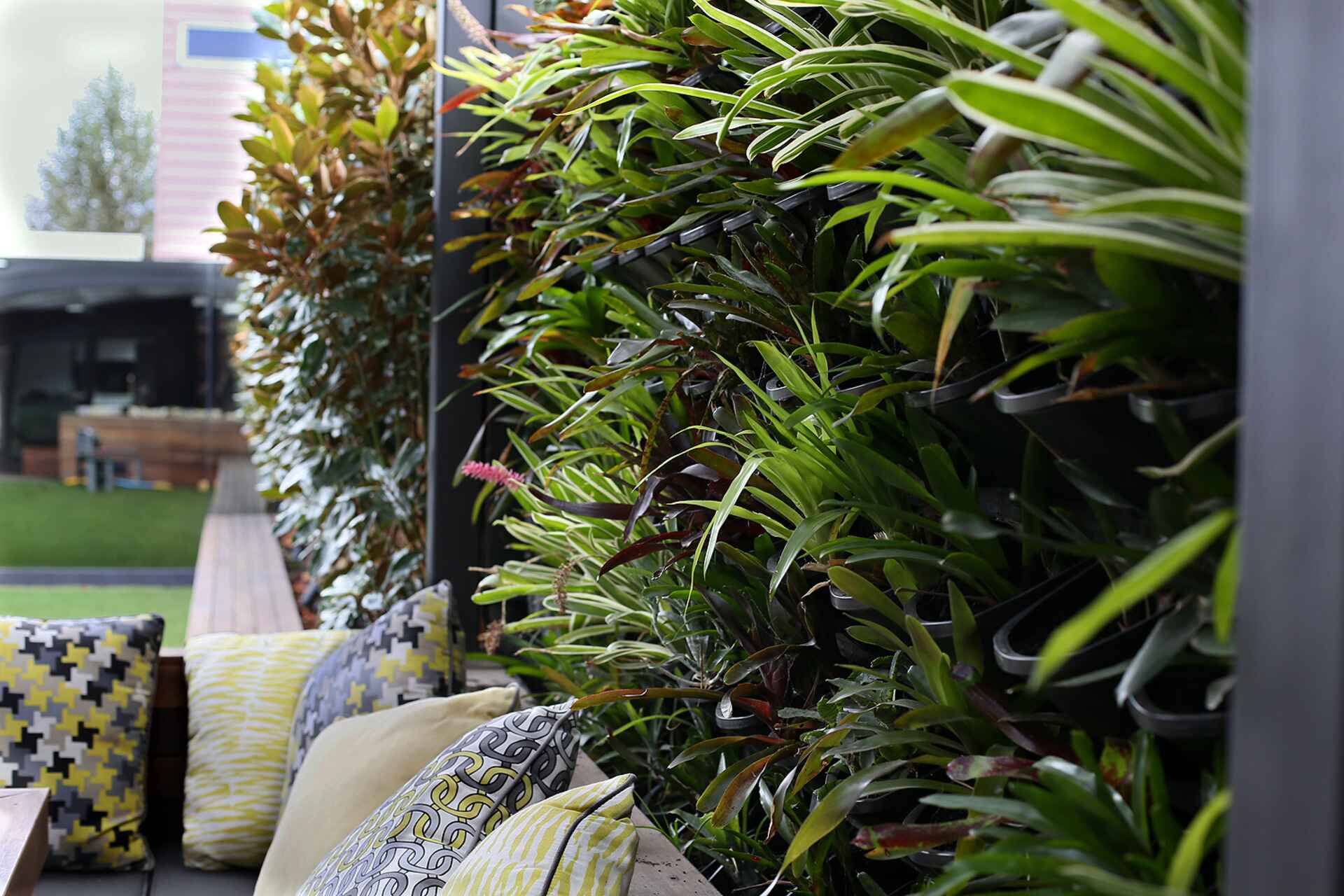
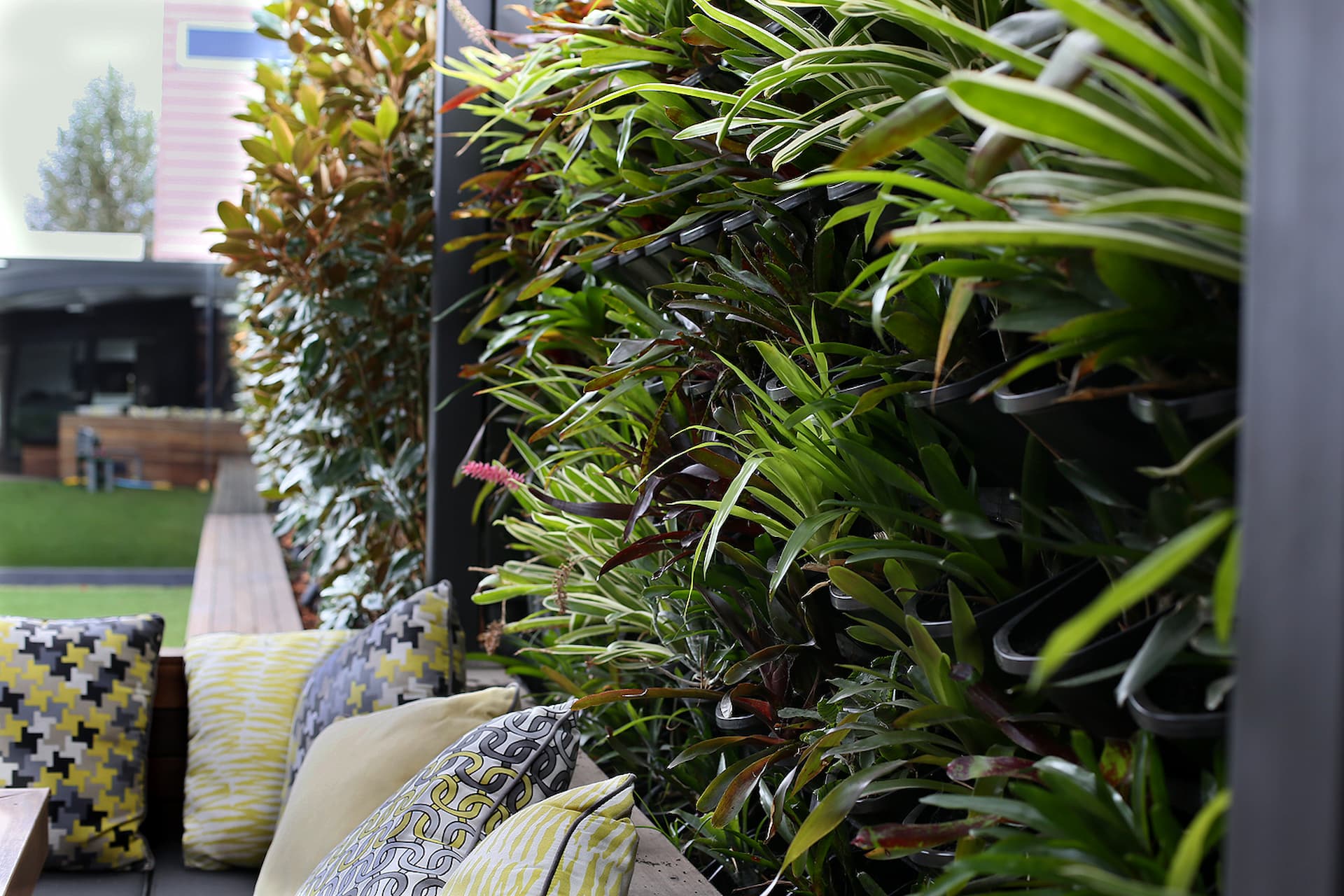
.webp)


Vertical gardens reduce building wall surface temperatures by up to 2-10 degrees. They support urban biodiversity and help reduce stormwater runoff. Professionally installed systems cost between $800 and $1,500 per square metre. Complex jobs can exceed $1,500 per square metre. A high-quality system with proper care typically lasts well beyond 15 years. The four main system types are modular panels, soil-based, hydroponic, and green facades. They suit different structural capacities, budgets, and performance goals.
Vertical gardens are plant systems attached to building walls or frames. They use growing media to support plants on a vertical surface.
Vertical gardens can reduce building surface temperatures by 2–10 degrees. They delay and reduce stormwater runoff and support biodiversity in urban settings.
The right system depends on your building's structure, and your performance goals and budget.
This guide covers the four main system types, their costs, and structural requirements.
What is the difference between a vertical garden, a living wall, and a green facade?
A vertical garden is an umbrella term for any planted system that grows vertically on or against a structure.
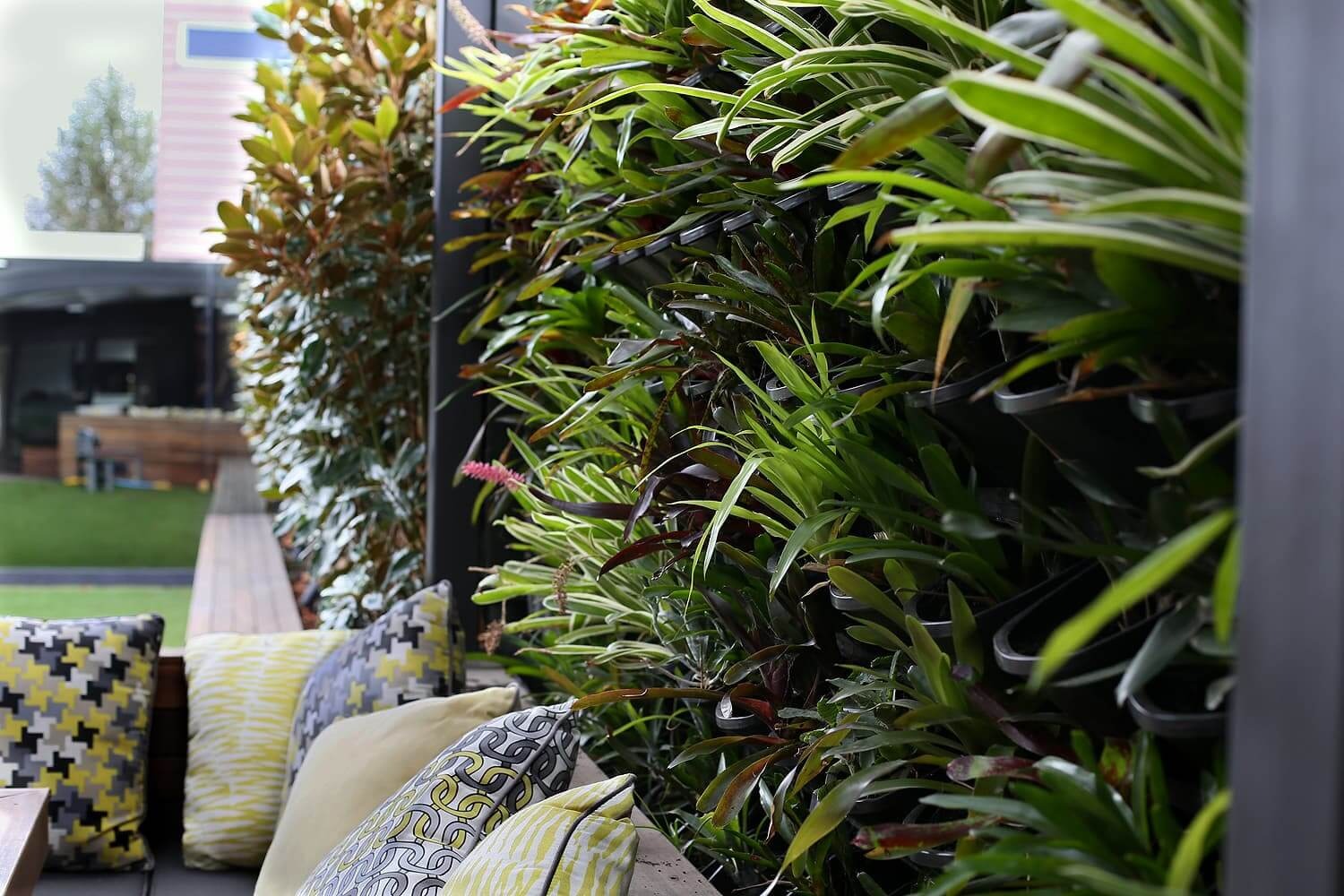
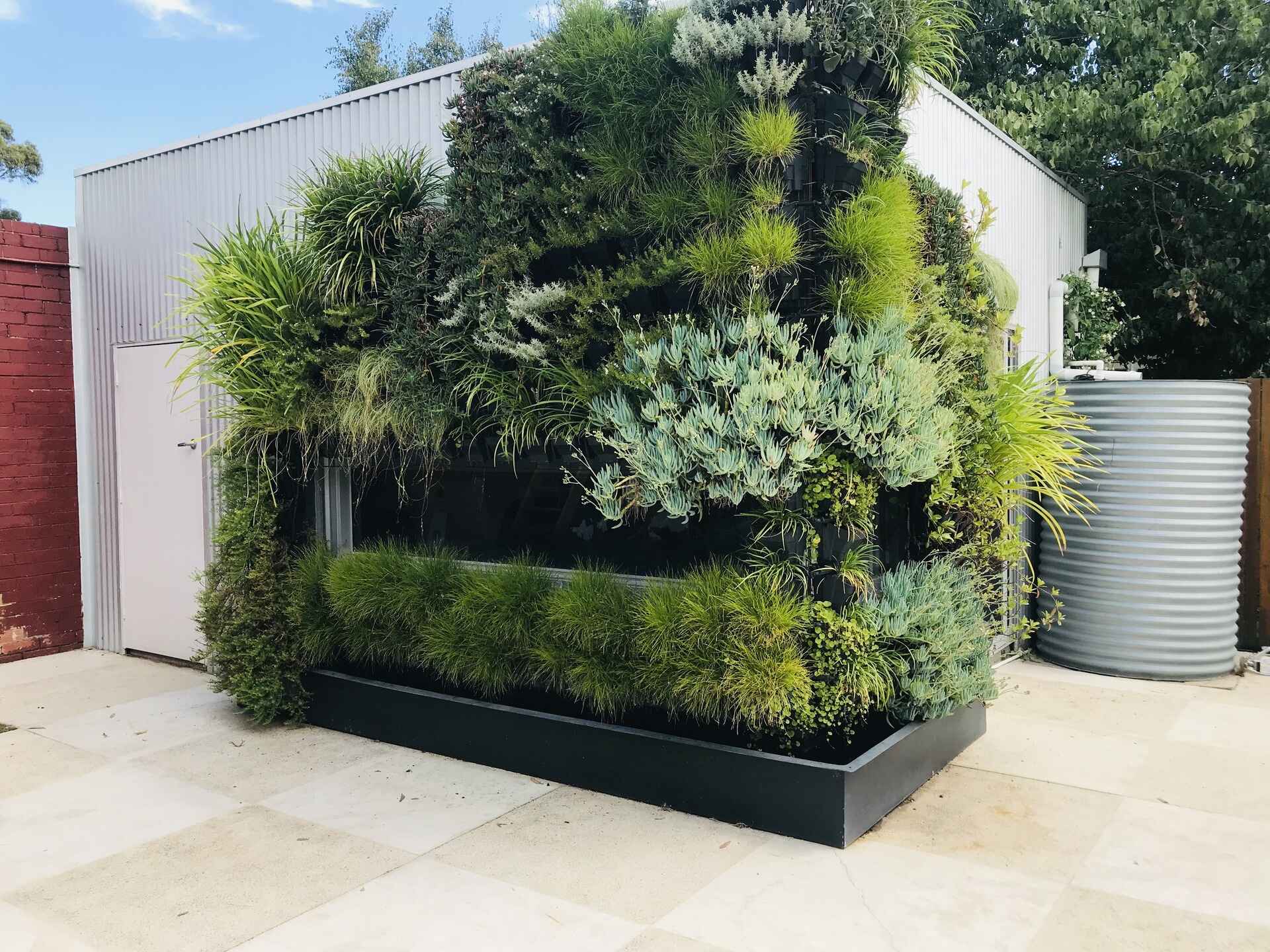
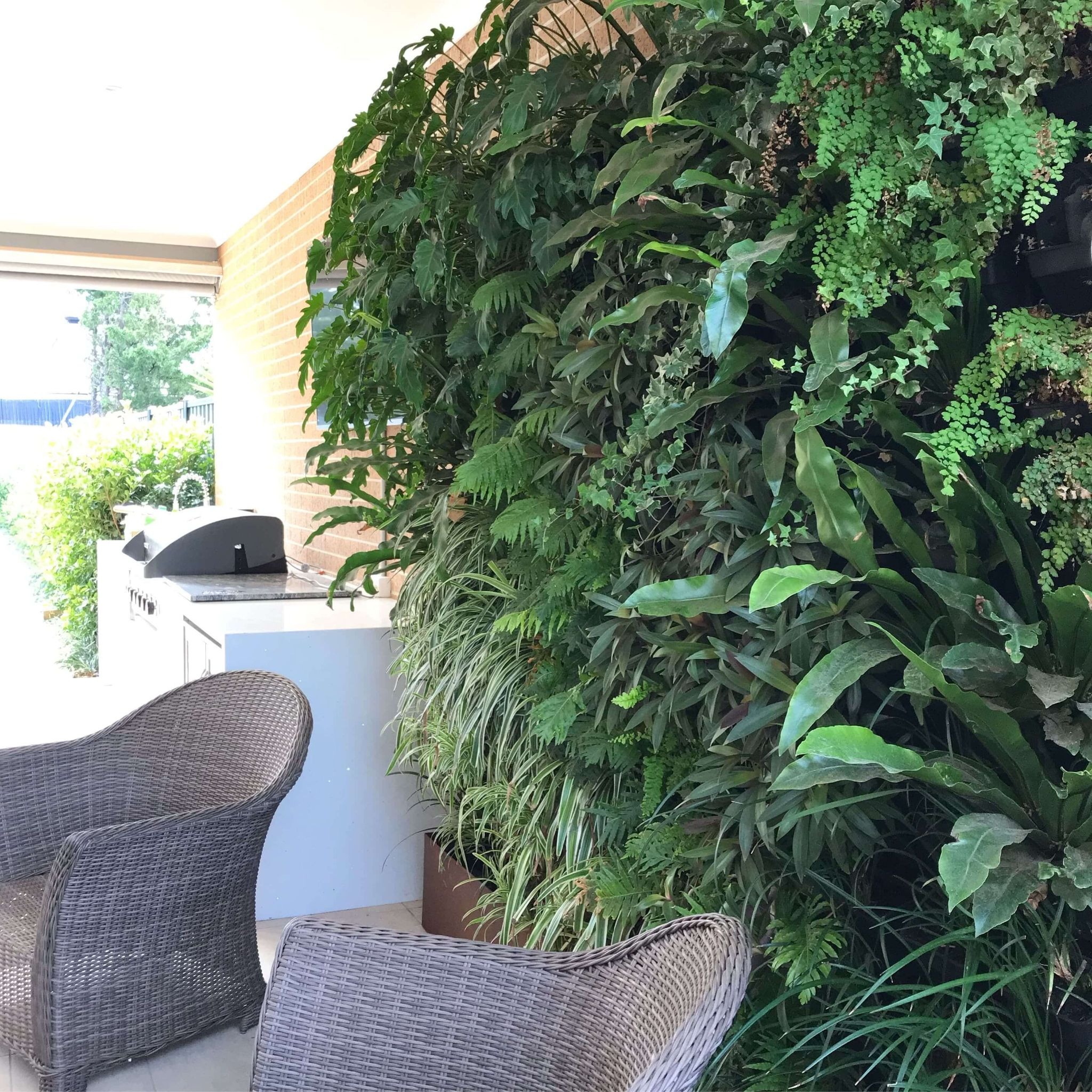
A living wall (also called a plant wall or green wall) uses panels or modules mounted flush to a wall surface. Plants grow directly from an integrated growing medium with built-in irrigation.
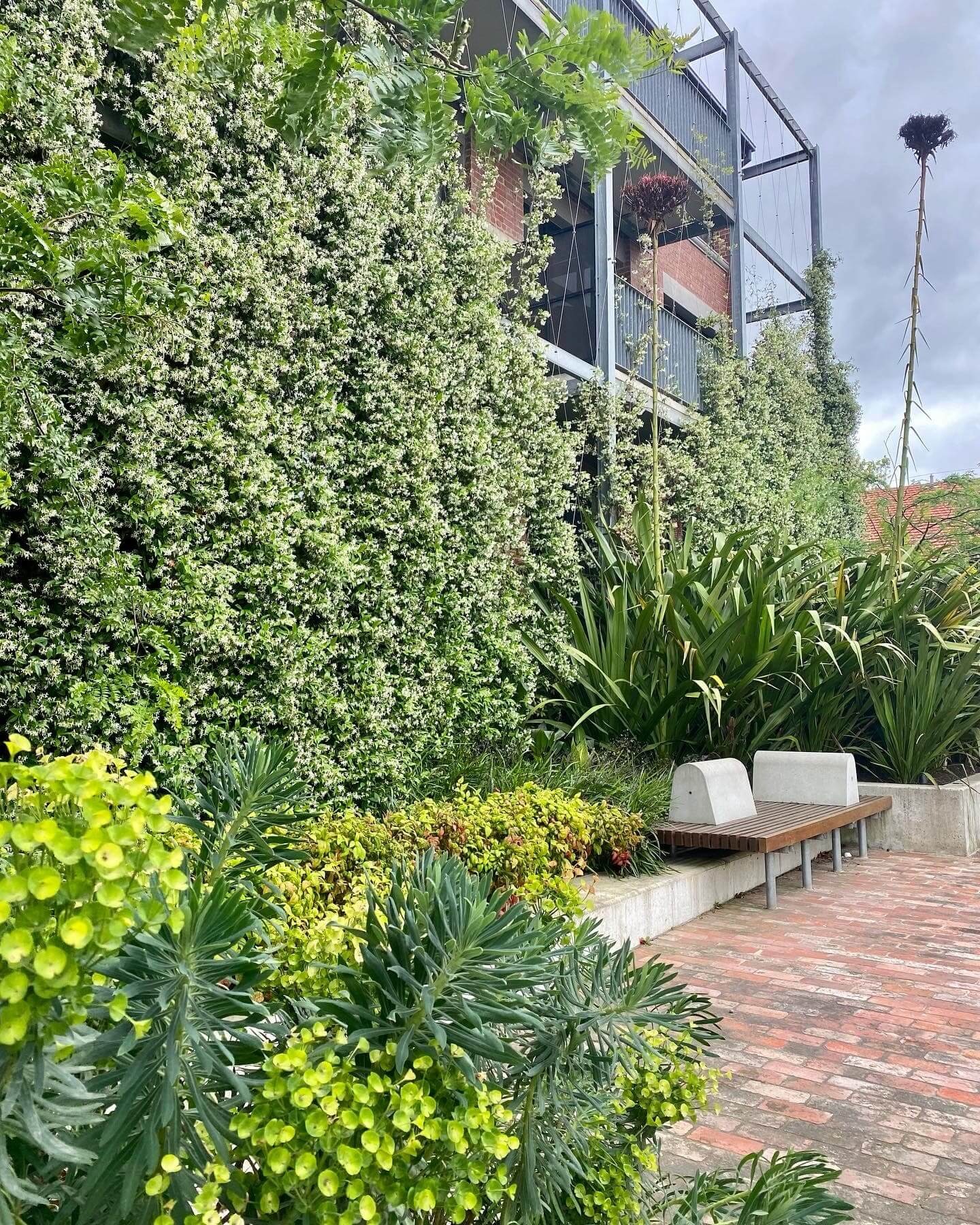
A green facade uses climbing plants that grow from the ground or from planters. The plants use the wall surface or a trellis for support.
Living walls and green facades perform differently.
Living walls give you more design flexibility, denser planting, and faster coverage. They need more engineering work and ongoing care than green facades.
Green facades cost less to install. They take one to two growing seasons to fill in. The timeline depends on species, climate, and system type. However, they offer less control over plant choice than living walls.
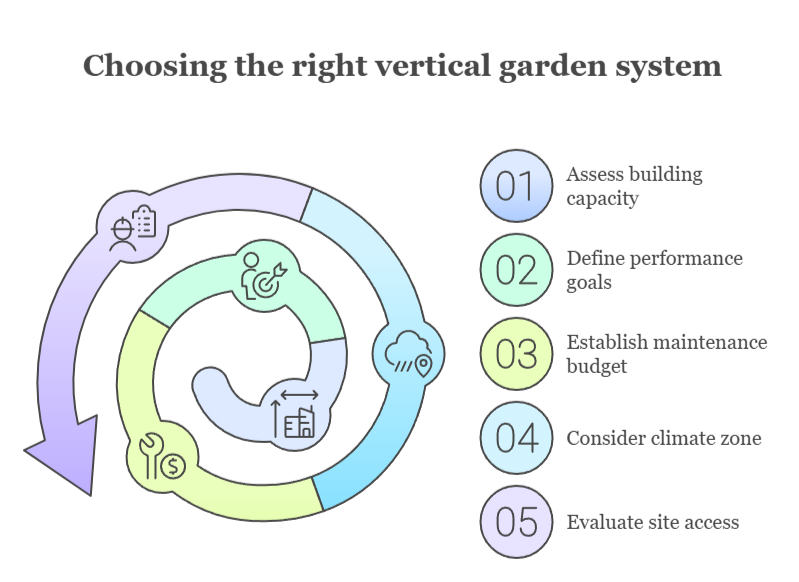
The right vertical garden system for you depends on your:
- Building's structural capacity
- Performance goals
- Maintenance budget
- Climate zone
- Site access
What are the proven environmental benefits of vertical gardens?
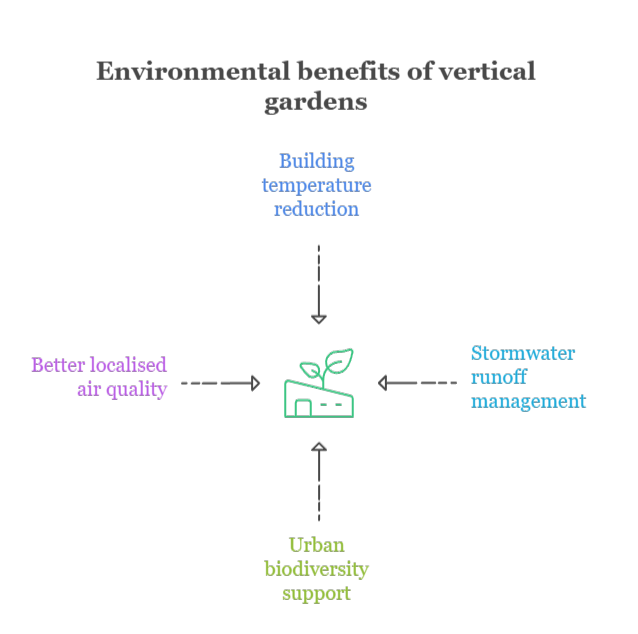
Vertical gardens deliver four measurable environmental benefits:
- Building temperature reduction
- Stormwater runoff management
- Urban biodiversity support
- Better localised air quality
Building temperature reduction
Vertical gardens reduce external wall surface temperatures by 2 to 10 degrees Celsius. Their effectiveness depends on:
- Foliage density
- Plant coverage
- Facade orientation
- Climate zone
- System maintenance
Studies in dense urban areas have recorded surface temperature drops of up to 6.1°C on sunny days.
In Australian cities, heatwaves are intensifying. Cooler temperatures, even by a few degrees, can make a real difference.
Systems on primary solar-exposed facades deliver the strongest results. However, poorly maintained or sparsely planted systems produce little benefit.
Stormwater runoff management
Vertical gardens slow down and reduce stormwater runoff. The foliage catches rainfall, and the substrate absorbs it.
How much rainfall vertical gardens can hold onto depends on the:
- Substrate depth
- Plant type
- System design
- Rainfall intensity
- Substrate saturation
- Climate and seasonal conditions
In cities like Melbourne, Water Sensitive Urban Design (WSUD) is built into planning and stormwater policies. Most sizeable developments must show compliant stormwater treatment.
Vertical gardens can support a broader WSUD strategy. This helps most on tight urban sites where ground-level options like rain gardens or swales won't fit.
Note that a single building's living wall won't prevent flooding. Vertical gardens work best as part of an integrated stormwater approach, not as a standalone solution.
Biodiversity support in cities
Vertical gardens can support urban biodiversity.
Research confirms that green walls host far more invertebrate species than bare walls. A well-planted living wall can support different bees, soil invertebrates, and birds. Flowering species attract urban pollinators, including native bees and butterflies.
Australian natives are underused in most vertical gardens. Fewer native cultivars have been tested for vertical growing compared to exotic species.
Of course, vertical gardens don't replace ground-level habitat. They instead complement ground-level plantings. That is why they work best as part of a broader green infrastructure network.
Better localised air quality
Vertical gardens can clean the air nearby by acting as a natural filter. Leaves and stems trap particles like dust and soot on their surfaces. Some plants can also absorb gaseous pollutants through their foliage.
Over time, wind and rain can wash these particles off the leaves. This, in turn, removes them from the air rather than letting them stay suspended and be breathed in.
Plant size and species matter. Dense plants with rough, small leaves catch more pollution than sparse systems with smooth, large leaves.
The wall's design and position also play a role. Green walls along busy roads tend to work better than those on quiet, open streets.
What types of vertical garden systems work for commercial buildings?
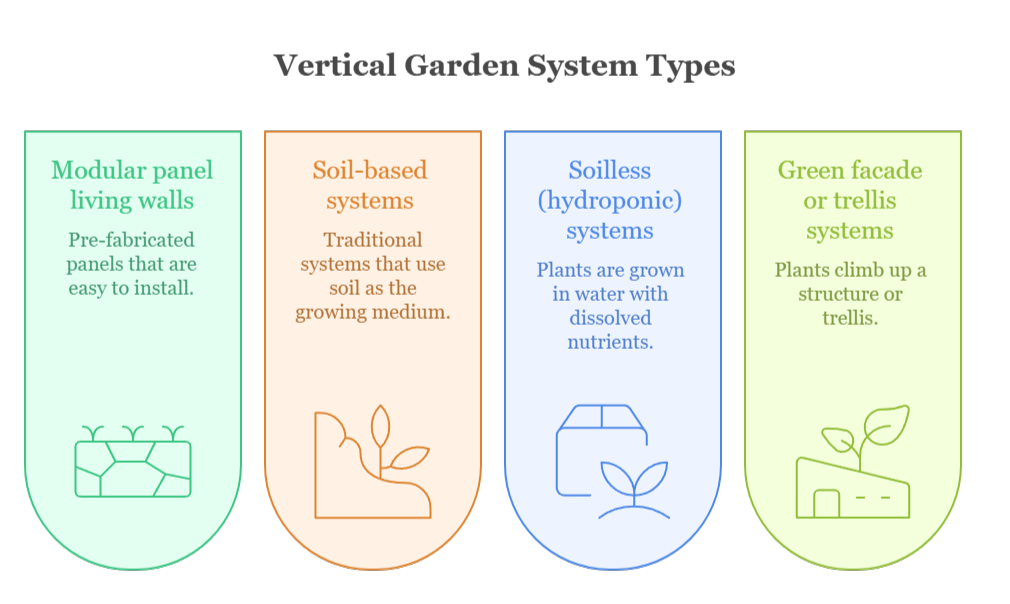
Commercial buildings in Australia use four main vertical garden system types:
- Modular panel living walls
- Soil-based systems
- Soilless (hydroponic) systems
- Green facade or trellis systems
How do modular panel systems work?
Modular panel systems use pre-planted panels fixed to a waterproofed wall frame. Each panel contains:
- Growing medium
- Plant material
- Integrated drainage
You can swap out single panels without affecting the rest. This cuts maintenance disruption and extends the system's life.
Many contemporary commercial installations in Melbourne and Sydney use modular systems.
Modular living walls add 30 to 80 kg/m² of load. The exact figure depends on substrate density and plant choice.
Every installation requires a structural engineering assessment before design begins.
What is the difference between soil-based and soilless (hydroponic) systems?
Soil-based systems hold growing media in pockets, felt panels, or modular cells. They often support a wider range of plants and cope better when irrigation stops.
Hydroponic systems feed nutrients straight to plant roots through an irrigation circuit. They generally weigh less, which means less load on your building.
Your choice should depend on three factors:
- Your building's structural capacity
- Your plant selection priorities
- Your long-term maintenance model
What are green facades and trellis systems?
Green facades use climbing or trailing plants rooted in planters at ground level or in raised troughs. Plants grow up a trellis or cable frame fixed to the building.
Green facades cost less than modular living wall systems. They suit long perimeter treatments on new-build projects.
Establishment takes one to two growing seasons, compared to immediate coverage from a modular panel system. Of course, it depends on the species, climate, and irrigation.
Green facades also work well with WSUD. Their planters connect straight to on-site drainage and stormwater harvesting.
What does a vertical garden cost in Australia?
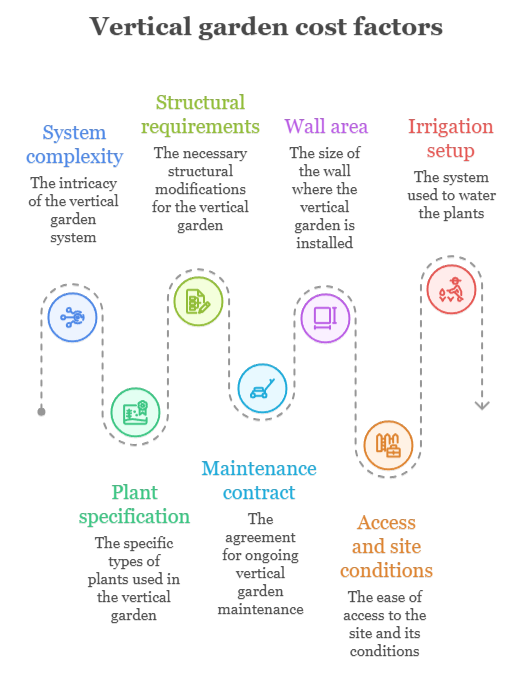
Installed living wall systems in Australia cost between $800 and $1,500 per square metre. Final cost depends on:
- System complexity
- Plant specification
- Structural requirements
- Your maintenance contract
- Wall area
- Access and site conditions
- Irrigation setup
Ongoing upkeep is a major cost that building owners overlook. Green walls need at least two to four maintenance visits per year to keep plants healthy and the system working well.
Evergreen Infrastructure recommends monthly check ups to keep the green wall in optimal condition.
What plants work best for vertical gardens in Australian climates?
Not all ornamental plants survive the stress of vertical growing. Vertical systems demand more than a standard garden, including:
- Shallow root zones
- Wind exposure
- Temperature swings
- Dehydration risk
Wrong species choice is one of the top reasons vertical gardens fail.
Evergreen Infrastructure's registered horticulturists select plant palettes carefully. We look at climate zone, aspect, exposure, and maintenance frequency.
For Melbourne's temperate climate, choose plants that have:
- Moderate drought tolerance
- Compact root systems
- Good UV resilience
- Wind exposure tolerance
- Seasonal interest
Evergreen Infrastructure uses BIM during design. BIM models sun exposure, wind load, and irrigation spread across the wall.
We also use specialist engineering inputs for wind loading and irrigation. This means plant selection is based on actual site conditions, not estimates.
What are the structural and engineering requirements for a living wall?
A living wall adds 30 to 140 kg/m² to your building's wall. Lightweight hydroponic systems sit at the low end. Fully saturated soil-based systems sit at the top.
The exact load depends on substrate depth, plant density, and water held in the system. Every installation needs a structural check before the design begins.
You must waterproof the wall behind the system. Poor waterproofing is the top cause of water damage in failed installations.
For existing buildings, Evergreen Infrastructure works with structural engineers and surveyors. We do this to check that your wall can handle the load.
For new builds, we join the design team early. This ensures the vertical garden design has the structural requirements before construction starts.
{{cta}}
How do vertical gardens support Green Star and planning compliance?
Vertical gardens help meet ESG, Green Star, and planning rules. They do this through measurable environmental results.
Do vertical gardens earn Green Star or LEED credits?
Yes. The GBCA recognises vertical gardens under its Green Star Buildings framework. A well-documented living wall can earn credits such as:
- Biodiversity Enhancement
- Indoor Plants
- Connection to Nature
Documentation requirements depend on the credits being targeted.
How do vertical gardens support WSUD compliance?
In Victoria and across Australia, WSUD is built into planning and stormwater policies. Most sizeable developments must show compliant stormwater management to gain planning approval.
On tight urban sites, standard options like bioretention, rain gardens, or swales often won't fit. Vertical gardens help fill that gap. They intercept rainfall, reduce runoff, and support on-site water management goals.
Vertical gardens are not a standalone WSUD fix. But when linked to the wider site stormwater system, they support primary treatment and help meet compliance on tight sites.
How long do vertical garden systems last?
Well-maintained systems last 10–15+ years. The structure and hardware often outlast the plants, but it will require managing as it ages.
Lifespan depends on:
- System quality
- Plant selection
- Irrigation reliability
- Maintenance frequency
- UV exposure
- Local climate conditions
Many systems fail sooner than expected. The usual causes are irrigation faults, UV damage to parts, and poor upkeep. You can prevent these failures with the right asset management approach.
Public sector and aged care clients often require documented asset management as part of their contracts.
Vertical garden system comparison
Structural loads are indicative ranges only. Final design loads must be confirmed with the selected system supplier and a structural engineer.
FAQ
Are vertical gardens suitable for all Australian climate zones?
Yes. Vertical gardens work in all Australian climate zones. Plant choice and irrigation design must suit the local climate. Melbourne's temperate climate supports a wider range of species than the humid tropics or dry zones.
Do vertical gardens require council or planning approval in Australia?
There is no single national standard for vertical garden installations. But you may need a planning review in some cases. These include:
- Heritage buildings
- Facade changes on a primary street
- Developments that require WSUD compliance
The City of Melbourne's urban forest strategy includes green walls as part of its green infrastructure planning. Evergreen Infrastructure advises clients on the right approval pathway for each project.
Can you install a vertical garden on an existing building?
Yes. Your wall needs enough load capacity and proper waterproofing. You must get a structural check before you install. Modular systems built for retrofits are widely available.
What is the minimum wall area for a vertical garden?
Vertical gardens under 10–15 m² offer limited environmental benefit. They're also harder to maintain cheaply with automated irrigation. Smaller installations work better for interior spaces like lobbies, foyers, and therapeutic environments.
How does smart irrigation work in a vertical garden?
Smart irrigation uses moisture sensors in the substrate. These sensors trigger watering only when moisture drops below a set level. A central controller adjusts the schedule based on sensor data. Smart irrigation reduces water use and helps prevent root disease. It also generates data you can use for asset reporting.
Get expert help with your vertical garden project
Evergreen Infrastructure has delivered green infrastructure at landmark Melbourne sites. This includes the Victorian State Treasury Building and Federation Square.
Our team includes registered horticulturists with specialist urban growing skills. The company is affiliated with:
- The Australian Institute of Horticulture (AIH)
- Green Roofs for Healthy Cities
- Landscaping Victoria
- Therapeutic Horticulture Australia (THA)
We also partner with the University of Melbourne and RMIT on research-informed projects.
Evergreen Infrastructure covers every stage, including:
- Consulting
- Design
- Project management
- Long-term asset management
If you're planning a vertical garden, reach out to us.
{{cta}}
We create green oases in urban settings
We'd love to discuss how we can partner to bring innovative, sustainable solutions to your urban environment.