


Rooftop farms grow food on unused roof space, and they also cool buildings, insulate them, and catch rain. Before any planting, a structural engineer needs to confirm the roof can carry wet soil, plants, and people. Melbourne Skyfarm turned part of a 2,000 m² car park roof into a farm built to grow over 5 tonnes a year.
A rooftop farm is a garden on a building's roof that grows food. Some are a few raised beds, while others are full farms with an orchard and a nursery.
Councils and companies use rooftop farms to make better use of flat roofs, from car parks to office buildings. A well-planned farm can feed local charities, teach students, and give staff a place to meet.
What is a rooftop farm?
A rooftop farm is a green roof built to grow food. A standard green roof holds rain and shelters wildlife. A rooftop farm adds harvests to that list.
Many rooftop farms are built as intensive green roofs, because food crops need deeper soil. The NSW Government says an intensive roof is heavier and needs a stronger structure than an extensive one.
The table below compares the 2 main types of green roofs. Growing medium depths follow the NSW Government's guidance.
Depths in the table come from the NSW Government's green roof guide. Choosing between extensive and intensive green roofs comes down to weight, cost, and planting depth.
What are the benefits of a rooftop farm?
As a type of urban farming, a rooftop farm grows food where people live and work, and it also cools, insulates, and catches rain. The benefits are strongest when the design suits the roof, the climate, and the people who will use it.
Fresh food close to where people live
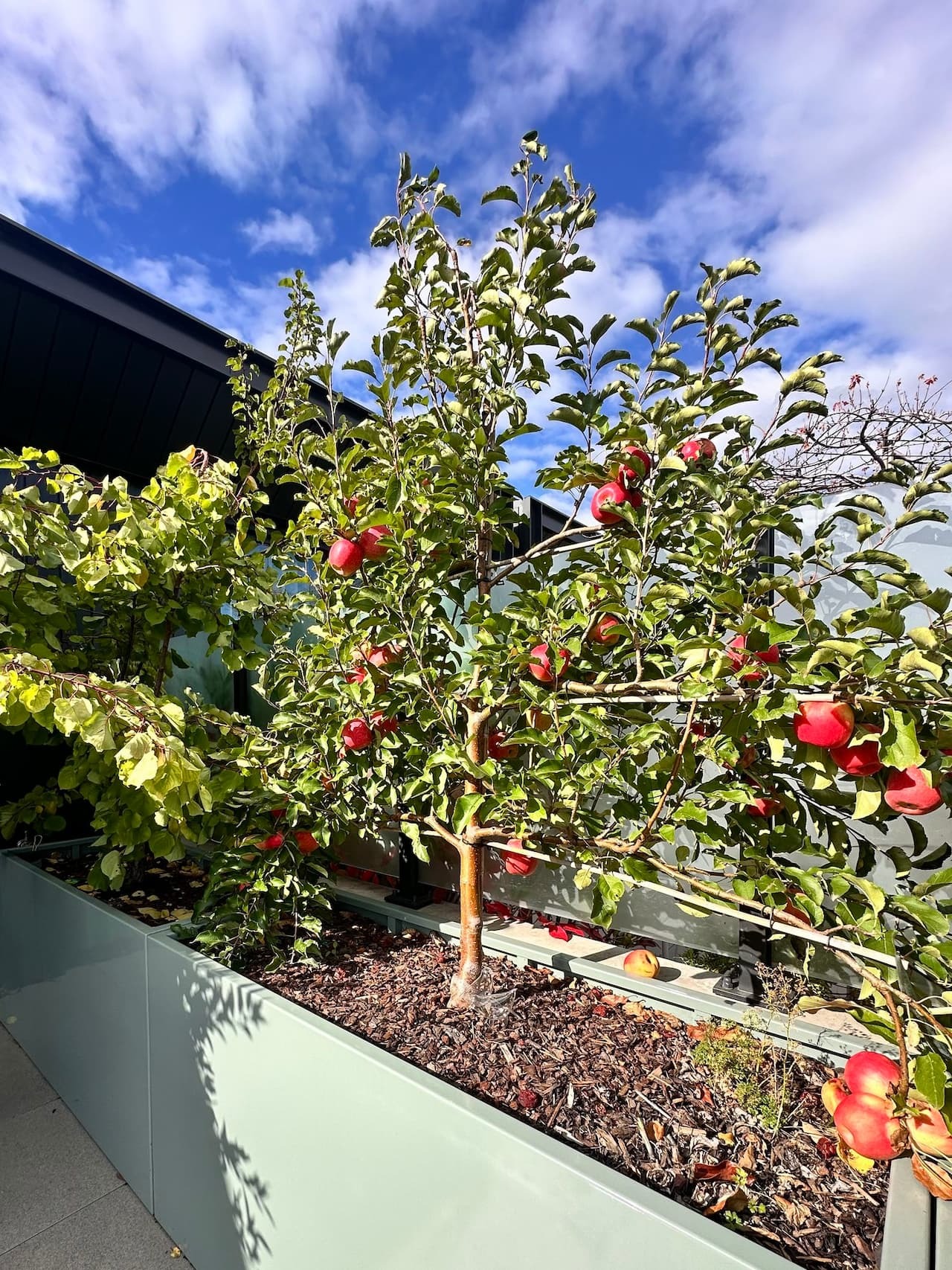
Rooftop farms cut the distance food travels from farm to plate. Melbourne Skyfarm was built to grow over 5 tonnes of produce a year, says the Melbourne Convention and Exhibition Centre. Much of that produce was earmarked for the food charity OzHarvest.
Cooler buildings and less runoff
Rooftop farms and other green roofs can help cool the air and capture rain, which reduces local flooding. Plants cool the air by shading surfaces and releasing water vapour, which eases the urban heat island effect. Green roofs also insulate a building, help save on energy bills, and can make solar panels more efficient, says the NSW Government.
Habitat in a city of hard surfaces
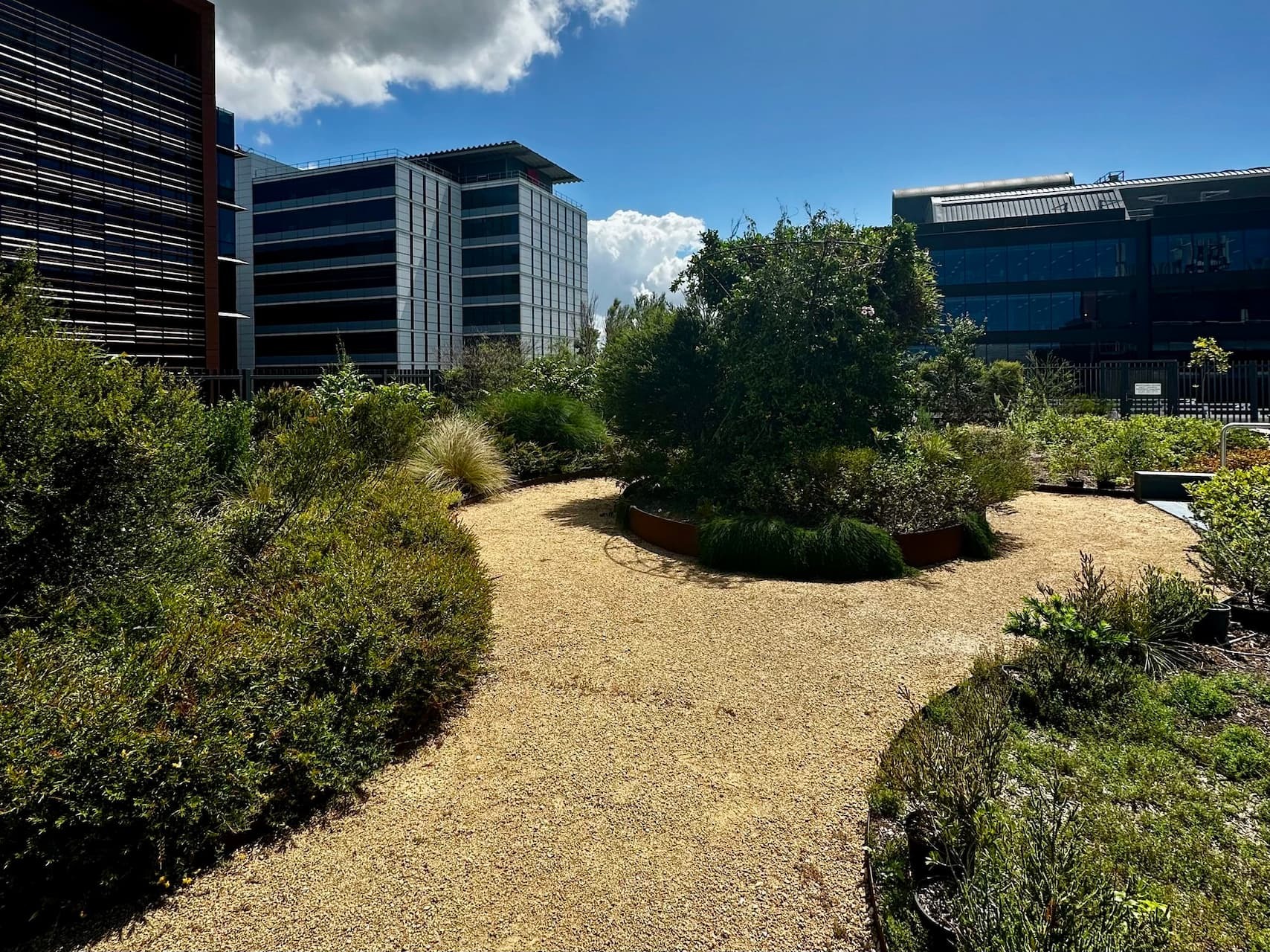
A rooftop farm creates small habitats for urban biodiversity where the ground is sealed over by roads and buildings. Flowering natives planted between crops can support bees and other insects, which also helps food crops set fruit.
Places for people to meet and learn
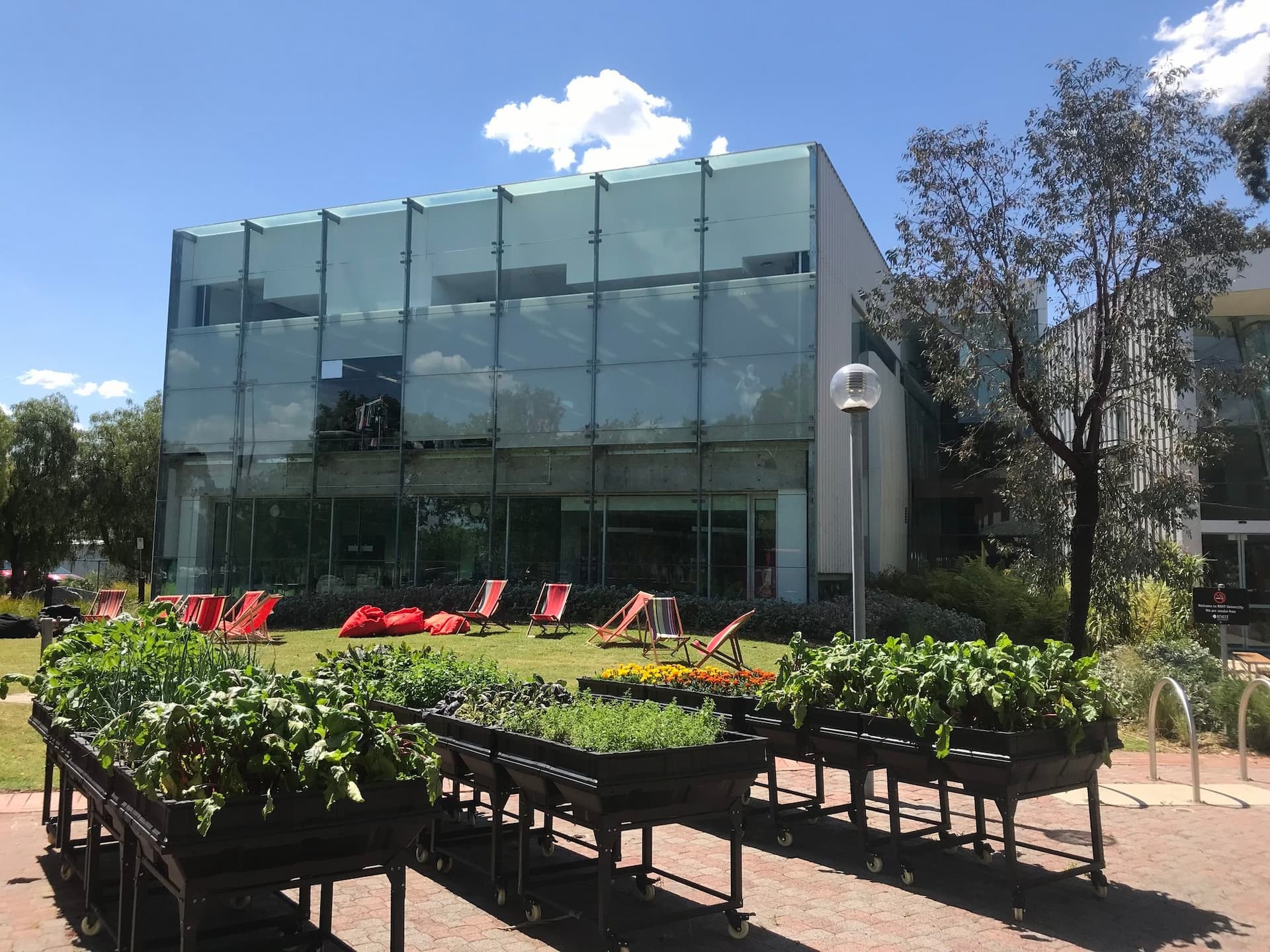
Rooftop farms work well as outdoor classrooms and community spaces. Evergreen Infrastructure took the same approach in a 760 m² urban farm for a Sydenham school. The farm's produce goes to the school's cooking students.
Which Australian rooftop farms can you learn from?
Melbourne Skyfarm, Burwood Brickworks, and the South Eveleigh native rooftop farm are 3 Australian rooftop farms worth learning from. They sit on a car park, a shopping centre, and an office precinct, and the table below compares them.
Farm sizes come from the Melbourne Convention and Exhibition Centre, Shopping Centre News, and the University of Technology Sydney. Each farm is described in more detail below.
Melbourne Skyfarm
Melbourne Skyfarm turned part of a 2,000 m² car park roof in Melbourne's city centre into a working farm. A $300,000 City of Melbourne Urban Forest Fund grant supported the urban farm part. That grant was about 10% of the overall project budget, says the Melbourne Convention and Exhibition Centre.
Burwood Brickworks
Burwood Brickworks in Melbourne's east opened in 2019 with a 2,000 m² rooftop farm. Shopping Centre News called it the first urban agriculture project in an Australian shopping centre. Cultivating Community manages the rooftop garden, Broadsheet reported in 2024.
South Eveleigh native rooftop farm
The South Eveleigh farm in Sydney grew over 2,000 edible native plants in a 550 m² planter box, four storeys up. Finger limes, saltbush, and the rare muntrie grew there, according to the University of Technology Sydney in 2019.
The South Eveleigh farm showed how a rooftop can share First Nations plant knowledge as well as grow food. Its founders used permaculture and companion planting to build biodiversity on the roof.
What kinds of rooftop farms suit councils and companies?
Five kinds of rooftop farms suit councils and companies: raised beds, market gardens, bush food gardens, pollinator gardens, and therapeutic gardens. The right one depends on the roof's strength, sun, and access, and on who will use it. Many projects mix two or more of the layouts below:
- Raised beds and planters: Movable beds suit roofs with lower load limits and can be rearranged later.
- Productive market gardens: Deeper beds and trellised crops suit buildings where food output is the main goal.
- Native and bush food gardens: Bush foods work best when Aboriginal growers help shape the design.
- Pollinator gardens: Flowering natives mixed with crops suit hospitals, universities, and government buildings.
- Therapeutic gardens: Planters at different heights suit aged care and health sites.
What does a roof need before it can hold a farm?
A roof needs enough strength to carry wet soil, plants, water, and people before it can hold a farm. Check the structure first, and talk to a structural engineer, advises the NSW Government.
Structural capacity
A structural engineer should check the roof's load capacity before design starts. This is because green roof weight peaks when the soil is fully saturated. Intensive roofs may need extra structural design to support the deeper soil that food crops need.
Growing medium and drainage
Rooftop growing media must drain freely but hold moisture, and stay as light as possible. Ordinary garden soil is too heavy for most roofs, so designers use blended rooftop media matched to the plants.
Water and irrigation
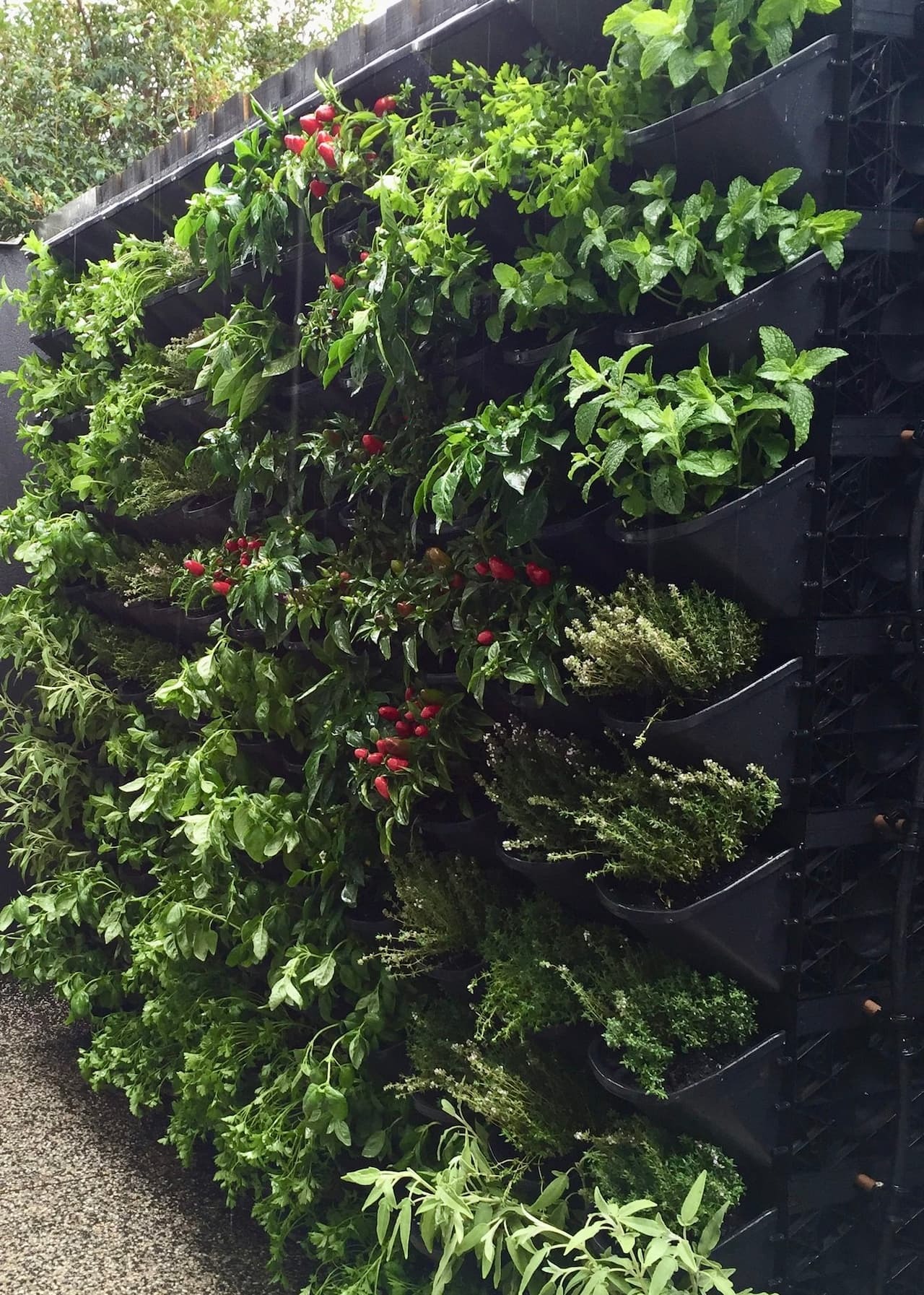
Rooftop farms need reliable irrigation because roofs face more sun and wind than ground-level gardens, and plants dry out faster. Evergreen Infrastructure's urban farm designs use rainwater harvesting and compost systems to keep crops growing.
Safe access
Gardeners need safe, regular access to the roof for planting, harvesting, and repairs. Plan stairs, lifts, edge protection, and storage early, because they're hard to add later.
Approvals
Many rooftop farms need council approval before work starts. The NSW Government suggests checking with your local council about a development application.
How do you plan a rooftop farm project?
Planning a rooftop farm takes 5 steps: check the structure, set the purpose, design the farm, get approvals, and build and maintain it. Most projects follow them in this order:
- Check the structure: A structural engineer confirms how much weight the roof can carry when the soil is wet.
- Set the purpose: Decide whether the farm is mainly for food, education, community, biodiversity, or a mix.
- Design the farm: A green infrastructure designer plans beds, growing media, irrigation, paths, and access.
- Get approvals: Check planning and building approvals with your council before construction starts.
- Build and maintain: Install the farm, then agree who will plant, harvest, and maintain it each season.
Who looks after a rooftop farm once it's built?
A community group or a specialist contractor can look after a rooftop farm once it's built. Crops need care every week, so the farm needs a clear operator from the start. At Burwood Brickworks, Cultivating Community manages the rooftop garden.
A specialist contractor can provide seasonal care and productivity checks. Regular green roof maintenance covers watering, weeding, fertilising, and inspections.
FAQ
What grows well on a rooftop farm in Australia?
Leafy greens, herbs, and hardy native foods tend to cope well with rooftop sun and wind. Evergreen Infrastructure's urban farm guidance lists lettuce, kale, spinach, herbs, and tomatoes among common crops.
How big does a rooftop farm need to be?
A rooftop farm can be any size the roof can safely carry, from a few planters to a whole roof. Even a small farm can grow herbs and salad greens for a staff kitchen.
Do you need a planning permit for a rooftop farm?
You may need a planning or building permit for a rooftop farm, depending on the roof and your council. Check with your council early, because structural changes and new access often need approval.
Is there funding for rooftop farms?
Some councils offer greening grants that can cover part of a rooftop farm. Check your council's current grant rounds, because funding and eligibility change from year to year.
Plan your rooftop farm with Evergreen Infrastructure
Evergreen Infrastructure designs, builds, and looks after green roofs and urban farms. We work with councils, government agencies, and companies. We installed the 700 m² Green Our Rooftop garden on Melbourne's Treasury Building for the Victorian Government and the City of Melbourne.
Our team can help you plan a rooftop farm, design it, and keep it productive for years. Talk to us about your rooftop.
{{cta}}
We create green oases in urban settings
We'd love to discuss how we can partner to bring innovative, sustainable solutions to your urban environment.