

A NABERS rating is a star rating out of 6 that shows how an existing building performs, based on real data. Commonwealth office leases now target 5.5 stars in major cities.
A NABERS rating is a star rating out of 6 for how an existing building performs in use. Ratings cover energy, water, waste, and indoor environment. Each one uses real data, not design estimates.
A NABERS rating does more than describe a building. The score can decide whether office space can be sold or leased, and whether a government tenant signs. The right upgrades, from plant and lighting to green roofs, can lift the score over time.
What is a NABERS rating?
A NABERS rating is an independent star rating of a building's environmental performance. NABERS stands for the National Australian Built Environment Rating System. Ratings run from one to 6 stars, much like the stars on a fridge.
Each NABERS rating compares a building with similar buildings in its sector. The comparison allows for climate, so a Darwin office isn't judged by Melbourne's cooling needs. That approach is set out on the NABERS Energy page.
What do NABERS ratings measure?
NABERS ratings measure energy, water, waste, and indoor environment, plus newer carbon and renewables tools. Each tool rates a different part of how a building runs. The table below sets out what each one measures.
NABERS lists all its rating tools on its ratings overview page. NABERS Energy applies to 11 building sectors. Those sectors run from offices and shopping centres to schools, hotels, and data centres.
What is the difference between base building, tenancy, and whole building ratings?
A base building rating covers central services, and a tenancy rating covers one business's space. A whole building rating covers both. The table below compares the 3 office options.
The NABERS Energy page explains the base building, tenancy, and whole building scopes for offices. Office tenancies can use around 50% of the energy in an office building. That's why government and corporate tenants often hold their own tenancy rating.
What NABERS star rating should a building aim for?
Most office owners should aim above the 4.45-star average across Commercial Building Disclosure (CBD) Program certificates. The CBD Program website shows that figure on its home page. Higher targets apply when a government tenant is involved.
The table below lists the NABERS star levels that matter for leasing and disclosure. Each level comes from a government source.
The Commonwealth's NABERS Energy targets apply to office leases of 4 years or more, covering 1,000 square metres or more, from 1 July 2025. The Department of Finance sets them in its Net Zero in Government Operations Strategy. The targets replaced an older 4.5-star rule, which ended in November 2023.
When is a NABERS rating required?
A NABERS Energy rating is required when large office space of 1,000 square metres or more is offered for sale or lease. The Commercial Building Disclosure Program sets that rule nationally, with some exceptions. Outside those deals, most ratings are voluntary.
Under the Commercial Building Disclosure (CBD) Program, owners must disclose a rating but don't have to improve it. Upgrades are the owner's commercial decision, the program's guide to improving ratings says. Leasing and planning rules can still push owners to lift their stars.
Government leases
Commonwealth agencies need minimum NABERS Energy ratings for office leases of 4 years or more, covering 1,000 square metres or more. Major city offices need 5.5 stars, and offices elsewhere need 4.5 stars, rising to 5.5 stars within 2 years. Owners chasing a government tenant need to know those targets early.
Council planning conditions
Some councils require NABERS Commitment Agreements for new buildings. The rule sits in their Development Control Plans, a NABERS case study notes. Planning rules vary, so check the conditions for each site.
What is a NABERS Commitment Agreement?
A NABERS Commitment Agreement is a contract to design and build for a target NABERS Energy rating. The developer or owner signs it before the building is finished. The agreement then checks that the finished building performs as designed.
NABERS Commitment Agreements deliver results, a study of 176 offices found. Of the 64 Green Star buildings with an agreement, 91% met or beat their NABERS Energy target within their first 2 years of operation. The Green Building Council of Australia did the research, published in its report on closing the performance gap.
How do you get a NABERS rating?
You get a NABERS rating through an accredited NABERS Assessor, who checks your building's real operating data. NABERS sets out the path in 5 steps on its What is NABERS page. The steps are listed below.
- Learn how it works: Read the NABERS fact sheets, case studies, and videos.
- Check your sector: Confirm NABERS rates your type of building.
- Estimate your rating: Use a NABERS calculator for an early indication.
- Find an assessor: Search the NABERS register for an accredited assessor.
- Check the costs: Review the NABERS fees and current offers.
Assessors can lodge energy and water ratings for almost all building types in NABERS Perform, an online rating platform. The Commonwealth co-funded the platform, which NABERS began building in 2019.
How do you find a building's current NABERS rating?
You find a current rating through the NABERS rating register. The register search shows star ratings, expiry dates, and energy and water use. Recycling rates and indoor quality scores appear for buildings rated on those tools.
The NABERS rating register lets you download every current public rating as a single file. Property teams can use the download to compare a portfolio against similar buildings. A building missing from the register may be unrated, have an expired rating, or hold a rating that isn't public.
How can you improve a NABERS rating?
You improve a NABERS rating by using less energy or water over the next rating year. The Commercial Building Disclosure (CBD) Program lists practical upgrades in its guide to improving ratings. The table below sums up the savings it gives.
Energy savings from upgrades show up in the next year's energy data, since NABERS rates real use. An upgrade that moves a NABERS Energy office rating by half a star or more counts as a major refurbishment. The CBD Program sets that threshold in its improvement guide.
How does green infrastructure support NABERS Energy and Water ratings?
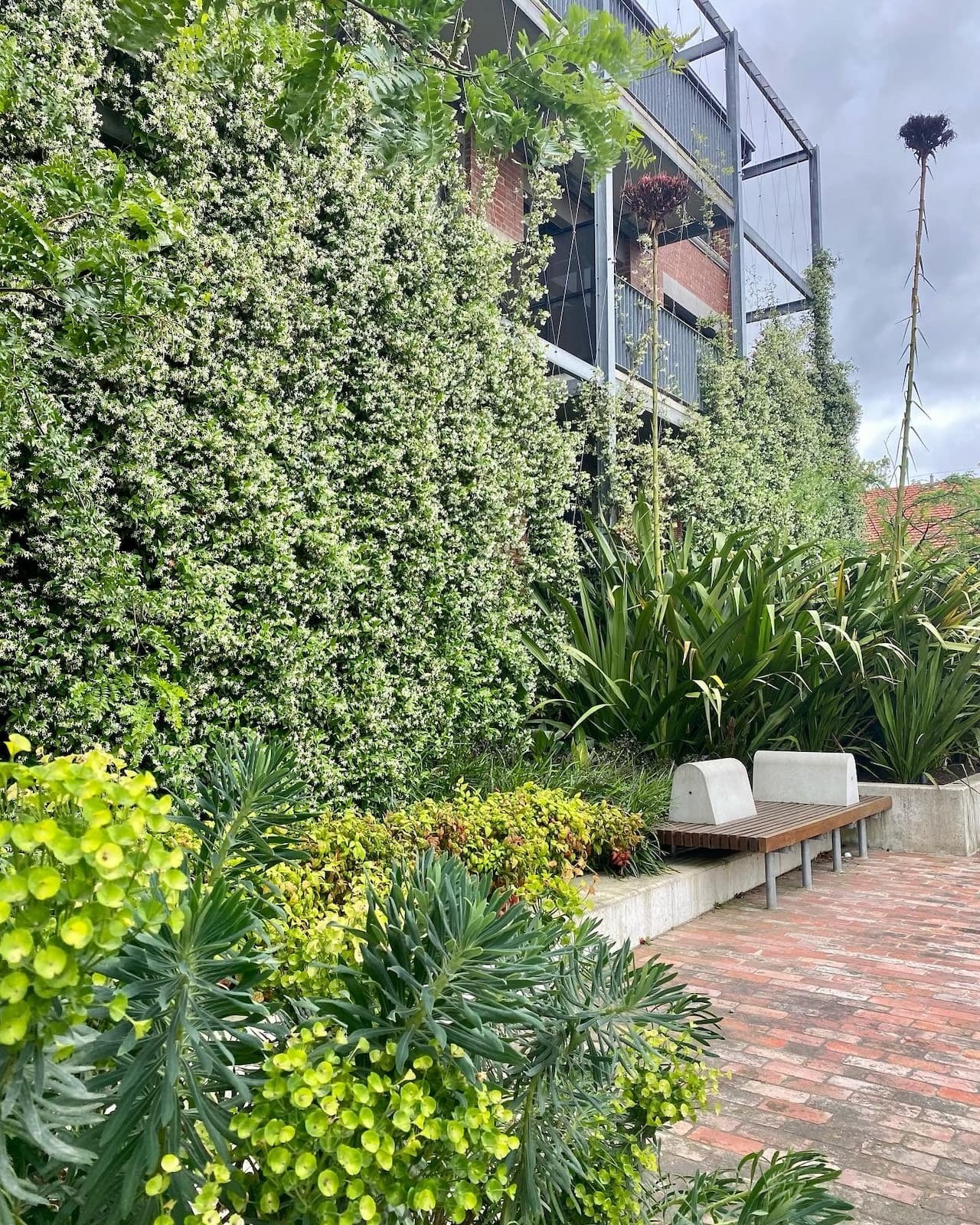
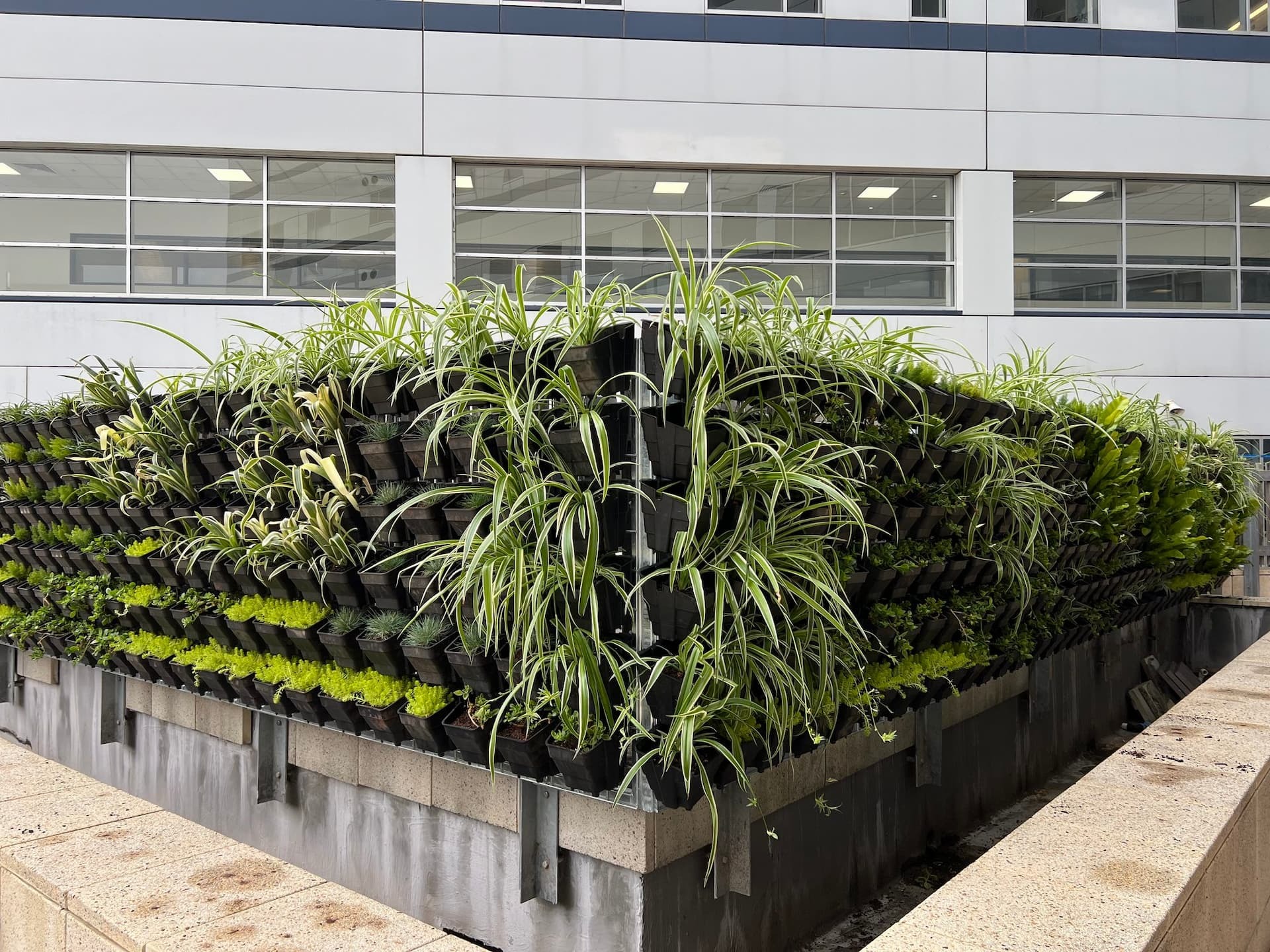
Green roofs and living walls can help NABERS Energy ratings by adding shade and insulation to a building. The Commercial Building Disclosure (CBD) Program lists shading and insulation among its energy upgrades. Less cooling then shows up as lower energy use in the next rating.
Green roofs work as a layer of insulation on top of a building. That insulation cuts the need for air conditioning in summer and heating in winter, one of the main advantages of rooftop gardening. Lightweight extensive systems keep green roof weight down, so they suit existing buildings not built for extra load.
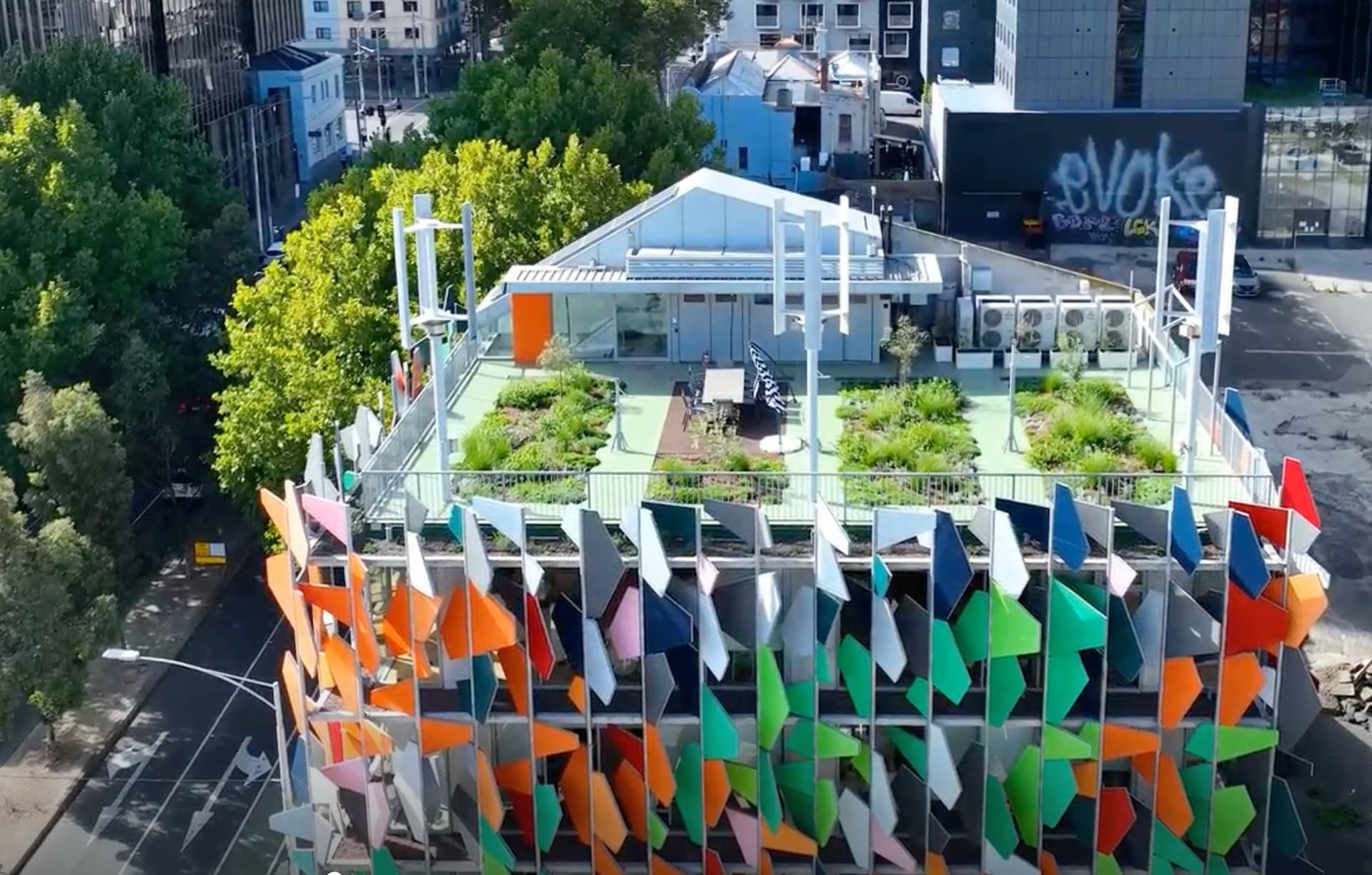
Green roofs can lift solar panel output when both share a roof. Pairing a green roof and solar panels keeps the panels cooler, so they produce more electricity than on a bare roof.
Rainwater capture can improve a NABERS Water rating if the system meets one of two conditions. It must connect on the user side of the meter recording the external water supply, or run independently of utility systems. The NABERS Water page sets out both options.
Green roof planting needs regular care to keep shading and insulating a building year after year. A green roof that dries out or fails stops doing that job. Regular green roof maintenance means watering, weeding, fertilising, and inspections.
How is NABERS changing?
NABERS has finalised a major Energy update, scheduled for 2030. The update keeps rewarding efficiency as Australia's electricity grid gets cleaner. NABERS announced it in its FY2026 annual report.
The NABERS FY2026 annual report notes Australia's first NABERS Embodied Carbon rating. NABERS also launched an application programming interface (API), so organisations can link their own systems to NABERS data. Updates to NABERS Waste now give more weight to genuine material recovery.
FAQs
Can you publish a NABERS calculator estimate?
No, a NABERS calculator estimate can't be promoted or published. The calculators give an indication of performance only. A rating you can share must come from an accredited NABERS Assessor.
How long does a NABERS rating last?
A NABERS rating lasts for 12 months. The annual cycle keeps each rating tied to how the building runs now. Owners renew each year to keep a current rating on the register.
Can a building with a NABERS rating be certified carbon neutral?
Yes, a building can be certified carbon neutral through Climate Active. The building first needs a current NABERS Energy rating of 4 stars or more. Carbon offsets then cover the building's remaining emissions.
Do apartment buildings get NABERS ratings?
Yes, apartment buildings can get NABERS Energy and Water ratings for common property. Common areas like lifts, car parks, and pools are rated together. Common property can account for up to 60% of energy use in an apartment building.
Plan greener, better-rated buildings with Evergreen Infrastructure
Evergreen Infrastructure designs, builds, and looks after green roofs and green walls. Our projects include the Treasury Building and Federation Square in Melbourne. Each one starts with the outcomes that matter to the client.
Evergreen Infrastructure can help you plan green infrastructure alongside energy and water upgrades. Once it's built, our asset care keeps planting healthy and supports your reporting.
If you're planning upgrades for a rated building, talk to us about where green infrastructure fits.
{{cta}}
We create green oases in urban settings
We'd love to discuss how we can partner to bring innovative, sustainable solutions to your urban environment.