

A Green Star rating is the Green Building Council of Australia's rating for sustainable buildings, fitouts, homes, and communities. New projects can earn 4, 5, or 6 stars, and existing buildings can earn 1 to 6 stars. Green roofs, living walls, and Water Sensitive Urban Design can all help a project earn points.
A Green Star rating is an independent score for a building's sustainability. Fitouts, homes, and communities can earn one too. The Green Building Council of Australia (GBCA) runs it, and new projects can earn 4, 5, or 6 stars.
Green Star is a voluntary rating system that rewards projects for going beyond the National Construction Code. The Green Building Council of Australia launched it in 2003. The council still assesses and certifies every rating itself.
New buildings now register under Green Star Buildings v1.1. Version 1.1 keeps the eight categories from v1 but adds tougher carbon and nature rules. New precincts use Green Star Communities v2, which sets new categories and rules.
What is the Green Star rating system?
The Green Star rating system independently assesses how sustainable a building, fitout, home, or community is. Ratings cover planning, design, construction, fitout, and day-to-day operation.
Only projects that the Green Building Council of Australia (GBCA) has certified can use the Green Star name. Claiming Green Star results without certification can breach the GBCA's trademark rules. Owners who do this may also face greenwashing claims.
Green Star Buildings scores projects across eight categories. These are Responsible, Healthy, Resilient, Positive, Places, People, Nature, and Leadership. Each category holds credits for parts of design, construction, or performance.
Older Green Star tools such as Design & As Built used nine categories. These included Management, Energy, Water, and Land Use and Ecology. Projects registered under those legacy tools still use the older names.
What is the Green Star rating scale?
New buildings, fitouts, and communities can earn a 4, 5, or 6 Star Green Star rating. The GBCA names these levels Best Practice, Australian Excellence, and World Leadership. A 6 Star rating is the highest.
Green Star Performance rates existing buildings on a scale of 1 to 6 stars, so a building can start low and improve. Owners recertify every 12 months to keep the rating.
Under Green Star Buildings, a project must meet 10 minimum expectations before any points count. Projects that target 5 or 6 stars must also meet the Climate Positive Pathway, which changes by registration date. Under Green Star Buildings v1.1, the minimum expectations also require an all-electric building.
Each star level under Green Star Buildings needs a set number of points. A project needs 15 to 34 points for 4 stars, 35 to 69 for 5 stars, and 70 or more for 6 stars. The WA Government's TG040 design guideline sets these ranges, also shown in the table below.
What are the Green Star rating tools?
The GBCA runs five main Green Star rating tools that cover buildings, operations, fitouts, homes, and communities. Each tool suits a different stage or scale of the built environment. The table below shows what each tool certifies and the scale it works at.
Green Star Buildings
Green Star Buildings is the main tool for new buildings and major refurbishments. The Green Building Council of Australia released version 1 on 29 October 2020 and launched v1.1 on 21 October 2025.
Registrations for Green Star Buildings v1 closed on 30 April 2026, so new projects now register under v1.1. Projects already registered under v1 can stay on that version or choose to upgrade. The tool covers carbon, health, resilience, nature, and responsible materials.
Green Star Performance
Green Star Performance rates how an existing building runs, rather than its design or construction. Ratings last 12 months, so owners resubmit each year to keep one.
Owners often use NABERS alongside Green Star Performance. NABERS is the National Australian Built Environment Rating System. The scheme rates how much energy and water a building uses.
Green Star Fitouts
Green Star Fitouts certifies the interior fitout within a building. Tenants use it to show the sustainability of their leased space, separate from the base building's rating. The Green Building Council of Australia released the current Fitouts tool in March 2026.
Green Star Homes
Green Star Homes certifies new residential homes. The Green Building Council of Australia released the tool in August 2021 as part of its Future Focus program.
Green Star Communities
Green Star Communities rates whole precincts, such as new suburbs and mixed-use hubs. The Green Building Council of Australia launched Communities v2 on 27 February 2025. New projects must register under v2 from 1 July 2026.
Green Star Communities v2 sorts its credits into eight categories, each built around a distinct outcome. The Green Building Council of Australia's strategic focus page reports more than 21,500 hectares of certified communities as of 30 June 2026.
What does a Green Star rating mean for buildings?
A Green Star rating gives independent proof that a project meets clear sustainability targets. A panel of outside experts reviews each project before the Green Building Council of Australia awards a rating.
Environmental performance
Green Star buildings produce 62% fewer greenhouse gas emissions than average Australian buildings. The same buildings use 66% less electricity and 51% less drinking water. The figures come from The Value of Green Star, a 2013 Green Building Council of Australia report.
Against new buildings built to minimum rules, Green Star buildings cut emissions by 45% and electricity use by 50%. The Green Building Council of Australia's 2013 Value of Green Star report made the comparison.
Green Star As Built projects recycled 96% of their construction and demolition waste on average. The 2013 Value of Green Star report drew on 428 certified projects, most rated under tools since replaced. Many results were estimates rather than measurements, so they're best read as a guide.
Financial performance
Green Star Design & As Built offices were worth 16.4% more per square metre than unrated offices, according to Real Investment Analytics. Annual returns were 4.2% for rated offices and 3.7% for unrated ones. Leases in rated offices also had 23% longer left to run, on average.
Real Investment Analytics used Green Building Council of Australia data for the year to December 2022. The firm compared rated offices with mostly prime-grade unrated offices. Founder Anthony de Francesco credited the results to tenant demand for greener buildings.
A 2014 study by Newell, MacFarlane, and Walker found Green Star offices had higher values and rents than similar non-green offices. The study compared over 200 green offices, allowing for other differences between buildings. Top National Australian Built Environment Rating System energy ratings also added value.
How big is the Green Star program?
Green Star covers 77 million square metres of certified building space in Australia. The GBCA's strategic focus page reports more than 9,860 certifications across more than 4,300 projects, as of 30 June 2026.
Green Star has its highest market share in CBD office buildings. The Green Building Council of Australia's Year in Focus FY2024–25 report found 46% of CBD office space held at least one Green Star rating. The council now says certified offices can hold 10% of Australia's workers each day.
Offices no longer lead new Green Star registrations. In December 2024, the Green Building Council of Australia said industrial buildings had taken the lead. Industrial projects made up 24% of Green Star Buildings registrations, overtaking offices for the first time.
Is Green Star the same as an energy star rating?
Green Star and energy star ratings are different systems that measure different things. Green Star looks at the whole building, including energy, water, materials, nature, and health.
Australian building energy ratings measure energy efficiency only. NatHERS (the Nationwide House Energy Rating Scheme) rates homes. NABERS Energy, from the National Australian Built Environment Rating System, rates commercial buildings, and neither scheme is part of Green Star.
No standalone Green Star energy rating exists, although people sometimes use the phrase. Energy is one of several areas that a full Green Star certification assesses.
How does Green Star compare to BREEAM and LEED?
Green Star, the UK's BREEAM, and the US Green Building Council's LEED are all voluntary third-party rating systems, each built for a different market. The right choice depends on where a project sits and who it reports to.
BREEAM started in the United Kingdom and is common across Europe. The name stands for Building Research Establishment Environmental Assessment Method. Its ratings run from Pass to Outstanding, with Good, Very Good, and Excellent in between.
The US Green Building Council developed LEED (Leadership in Energy and Environmental Design). Projects around the world seek LEED certification at Certified, Silver, Gold, or Platinum level.
The Green Building Council of Australia built Green Star for the Australian climate, rules, and industry. Australian governments, investors, and planning authorities treat it as the local standard.
What is ESG and how does Green Star relate to it?
ESG stands for Environmental, Social, and Governance, the three areas investors, regulators, and boards use to judge an organisation or asset beyond its finances. Green Star certification gives third-party evidence for the environmental side of ESG. Owners can use that evidence in sustainability reports, investor disclosures, and planning applications.
The Green Building Council of Australia designed Green Star Buildings v1.1 to help with required carbon reporting. The tool also supports reusing materials and reporting on nature. One nature reporting framework is the Taskforce on Nature-related Financial Disclosures (TNFD).
The Australian Government sets Green Star rules for its own office property. From 1 July 2026, offices it buys or builds for over $15 million need a 4 Star Green Star rating. The Net Zero in Government Operations Strategy also accepts an approved similar rating.
How does green infrastructure contribute to Green Star points?
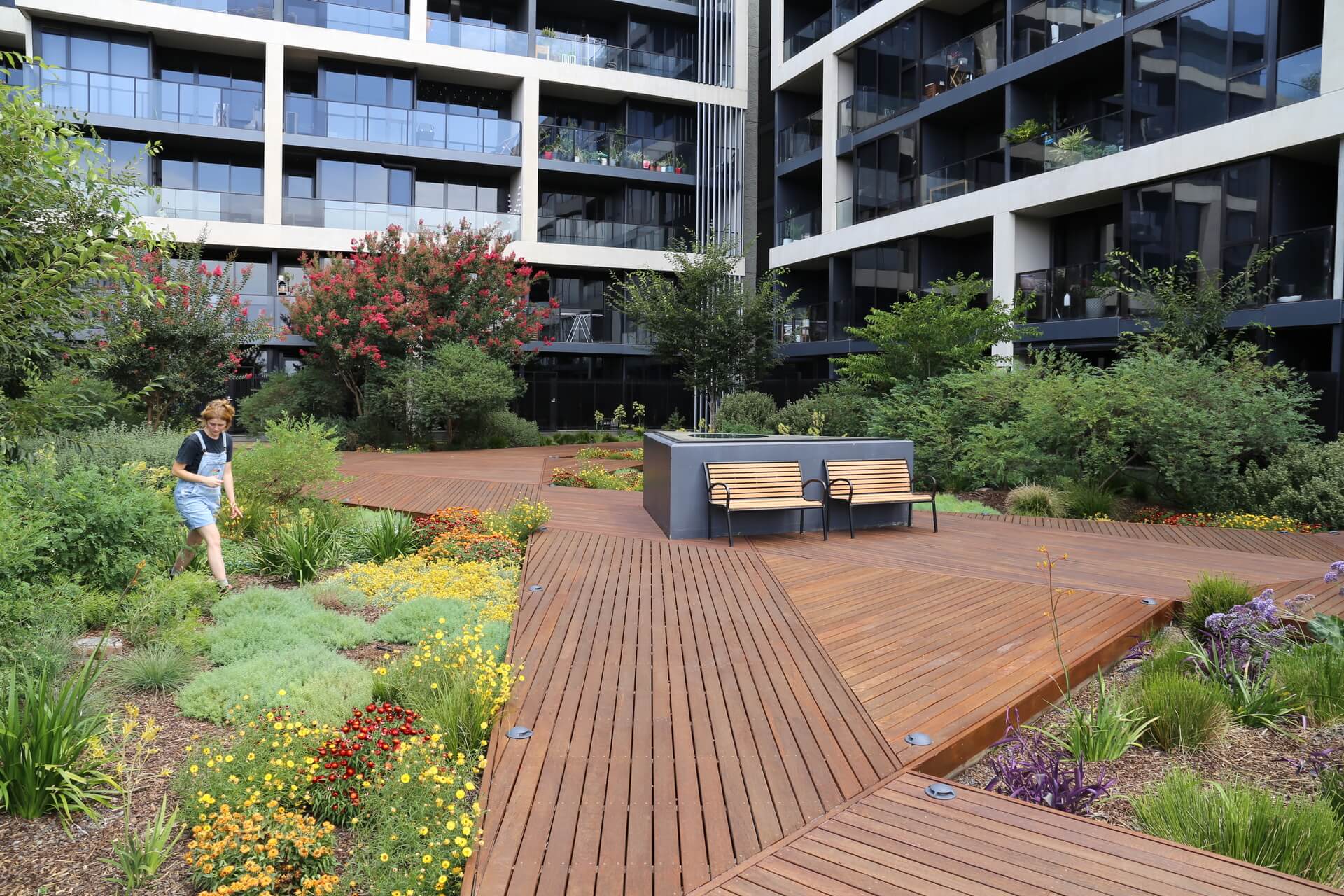
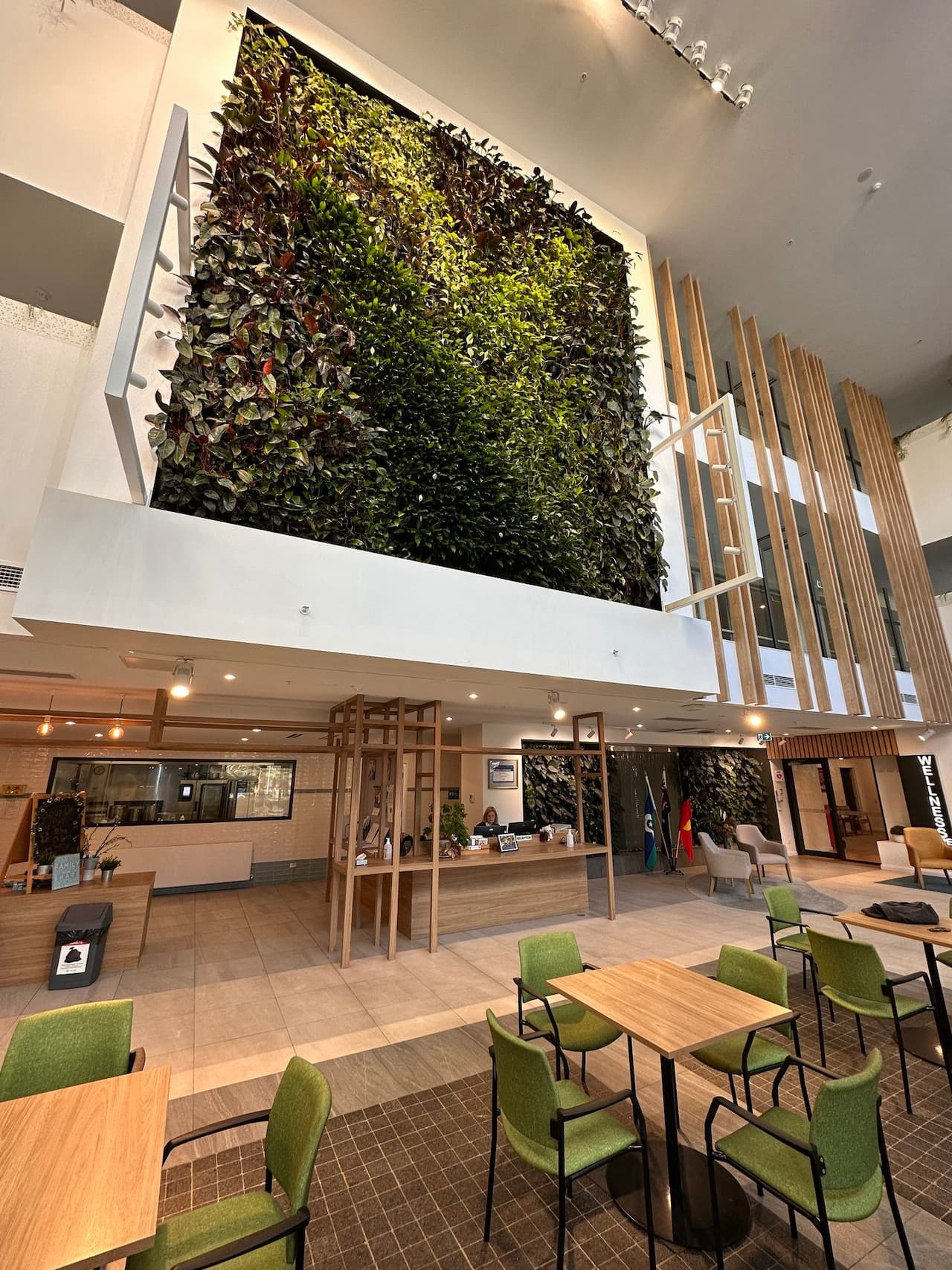
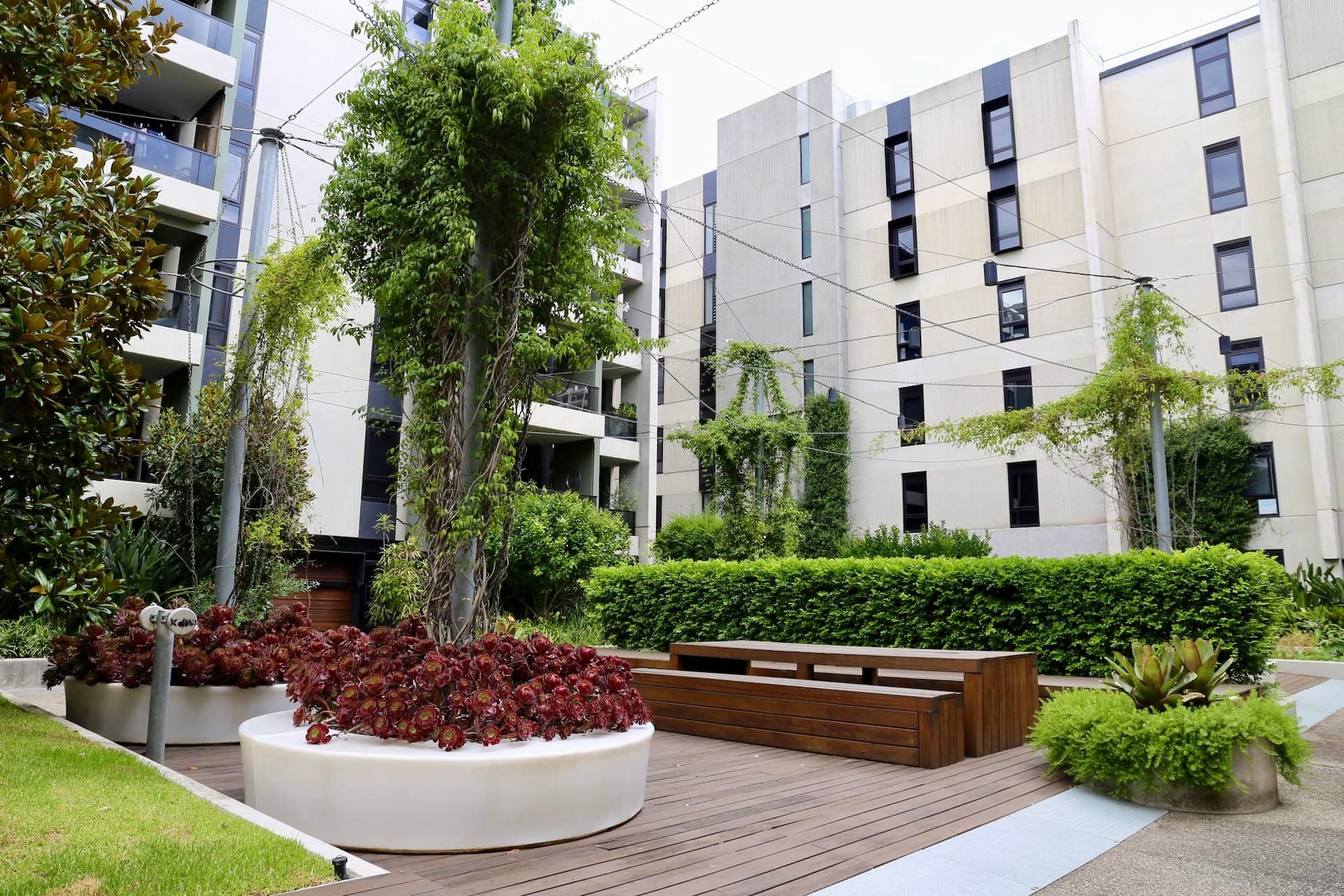
Green roofs, living walls, and Water Sensitive Urban Design (WSUD) can all earn Green Star points. The points fall under five categories, which are Nature, Healthy, Resilient, Positive, and Leadership. The points earned depend on the design and the project's credit strategy.
Legacy Green Star tools such as Design & As Built link green roofs, living walls, and WSUD to different categories. These include Land Use and Ecology, Water, Energy, Indoor Environment Quality, and Innovation.
Nature
Green Star's Nature category rewards projects that help wildlife, connect habitats, and keep waterways clean. Green roofs, green walls, and native planting can support these credits by adding habitat to urban sites. Bioretention and other WSUD systems can protect waterways by managing stormwater on site.
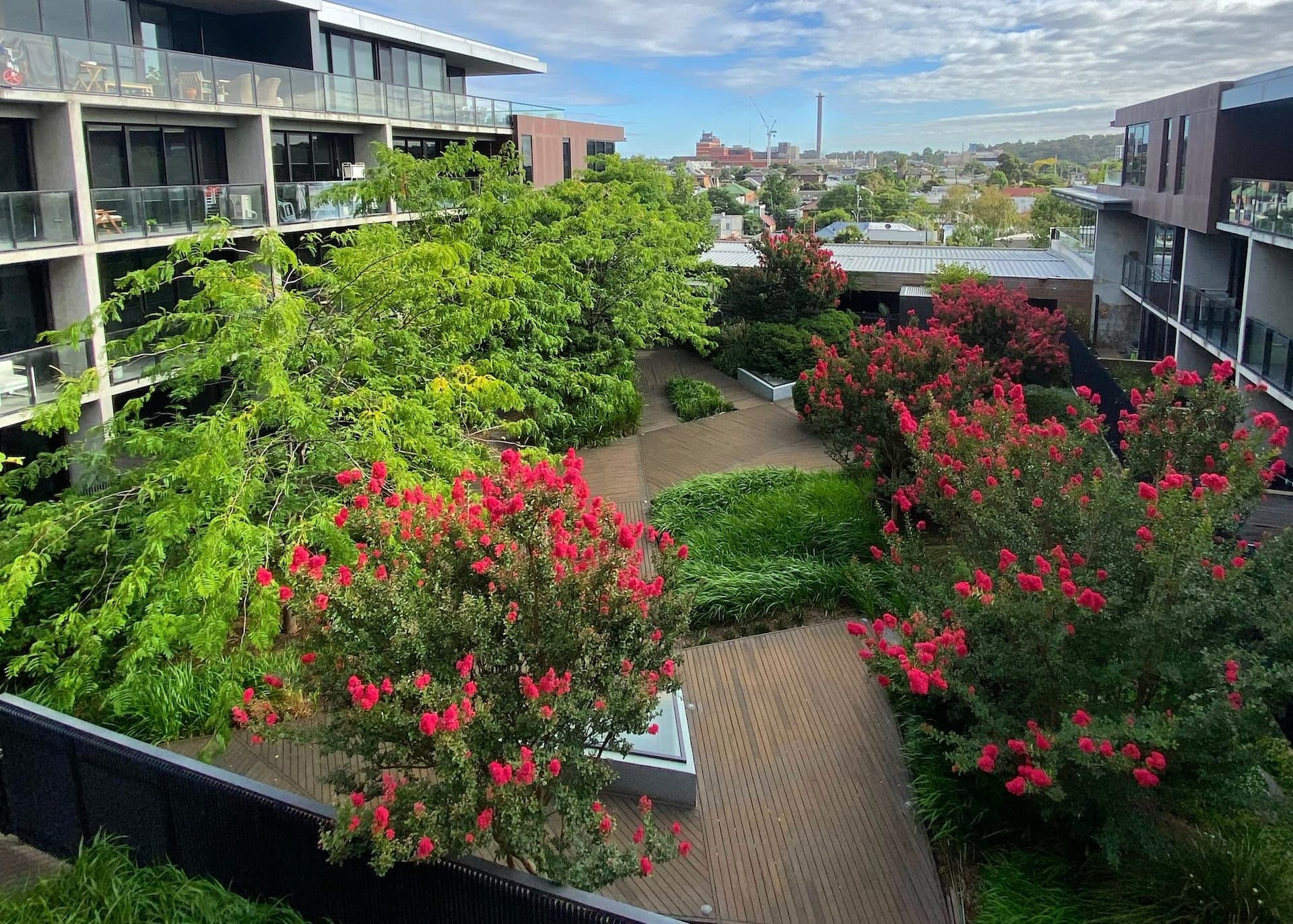
Under Green Star Buildings v1.1, biodiversity becomes a requirement for higher ratings from 2028. New projects targeting 5 or 6 stars must show a 10% net gain in biodiversity. All projects will also have to report on nature, using draft guidance from the Taskforce on Nature-related Financial Disclosures.
Healthy
Green Star's Healthy category includes a Connection to Nature credit, alongside credits for clean air and amenity. Living walls and biophilic design inside occupied spaces can help projects target that credit.
Resilient
Green Star's Resilient category includes a Heat Resilience credit. The credit rewards projects that keep the area around the building cooler. Green roofs and shade planting cool roof and ground surfaces, which counts toward this credit.
Positive
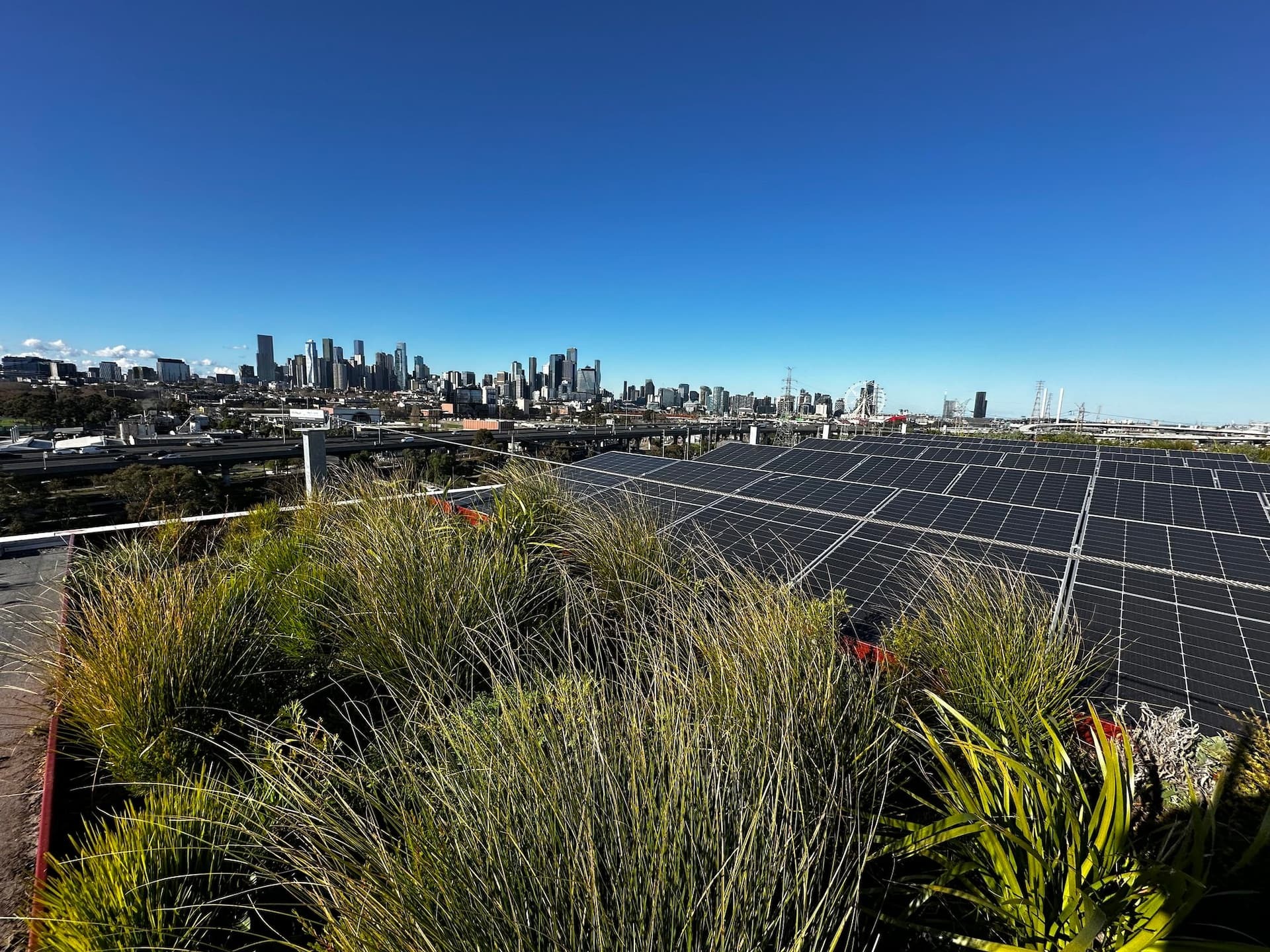
Green Star's Positive category covers energy use, water use, and carbon. Green roofs can lower cooling demand by insulating the roof and shading the building. Rainwater captured on roofs can also cut potable water demand.
Leadership
Green Star's Leadership category rewards projects that lead the market beyond the core credits. A project may qualify with new ways to restore habitat, manage stormwater, or cool the city.
Does Green Star work differently in NSW and other states?
Green Star works the same way in every state and territory, including NSW. The system has no separate NSW tool or rating scale.
State and local governments increasingly name Green Star in planning and buying rules. Western Australia's TG040 guideline uses Green Star Buildings points thresholds. The guideline covers non-residential government buildings.
The Green Building Council of Australia's project directory lists certified projects by location. Readers can use it to find rated buildings in NSW, Victoria, Queensland, and other states.
How do you get a Green Star rating?
Project teams earn a Green Star rating by sending evidence for each credit they target. Independent experts then assess the evidence. The process follows four broad stages:
- Register: The team registers the project with the Green Building Council of Australia under the right tool.
- Gather evidence: The team collects drawings, specs, modelling, system test reports, and waste records.
- Submit: The team shows how the project meets the minimum expectations and each target credit.
- Get assessed: An expert panel reviews the work, gives feedback, and confirms the rating.
The GBCA publishes submission guidelines for each tool, setting out the evidence each credit needs. Bringing in a sustainability consultant early gives a project the best chance of reaching its target.
FAQ
What is a 6 Star Green Star rating?
A 6 Star rating is the highest Green Star level and represents World Leadership. Under Green Star Buildings, a project needs 70 points or more, plus the minimum expectations and the Climate Positive Pathway.
What is a 5 Star Green Star rating?
A 5 Star rating represents Australian Excellence. Green Star Buildings projects need 35 to 69 points, along with the minimum expectations and the Climate Positive Pathway.
Can an existing building get a Green Star rating?
An existing building can earn a rating through the Green Star Performance tool. The tool awards 1 to 6 stars, and owners renew the rating each year.
Does Green Star apply to cars?
Green Star applies only to buildings, fitouts, homes, and communities, not to cars. The phrase "green star rating for cars" is informal and not linked to the GBCA. Vehicle efficiency falls under the separate New Vehicle Efficiency Standard.
Can a green roof help a building earn Green Star points?
A green roof can help a project earn points in several Green Star Buildings categories. The points depend on the plants, growing depth, how much rain the roof holds, and the credit strategy. A consultant who knows Green Star should assess it at the design stage.
Planning green infrastructure for your Green Star project
Evergreen Infrastructure designs, builds, and cares for living systems in Melbourne and across Australia. Our work includes green roofs, living walls, urban farms, and WSUD systems. We work with councils, developers, universities, health providers, and corporations.
Our living systems can earn points in five of the eight Green Star Buildings categories. Contact our team to plan for your Green Star target, from concept to long-term care.
{{cta}}
We create green oases in urban settings
We'd love to discuss how we can partner to bring innovative, sustainable solutions to your urban environment.