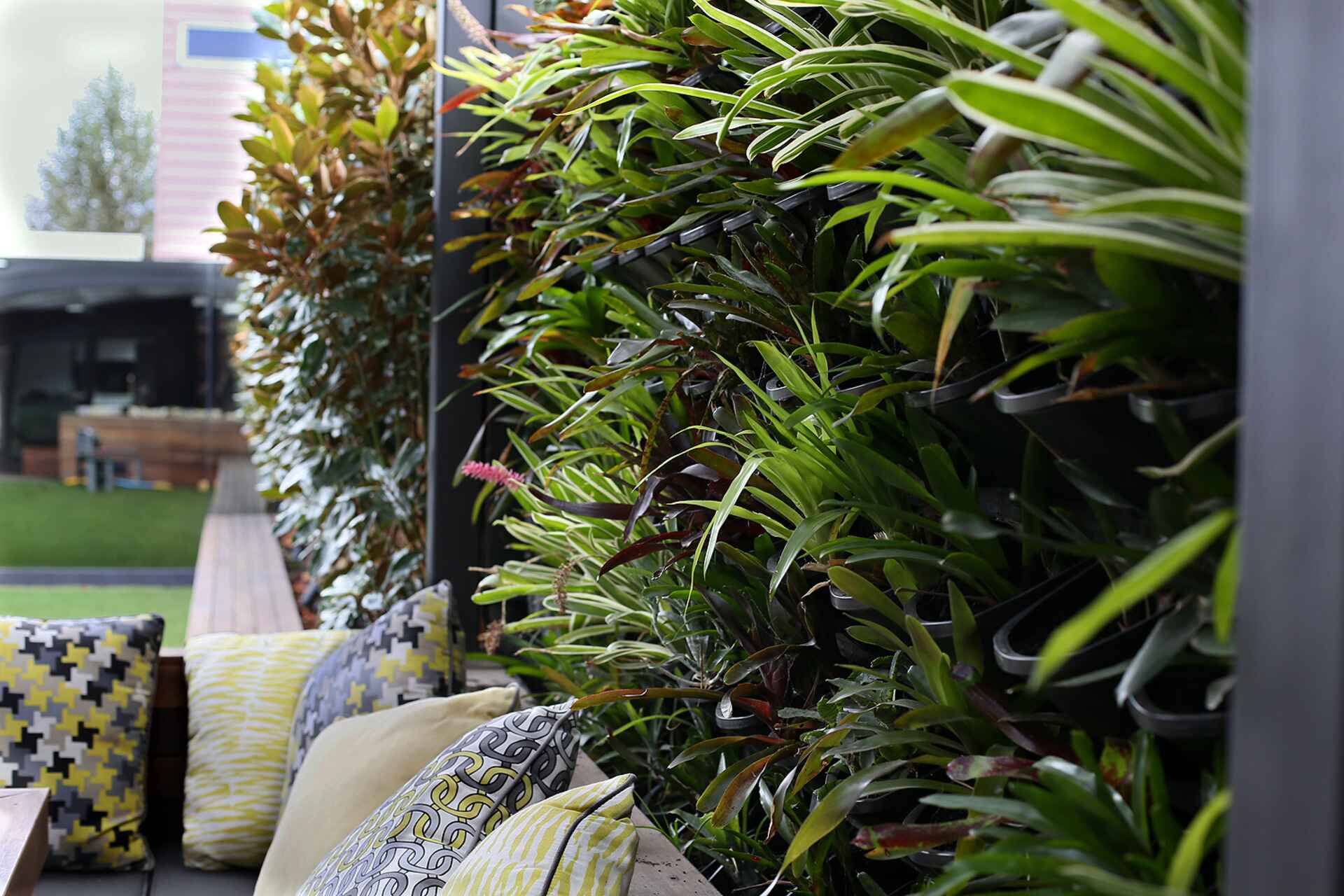
.webp)

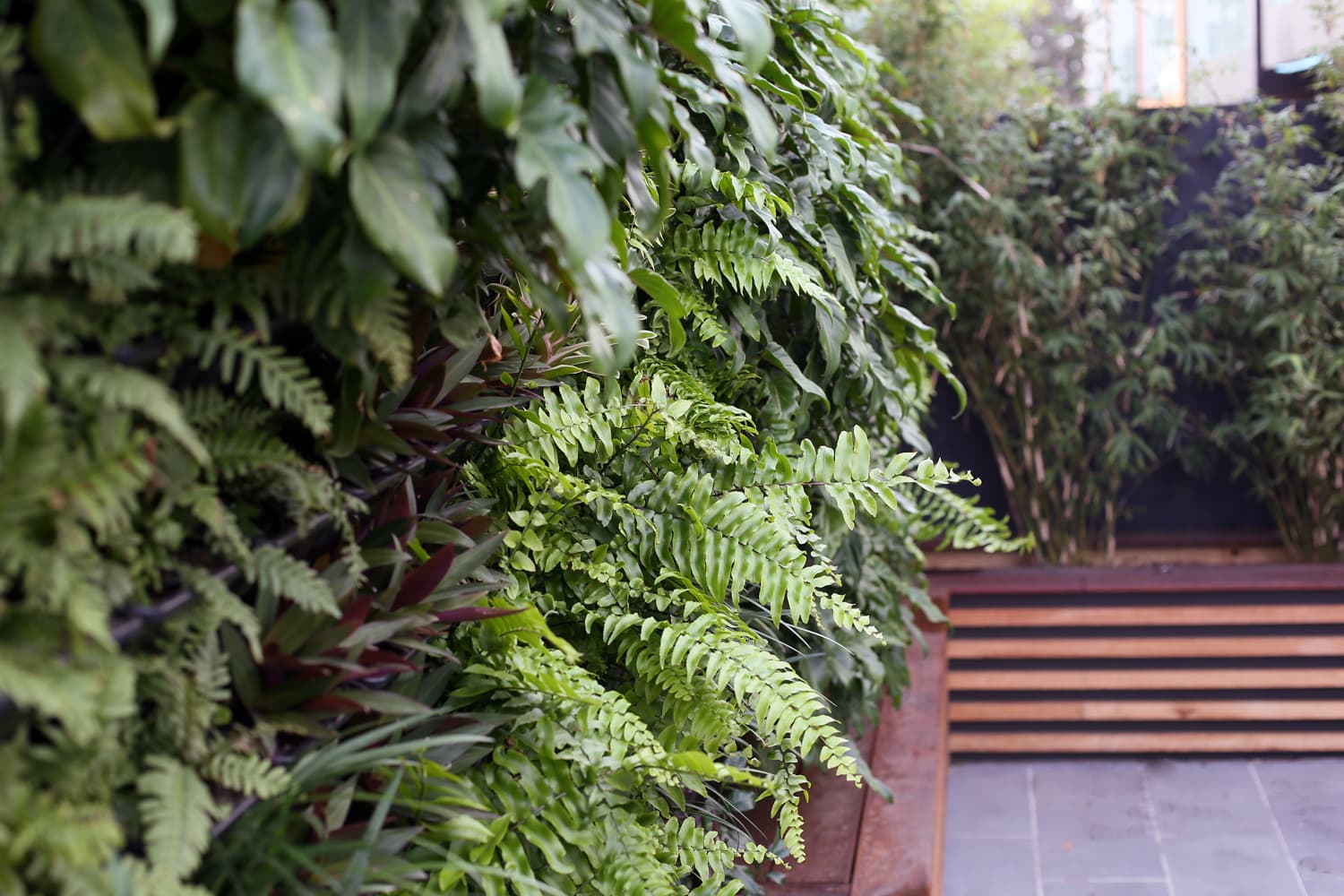
A living wall shades and insulates the façade behind it, cutting the energy needed to heat and cool the building. Water evaporating from the plants lowers air temperatures in the street outside. The substrate absorbs rainfall that would otherwise run straight into the drains. Leaves collect traffic particles at the height pedestrians breathe them in. Foliage and growing medium together absorb sound, taking the sharpness out of street noise. Birds, insects, and spiders colonise the panels, adding habitat where there's no ground to plant in. People nearby report lower stress and better focus, an effect measured in schools, workplaces, and hospitals. Owners see it in valuations, tenant appeal, and green building ratings.
Living walls deliver measurable benefits. They reduce building cooling loads, lower ambient air temperatures, and filter particulate matter. Living walls also cut noise, support urban biodiversity, and improve occupant wellbeing.
These outcomes are well-documented. They appear across peer-reviewed research, government guidelines, and industry practice. In Australian cities, living walls are increasingly recognised as functional infrastructure.
What is a living wall?
A living wall is a vegetated system in which plants grow on a vertical building surface, using soil-based or hydroponic modules. Systems may also use climber trellises or continuous substrate panels integrated directly with the façade.
The terms green wall, vertical garden, and living façade describe the same family of systems.
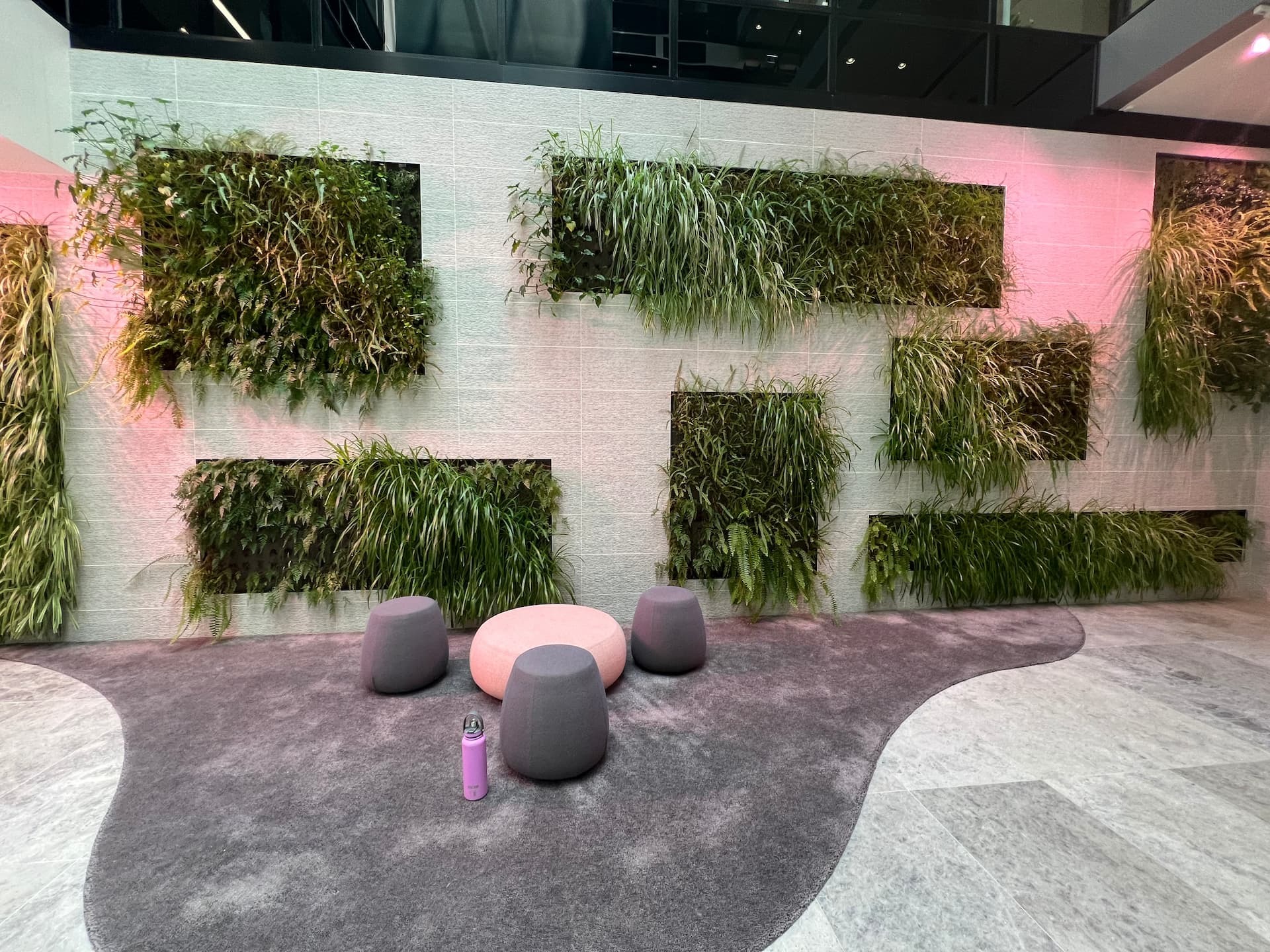
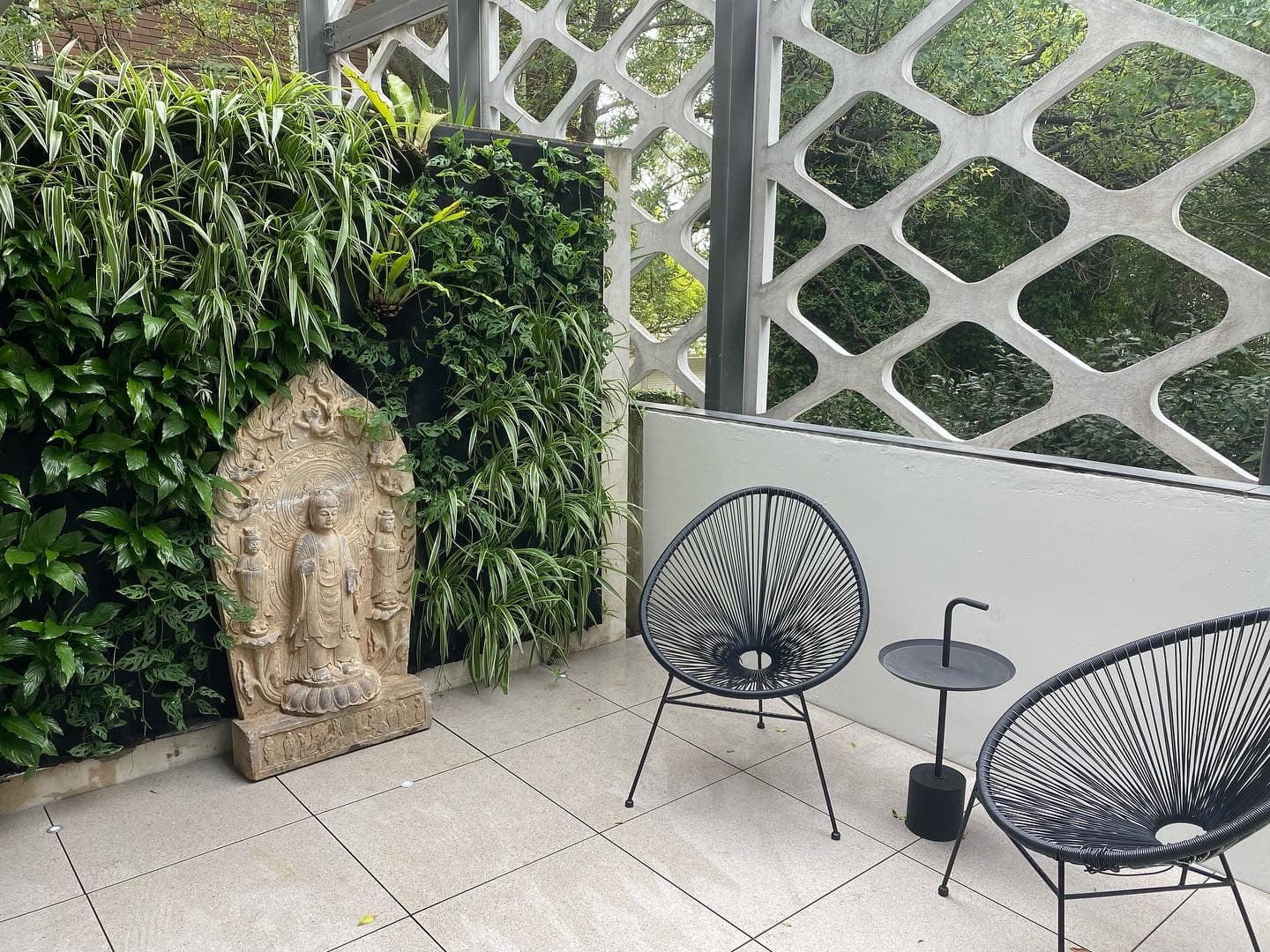
Living walls sit within Australia's broader urban green infrastructure network. Within that network, living walls are uniquely space-efficient. They add greenery without using valuable ground-level space in dense city centres.
What are the environmental benefits of living walls?
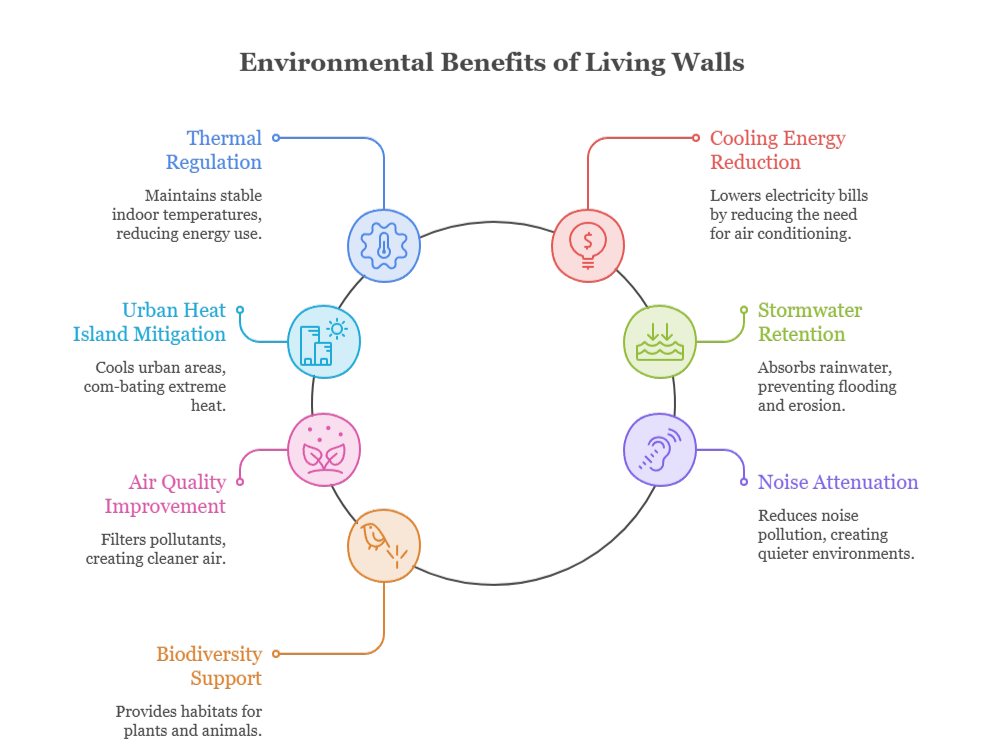
Living walls deliver important environmental benefits, including:
- Thermal regulation
- Cooling energy reduction
- Urban heat island mitigation
- Stormwater retention
- Air quality improvement
- Noise attenuation
- Biodiversity support
Thermal regulation and cooling energy
A 2022 review by Goel et al. found that green walls absorb or reflect 40–80% of solar radiation in summer. Doing so prevents heat from penetrating the building fabric. This effect is substantial enough to lower a building's interior temperature by as much as 10°C.
This 2018 field study by Vox et al. in Building and Environment measured surface temperatures across seasons. It recorded green façades running up to 9.0°C cooler than bare walls in summer. Under peak conditions, a maximum surface temperature differential of 15.5°C was recorded.
Winter nighttime temperatures sit as much as 3.5°C warmer than uncovered walls, trimming heating demand in both seasons.
A 2022 practitioner's guide from GIZ notes that a well-designed and constructed building envelope can influence 20–60% of heating and cooling energy. Green walls act as one of the passive design measures contributing to that range. At the upper end, the guideline cites reported savings reaching 84% in heating seasons and 48% in cooling seasons.
Urban heat island mitigation
A 2022 review by Susca et al. found that green wall installation reduces air temperature by up to 8°C in street canyons. Living walls also lower surrounding ambient temperature by 0.5°C to 2°C through evapotranspiration and high water retention.
A 2025 study by Hecht et al. measured daytime cooling effects of up to 0.6–0.7°C between the front and back of green walls.
Melbourne's Growing Green Guide links vegetated façades to lower heat-related mortality risk. This works by reducing outdoor thermal stress in dense precincts. As Australian cities face more frequent heatwaves, this is a direct public health benefit.
Stormwater retention and water-sensitive urban design
Green walls and green roofs reduce both total rainwater runoff and the speed at which it discharges to sewerage systems.
A 2011 study by Ostendorf et al. monitored eighteen planted and unplanted wall systems across a full growing season. Each wall received 3,807.8 litres of precipitation over the study period, and all treatments retained more than 75% of it.
In Australian developments, WSUD regulations set explicit pollutant reduction targets. South Australia's WSUD guideline requires reductions of:
- 80% for total suspended solids
- 60% for total phosphorus
- 45% for total nitrogen.
- 90% for gross pollutants
Living walls can form part of the integrated system used to achieve these stormwater targets. They can work well on tight urban sites where traditional bioretention systems don't fit.
Air quality improvement
A 2021 study by Ysebaert et al. found that green walls reduce particulate matter concentrations in deep street canyons by around 5–30%. Along high-intensity traffic roads, green walls accumulate between 10¹⁰ and 10¹¹ particles per square metre of leaf area.
This deposition occurs at pedestrian breathing height. The level where exposure matters most.
In dense Australian CBDs with heavy traffic and little tree canopy, space for new trees is often limited. Living walls offer a space-efficient way to capture airborne particles instead. They are valuable where ground-level planting is simply not possible.
A 2022 review by Goel et al. found that living wall substrates captured 3–4 kg/cm² of carbon in the systems studied. This accounted for 50–70% of the total carbon trapped in those living wall systems.
Noise attenuation
A 2015 study in Applied Acoustics by Azkorra et al. tested a modular green wall under laboratory conditions to two international standards. The system achieved a weighted sound reduction index of 15 dB. Sealing the joints between modules lifted this to 18 dB, moving the wall up a grade in barrier classification.
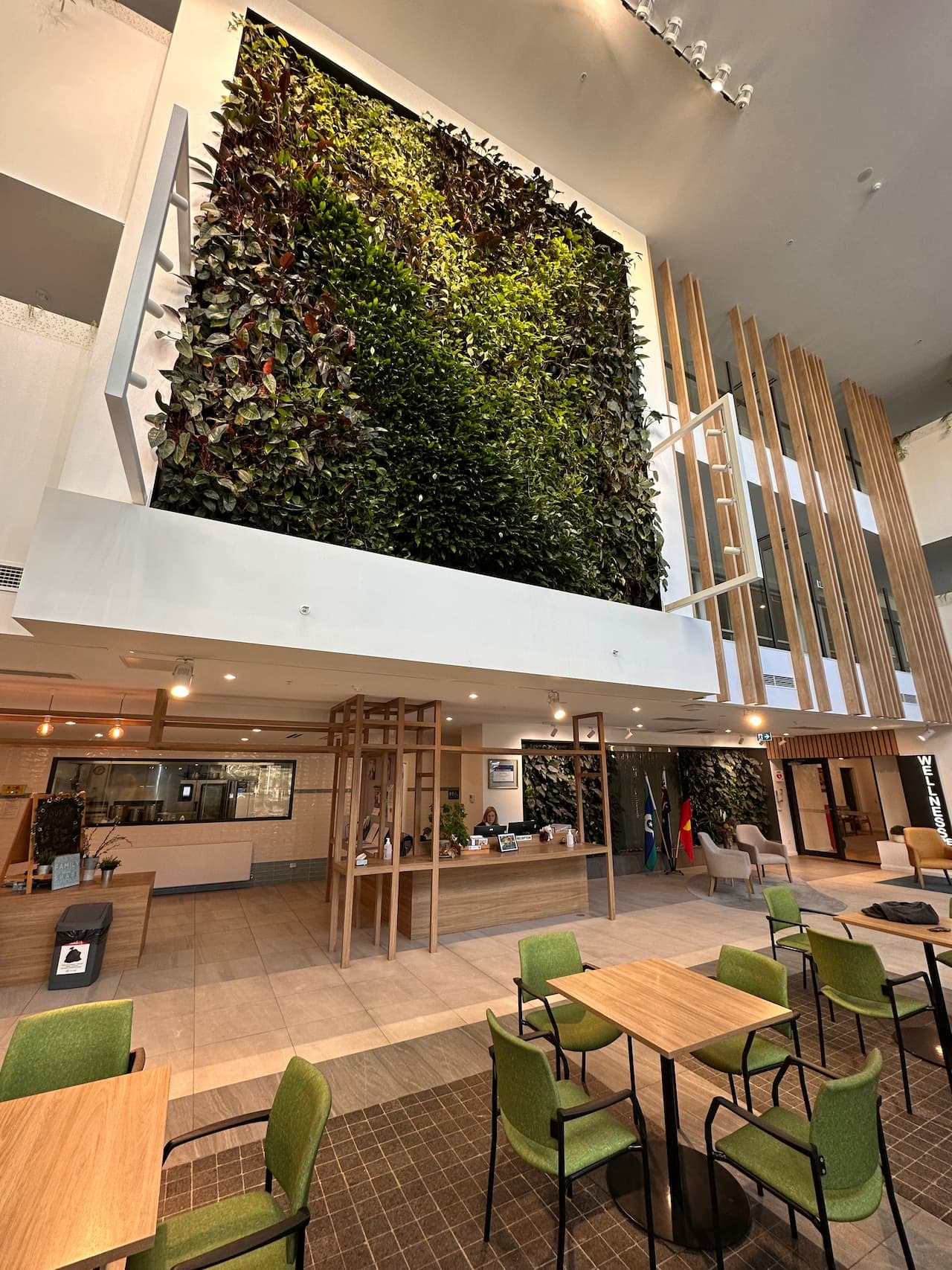
Module-based green wall systems are more common in real-world installations. These systems show smaller average noise reductions of 2–3 dB compared to vegetation-only effects.
Biodiversity support
A 2025 comparative study by Hecht et al. found that green walls hosted over 100 animal species, including insects, spiders, and birds.
Plant choice strongly determines biodiversity value. A 2023 study by Salisbury et al. looked at green façades with denser, more varied vegetation cover, including combinations of plant species. These façades supported significantly higher invertebrate abundance than sparser single-species walls.
In Australian cities, urban consolidation is reducing private garden space. Living walls can help by acting as vertical habitat stepping stones.
What are the health and wellbeing benefits of living walls?
Living walls improve mental health, reduce physical symptoms, and support cognitive performance. These outcomes are documented in schools, offices, hospitals, and aged care settings.
A 2022 study by Gunn et al. looked at green walls along with other nature elements like indoor plants and window views. It found that these immediately reduce levels of stress and anxiety and increase wellbeing in schools.
Mental health and psychological restoration
Exposure to living plants in vertical systems reduces stress, tension, and cognitive fatigue. Visual contact with vegetation supports attention restoration and lowers perceived stress. This is particularly the case in high-density urban settings with limited access to parks.
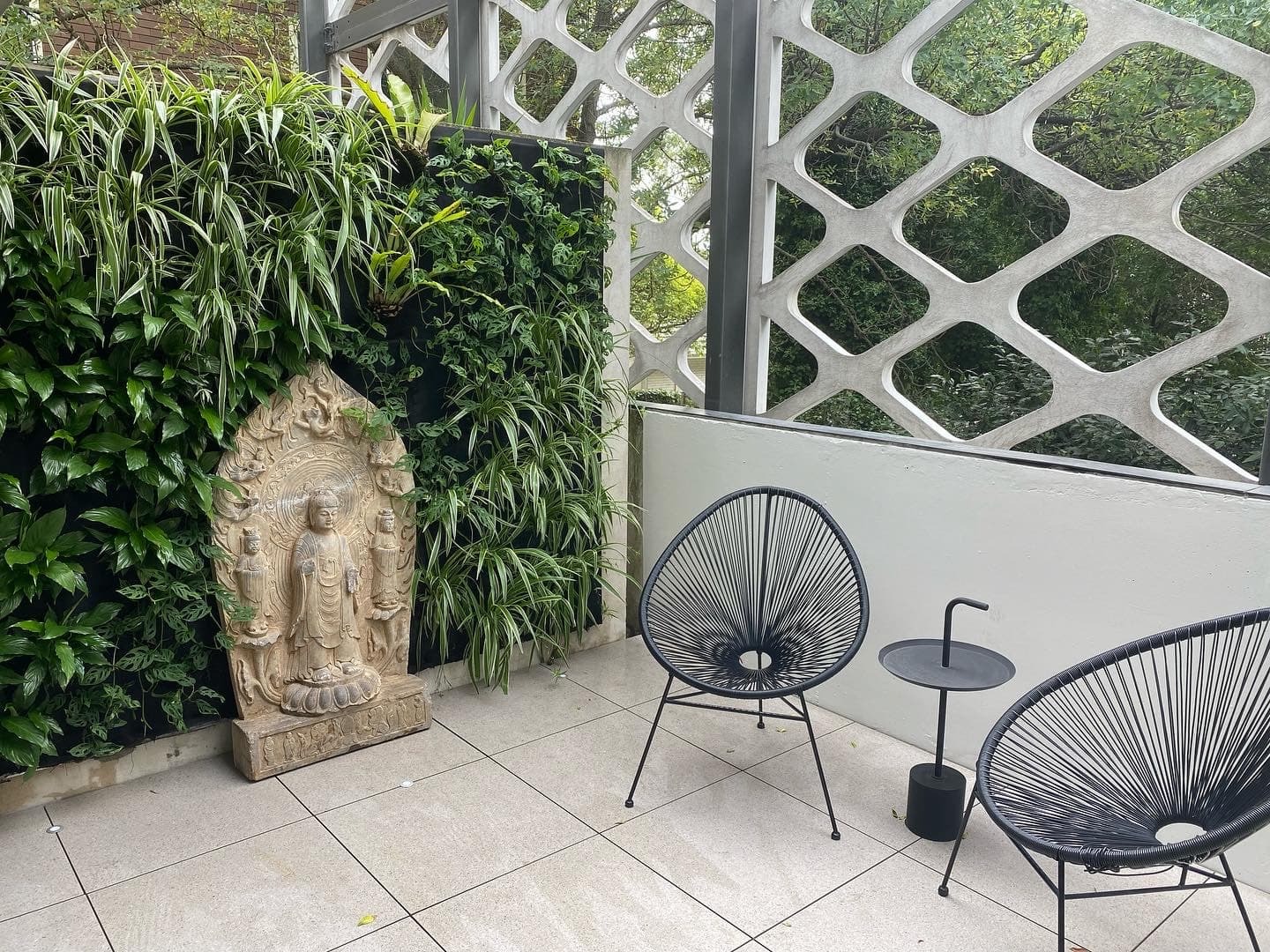
For therapeutic landscape projects, living walls create immersive green environments. This includes hospital atria, mental health facilities, and aged care courtyards.
These installations envelop users in nature within community wellness settings. Plants with soft leaves, seasonal colour, and gentle movement in the breeze make the effect even more calming.
Workplace and educational settings
A 2017 study by van den Berg et al. conducted a controlled evaluation of classroom green walls. The study involved 170 children aged 7–10 and measured:
- Attentional performance
- Wellbeing
- Classroom evaluations
Results showed that green walls can improve selective attention. They can also produce more positive evaluations of the learning environment.
Evergreen Infrastructure's study hall project demonstrates how these research outcomes translate into real educational environments.
In offices and commercial buildings, biophilic design elements including living walls:
- Reduce stress
- Improve perceived air quality
- Align with ESG commitments to employee health
For Australian universities, these outcomes support both duty-of-care obligations and staff attraction goals. This also applies to healthcare providers and corporate tenants.
Are green walls sustainable?
Green walls are a sustainable design solution, delivering measurable environmental services. This includes cooling, stormwater retention, air filtration, carbon capture, and biodiversity support.
A 2022 GIZ guide treats green walls as passive design measures that improve a building's thermal performance. This, in turn, accounts for 20–60% of a building's heating and cooling energy. However, living walls need regular irrigation to keep plants alive, unlike simpler green façades.
Green wall sustainability is recognised in Australian planning frameworks. CSIRO positions vegetated walls as part of functional urban green infrastructure that provides:
- Climate regulation
- Clean air and water
- Erosion control
- Recreational space
Melbourne's Green Our City plan treats vertical greening as a key climate adaptation tool. Victoria's Growing Green Guide does the same.
In Green Star, living walls can contribute to credits across:
- Energy
- Water
- Land Use & Ecology
- Indoor Environment Quality
- Innovation categories
Do living walls increase property value?
A 2021 review by Manso et al. found that green infrastructure raises building market value by an average of around 8%. Studies focused specifically on green walls reporting increases of 2–5%.
A living wall can incorporate 96 plants per square metre, adding immediate perceived value to a space. That value is sustained over time through self-regulated irrigation and modular plant design.
In Australian commercial property, living walls can:
- Differentiate buildings in competitive markets
- Support sustainability branding
- Help achieve higher‑rated green building certifications
In public and institutional buildings, their value case extends to social return. This occurs through improved health, wellbeing, and biodiversity. These benefits can be reported under ESG and SDG frameworks, which track climate, nature, and wellbeing impacts.
FAQ
What is the difference between a green wall and a living wall?
The terms are used interchangeably in Australian practice. Both refer to vegetated systems grown on vertical building surfaces. This includes soil-based modular panels, hydroponic systems, and climber trellises on frames.
The choice of terminology varies by designer, supplier, and region. There is no technical distinction between them.
Can living walls be installed on existing buildings?
Yes, most existing buildings can be retrofitted with living walls using modular cladding systems. These attach to the façade with an independent frame, usually with a 100 mm air gap.
A qualified engineer should check structural load, waterproofing, drainage, and fire safety first. Systems come in a range of sizes, from small walls (around 2 m²) to large commercial installations.
How much maintenance do living walls require?
Living walls need regular watering, fertilising, pruning, pest control, and plant replacement. Smart irrigation and monitoring cut labour costs and improve plant health. Many providers offer fixed-fee or performance-based maintenance contracts covering all these tasks.
Do living walls help with Green Star or NABERS ratings?
Living walls can contribute to several Green Star categories. This requires supporting data like energy modelling, stormwater performance, and biodiversity monitoring.
NABERS doesn't award specific credits for living walls. However, they can still boost Energy, Water, and Indoor Environment ratings.
This requires tracking their impact for at least 12 months. A green infrastructure consultant engaged early in design can help ensure the wall is specified correctly. This supports the project's rating goals.
Are living walls suitable for schools and healthcare facilities?
Yes, living walls suit both settings well. In classrooms, nature elements like green walls can reduce stress and improve mood and attention. In healthcare settings, exposure to greenery supports psychological recovery and may lower stress. Plant choice, ventilation, and cleaning still need careful planning to manage allergens and germs.
Living walls are infrastructure worth investing in
Living walls are no longer just about looks. The evidence on cooling, stormwater, air quality, noise, biodiversity, and occupant health all points the same way. Design one as infrastructure, and it will keep earning its place on the building for decades.
Evergreen Infrastructure designs, installs and maintains living wall systems across Australia. The work we have done so far includes commercial, institutional, and public projects.
Retrofitting an existing façade? Targeting Green Star credits? Working out whether a vertical system fits a tight site?
Whatever the brief, the earlier we're involved, the more the wall can do for your project. Get in touch for a consultation, and we'll help you scope a system that performs well for years to come.
{{cta}}
We create green oases in urban settings
We'd love to discuss how we can partner to bring innovative, sustainable solutions to your urban environment.