.webp)

Vertical gardening offers Australian cities a range of practical benefits. Green walls cool buildings by shading surfaces and releasing moisture. They cut energy use, catch rainwater, and slow stormwater runoff. On top of that, they support birds and pollinators, filter air pollutants, and reduce noise. Indoor green walls can lower stress and anxiety in offices, hospitals, and schools. Vertical farming systems also grow far more food per square foot than traditional methods.
Vertical gardening is the process of growing plants on walls, facades, and climbing structures. In dense urban settings, it can deliver measurable environmental, ecological, and wellbeing benefits.
In Australian cities, heat, stormwater pressure, and mental health concerns are growing challenges. Green walls are increasingly recognised as functional infrastructure, not decoration.
What is vertical gardening?
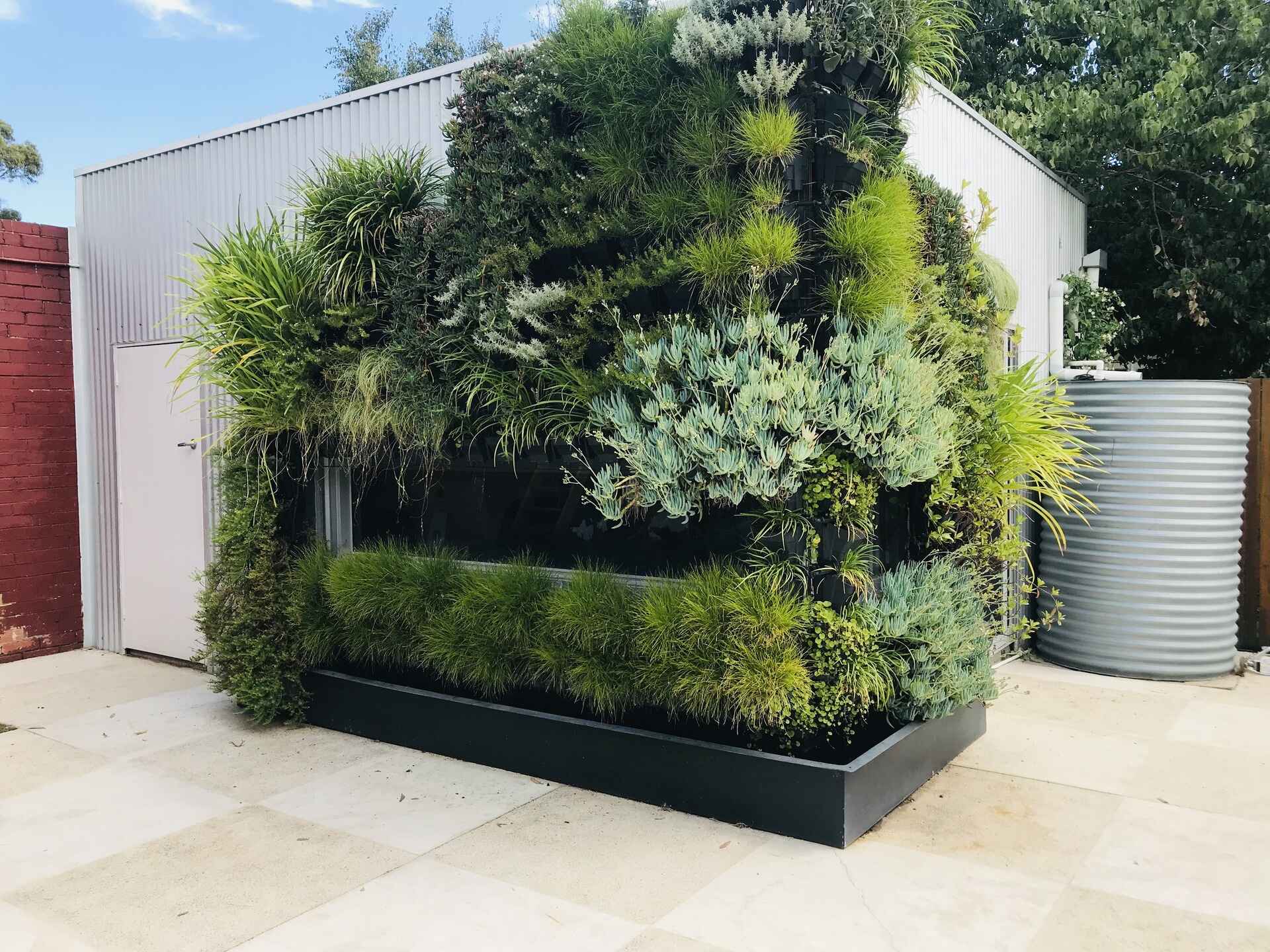
Vertical gardening is the practice of growing plants on vertical surfaces. It includes:
- Green walls (also called living walls)
- Green facades
- Freestanding vegetated structures installed on or against buildings
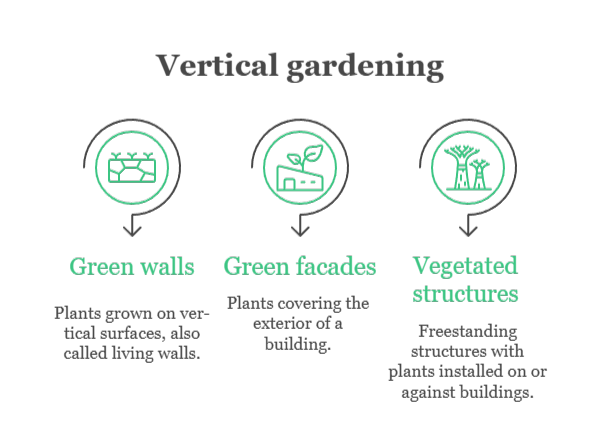
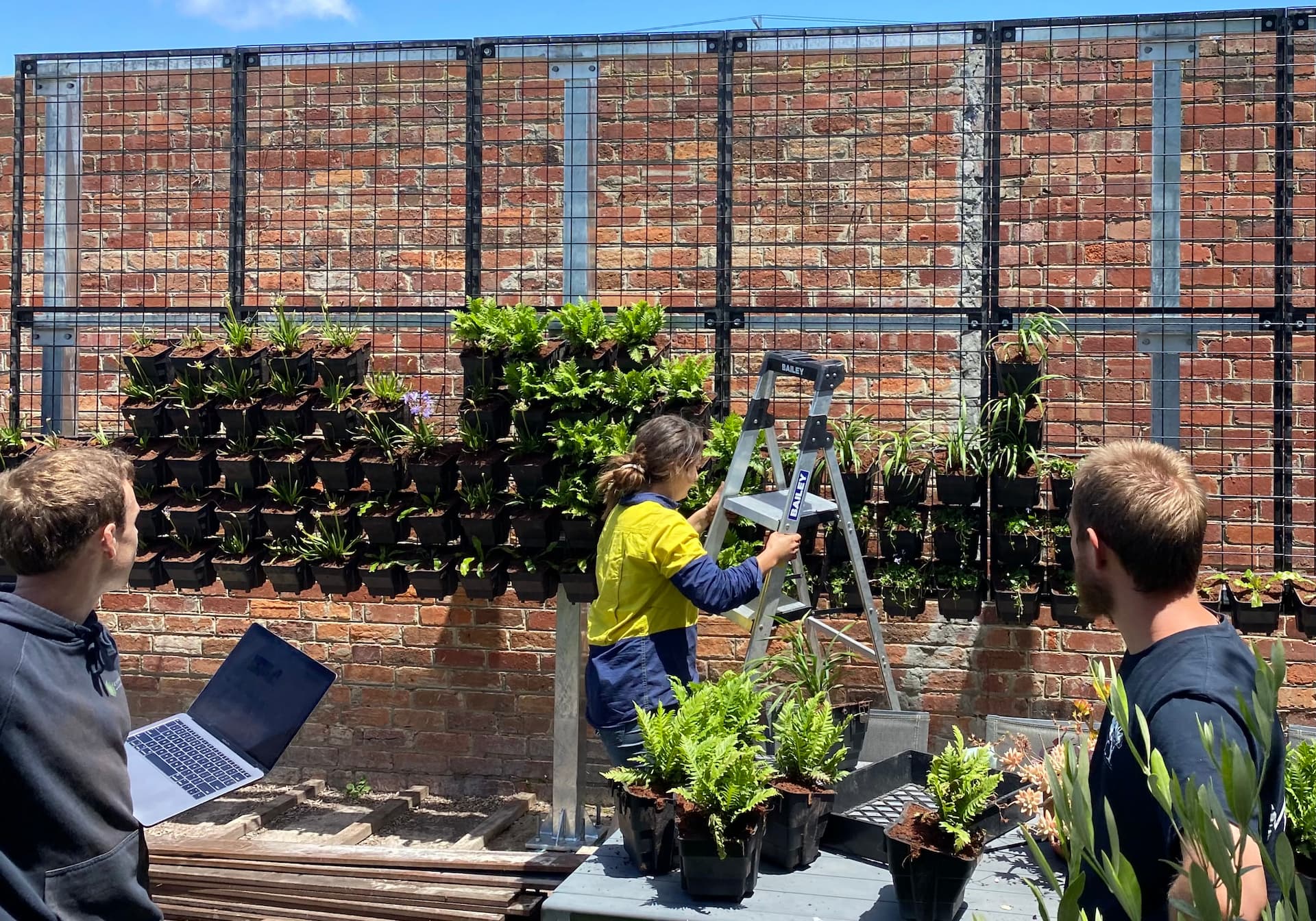
These systems use a growing medium fixed to or hung from a structure. Plants are selected for the specific microclimate, orientation, and purpose of each installation.
Melbourne alone has about 50 green walls and 100 green roofs documented across the city. According to the C40 Cities Climate Leadership Group, that number is growing.
What are the advantages of vertical gardening?
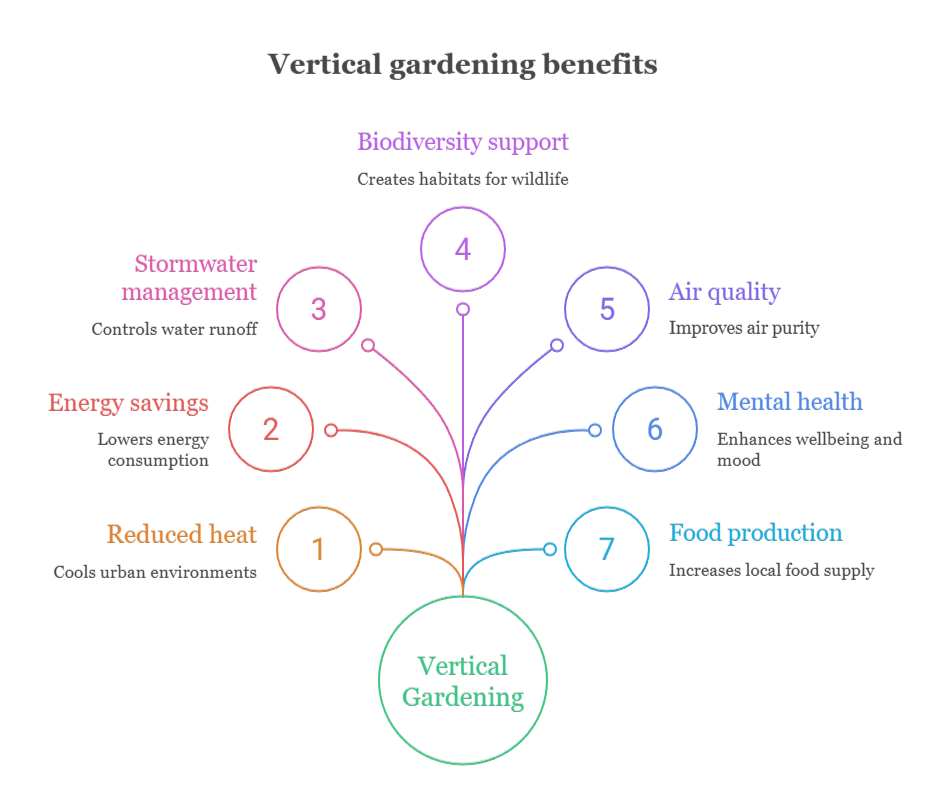
Vertical gardening offers a distinct set of benefits. Each of them addresses specific problems facing dense urban environments. They include:
- Reducing urban heat
- Cutting energy costs
- Managing stormwater
- Supporting biodiversity
- Enhancing air quality
- Improving mental health and wellbeing
- Increasing food production
How does vertical gardening reduce urban heat?
Vertical gardening reduces urban heat by shading surfaces and insulating walls. Green walls release moisture through a process called evapotranspiration. These combined effects lower both surface and ambient temperatures.
A 2025 study published in Energy and Buildings examined a modular green wall's cooling performance. It found that the wall reduced surface temperatures by up to 15°C compared to a bare reference wall during peak hours.
Another study by Susorova et al. (2014) tested ivy on building facades under experimental conditions. It found that the ivy reduced exterior surface temperatures by an average of 0.7°C, reaching up to a 12.6°C reduction on east-facing walls during peak hours.
What are the energy savings from vertical gardens?
Vertical gardens reduce building energy demand by insulating walls and cutting heat loss. The scale of savings depends on the climate zone, building orientation, and the type of system installed.
The University of Plymouth conducted research on a pre-1970s masonry building in 2021. The research found that a living wall can reduce heat lost through the wall structure by over 30%.
A 2022 study in Energy and Buildings looked at a green facade in Mediterranean climatic conditions. The green facade delivered an annual energy saving of 28.5% compared to a wall without vegetation.
How do vertical gardens manage stormwater?
Vertical gardens manage stormwater by catching rain, absorbing it, and slowing runoff into drains. This directly supports Water Sensitive Urban Design (WSUD). WSUD is a regulated planning requirement for many new urban developments in Australia.
Research from Penn State found that a 25 ft² green wall linked to a cistern can retain about 2.5 gallons per day. This is roughly 0.5 inches of rainfall over three days. Sizing green walls to capture this depth is enough to intercept runoff from 60 to 70% of annual rainfall events.
A 2025 study in Water Research looked at green walls combined with water storage across four Australian cities. It found that these systems can further cut stormwater discharge from high-density buildings.
Green walls also contribute to stormwater quality. They filter pollutants through plant and growing media layers before water enters the drainage system.
What are the biodiversity benefits of vertical gardens?
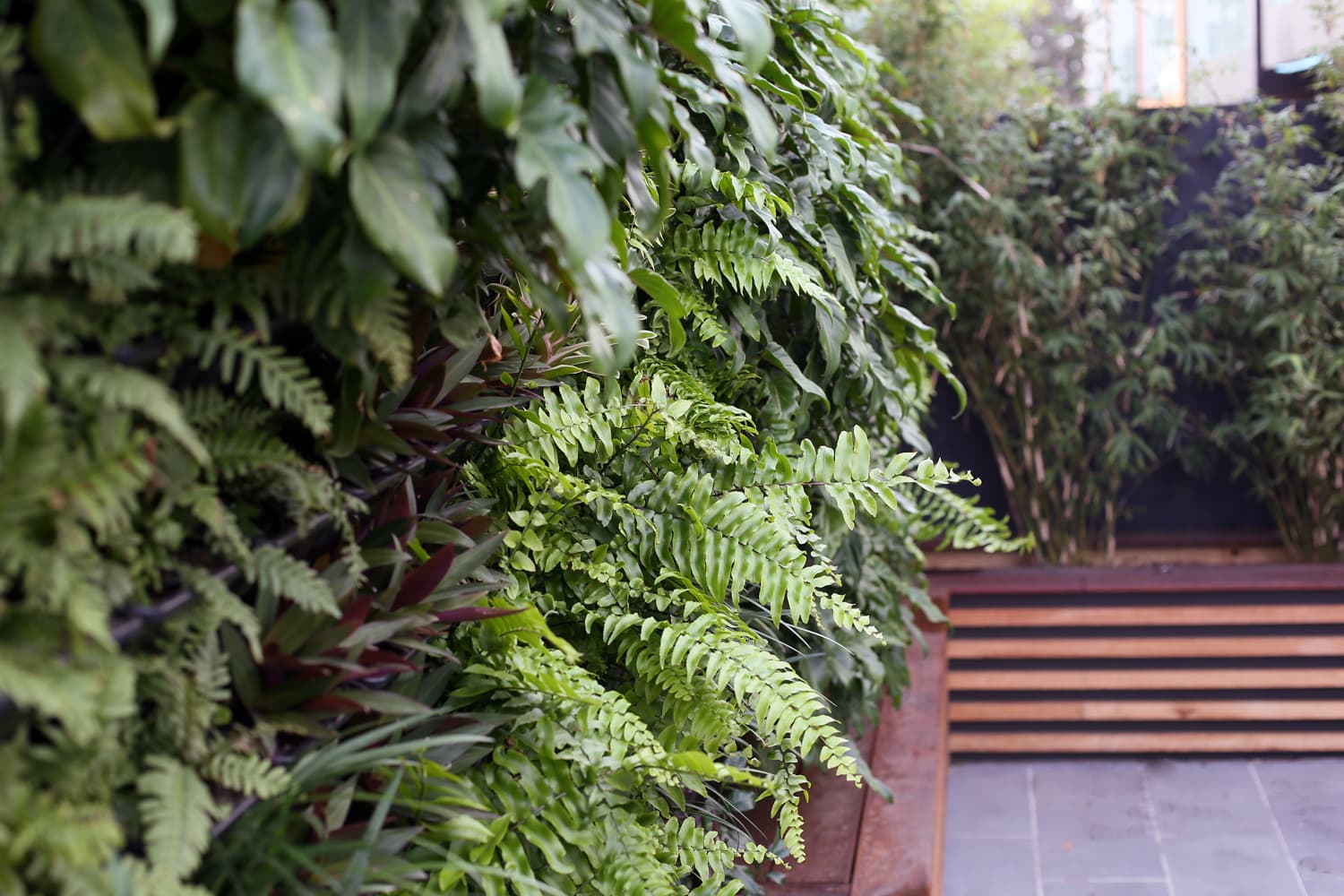
Vertical gardens support urban biodiversity by providing habitat and food sources. They also provide an ecological refuge for birds, insects, and other fauna on otherwise bare building surfaces.
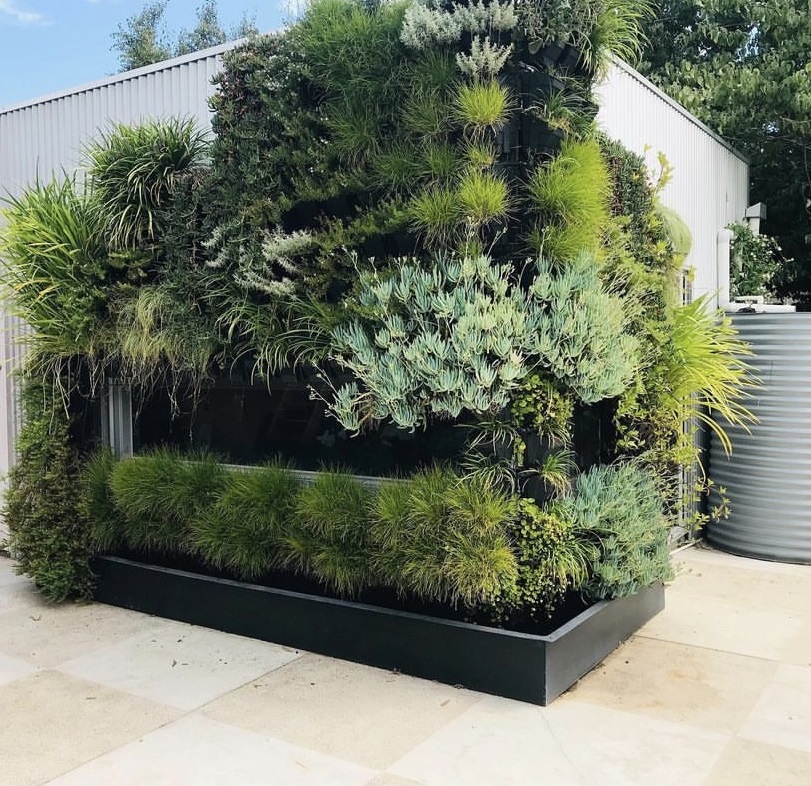
A 2023 case study in the Journal of Water and Land Development recorded 13 bird species using vegetated walls in a Polish city. This included nesting by common urban species such as blackbirds and house sparrows. Older, well-established climbers had more nests. This showed how important long-term planting and maintenance are.
A 2026 study by Plymouth University found dozens of bird and pollinator species using soil-based green walls. Vegetation structure and plant choice were the biggest factors in attracting wildlife.
How do vertical gardens improve air quality?
Vertical gardens improve indoor and outdoor air quality by absorbing pollutants. They do so through plant-microbe interactions in the growing media.
A 2024 study in Science of the Total Environment analysed 12 green wall plant species at Harvard University. It found that plant-based green walls can absorb and break down volatile organic compounds (VOCs). It also developed a model for selecting plants that deliver the best indoor air quality outcomes.
A 2015 study in Applied Acoustics tested the noise-reduction performance of green walls. It found insertion loss reductions of 2–3.9 dB at high frequencies, with one configuration reaching 8.8 dB.
What are the mental health and wellbeing benefits of vertical gardening?
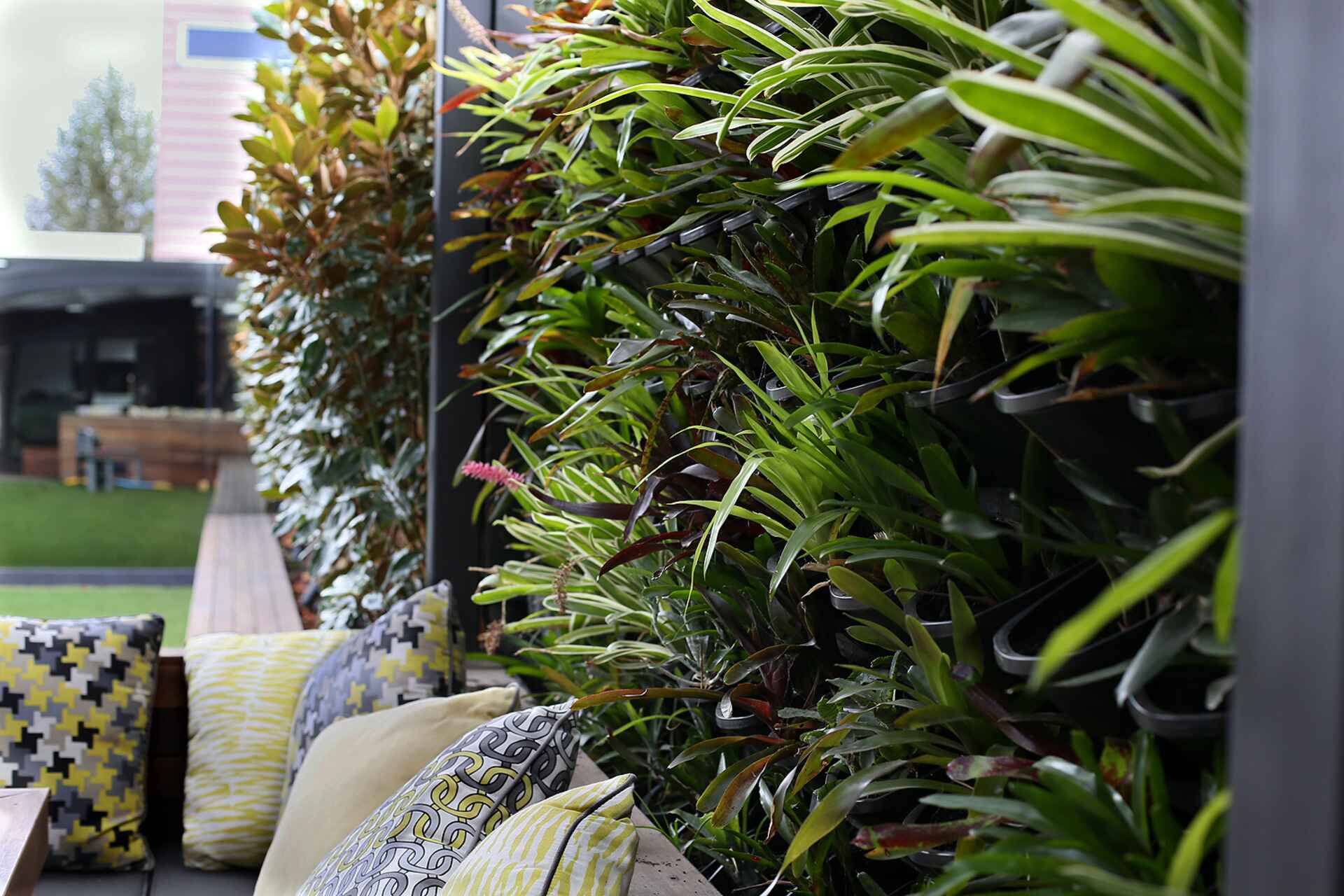
Vertical gardens reduce stress and anxiety and support mental health recovery. They can also improve wellbeing for occupants in offices, hospitals, schools, and aged care environments.
Many studies have looked at indoor green walls, including a 2026 Frontiers in Psychology study. They show that green walls can reduce stress, anxiety, and tension compared with non-green rooms. These benefits can last and even grow with repeated exposure.

A 2023 literature review in HERD examined the role of purposefully designed hospital gardens. It found that hospital users consistently report less stress and anxiety. This holds true when they have access to these spaces.
What are the food production advantages of vertical gardening?
Vertical gardening produces much more food per square foot than regular growing systems.
A 2016 study in Food and Energy Security compared a vertical farming system for lettuce with a horizontal hydroponic system. It found that the vertical system produced 13.8 times more crop per unit of growing floor area. The same system achieved a 20-fold higher number of plants per growing floor area.
A 2023 study by Carotti et al. tested dehumidifier water recovery in controlled vertical farms. It found that this approach decreases total water use by 67% and increases water use efficiency by 206%.
These results make vertical farming worth considering for institutional campuses and mixed-use developments. These sites often want local food production, space savings, and less transport. But whether it makes financial sense will depend on site-specific energy costs and upfront investment.
What does vertical gardening cost in Australia?
Green wall costs in Australia vary by system type and size. The table below summarises current cost ranges from Australian industry sources.
Source: Evergreen Infrastructure
Why is vertical gardening important for Australian urban planning?
Vertical gardening directly addresses three priority challenges in Australian urban planning. These challenges include urban heat, stormwater management, and biodiversity loss. It delivers these benefits within the constrained footprints of dense city environments.
Nature-based solutions are emerging as an approach to sustainable environmental management in Australia. This includes green walls. They are increasingly applied to address both environmental and social issues, according to Zhu et al.

A 2016 review by Pianella et al. was conducted for the CRC for Low Carbon Living and the University of Melbourne. It examined green roofs in Australia. It recommends adapting international green roof policy to Australian cities.
For developers and councils, vertical greening can:
- Support compliance with WSUD requirements
- Contribute to Green Star ratings
- Support ESG reporting and SDG alignment
- Contribute to emissions reduction strategies
- Deliver therapeutic and pedagogical outcomes backed by peer-reviewed evidence
FAQ
Does a vertical garden actually reduce building temperatures?
A vertical garden reduces building temperatures through shading, insulation, and evapotranspiration. A modular green wall reduced surface temperatures by up to 15°C compared to a bare reference wall during peak hours.
Are vertical gardens suitable for Australia's hot and dry climate?
Yes, if plant selection, substrate depth, and irrigation match local conditions. In hot urban environments, green walls cool surfaces through shading, insulation, and evapotranspiration. Drought-tolerant species, smart irrigation, and rainwater harvesting can cut water demand. It can also boost resilience in drier conditions.
Can a vertical garden help with planning compliance in Australia?
Yes. A vertical garden can help meet Water Sensitive Urban Design (WSUD) requirements. It can also help meet stormwater retention targets and green space rules in development approvals.
Green walls catch and hold rainfall, slowing runoff into drains, so they count as part of an on-site stormwater strategy. Where WSUD compliance is required for approval, a well-designed green wall can be part of that solution.
What maintenance does a vertical garden require?
A vertical garden needs regular watering, feeding, pruning, and occasional plant replacement. Well-designed systems use smart irrigation and digital monitoring to cut labour. It also keeps plants healthy. Maintenance manuals and health checks help the system perform well over its lifetime.
Are vertical gardens only for large commercial buildings?
Vertical gardens are installed across many building types. This includes medium-density housing, schools, aged care facilities, hospitals, and government buildings. Modular systems can be small, like courtyards, balconies, and feature walls, or large, like commercial facades.
Size, substrate, and plant choice can all be scaled to match the project's budget, maintenance needs, and purpose.
Vertical gardening: functional infrastructure for Australia's urban future
Vertical gardening is no longer just an aesthetic choice for Australian cities. It's a practical response to real urban pressures. As heat, stormwater, and mental health challenges intensify, green walls offer measurable benefits.
They cool buildings, save energy, manage rainfall, support wildlife, clean the air, and improve wellbeing. Although it requires upfront costs and maintenance, vertical greening offers a wide range of benefits. For developers and councils, it is a valuable investment in creating more liveable and resilient cities.
Ready to transform your building with vertical greenery?
Evergreen Infrastructure designs and installs high-quality vertical greening solutions. Our systems improve building performance, enhance urban environments, and create healthier spaces. Contact our team to discuss the best solution for your next project.
{{cta}}
We create green oases in urban settings
We'd love to discuss how we can partner to bring innovative, sustainable solutions to your urban environment.