.webp)


Nature-based solutions use living systems like green roofs, rain gardens, and wetlands to solve urban problems. They help reduce heat, manage stormwater, support wildlife, and improve wellbeing. These solutions are increasingly required under Australian planning and sustainability frameworks. Evergreen Infrastructure designs, builds, and maintains NBS projects across Melbourne.
Nature-based solutions (NBS) are actions that use ecosystems to tackle real-world problems. This means protecting, restoring, or sustainably managing those ecosystems. The idea is simple: work with nature to deliver benefits for both people and the environment.
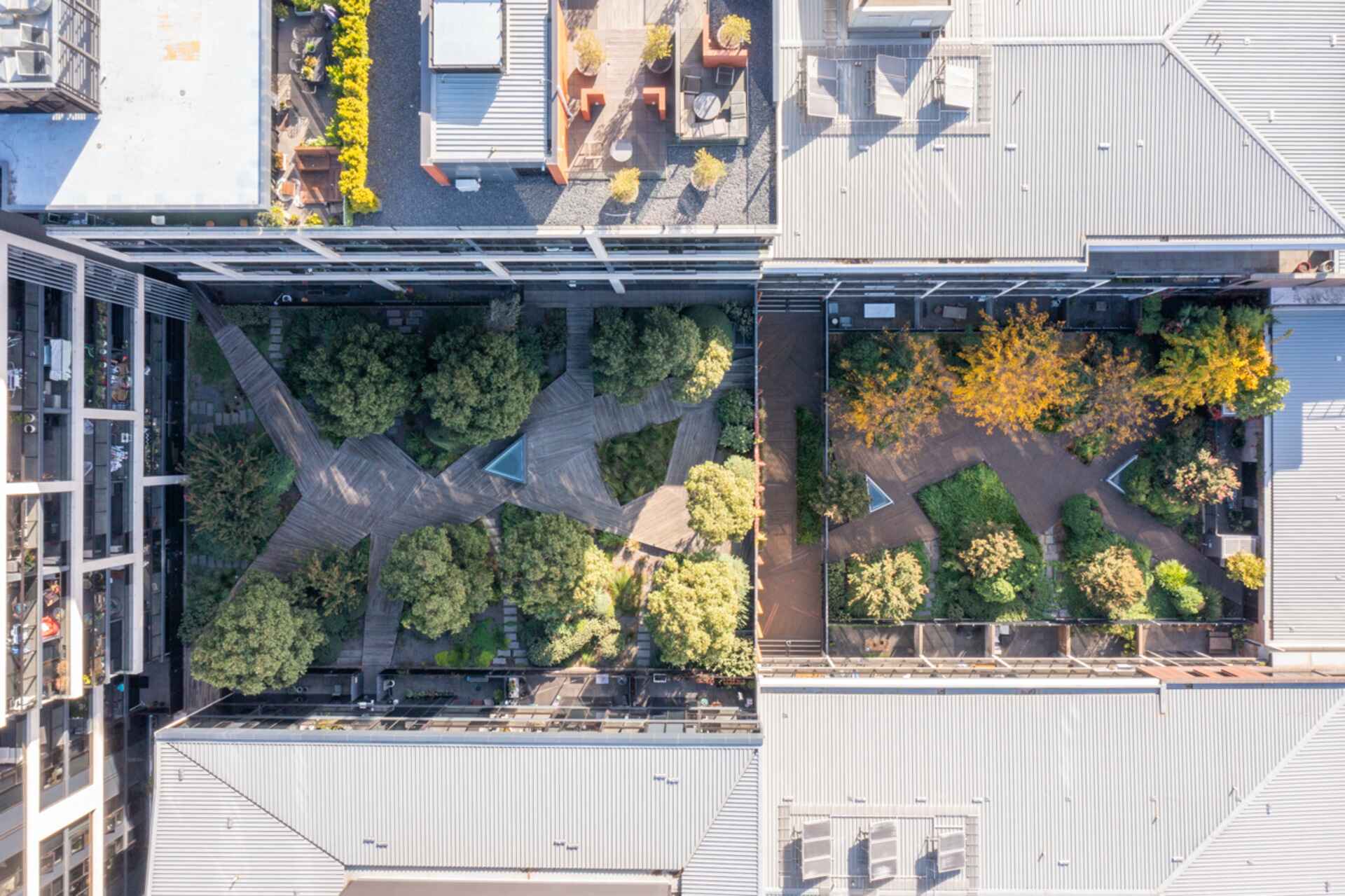
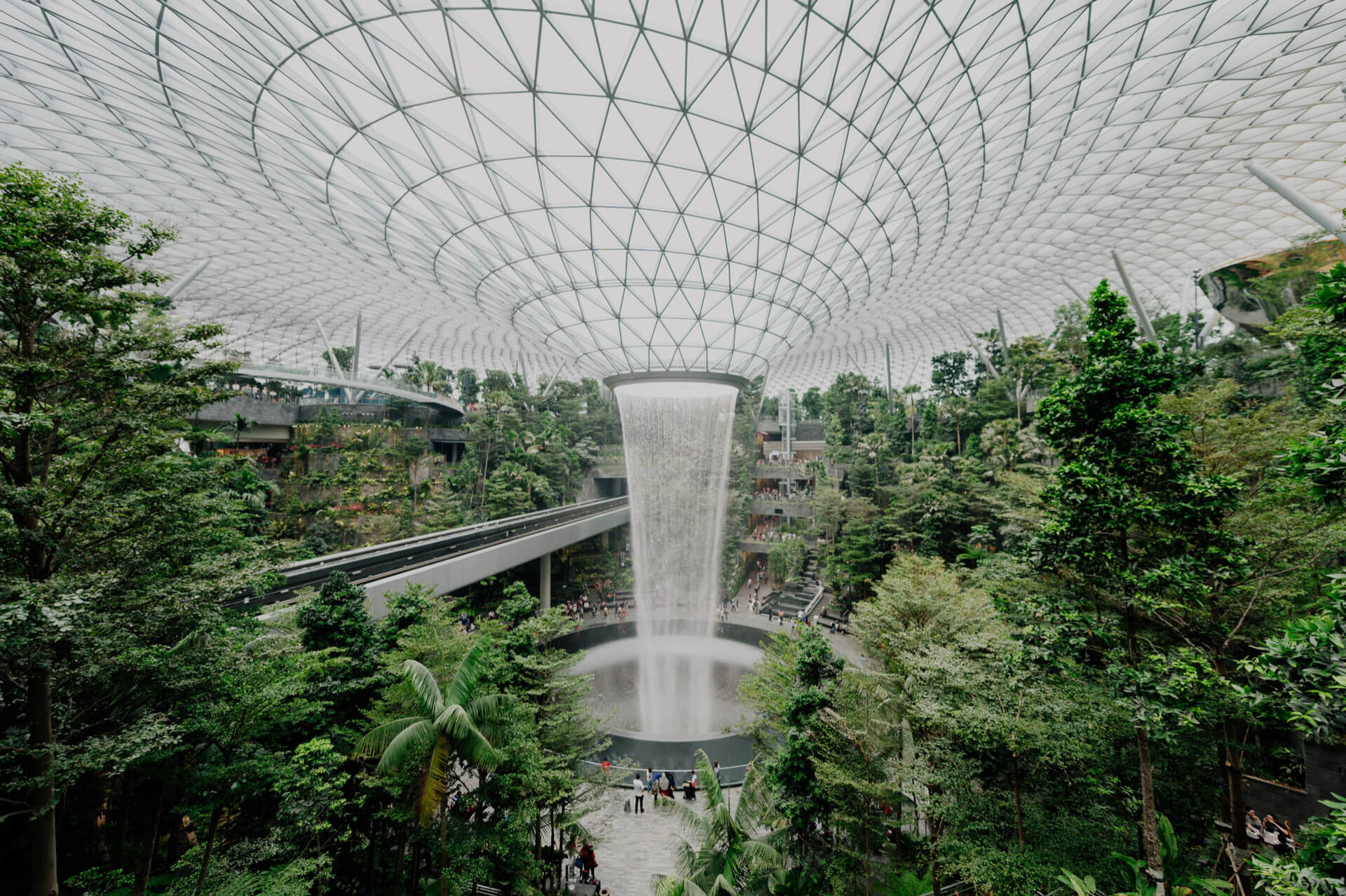
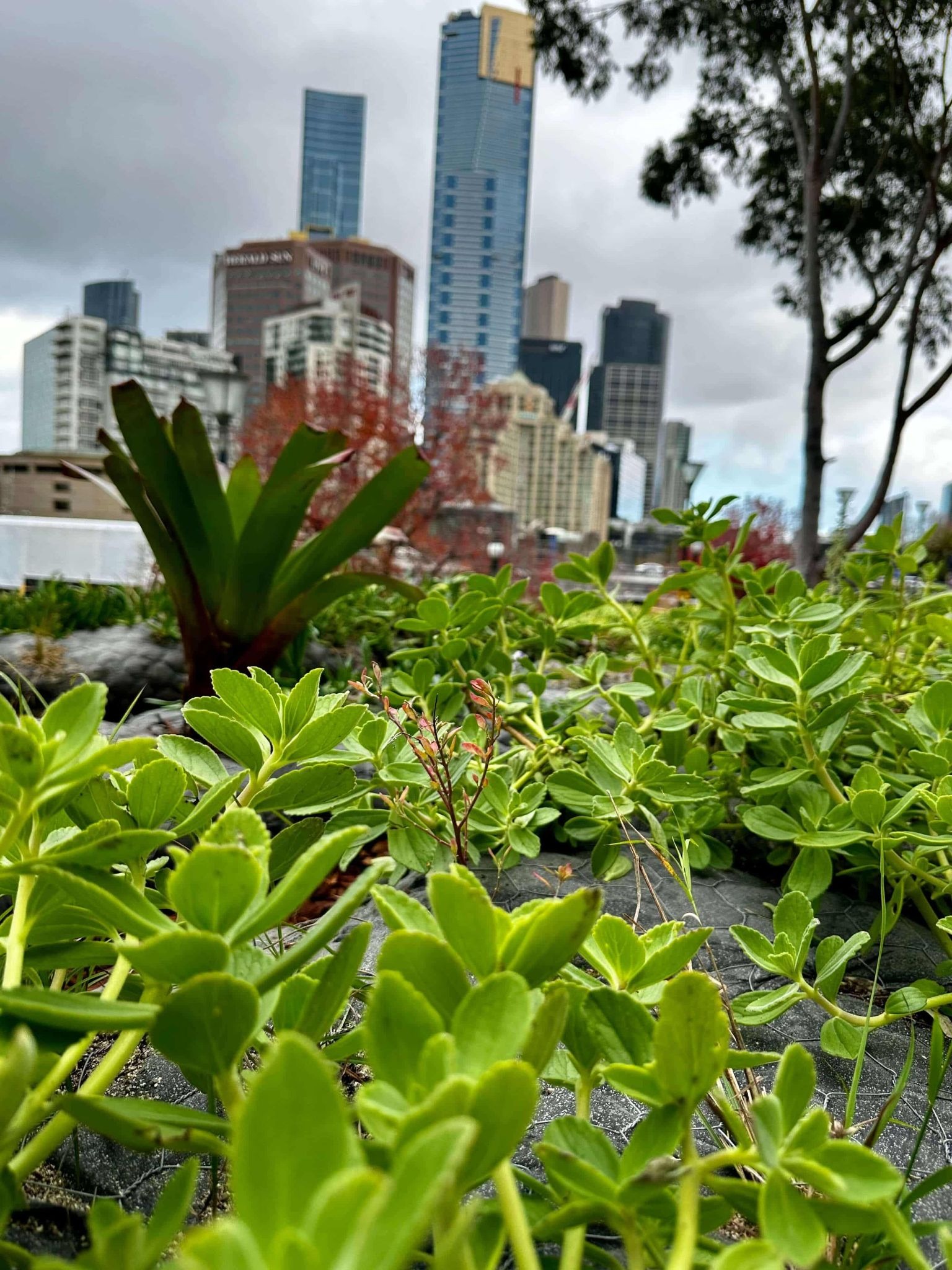
In the built environment, nature-based solutions include different green infrastructure projects. For example, green roofs, green walls, urban forests, wetlands, and bioretention systems. These are all designed to solve infrastructure problems using natural processes.
The problems nature-based solutions help solve are significant. They include urban heat, stormwater flooding, biodiversity loss, poor air quality, and more.
These outcomes are not incidental. They're measurable, well-documented, and increasingly built into planning frameworks across Australian cities.
What is the definition of nature-based solutions?
Nature-based solutions are actions that address societal challenges. This definition comes from the International Union for Conservation of Nature (IUCN).
These actions work by protecting, sustainably managing, and restoring natural and modified ecosystems. They benefit biodiversity and human wellbeing at the same time.
The IUCN has supported this definition for over 20 years. It also developed the IUCN Global Standard for Nature-based Solutions. This standard guides the design, verification, and scaling up of NBS interventions.
The Standard applies eight criteria and a set of associated indicators to assess whether an NBS is genuinely effective.
The core principle is simple. NBS work with natural systems rather than against them. Instead of a concrete drain, you design a wetland. Instead of a bare rooftop, you install a living green roof.
The result addresses an engineering or planning challenge. But it also delivers ecological and social value as equally intended outcomes.
What are the main types of nature-based solutions in the built environment?
Nature-based solutions in urban and built environments fall across five common system types. Each type addresses a different set of infrastructure challenges.

Each type is applied on its own or combined into an integrated NBS strategy. The most effective urban projects layer different system types. That way, they can address heat, water, biodiversity, and human health at the same time.

Green roofs
A green roof is a planted layer installed over a waterproof membrane on a rooftop structure. Green roofs are classified as:
- Extensive (shallow substrate, low-maintenance plants, 50–150mm depth)
- Intensive (deeper substrate, broader plant palette, structural load requirements)
Both types retain stormwater, reduce roof surface temperatures, and extend membrane lifespan.
Evergreen Infrastructure has installed green roofs at the Victorian State Treasury Building. The Federation Square biodiversity green roof in Melbourne is another example of this approach. These show NBS outcomes at a landmark civic scale.
{{cta}}
Green walls
A green wall is a vertical planted system. It's usually fixed to or growing against a building facade or freestanding structure.
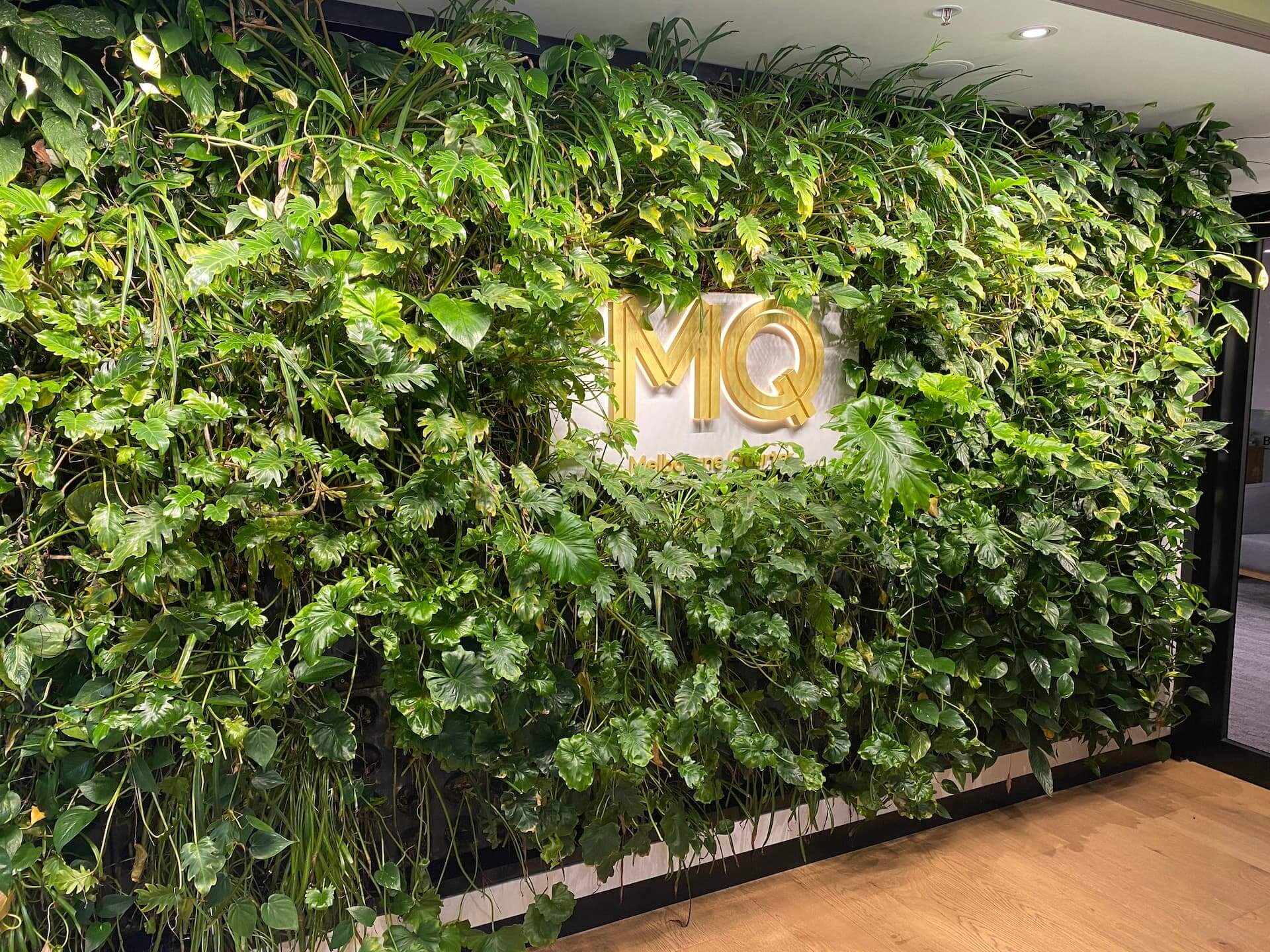
Green walls reduce heat absorbed by building envelopes. They also buffer ambient noise in high-traffic locations. In dense urban areas with limited ground space, they improve air quality and support biodiversity.
They're also called vertical gardens.
Bioretention systems and water-sensitive urban design
Bioretention systems are also called rain gardens. They filter and slow stormwater runoff through planted soil before it reaches the stormwater network.
Water Sensitive Urban Design (WSUD) is an Australian approach to land planning and engineering design. It integrates water management into urban development. WSUD underpins many of the policies and standards that shape how these systems are built into new developments.
WSUD principles are embedded in key Victorian planning provisions. They also appear in several other Australian state and local planning policies. This is particularly the case for new urban development and subdivisions.
Green infrastructure designed to WSUD standards is required to meet specific performance targets. These include:
- Runoff reduction
- Water quality improvement
- Water retention
What problems do nature-based solutions solve?
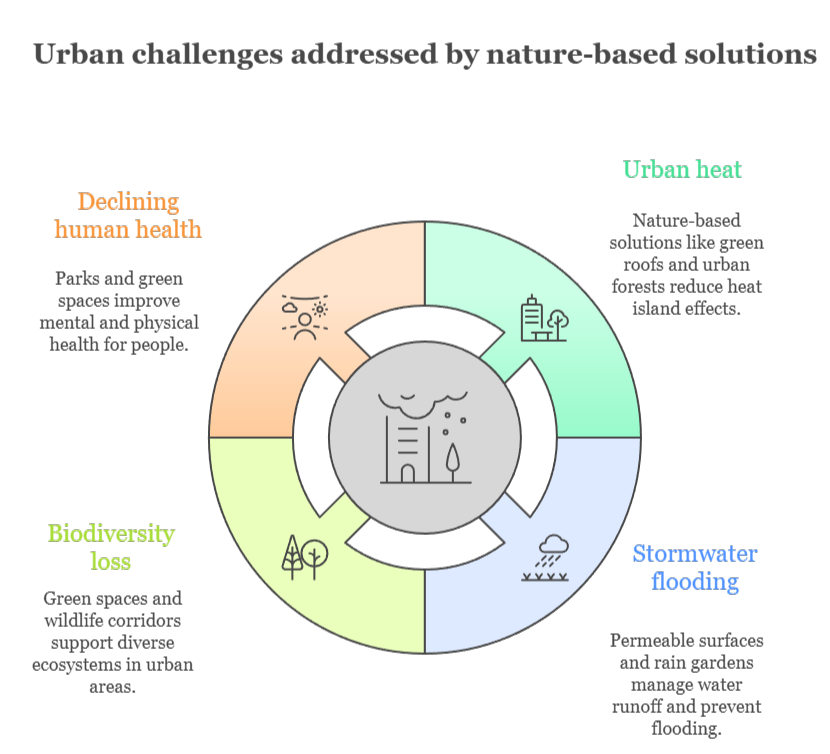
Nature-based solutions address four interconnected urban challenges:
- Urban heat
- Stormwater flooding
- Biodiversity loss
- Declining human health and wellbeing
Urban heat
Cities are much warmer than the surrounding rural areas. This is known as the urban heat island effect. It happens when natural land is replaced with hard surfaces that absorb and radiate heat.
The main causes include:
- Hard surfaces
- Lack of vegetation
- Waste heat from buildings and vehicles
Green roofs and urban tree canopy directly reduce this effect. Project data from Evergreen Infrastructure shows green roofs can reduce ambient temperatures. This is a meaningful outcome in Melbourne's increasingly hot summers.
Stormwater flooding
Hard urban surfaces stop rainfall from soaking into the ground naturally. Bioretention systems, green roofs, and constructed wetlands slow and filter runoff. This reduces peak flood events and pollutant loads entering waterways.
Biodiversity loss
Urban development breaks up and destroys habitats. Green roofs, green walls, and planted corridors restore habitat connectivity. They also support native plant and animal species in built environments.
Declining human health and wellbeing
Access to green spaces is linked to these benefits:
- Better mental health
- Reduced stress
- Faster recovery from illness
This is where therapeutic landscapes can really help. Sensory gardens, for example, are designed to support specific health and wellbeing outcomes.
How do nature-based solutions relate to climate goals?
Nature-based solutions are recognised globally as essential tools for climate mitigation and adaptation. According to the IUCN, they could provide around one-third of the climate mitigation needed to meet the goals of the Paris Agreement.
In Australia, nature-based solutions fit within key national and state policy frameworks. This includes:
- The Climate Active carbon neutral framework
- Australia's National Biodiversity Strategy (Australia's Strategy for Nature 2024–2030)
- National and state climate resilience and adaptation strategies.
NBS projects produce measurable co-benefits across ESG and Sustainable Development Goal (SDG) reporting. These include:
- Carbon indicators
- Water indicators
- Biodiversity indicators
- Community health indicators
For corporate building owners, NBS delivers on ESG commitments with documented performance data. For government agencies, NBS supports climate adaptation targets. It also improves liveability and public health through the same infrastructure.
What is the difference between nature-based solutions and green infrastructure?
Green infrastructure is a subset of nature-based solutions (NBS). The latter covers any action that uses natural processes to address societal challenges. Examples range from coastal mangrove restoration to urban rain gardens.
Green infrastructure is more specific. It refers to the planned network of green spaces, planted systems, and natural features within built environments.
In practice, many built environment NBS projects are green infrastructure projects:
- Green roofs
- Green walls
- Urban forests
- Bioretention systems
- Wetlands
The two terms are used interchangeably in many planning and policy documents. But NBS puts a stronger emphasis on documented ecological and social outcomes.
How are nature-based solutions designed and delivered?
Effective NBS delivery follows a structured process. It brings together ecological science, engineering, planning compliance, and stakeholder engagement.

Step 1: Understand the system.
Before designing a solution, the full site context must be understood. This includes biophysical conditions such as climate zone, soil, hydrology, and microclimate.
It also includes the planning and regulatory environment, WSUD requirements, and council overlays. It may also include applicable sustainability rating schemes such as Green Star.
Step 2: Define the outcomes.
Identify which challenges the NBS must address and how success will be measured.
For a green roof, this includes:
- Stormwater retention targets
- Thermal performance benchmarks
- Biodiversity objectives
For a therapeutic landscape, it includes:
- Wellbeing outcomes
- Accessibility requirements
- Clinical or educational stakeholder input
Step 3: Design and specify.
Develop the detailed design, including plant selection matched to:
- The microclimate and substrate
- Structural and hydraulic engineering
- Irrigation and drainage systems.
This stage also includes BIM (Building Information Modelling) documentation.
Smart irrigation and digital monitoring systems should be built in from the design stage. This reduces long-term maintenance costs and supports asset performance reporting.
Step 4: Deliver and monitor.
This covers project management, contractor coordination, and quality assurance during installation. After installation, ongoing monitoring validates the investment and supports compliance reporting. This includes biodiversity health checks, stormwater data, and thermal readings.
What does nature-based solutions monitoring involve?
NBS monitoring tracks performance against the outcomes defined at the design stage. It covers:
- Stormwater retention volumes
- Ambient temperature readings
- Plant health and biodiversity surveys
- Structural inspection of roof and wall systems
For asset managers and facilities teams, monitoring produces:
- Operations and maintenance (O&M) manuals
- Compliance reports
- Documented performance data
This data is increasingly needed for ESG reporting and for meeting certain planning conditions. It's also necessary for Green Star and other green building certifications.
Biodiversity health monitoring is a specific part of living infrastructure asset management. This includes native species counts and habitat condition assessments.
Digital monitoring tools and smart irrigation systems allow real-time performance tracking. They:
- Cut water use
- Flag maintenance issues early
- Produce the data needed for compliance and ESG reporting
FAQ
What are nature-based solutions?
Nature-based solutions are actions that use ecosystems and natural processes to address challenges. These challenges can be social, environmental, or infrastructural. The IUCN definition specifies that NBS must benefit both people and nature at the same time.
What is the difference between NBS and traditional engineering solutions?
Traditional engineering solutions use built materials to manage water, heat, or infrastructure loads. This can include concrete, steel, and pipes. NBS uses living systems like plants, soils, and wetlands to achieve the same outcomes. The key difference is that NBS can deliver extra benefits that most conventional engineered systems do not.
Are nature-based solutions regulated in Australia?
Yes. Several NBS categories are regulated or incentivised through Australian planning frameworks. Water Sensitive Urban Design (WSUD) principles are built into many state and council planning rules. WSUD compliance is required for many new developments. Green Star certification from the Green Building Council Australia scores green infrastructure contributions. Some councils require green roof or tree canopy coverage as part of development approvals.
How long does a green roof or green wall last?
A green roof built to specification lasts 40–50 years. But it must have a quality waterproof membrane, appropriate substrate depth, and a matched plant palette. This is well beyond the 15–20-year lifespan of a conventional unplanted membrane. Green walls vary more by system type, but structural components are designed for a 20–30 year lifespan with plant replacement as needed.
Can nature-based solutions help with ESG reporting?
Yes. NBS projects produce documented outcomes across environmental, social, and governance dimensions. These include:
- Carbon sequestration
- Stormwater management
- Biodiversity conservation
- Urban heat reduction
- Community health outcomes.
All these map to recognised ESG frameworks and SDG indicators. NBS projects can also support Climate Active carbon neutrality claims. This applies when they generate eligible offsets or verified emission reductions. Regular monitoring and reporting provide the data needed for ESG audits.
Who commissions nature-based solutions projects in Australia?
NBS projects are commissioned by a wide range of organisations. These include:
- Property developers
- Local government councils
- Healthcare providers
- Aged care operators
- Universities
- Corporate building owners
- Community housing organisations
Work with Evergreen Infrastructure on your next nature-based solutions project
Evergreen Infrastructure brings together expertise in horticulture, engineering, and environmental science. Our team manages projects from initial concept through to long-term maintenance. We focus on delivering solutions that perform and last.
We have delivered landmark NBS projects across Melbourne. This includes
- The Victorian State Treasury Building green roof
- The Federation Square biodiversity green roof
- The Bruce Street biodiversity roof
We work with property developers, government agencies, building owners, and community organisations.
Our end-to-end service model covers:
- Consulting
- Design
- Project management
- Long-term asset management
Every project is backed by ongoing monitoring and performance data.
If you're interested in what we do, don't hesitate to reach out to us.
{{cta}}
We create green oases in urban settings
We'd love to discuss how we can partner to bring innovative, sustainable solutions to your urban environment.