Blue-green infrastructure links plants with water systems to manage stormwater and cool cities. The main systems are green roofs, green walls, raingardens, and planters. In Melbourne, a 100 mm deep green roof can retain 86% to 92% of annual runoff. Projects need a structural check and a maintenance plan from the start.
Blue-green infrastructure brings plants and water together in one design. The green part is living vegetation, and the blue part manages stormwater. Together, they help sites handle heavy rain and stay cooler in summer.
This article explains how blue-green systems work and where each one fits. It also covers what councils and property teams should plan for, from structural checks to long-term care.
What is blue-green infrastructure?
Blue-green infrastructure, or BGI, is a linked network of water assets and plants. Together, they deliver environmental and community benefits. Each part does a different job.
- Blue infrastructure: Waterways, wetlands, tanks, and stormwater features, known as Water Sensitive Urban Design.
- Green infrastructure: Trees, parks, gardens, green roofs, and other living vegetation.
- Combined systems: Water supports the plants, and the plants help manage the water.
In a blue-green street, runoff can flow through kerb openings into planted tree pits. The pits water the trees and can store or filter some runoff. The excess then reaches the drain.
Existing natural assets, such as wetlands and waterways, count as blue-green infrastructure too. Protecting one may matter as much as building a new raingarden or green roof.
The City of Melbourne and Merri-bek guidelines rank green roofs and walls third in their greening priorities. Existing trees and in-ground planting come first. Roofs and walls cost more and deliver less benefit, but they work where ground space runs out.
How does BGI differ from WSUD?
Blue-green infrastructure combines water assets and plants. Water-sensitive urban design, or WSUD, focuses on the water cycle. The two overlap but aren't identical, and four related terms each stress something different.
Water-sensitive urban design (WSUD) techniques can help deliver a blue-green network. The City of Melbourne lists green roofs and raingarden tree pits as common WSUD types. A 2026 presentation on sponge cities says the concept was developed in China and uses raingardens, wetlands, and green roofs.
Sources don't always agree on which assets are blue and which are grey. A Victorian guide for local councils counts pipes and drains as blue infrastructure, while other sources treat pipes as grey.
How do blue-green systems manage stormwater?
Blue-green systems manage stormwater by capturing rain where it falls. Plants and soil slow the water, then filter it or store it. Standard drainage does the opposite, carrying pollutants to rivers and bays, says Planning Advisory Note 75.
In Melbourne, a 100 mm deep green roof can retain 86% to 92% of annual runoff. A City of Melbourne review reports the figure, which reflects Melbourne's many small rain events. Retention falls as storms get larger.
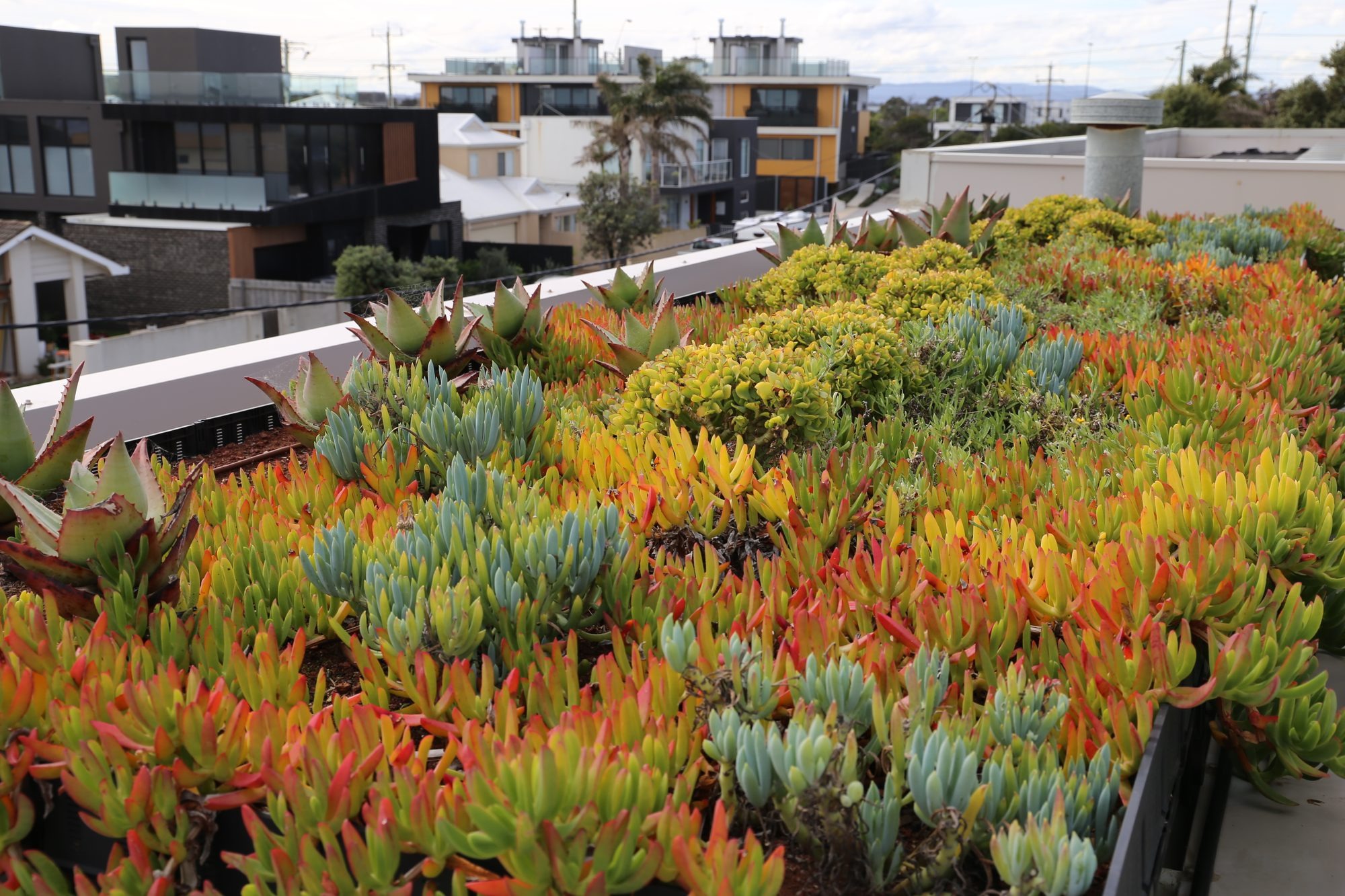
Green walls work differently from green roofs, because they're water-intensive. A City of Melbourne review says walls are unlikely to cut runoff directly, but could use captured stormwater. Climbers could also be planted in raingardens beside a wall, fed by roof drainage.
What are examples of blue-green systems?
Green roofs, green walls, raingardens, and rooftop planters are the four main blue-green systems.
Green roofs and blue-green roofs
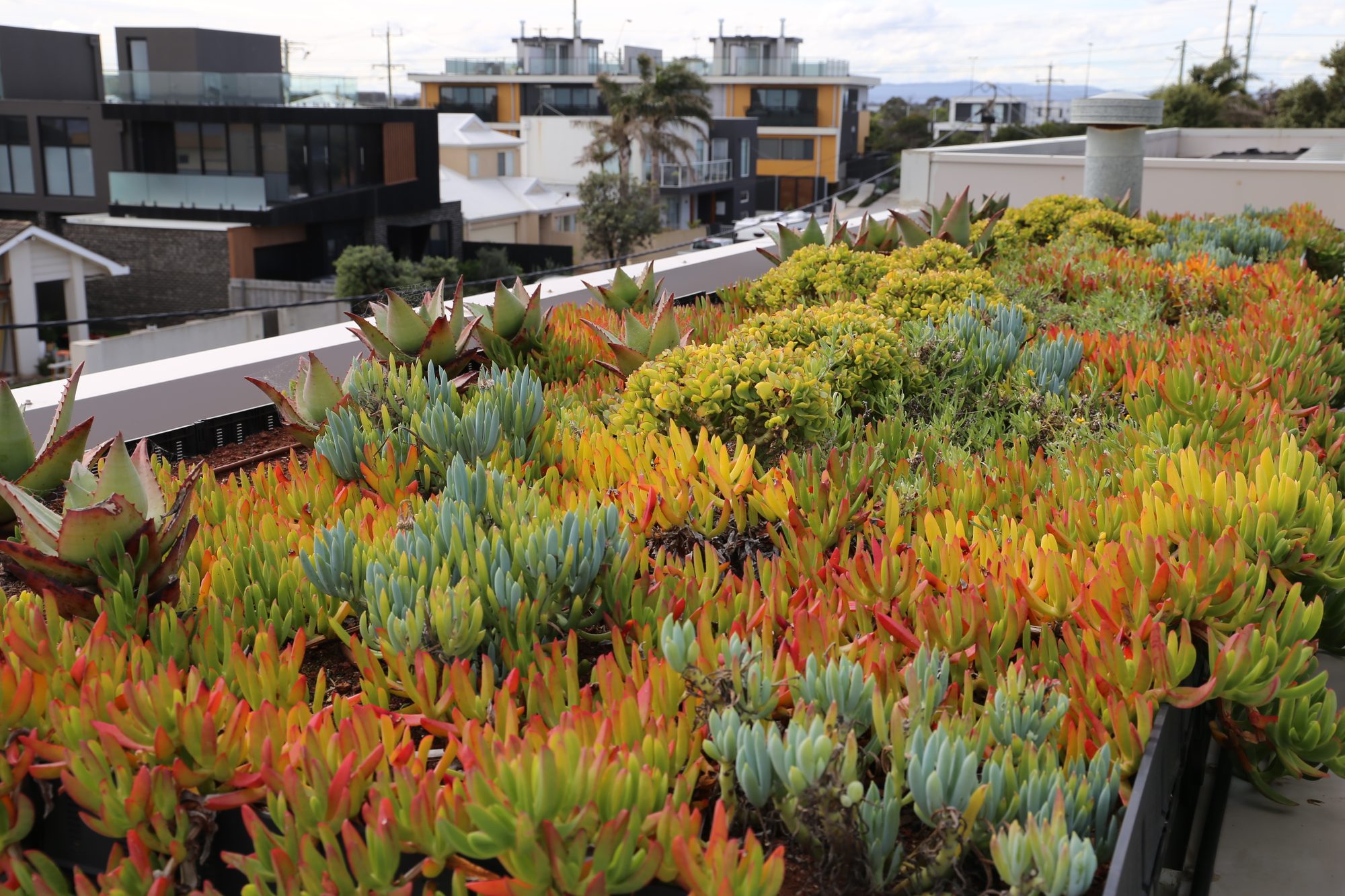
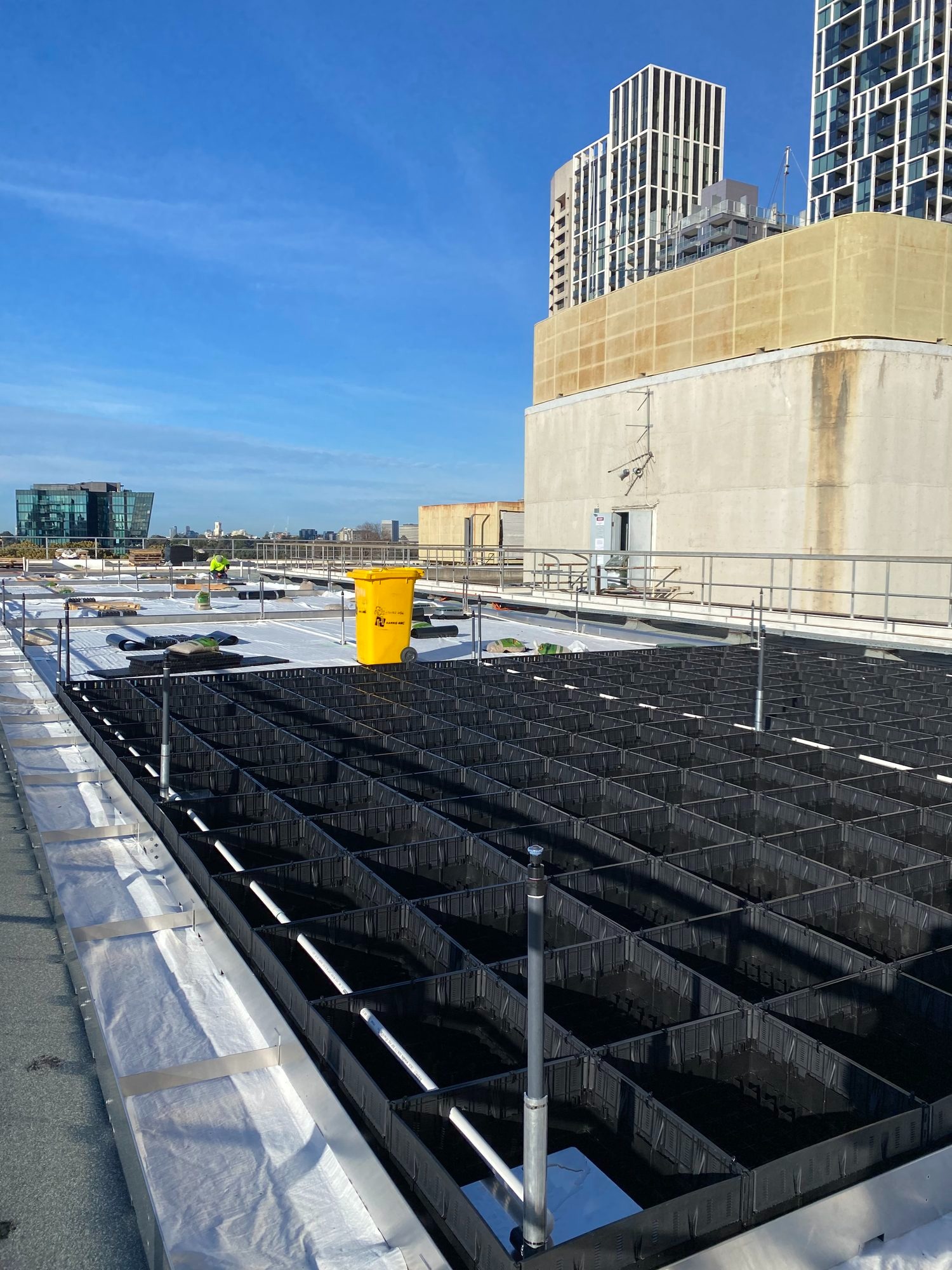
A green roof is a planted layer built on a roof. Extensive roofs are shallow and low-maintenance, while intensive roofs are deeper and need more water. Blue-green roofs add features such as retention ponds.
Green walls
A green wall is a vertical planting system on a wall. Walls hold little growing media, so they need reliable water and fail quickly if watering fails.
Raingardens and water-sensitive streetscapes
A raingarden is a planted dip that collects and filters runoff. Roadside raingardens can be very effective at cutting pollutants and sediment from roads.
Rooftop planters
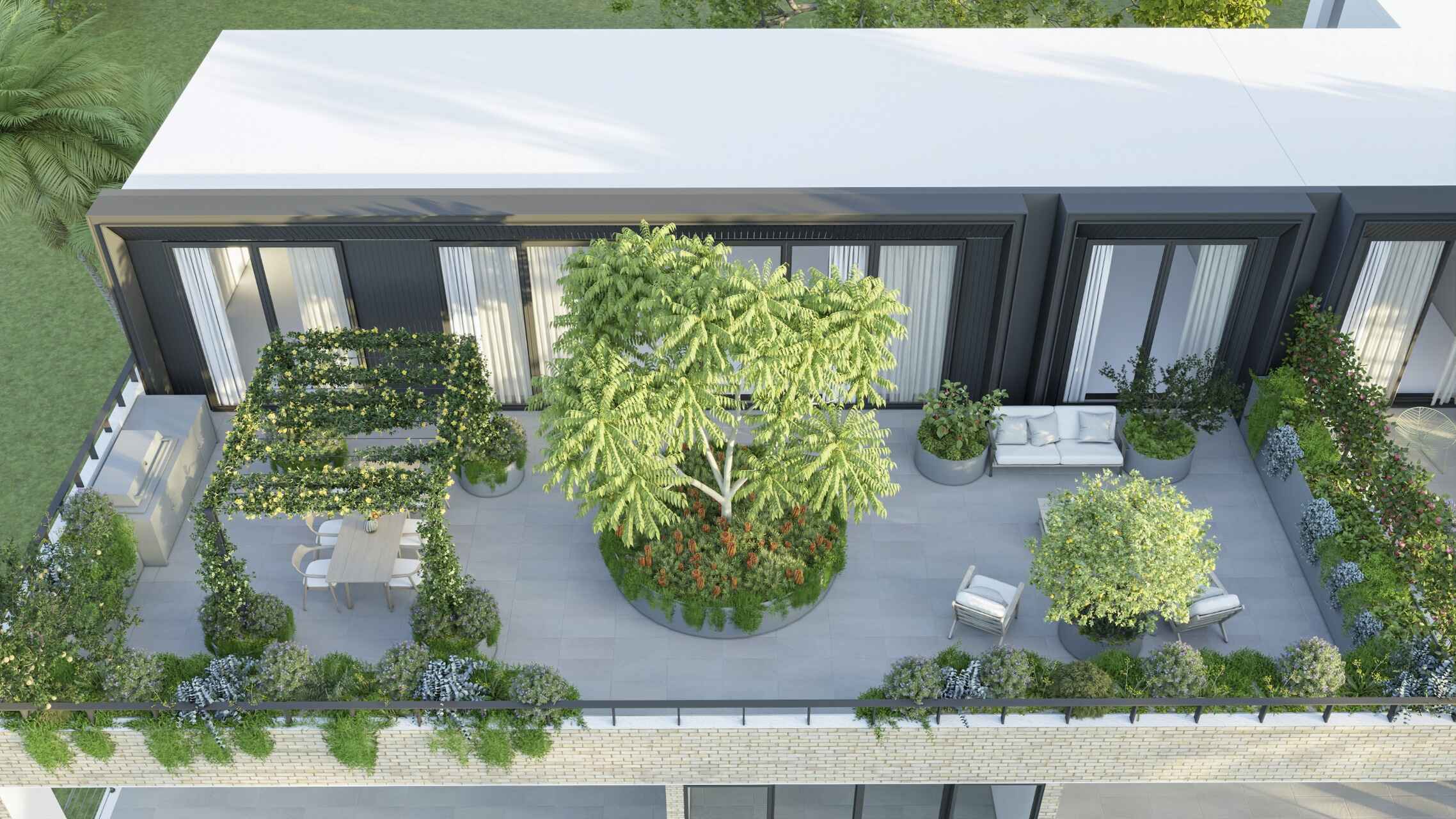
Rooftop planters put plants on terraces and roofs. With enough soil, planters can support small and medium trees at height.
Public showcase roofs
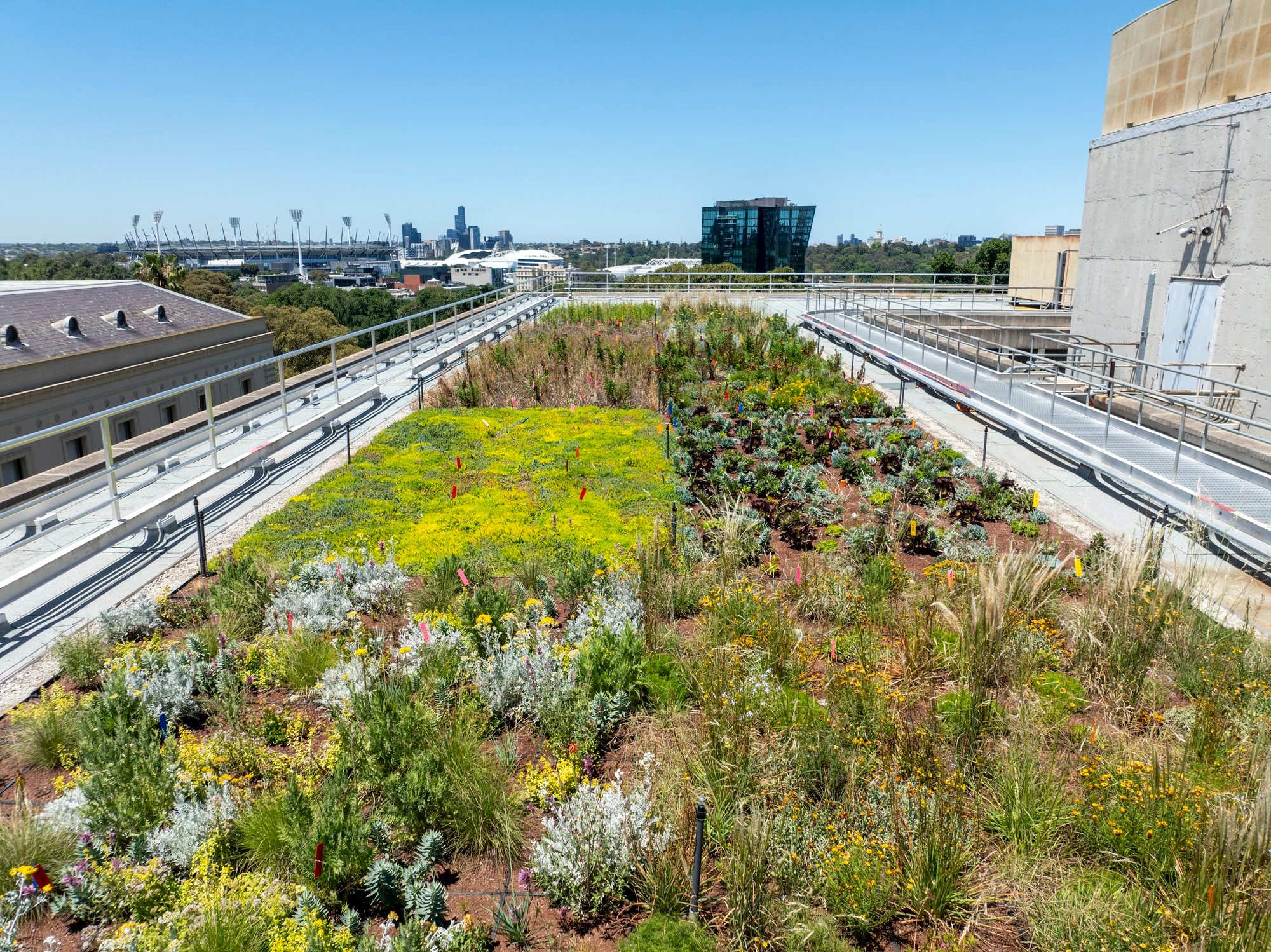
The 700 m² Treasury Building roof is an extensive garden retrofitted onto a 1960s landmark. Evergreen Infrastructure installed it, and co-designed the green roof on the Greenline hub at Federation Square.
What do blue-green systems deliver?
Blue-green systems cut stormwater runoff and can help cool cities. Melbourne research finds the evidence strongest for stormwater.
Green roof cooling is felt mostly in the building below, not on the street. Councils can test the modelled figures against their own sites.
Blue-green results are site-specific because the growing layer and the watering both change the outcome. Green roofs and walls work best alongside tree canopy and in-ground planting.
How do you plan a blue-green project?
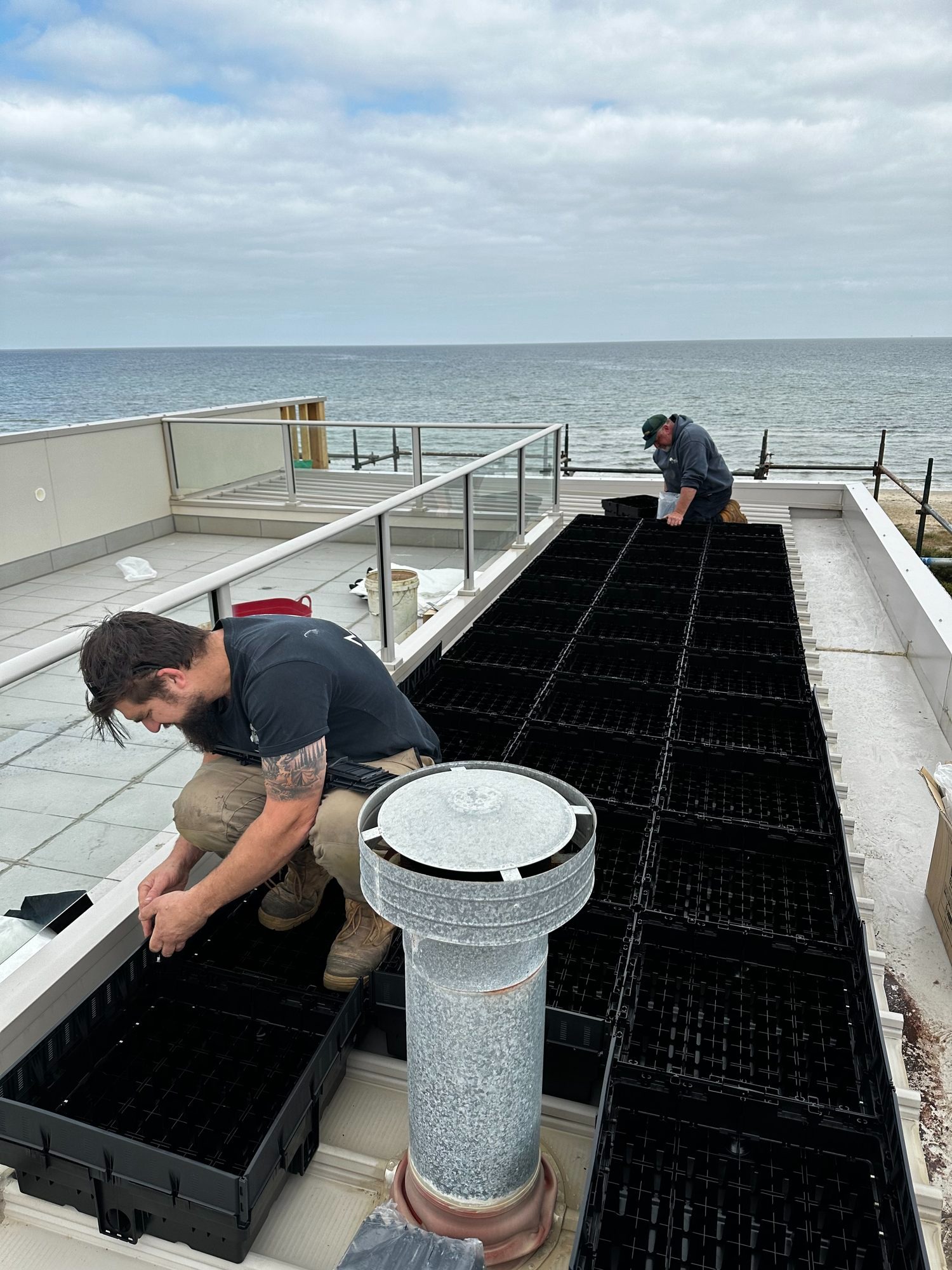
Planning a blue-green project starts with the site, especially its structural capacity. A structural engineer should confirm load capacity first. On existing buildings, Australian roofs are often not designed for northern hemisphere loads.
Clause 53.18 of Victoria's planning rules covers stormwater for most new development. Targets include 80% retention of suspended solids and 45% for phosphorus and nitrogen, says Planning Advisory Note 75. The rules also ask designs to support cooling and habitat.
How should blue-green systems be maintained?
Every blue-green system needs a maintenance plan from the start. Neglected assets lose their function and are eventually removed. Councils expect owners to keep assets in good order, say the City of Melbourne and Merri-bek guidelines.
The City of Melbourne and Merri-bek guidelines list upkeep schedules based on University of Melbourne research. Most checks are quarterly, while waterproofing and growing media are checked annually.
At the City of Melbourne's CH2 building, more than half of 164 façade plants died or failed to cover their trellis within two years. Causes included low light, wind burn, irrigation failure, and inadequate maintenance.
Why do cities need blue-green systems now?
Cities need blue-green systems now because of warmer summers and higher flood risk. Sealed surfaces trap heat and raise flood risk, say the May 2026 City of Melbourne and Merri-bek guidelines.
FAQs
What is the difference between blue-green and grey infrastructure?
Grey infrastructure uses pipes and sealed surfaces to move water away fast. Blue-green systems keep water in the landscape to feed plants. A Victorian guide for local councils says good design uses both because doing without grey infrastructure isn't possible or desirable.
Can you retrofit blue-green systems on an existing building?
Yes, you can retrofit green roofs and walls, but a structural engineer should check the building first. The 700 m² Treasury Building roof that Evergreen Infrastructure installed was retrofitted onto a 1960s Melbourne landmark.
Who maintains blue-green systems?
The building owner or occupier is responsible for maintaining blue-green systems. A maintenance plan should say who does what.
Land tenure matters, because private lots and common property carry different costs and duties. Horticulturists and structural engineers each have a role.
Do blue-green systems support biodiversity?
Blue-green systems can support biodiversity, but the benefits depend on design and location. Melbourne surveys of green roof invertebrates found more diversity near more green space. Plants that flower at different times can feed pollinators across the year.
Plan your blue-green project with Evergreen Infrastructure
At Evergreen Infrastructure, we design and build green roofs and walls, then look after them. We work with councils and planning authorities, and with property owners and health networks. One team can show how a roof or wall meets your stormwater targets, then look after it for the long term.
To discuss a site or precinct, talk to our team or explore our projects.
{{cta}}
We create green oases in urban settings
We'd love to discuss how we can partner to bring innovative, sustainable solutions to your urban environment.